2022-23 FA Cup · The Final
2023 FA Cup Final: Manchester City 2-1 Manchester United
The Manchester Final
The first all-Manchester FA Cup final was played on a day when the trains to it were cancelled, and the crowd was smaller than at the finals on either side of it.
Manchester City beat Manchester United in the first FA Cup final the two Manchester clubs ever contested, on a Saturday when a national rail strike shut the route from Manchester to Wembley.
Saturday 3 June 2023 · Wembley Stadium
What you will not find elsewhere
The novelty final of the modern era was the worst attended of its three-year window, and the reason was that no trains ran to it
Every account of this match records the attendance and moves on. Put it beside its neighbours and it stops being background noise. The police graded the fixture high risk, which produced a 15:00 kick-off, the earliest final start since 2011 and precisely the arrangement that lets away supporters travel home by rail. Then the RMT struck on the eve of the final and the train drivers struck on the day, Avanti West Coast confirmed nothing at all would run on the West Coast Main Line, and the FA told ticket holders to reach Wembley by coach or car. The result is measurable. The first all-Manchester FA Cup final drew 83,179, against 84,897 for Chelsea and Liverpool the previous May and 84,814 when these same two clubs returned to the same stadium in 2024. That is 1,718 short of the final before it and 1,635 short of the final after it. The most novel fixture in the modern history of the competition was the least well attended of the three, and the cause was industrial action rather than indifference.[4][7][5][8][9]
Three of this final's officials are filed on Wikipedia under county FAs that do not exist
Wikipedia's article on this final gives assistant referee Scott Ledger as South Yorkshire FA, fourth official Peter Bankes as Merseyside FA and reserve assistant referee Adrian Holmes as West Yorkshire FA. The Football Association's own appointment announcement, published on 17 May 2023, gives Ledger as Sheffield and Hallamshire FA, Bankes as Liverpool FA and Holmes as West Riding FA. Those are the real names of the affiliated county associations. There is no county FA called South Yorkshire, none called Merseyside and none called West Yorkshire: the encyclopedia has substituted plausible modern geography for the actual governing bodies. We publish the FA's version, because the FA appoints the officials.[2][5]
One handball kept City out of a list that has held two names since 1903
The FA's pre-match briefing set the scene without knowing the ending. It recorded that Manchester City had not conceded a goal anywhere in that season's competition, and that in the Football League era only two clubs have ever won the FA Cup without conceding at all: Preston North End in 1889 and Bury in 1903. City were one match from becoming the third name on a list a hundred and twenty years old. Finish the arithmetic at the final whistle and it reads like this. City played six ties, scored 19 and conceded exactly one. The one was Bruno Fernandes' penalty, awarded for a handball, in the final itself. Five rounds against Chelsea, Arsenal, Bristol City, Burnley and Sheffield United produced 17 goals for and none against, and no opponent scored against Manchester City from open play in the 2022-23 FA Cup at all.[3][5]
The watchdog said it plainly: no trains at all
The travel picture is usually reported as a strike in the abstract. The statutory watchdog for London transport users put it in the flattest possible terms, warning supporters that Avanti West Coast have confirmed there will be running NO trains on FA Cup Final day. The FA's own matchday guide told ticket holders to organise alternative travel to Wembley via coach or car. Those two documents, read together, are why the first all-Manchester final was watched by fewer people than the finals on either side of it.[7][4]
The footage
The match report
The two Manchester clubs had met each other in league matches, in derbies that decided titles, and in cup ties in every round the FA Cup has. They had never once met with a trophy on the table. The FA's own preview of this match put it in a single flat sentence: this was the first ever major final between Manchester City and Manchester United. It was the 142nd FA Cup final.[3][4]
It took 12 seconds to become memorable. From the kick-off the ball came out to Ilkay Gundogan on the edge of the penalty area and City's captain hit a first-time right-footed volley past David de Gea. It is the fastest goal ever scored in an FA Cup final, and it displaced a mark of 25 seconds set by Louis Saha for Everton against Chelsea in 2009. Saha, as the FA's own report notes, was a former Manchester United striker.[1][6]

United's way back was handed to them. Aaron Wan-Bissaka headed the ball across the face of goal and it struck Jack Grealish on the hand. Paul Tierney checked the video review, pointed to the spot, and Bruno Fernandes sent Stefan Ortega the wrong way.[1][5]
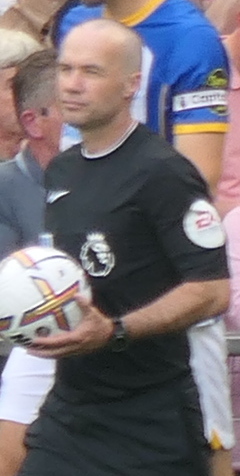
That penalty was the first goal Manchester City had conceded in the entire competition. They had come through five ties before Wembley without their net being touched, scoring 17 and letting in nothing, beating Chelsea, Arsenal, Bristol City, Burnley and Sheffield United along the way. Fernandes' penalty was also the last goal they conceded in it. City finished the 2022-23 FA Cup having scored 19 and conceded one, and that one arrived from twelve yards in the final.[3][5]

Six minutes after the interval Gundogan did it again. De Bruyne chipped a free-kick into the area, Gundogan let it drop, shifted his balance and volleyed it into the bottom corner with his weaker left foot. Two goals in a cup final, both volleys, both struck from beyond the edge of the box, both by the midfielder wearing the armband.[1][5]
United had reached Wembley by a route with a strange rhythm to it. Everton, Reading, West Ham United and Fulham were each beaten by exactly 3-1, four identical scorelines in a row, a run the FA noted in its own pre-match briefing. Then the semi-final against Brighton and Hove Albion ended goalless after extra time and went to a shoot-out that United won 7-6. Nothing about the pattern survived contact with the final.[3][5]
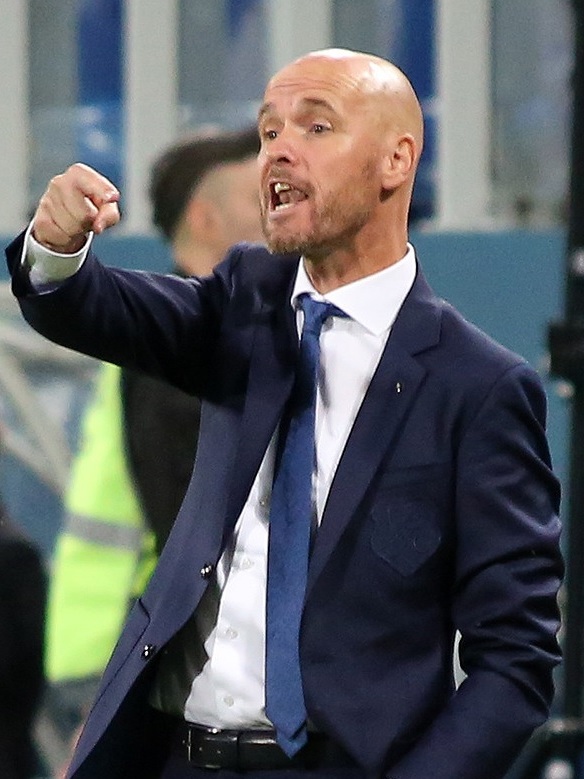
Ten Hag emptied his bench and United pressed in the added minutes without finding a way through. City had held the middle of the pitch for most of the afternoon and saw it out. It was their seventh FA Cup, and it was won with Stefan Ortega in goal rather than Ederson: the FA's own report records that Guardiola stayed loyal to his second-choice keeper and regular cup shot-stopper for the final. The treble was still standing when City walked off, with Inter Milan and a Champions League final in Istanbul a week away.[1][3]

The kick-off time told a story of its own. The police graded the fixture high risk, and the final was moved to a 15:00 start, the first FA Cup final to begin at that traditional hour since 2011. An early kick-off on a Saturday is the arrangement that lets supporters get home again by train.[5][4]
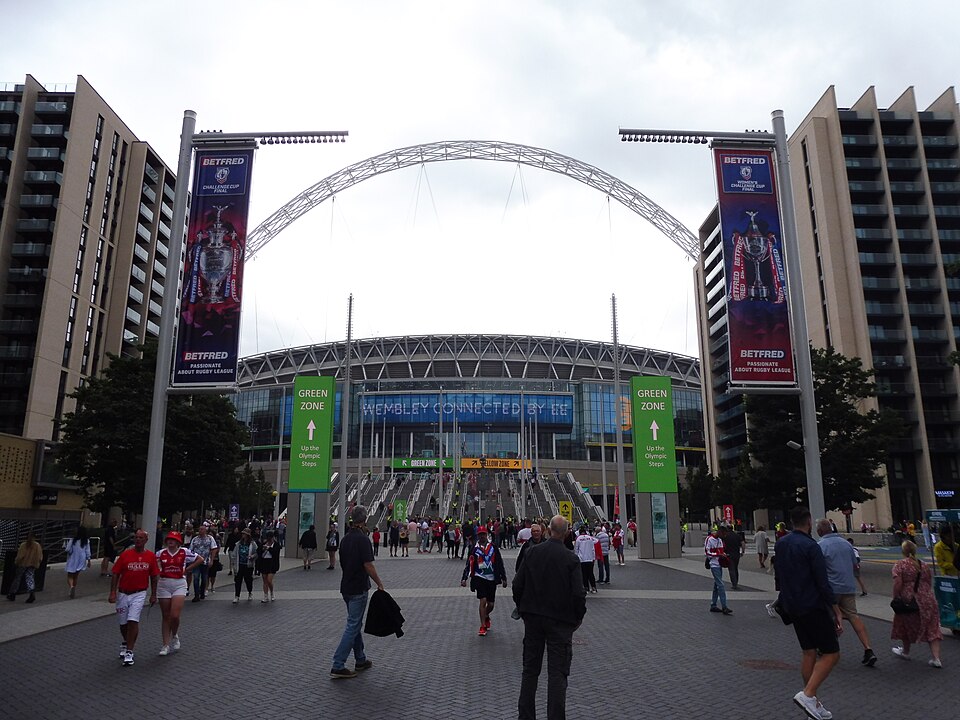
There were no trains. The RMT struck on the eve of the final and the train drivers' union struck on the day of it, and the FA's own matchday guide told ticket holders there would be no trains running at all on the Saturday and that they should organise alternative travel to Wembley by coach or car. Avanti West Coast confirmed nothing would run on the West Coast Main Line, which is the railway between Manchester and London. The attendance was 83,179. The final the year before, Chelsea against Liverpool, drew 84,897. When the same two Manchester clubs came back to Wembley the following May, on an ordinary Saturday with a working railway, 84,814 came. The first all-Manchester final in the history of the FA Cup was watched by a smaller Wembley crowd than the finals on either side of it.[4][7][8][9]
How the match unfolded
- 1'Straight from the kick-off the ball is worked out to Ilkay Gundogan on the edge of the penalty area and he volleys it first time past David de Gea. The FA timed it at 12 seconds. The first ball De Gea touches in a cup final is one he is picking out of his own net.[1][6]
- 33'Aaron Wan-Bissaka heads the ball across the face of goal and it strikes Jack Grealish on the hand. Paul Tierney awards the penalty after a video review and Bruno Fernandes sends Stefan Ortega the wrong way.[1][5]
- 51'Kevin De Bruyne chips a free-kick to the edge of the area, Gundogan lets it drop and volleys it in with his weaker left foot. Two goals in one final, both volleys, both struck from outside the box.[1][5]
- 62'Erik ten Hag makes the first change of the afternoon, Alejandro Garnacho on for Christian Eriksen as United look for pace running in behind.[5][6]
- 76'De Bruyne is withdrawn for Phil Foden, with a Champions League final in Istanbul a week away.[5][6]
- 78'Wout Weghorst replaces Jadon Sancho and United go more direct.[5][6]
- 83'Scott McTominay comes on for Victor Lindelof. Ten Hag takes off a centre-back to chase the equaliser.[5][6]
- 89'Nathan Ake on for Grealish, City shutting down the flank they had been attacking all afternoon.[5][6]
- 90'United press in stoppage time without finding the goal. Aymeric Laporte replaces Kyle Walker deep into the added minutes and City see the cup out.[5][6]
Match facts
- Date
- Saturday 3 June 2023
- Venue
- Wembley Stadium, London
- Attendance
- 83,179The gate figure, given identically by Wikipedia and by Sky Sports. It is lower than the crowd at the final before it and lower than the crowd when the same two clubs returned to Wembley for the next one. A national rail strike ran on the day of this match, with a second strike the evening before, and the FA told ticket holders to travel by coach or car.[5][6]
- Competition
- 2022-23 FA Cup
Where they played
Both sides as they lined up. Choose any player to read what they did in this final.
Select a shirt for that player's note.
Route to the final
Manchester City
- Third round: Chelsea (h) won 4-0
- Fourth round: Arsenal (h) won 1-0
- Fifth round: Bristol City (a) won 3-0
- Quarter-final: Burnley (h) won 6-0
- Semi-final: Sheffield United (Wembley) won 3-0
Manchester United
- Third round: Everton (h) won 3-1
- Fourth round: Reading (h) won 3-1
- Fifth round: West Ham United (h) won 3-1
- Quarter-final: Fulham (h) won 3-1
- Semi-final: Brighton and Hove Albion (Wembley) drew 0-0 after extra time, won 7-6 on penalties
Line-ups
Manchester City · 4-3-3
- Stefan Ortega Goalkeeper
- Kyle Walker Substituted deep in stoppage time
- Ruben Dias
- Manuel Akanji
- John Stones
- Rodri
- Ilkay Gundogan Captain. Scored both goals, each of them a volley from outside the area
- Kevin De Bruyne Supplied the free-kick for the winning goal
- Bernardo Silva
- Erling Haaland
- Jack Grealish The handball that gave United their penalty
Manchester United · 4-2-3-1
- David de Gea Goalkeeper
- Aaron Wan-Bissaka His header across goal won the penalty
- Raphael Varane
- Victor Lindelof Withdrawn as United chased the game
- Luke Shaw
- Casemiro
- Fred
- Bruno Fernandes Captain. Scored United's goal from the penalty spot
- Christian Eriksen
- Jadon Sancho
- Marcus Rashford
Trivia and detail
- Manchester City arrived at Wembley without having conceded a goal anywhere in the competition. In the Football League era, only two clubs have ever won the FA Cup without conceding at all: Preston North End in 1889 and Bury in 1903.[3]
- The record Gundogan broke belonged to Louis Saha, who scored after 25 seconds in the 2009 final for Everton against Chelsea. Saha had previously played for Manchester United, so the fastest goal in an FA Cup final passed from a former United forward to a City captain in a final between the two Manchester clubs.[1]
- This was Manchester United's 21st FA Cup final, level with Arsenal for the most appearances in the competition's history. Manchester City were making their 12th.[3]
- Erik ten Hag became the fourth different Dutch manager to take charge of a side in an FA Cup final, after Ruud Gullit, Guus Hiddink and Louis van Gaal.[3]
- It was only the third meeting between the two clubs at the current Wembley Stadium. The other two both fell in 2011, an FA Cup semi-final that City won and a Community Shield that United won.[3]
- Going into the final, United had won five of the previous six FA Cup meetings between the clubs, the most recent of them in January 2012. The one with a trophy attached went the other way.[3]
- Erling Haaland did not score. The FA had flagged in its own pre-match briefing that he could become the first Norwegian to score in an FA Cup final, and the chance went unclaimed.[3]
- Paul Tierney had walked out at Wembley on cup final day before, carrying a flag. He was an assistant referee at the 2010 final between Chelsea and Portsmouth.[2]
- The win gave Manchester City the league and FA Cup double for the second time in the club's history, after 2018-19. Only Manchester United and Arsenal had previously done the double more than once.[3]
- The final fell in the centenary year of the first FA Cup final staged at Wembley, the 1923 meeting of Bolton Wanderers and West Ham United remembered for the white horse.[5]
How well do you know the 2023 final?
Five questions. Every answer is sourced from the material on this page.
-
How quickly did Ilkay Gundogan score the opening goal of the 2023 FA Cup final?
-
Whose record for the fastest goal in an FA Cup final did Gundogan break?
Answer
Louis Saha. Saha scored after 25 seconds for Everton against Chelsea in the 2009 final. He had previously played for Manchester United.[1]
-
How many goals had Manchester City conceded in the competition before Bruno Fernandes scored his penalty?
-
Why were supporters told to reach Wembley by coach or car?
-
Which county FA does the FA's own appointment announcement give for assistant referee Scott Ledger?
What is not settled
Honesty matters more than tidiness. These details are contested or unrecorded, and we have not guessed at them:
- The county FA affiliations of three officials are contested. Wikipedia gives Scott Ledger as South Yorkshire FA, Peter Bankes as Merseyside FA and Adrian Holmes as West Yorkshire FA; the FA's own appointment announcement gives Sheffield and Hallamshire FA, Liverpool FA and West Riding FA. We publish the FA's version and record the disagreement here.
- Manchester City's shape is given as 4-3-3 by Sky Sports and by Wikipedia, and the pitch on this page is drawn from that. ESPN describes the same eleven players as a 3-2-4-1. Both are descriptions of the same team sheet, and the team sheet itself is not in doubt.
- The link between the rail strike and the size of the crowd is our own analysis. The strike, the FA's travel advice and the three attendance figures are each separately sourced; no source we found states the causal connection outright.
- Gundogan's opening goal is recorded as a first-minute goal in every scoreline convention. The FA's match report is the source for the 12 second timing; some accounts round it differently.
- The exact minute of a Gundogan effort ruled out for offside, and of Scott McTominay's shot against the woodwork, were not established to our satisfaction and are therefore not given as timed events.
- No footage has been verified for this final yet, so the television shows no signal rather than an unchecked embed.
How we know
Every claim on this page is tied to a numbered source below. These are the contemporary records behind it, each one fetched and matched word for word before publication rather than taken on trust:
- The FA official match report, 3 June 2023 · The Football Association
- The FA, 17 May 2023, match officials announcement with county FA affiliations · The Football Association
- The FA, 30 May 2023, pre-match stats briefing · The Football Association
- The FA, 1 June 2023, supporters' travel and matchday guide · The Football Association
Where a primary record and a modern account disagree, we show both rather than choosing the tidier number.
Sources
- Dazzling Gundogan double delivers Manchester City derby day Emirates FA Cup glory · The Football Association
- Paul Tierney to referee 2023 Emirates FA Cup Final · The Football Association
- FA Cup Final 2023 stats and facts: Manchester City v Manchester United · The Football Association
- Fans' matchday guide for 2023 FA Cup Final: Manchester City v Manchester United · The Football Association
- 2023 FA Cup final · Wikipedia
- Man City 2-1 Man Utd, team news, line-ups and match facts · Sky Sports
- Rail strikes: Saturday 3 June, the FA Cup Final · London TravelWatch
- 2022 FA Cup final · Wikipedia
- 2024 FA Cup final · Wikipedia