1871-72 FA Cup · The Final
1872 FA Cup Final: Wanderers 1-0 Royal Engineers
The first final
The man who invented the FA Cup wrote a book two years later, and in it you can still see the school competition he copied.
The competition began with a proposal, fifteen entrants and a silver cup barely 18 inches high. It ended with a goal from a man playing under a false name.
Saturday 16 March 1872 · Kennington Oval
What you will not find elsewhere
The idea, in the inventor's own words, two years on
Charles Alcock proposed the FA Cup, ran the Football Association, and captained the side that won the first final. In 1874 he published Football: Our Winter Game, and in describing school football he set down the system he had borrowed: "There is a challenge-cup for the best House eleven", and another for the best lower boy house eleven, competitions which he says excite great interest. That is the FA Cup in miniature, described by its author two years after he had transplanted it onto the whole of England.[8]
The famous 2,000 is an estimate, not a gate
Reference books settle on a round figure of 2,000. No gate was counted. The Morning Post saw a vast number of spectators and The Field thought the crowd much above average, while Bell's Life in London reported not a great number of visitors and blamed the shilling admission. We give the modern estimate and the contemporary disagreement together, because the honest answer is that the attendance at the first FA Cup final is unknown.[5][11][1]
The footage
The match report
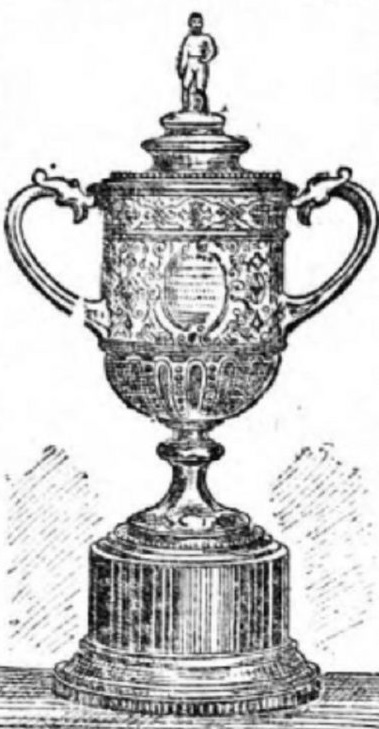
The FA Cup began as a proposal. On 20 July 1871, at a committee meeting of the Football Association, the secretary Charles W. Alcock put it to his colleagues that it was desirable that a challenge cup should be established, for which all clubs belonging to the Association should be invited to compete. His model was the knockout competition he had known as a pupil at Harrow School. Fifty clubs were eligible. Only twelve entered, three of those promptly withdrew, and six more signed up to bring the field to fifteen. Almost all were London or Home Counties sides drawn from the leisured classes, with one striking exception: Queen's Park of Glasgow, the leading club in Scotland. The trophy was a modest thing, a silver cup barely 18 inches high, made in Sheffield for 20 pounds, and later nicknamed the little tin idol.[3][5][6][8]
Wanderers reached the first final by one of the strangest routes in the competition's history. Drawn against Harrow Chequers in round one, they were handed a walkover when the Chequers withdrew. They beat Clapham Rovers 1-0 in December in a game that finished in near darkness after a late kick-off. In the third round they drew 0-0 with Crystal Palace and were sent through anyway, because an original rule allowed the committee to promote both sides after a draw at its own discretion. In the semi-final they drew 0-0 with Queen's Park, offered thirty minutes of extra time to settle it there and then, were refused, and went through when the Scots, unable to afford a second journey south, scratched. Wanderers therefore arrived at the final having won a single match and scored a single goal in four rounds.[9][10][11]
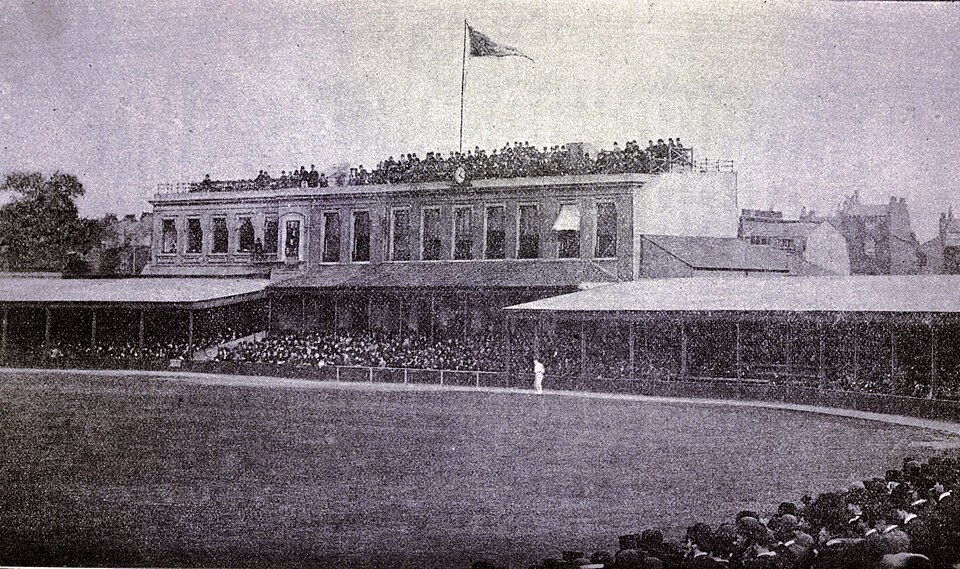
Their opponents had done it the hard way. The Royal Engineers, a team of Army officers based at Chatham, had beaten Hitchin heavily, seen off Hampstead Heathens, and needed a replay to get past Crystal Palace. They were also the better team on paper. The Engineers were the leading exponents of the Combination Game, the then novel idea of passing the ball between team-mates, at a time when almost everyone else relied on individual dribbling runs. The Field reported that the general feeling seemed to be in favour of a victory for the Sappers.[1][13][5][11]
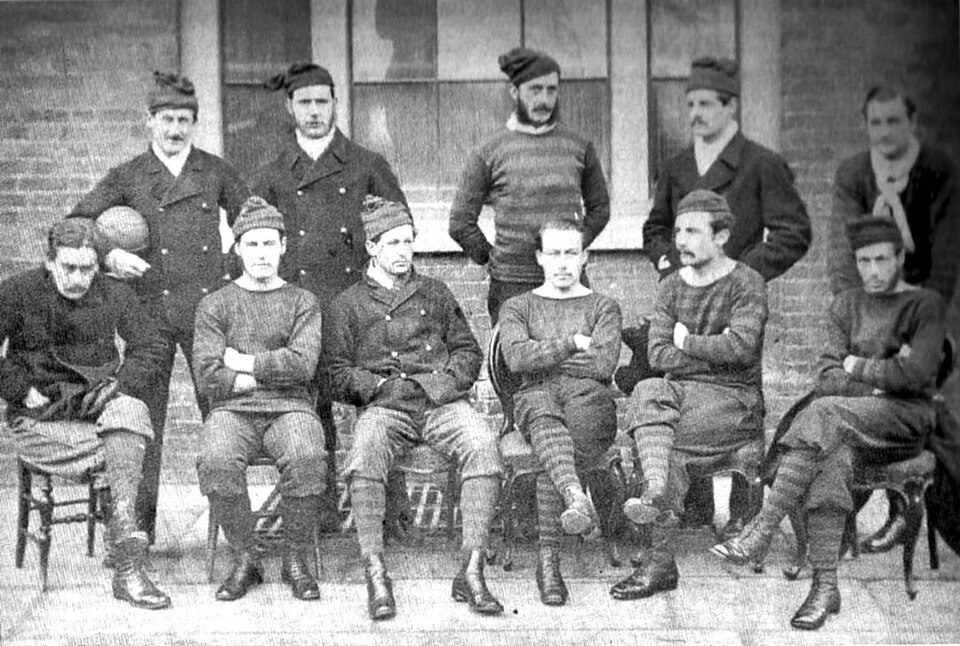
How many people watched is genuinely unclear, and this page will not pretend otherwise. The Morning Post described a vast number of spectators. The Field thought the crowd much above average, even though the fixture clashed with trials for the Oxford and Cambridge Boat Race. Bell's Life in London reported not a great number of visitors and blamed the shilling admission charge. Modern reference books settle on a round 2000, which is an estimate made long afterwards rather than anything counted on the day.[1][5][11]
The favourites never got going. Alcock won the toss and chose to defend the western goal, putting the wind and sun in the Engineers' faces, and Wanderers took command from the first exchanges, surprising onlookers by out-passing the passing team. Ten minutes in, a melee left Lieutenant Edmund Creswell with a broken collar bone. There were no substitutes in 1872 and would not be for another ninety years, so Creswell refused to leave the field and was shifted to the wing where he could do least and suffer least.[1][3][5]
Five minutes later the only goal arrived. Walpole Vidal, one of the great dribblers of the era, carried the ball forward on a long run and slipped it to Morton Betts, who finished from a tight angle. Betts was playing under the name A. H. Chequer, a nod to his membership of Harrow Chequers. A popular explanation holds that he was disguising the fact he was cup-tied, but no such rule existed that season, so the pseudonym appears to have been simple Victorian whimsy. Under the laws of the day the sides changed ends after a goal, so the Engineers now had the elements with them, and it made no difference. Alcock put the ball past Merriman on twenty minutes only for it to be struck off because Charles Wollaston had handled in the build-up.[3][6][10]
Thereafter it was the Engineers' goalkeeper who kept the score down. The Field wrote that so resolute was the front offered by Captain Merriman, and so judicious his defence, that further reverses were averted, and called his display perfect. The Field also judged the game the fastest and hardest match that had ever been seen at the Oval. The Morning Post was blunter, calling it one sided and reporting that the Engineers could never get within many yards of their opponents' quarters. Officiating was shared out in the fashion of the time: each club supplied an umpire, and the referee, Alfred Stair, was on hand only to settle disputes the umpires could not.[1][10]
There was no lap of honour and no trophy lift. Wanderers did not receive the cup until 11 April, when the president of the FA presented it at the club's annual dinner near Charing Cross. As holders, Wanderers were then granted a bye straight to the following season's final, in keeping with the literal idea of a challenge cup: the champion sits and waits to be challenged. It proved so obviously unfair that it was never applied again. Wanderers won the trophy five times in all before fading away in the 1880s as their players drifted back to their old boys' clubs. Their last recorded fixture was a defeat by Harrow School in December 1887.[11][5][4][1]
The competition they launched did rather better. It is now the oldest football competition in the world and has been played every season since. The afternoon has kept generating stories long after the men who played in it were gone: Lieutenant Alfred Goodwyn died in India in 1874 on the very day of the third final, the first FA Cup finalist to die; the beaten captain Francis Marindin went on to serve as president of the FA and to referee eight finals; and the original trophy was stolen from a shop window in Birmingham in 1895 and never recovered.[1][7][4]
Match facts
- Date
- Saturday 16 March 1872
- Venue
- Kennington Oval, London
- Attendance
- 2,000A modern estimate, not a gate count. Contemporary papers flatly disagreed: the Morning Post reported a vast number of spectators and The Field called the crowd much above average, while Bell's Life in London said there were not a great number of visitors and blamed the one shilling admission.[3][5][10]
- Competition
- 1871-72 FA Cup
Route to the final
Wanderers
- Round 1: Harrow Chequers, walkover after the Chequers withdrew
- Round 2: Clapham Rovers won 1-0, finished in near darkness
- Round 3: Crystal Palace drew 0-0, both clubs promoted under the discretionary rule
- Semi-final: Queen's Park drew 0-0, the Scots withdrew rather than fund a second trip south
Royal Engineers
- Round 1: Reigate Priory, walkover after Reigate withdrew
- Round 2: Hitchin won 5-0, against a side that could muster only eight players
- Round 3: Hampstead Heathens won (score disputed between sources)
- Semi-final: Crystal Palace drew 0-0, replay won 3-0
Line-ups
Wanderers · 1-1-8
- Reginald de Courtenay Welch Goalkeeper
- Edgar Lubbock Full back
- Albert Meysey-Thompson Half back
- C. W. Alcock Forward, captain, and the man who proposed the competition
- Edward Ernest Bowen Forward
- Alexander Bonsor Forward
- Morton Betts Forward, scored the winner under the pseudonym A. H. Chequer
- William Crake Forward
- Thomas Hooman Forward
- Walpole Vidal Forward, made the run that created the goal
- Charles Wollaston Forward
Royal Engineers · 1-2-1-7
- Capt. William Merriman Goalkeeper, and the reason the score stayed respectable
- Capt. Francis Marindin Full back, captain, later president of the FA
- Lieut. George William Addison Full back
- Lieut. Alfred Goodwyn Half back
- Lieut. Hugh Mitchell Forward
- Lieut. Edmund Creswell Forward, broke his collar bone after ten minutes and played on
- Lieut. Henry Renny-Tailyour Forward, the competition's leading scorer that season
- Lieut. Henry Bayard Rich Forward
- Lieut. Herbert Muirhead Forward
- Lieut. Edmond Cotter Forward
- Lieut. Adam Bogle Forward
Trivia and detail
- Wanderers reached the first final having won only one match and scored only one goal in four rounds. Two opponents withdrew, one tie was drawn with both clubs promoted, and their semi-final opponents scratched.[10][9][11]
- The scorer Morton Betts appeared under the pseudonym A. H. Chequer, from his Harrow Chequers membership. The popular explanation that he was hiding being cup-tied does not hold up: no such rule existed that season.[6][10][3]
- Lieutenant Edmund Creswell broke his collar bone ten minutes in and played on, moved out to the wing. Substitutes were not permitted in English football for another ninety years, so an injured man either continued or his side played short.[3][5][1]
- Wanderers had a second goal disallowed after about twenty minutes, Alcock beating Merriman but Charles Wollaston having handled in the build-up. Under the laws then in force the teams also changed ends after a goal was scored.[10][3]
- The winners did not receive the cup on the day. It was presented at the Wanderers annual dinner near Charing Cross on 11 April 1872, nearly four weeks after the match.[11][4]
- As holders, Wanderers received a bye straight to the 1873 final under the original challenge cup principle. It is the only time in FA Cup history that rule was used.[11][5]
- The first trophy cost 20 pounds, stood about 18 inches high and became known as the little tin idol. It was stolen from a Birmingham shop window in 1895 while on display after Aston Villa's win, and was never recovered.[6][7]
- Wanderers offered Queen's Park thirty minutes of extra time to settle their drawn semi-final on the spot. Queen's Park refused, then withdrew from the competition altogether because they could not afford a second trip from Glasgow.[2][9][5]
- The only known surviving winner's medal from the 1872 final, bought by a jeweller in a house clearance in the 1950s, sold at auction in London in 2010 for 70500 pounds to the Professional Footballers Association.[10][4]
- Henry Renny-Tailyour of the Royal Engineers was the inaugural competition's leading scorer with three goals, scored twice when the Engineers finally won the cup in 1875, and remains the only person to have represented Scotland at both association football and rugby union.[2][13]
- In 2012 a revived Wanderers club met the Royal Engineers at the Oval to mark the 140th anniversary of the first final.[15][14]
How well do you know the 1872 final?
Five questions. Every answer is sourced from the material on this page.
-
Who scored the only goal of the first FA Cup final?
-
Where was the 1872 final played?
-
Why did Queen's Park withdraw after their drawn semi-final with Wanderers?
-
What happened to Lieutenant Edmund Creswell early in the final?
-
When did Wanderers actually receive the trophy?
What is not settled
Honesty matters more than tidiness. These details are contested or unrecorded, and we have not guessed at them:
- The attendance figure of 2000 is a modern estimate and is not attested by any contemporary count. The papers of the day contradicted each other directly, and the true gate is unknown.
- Kit colours are not firmly established for this match. No photographs of the 1872 Wanderers side survive and sources disagree between orange, violet and black and pink, cerise and black. The colours used on this page are for identification only and are not a claim about what was worn.
- Several sources print both line-ups in alphabetical order after the goalkeeper rather than by position, which has led some readers to conclude that Francis Marindin kept goal for the Royal Engineers. He did not. He was a full back and the captain, and William Merriman kept goal.
- The Royal Engineers third round score against Hampstead Heathens is disputed between sources, given variously as 2-0 and 3-0.
- Spellings and initials vary between sources: Creswell or Cresswell, Albert Thompson or Albert Meysey-Thompson, W. P. Crake or William Crake.
- The goal is consistently reported as coming after fifteen minutes, but timekeeping in 1872 was informal and the figure should be read as approximate.
- Obituaries of Thomas Hooman published in 1938 credited him with the winning goal. Every contemporary report names Betts, and the same obituaries contain other demonstrable errors, so this is recorded as a documented mistake rather than a live alternative.
How we know
Every claim on this page is tied to a numbered source below. These are the contemporary records behind it, each one fetched and matched word for word before publication rather than taken on trust:
- Football: Our Winter Game (London, 1874), on school house football · Charles W. Alcock, London, 1874
Where a primary record and a modern account disagree, we show both rather than choosing the tidier number.
Sources
- 1872 FA Cup final · Wikipedia
- 1871-72 FA Cup · Wikipedia
- The first FA Cup Final: Wanderers 1-0 Royal Engineers · The Football Association
- The History of The FA Cup · The Football Association
- The FA Cup Finalists 1872-1879 · Historical Football Kits
- The First FA Cup Final 1872 · Soccerhistory.co.uk
- Silversmiths and FA Cups · SportingLandmarks
- Football: Our Winter Game · Charles W. Alcock, London, 1874
- England - FA Challenge Cup 1871-72 · Rec.Sport.Soccer Statistics Foundation
- FA Cup 1871-72 results · Steve's Football Stats
- 1872 FA Cup Final: Wanderers vs Royal Engineers · FA Cup Finals (fa-cupfinals.co.uk)
- FA Cup 1871/1872 - Final · worldfootball.net
- Royal Engineers AFC - history of the old football club · Football History (footballhistory.org)
- Wanderers FC - history of the old football club · Football History (footballhistory.org)
- The Oval - the first home of soccer · Soccerphile