2001-02 FA Cup · The Final
2002 FA Cup Final: Arsenal 2-0 Chelsea
The double, part one
A final remembered for two spectacular goals was, on the record of the day, a dull match watched by the smallest British television audience a cup final had ever drawn, and the FA's own report of it cannot agree with itself on the minute of either goal.
Arsenal won the 2002 FA Cup final 2-0 against Chelsea at Cardiff's Millennium Stadium, Ray Parlour and Freddie Ljungberg scoring two of the finest goals seen in a final, to take the first half of a league and cup double completed at Old Trafford four days later.
Saturday 4 May 2002 · Millennium Stadium
What you will not find elsewhere
The FA's own report says 2.3 billion people watched. The measured British audience was the smallest a cup final had ever drawn
The Football Association's match page for this final, still online through the Internet Archive, says the two goals were scored on a day when 2.3 billion people around the world were watching. Set that beside the audience that was actually measured. The overnight figures reported by the Guardian gave BBC One an average of 4.1 million viewers for its coverage, 6.3 million for the match itself and a peak of 7.4 million: a record low for the event, and beaten two nights later by the final of the world snooker championship on BBC Two. The FA's spokesman defended the figures as pretty good for a hot bank-holiday Saturday. The global claim was never a measurement of anything; it is the kind of number that gets repeated because nobody checks it. This page repeats the measured figures and not the billions.[1][14][21]
69 or 70, 79 or 80: the FA's page gives both answers on the same screen
Every live account of the match timed Parlour's goal at 69 minutes and Ljungberg's at 79: the BBC's clockwatch, the BBC's match report, the Observer's Paul Wilson, and the prose of the FA's own report, which says the deadlock was broken on 69 minutes and the second came on 79. Yet the goals line at the foot of that same FA page reads Parlour 70, Ljungberg 80, and those are the minutes the RSSSF archive, the standard reference work and the FA's 2014 article on Parlour's goal all print. The statistical record has rounded the live clock up by a minute on both goals and the governing body has published both versions without noticing. This record carries 70 and 80 in its structured data, as the figures the official goals line and the statistical archives agree on, and shows the live timings against each goal.[1][4][3][10][19][2]
Six substitutions, four sources, and only two minutes everyone agrees on
Lay the substitution minutes out. Terry for Babayaro: 45 on the BBC's report and the FA's page, 46 on RSSSF, at the interval on the BBC's live log. Zola for Hasselbaink: 68 on the BBC report, the FA and RSSSF, 67 on the live log. Edu for Bergkamp: 72 on the report, the FA and RSSSF, 71 on the live log. Zenden for Melchiot: 76 on the report, the FA and the live log, 77 on RSSSF. Kanu for Henry: 81 on the report, the FA and RSSSF, 80 on the live log. Keown for Wiltord: 90 on all three, 89 in the standard reference work. The live log runs about a minute behind the written records on every change it times, exactly the pattern found in the 2001 final at the same ground, and RSSSF drifts a minute the other way twice. The record uses the minute the BBC report and the FA agree on.[3][1][19][4][21]
Ljungberg scored in consecutive finals, and said why it mattered to him
A year after his goal at the same ground had been overturned by Michael Owen, Freddie Ljungberg scored again in Cardiff, curling the second goal past Carlo Cudicini after running from inside his own half. His words afterwards, verified against the BBC's page, were not about the goal but about the memory it replaced: you don't want to be remembered for losing two finals in a row. He is the first player to score in successive FA Cup finals since Tottenham's Bobby Smith in 1961 and 1962 according to the BBC, a claim this page records as the BBC's rather than its own.[5][1]
The footage
The match report
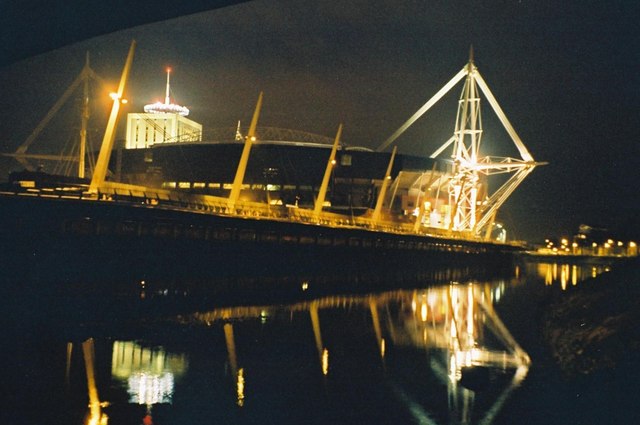
The 121st FA Cup final was played on Saturday 4 May 2002 at the Millennium Stadium in Cardiff, in front of 73,963 spectators, on a sunny bank-holiday afternoon. It was the second final held in Wales while Wembley was rebuilt, and the first all-London final since Tottenham beat Chelsea in 1967. Arsenal were in their 15th final, one year after losing the last one to Michael Owen's two late goals, and Chelsea in their seventh. The predicted traffic chaos on the M4 never came: South Wales Police reported most supporters in the city by midday, and both clubs flew to Cardiff on chartered aircraft.[20][3][4][17][21][7]
Arsenal arrived unbeaten domestically since December and needing only a point at Old Trafford the following Wednesday to win the league. Arsene Wenger restored David Seaman in goal in place of Richard Wright, who had played in every earlier round, recalled Sol Campbell after a hamstring injury, and chose Ray Parlour ahead of Edu beside Patrick Vieira because a London derby with a fractious recent history called for his combative qualities. Chelsea's selection was shaped by medical bulletins. Jimmy Floyd Hasselbaink was passed fit despite a calf strain that would leave him a passenger; Graeme Le Saux recovered from a similar injury; and John Terry, the semi-final match-winner, woke with a virus that affected his balance and was named only among the substitutes, with William Gallas partnering Marcel Desailly.[3][11][10][21][4]
The first half was poor. Le Saux was booked in the second minute for a high challenge on Lauren, and for half an hour Chelsea narrowed the pitch and Arsenal found no rhythm. Frank Lampard, who outplayed Vieira for long spells, forced the first save from Seaman after Vieira gave the ball away in the 17th minute. Vieira answered with the pass of the afternoon, a long ball that put Dennis Bergkamp clear with Carlo Cudicini off his line, but the Dutchman, playing his first FA Cup final at the third attempt, headed wide. The best chance fell to Lauren, who headed Sylvain Wiltord's cross over from close range, and the half ended goalless with a Chelsea one-two stopped by an offside flag the Guardian thought wrong.[4][10][11][3]
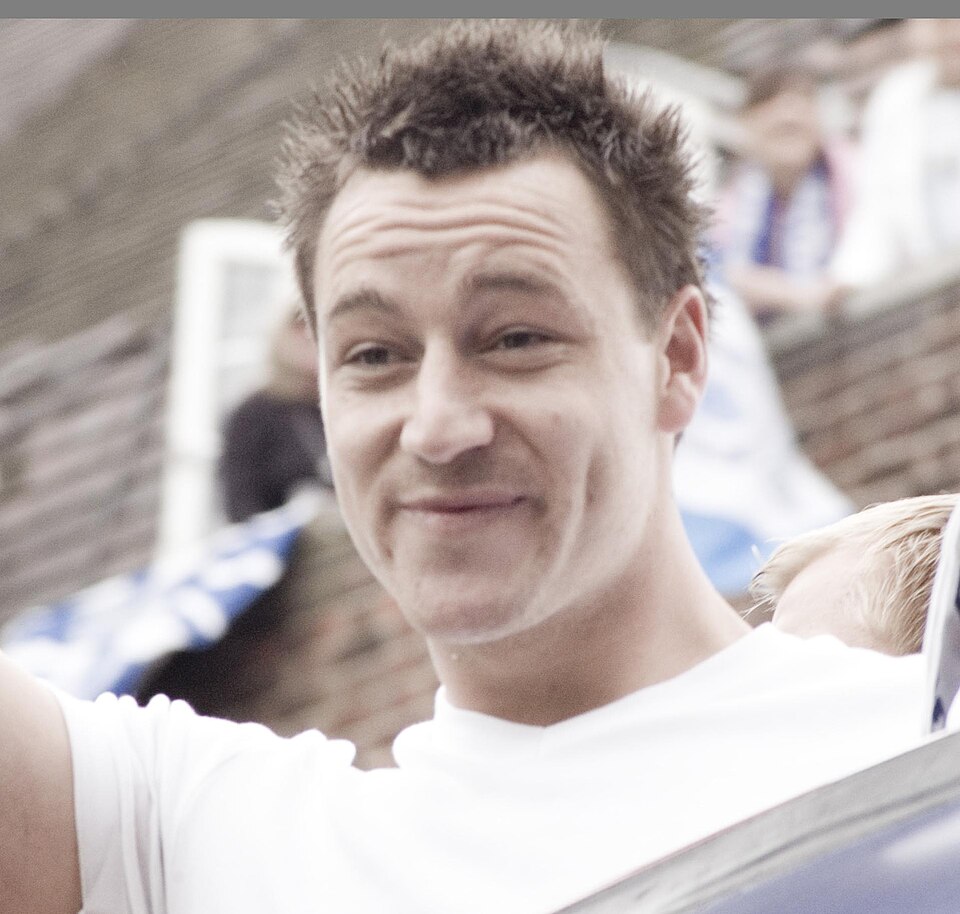
Terry came on at half-time for the injured Celestine Babayaro, and within a minute of the restart Cudicini had to save from Thierry Henry six yards out. That scare woke Chelsea. For twenty minutes they were the better side: Seaman dived backwards to tip over a dipping shot from Eidur Gudjohnsen in the 57th minute, Le Saux scooped Jesper Gronkjaer's cut-back over the bar from the middle of the goal, and Tony Adams stretched out a leg to take the ball off Hasselbaink's toe. The Guardian's David Lacey called Le Saux's miss the pivotal moment of the match.[4][11][10][1]
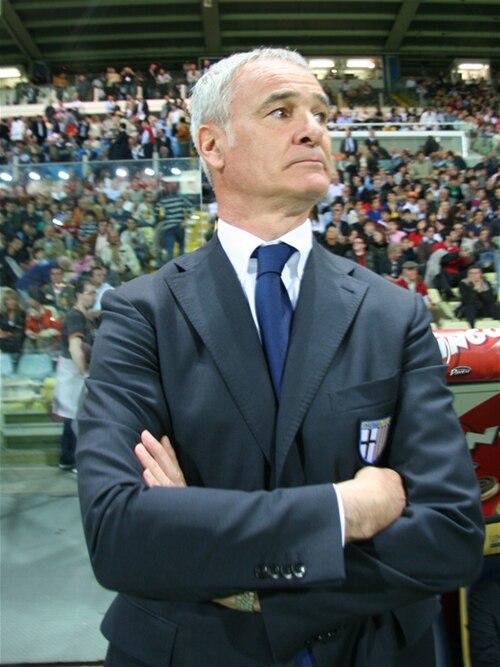
Claudio Ranieri replaced Hasselbaink with Gianfranco Zola, and Arsenal scored almost at once. Adams's quick pass out of defence found Wiltord, whose reverse pass sent Parlour into the Chelsea half with three team-mates streaming left. The defence went with them. Parlour kept the ball, cut inside, and from around 25 yards curled a right-footed shot over the diving Cudicini into the top corner. The Observer called it one of the best strikes seen in a cup final; Parlour said afterwards that he knew it was going in and that he did not score many like it.[10][11][4][5][1]
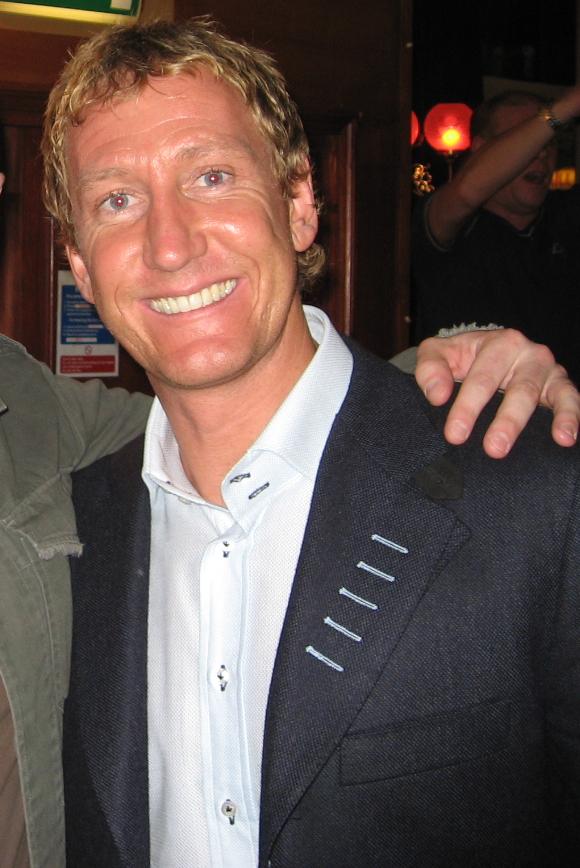
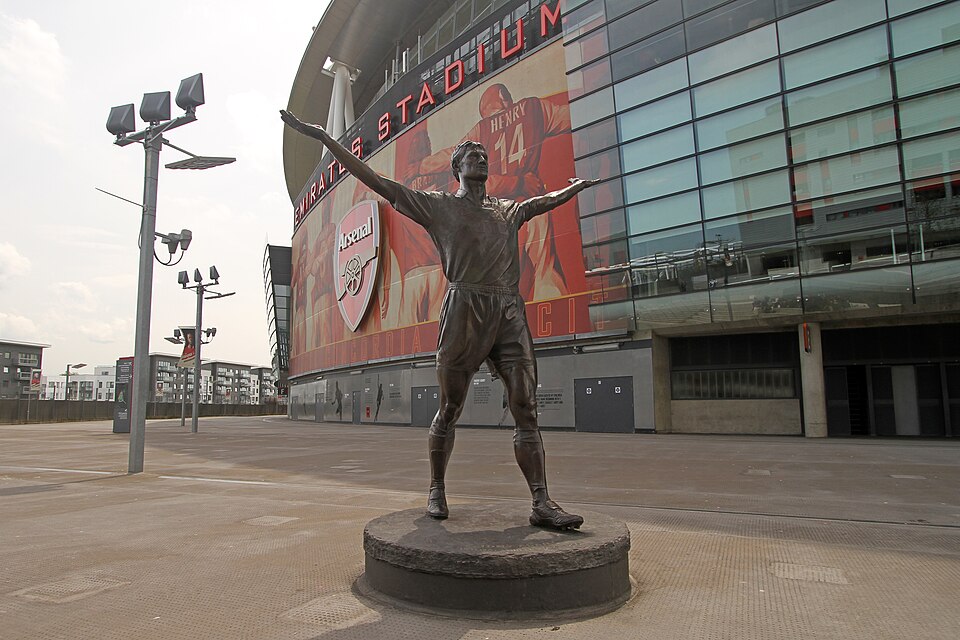
Wenger sent on Edu for Bergkamp to protect the lead, Henry and Terry were booked for squaring up to each other, and Cudicini made an even better save from Henry after Ashley Cole had raced clear. Then Ljungberg settled it. Receiving the ball from Edu inside his own half, he ran at the retreating defence, shook off Terry's clawing challenge on the edge of the area and curled the ball wide of Cudicini and back inside the far post. The BBC noted that he was the first man to score in successive finals since Bobby Smith for Tottenham forty years earlier. Chelsea's frustration ended with Gudjohnsen booked for a foul on Parlour in added time.[4][11][10][3][1]
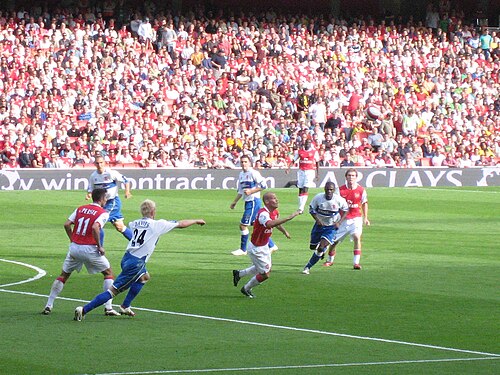
Adams collected the trophy for the third time in a 19-year career and shared the lifting of it with Vieira. Wenger promised the double would follow on Wednesday; Ljungberg said nobody wanted to be remembered for losing two finals in a row; Le Saux called the second goal a kick in the teeth. Lampard hoped his performance against Vieira would win him a World Cup place, and Terry, still smarting at being left out, said he had felt like crying. Alan Hansen wrote that the better side had won, and that Adams, who was considering retirement, was crazy to think of giving up.[5][13][6][21]
Four days later a Wiltord goal at Old Trafford gave Arsenal the league title and their third double, the second under Wenger. The final itself was shown live by BBC One and Sky Sports and drew the smallest audience a cup final had ever had: an average of 4.1 million for the coverage, 6.3 million for the match and a peak of 7.4 million, fewer than watched the world snooker championship final finish on BBC Two two nights later. Chelsea lost their last league game at home to Aston Villa and finished sixth.[15][14][21]
How the match unfolded
- 2'Graeme Le Saux is booked for a high challenge on Lauren, whose chest takes the studs. The Observer thought the contact accidental and Lauren's reaction theatrical.[4][3][10]
- 6'Ray Parlour escapes a booking for a foul; the BBC's log says on Celestine Babayaro, the Observer says on Frank Lampard.[4][10]
- 17'Patrick Vieira gives the ball away and Lampard's shot is saved by David Seaman, diving to his left.[4][10]
- 21'Vieira's long ball beats the offside trap and Dennis Bergkamp, with Carlo Cudicini off his line, heads wide. The FA's page times it at 22.[4][3][1][11]
- 26'Vieira is booked for a foul on Eidur Gudjohnsen, the first Arsenal card.[4][3]
- 36'The best chance of the half: Wiltord turns and crosses from the left and Lauren, unmarked in the six-yard box, heads over. The BBC's report and the FA time it at 37.[4][3][1][11]
- 43'Jimmy Floyd Hasselbaink and Gudjohnsen carve Arsenal open with a one-two, but the flag is up; the Guardian called it an aberrant offside decision.[4][11]
- 45'Half-time, 0-0. John Terry, left out with a virus, replaces the injured Babayaro at the interval; William Gallas moves to left back.[4][3][11][21]
- 46'Henry collects the ball six yards out and Cudicini makes a fine save from his side-footed shot.[4][1][10]
- 57'Seaman dives backwards to tip Gudjohnsen's dipping shot over the bar, his one difficult save of the afternoon.[4][6][10]
- 59'Jesper Gronkjaer sets up Le Saux in the middle and he blasts over. The Guardian's writers put this on the hour and called it the pivotal moment.[4][11][10]
- 68'Gianfranco Zola replaces the limping Hasselbaink. The BBC's live log has the change at 67.[3][1][19][4]
- 70'Goal. Adams's quick pass finds Wiltord, whose reverse pass releases Parlour in the Chelsea half. The defence backs off, Parlour cuts inside and curls a right-footed shot from around 25 yards over Cudicini into the top corner. Arsenal 1-0 Chelsea. The live accounts time it at 69; the FA's goals line, RSSSF and the FA's later article say 70.[1][19][4][11][2]
- 72'Edu replaces Bergkamp as Wenger protects the lead.[3][1][19]
- 75'Henry and Terry are both booked after a face-to-face confrontation.[4][3]
- 76'Boudewijn Zenden replaces Melchiot, Chelsea's third change.[3][1][4]
- 78'Ashley Cole races clear and Henry's follow-up brings another excellent save from Cudicini.[4][1][10]
- 80'Goal. Ljungberg receives the ball from Edu in his own half, runs at the defence, shakes off Terry's clawing challenge and curls a shot from the edge of the area past Cudicini into the far corner. Arsenal 2-0 Chelsea. The live log and the FA's prose say 79.[1][19][4][11][10]
- 81'Kanu replaces Henry.[3][1][19]
- 90'Martin Keown replaces Wiltord and three added minutes are signalled.[4][3][1]
- 91'A frustrated Gudjohnsen is booked for a foul on Parlour.[4][3]
- 92'Full-time: Arsenal 2-0 Chelsea, and the eighth FA Cup in Arsenal's history.[4][11]
Match facts
Where they played
Both sides as they lined up. Choose any player to read what they did in this final.
Select a shirt for that player's note.
Route to the final
Arsenal
- Third round: Watford (a) won 4-2
- Fourth round: Liverpool (h) won 1-0 - the holders beaten, with three players sent off
- Fifth round: Gillingham (h) won 5-2
- Quarter-final: Newcastle United (a) drew 1-1
- Quarter-final replay: Newcastle United (h) won 3-0
- Semi-final: Middlesbrough (Old Trafford) won 1-0 - a Gianluca Festa own goal
Chelsea
- Third round: Norwich City (a) drew 0-0
- Third round replay: Norwich City (h) won 4-0
- Fourth round: West Ham United (h) drew 1-1
- Fourth round replay: West Ham United (a) won 3-2 - John Terry's stoppage-time header
- Fifth round: Preston North End (h) won 3-1
- Quarter-final: Tottenham Hotspur (a) won 4-0
- Semi-final: Fulham (Villa Park) won 1-0 - a John Terry header
Line-ups
Arsenal · 4-4-2
- David Seaman Goalkeeper, restored in place of Richard Wright, who had played every earlier round. One difficult save, tipping over Gudjohnsen's dipping shot
- Lauren Right back. Took Le Saux's studs in the chest in the second minute and headed the best chance of the first half over the bar
- Sol Campbell Centre back, fit again after a hamstring injury and preferred to Keown. Two important challenges on Hasselbaink
- Tony Adams Centre back and captain. His quick pass began the move for the first goal; the Guardian's David Lacey made him man of the match
- Ashley Cole Left back. His late run set up the chance Cudicini saved from Henry just before the second goal
- Sylvain Wiltord Right midfield. His reverse pass released Parlour for the first goal; sliced a good chance wide; replaced by Keown at the end
- Ray Parlour Central midfield, chosen ahead of Edu for his combative qualities. Scored the opening goal from around 25 yards
- Patrick Vieira Central midfield. Booked, outplayed by Lampard for long spells, but his long ball created Bergkamp's chance
- Freddie Ljungberg Left midfield. Scored the second goal with a run from his own half, and became the first man to score in successive finals for forty years
- Dennis Bergkamp Deep-lying forward, in his first FA Cup final at the third attempt. Headed wide when clear and was replaced by Edu
- Thierry Henry Centre forward. Denied twice by Cudicini and booked after squaring up to Terry; replaced by Kanu
Chelsea · 4-4-2
- Carlo Cudicini Goalkeeper. Two important saves from Henry; got a touch to Parlour's shot but could not keep it out
- Mario Melchiot Right back. Pushed by Adams at the first corner; his looping header troubled Seaman; replaced by Zenden
- William Gallas Centre back, preferred to Terry. Moved to left back after the interval
- Marcel Desailly Centre back and captain. Dominant, with surging runs from the back, but caught out when Parlour scored
- Celestine Babayaro Left back. Injured in the first half and replaced by Terry at half-time
- Jesper Gronkjaer Right midfield. Made inroads against Cole and set up Le Saux's big chance on the hour
- Frank Lampard Central midfield. Outshone Vieira and forced Seaman's first save; the Guardian's best Chelsea player
- Emmanuel Petit Central midfield, facing his former club. Controlled long spells with Lampard before fading
- Graeme Le Saux Left midfield, passed fit after a calf injury. Booked in the second minute; scooped the pivotal chance over the bar
- Eidur Gudjohnsen Centre forward, Chelsea's liveliest attacker. Forced Seaman's best save; booked late on
- Jimmy Floyd Hasselbaink Centre forward, risked with a calf injury and largely a passenger. Replaced by Zola
Trivia and detail
- Chelsea were led out by Roberto Di Matteo, scorer in their 1997 and 2000 final wins, who had been forced to retire through injury earlier in the season.[4][21]
- Chelsea drew the south dressing room after a coin toss. No team had yet won a final at the stadium from it, and the Observer opened its report by noting the jinx still held.[10][21]
- Terry had woken with a virus that affected his balance and, having passed a morning fitness test, was still left on the bench. He said he had an injection, told the manager he was fully fit, and felt like crying when left out.[13][3]
- Bergkamp was starting his first FA Cup final at the third attempt: he missed the 1998 final through injury and came on only for the last minute in 2001.[10]
- The Guardian ranked the match's officials, and named Adams rather than the official choice, Ljungberg, as its man of the match; its player ratings put Lampard above every Arsenal midfielder.[11][12][21]
- Arsenal's players wore Hugo Boss suits for the pre-match walkabout and Chelsea's wore Armani, a contrast a branding consultant used in the Guardian that morning to cast Arsenal as Harvey Nichols to Chelsea's Harrods.[16][21]
- Three hundred Arsenal supporters chartered a Boeing 747 to fly to Cardiff, and both clubs flew in on chartered British Airways aircraft.[7]
- Chelsea's cup run included two replays and three goals from Terry: the stoppage-time winner at West Ham and the only goal of the semi-final against Fulham, headed through the legs of Louis Saha.[19][18][9]
- Arsenal's fourth-round win over the holders Liverpool saw Martin Keown, Bergkamp and Jamie Carragher all sent off in the space of ten minutes, Carragher for throwing a coin back into the crowd.[21][19]
- Richard Wright kept goal in every round of the cup run before Seaman was restored for the final; Wright watched from the bench.[3][21]
- The BBC website's own poll after the match preferred Ljungberg's goal to Parlour's by roughly three votes to two, from more than eighteen thousand cast.[4]
- Lee Dixon, an unused substitute, addressed the crowd at Islington Town Hall during the double parade after ending a fourteen-year Arsenal career.[8]
How well do you know the 2002 final?
Five questions. Every answer is sourced from the material on this page.
-
Who scored Arsenal's first goal in the 2002 final, and how?
-
What record did Ljungberg's goal give him, according to the BBC?
Answer
First player to score in successive FA Cup finals since Bobby Smith in the early 1960s. Ljungberg had scored Arsenal's goal in the 2001 final too; the BBC's report said he was the first man to do it in successive finals since Tottenham's Bobby Smith forty years earlier.[3]
-
Why did John Terry start the final on the bench?
-
What happened four days after the final?
-
How did the final's television audience compare with previous finals?
What is not settled
Honesty matters more than tidiness. These details are contested or unrecorded, and we have not guessed at them:
- Attendance: the BBC's match report and the standard reference work print 73,963; the RSSSF archive prints 73,965. The FA's own page gives no figure.
- Goal minutes: the BBC's live log, the BBC's report, the Observer and the prose of the FA's page give 69 and 79; the FA's goals line, RSSSF, the standard reference work and the FA's 2014 article give 70 and 80. See the originality item. The BBC's report also says Ljungberg scored nine minutes after Parlour, which fits neither pair.
- Substitution minutes differ by a minute between the BBC's live log, the BBC's report, the FA's page and RSSSF on five of the six changes; the record uses the minute on which the BBC report and the FA agree.
- Bergkamp's headed chance is timed at 21 by both BBC accounts and at 22 by the FA. Lauren's header is 36 on the BBC's live log and 37 on the BBC report and the FA's page.
- The player Parlour fouled early on is Babayaro in the BBC's live log and Lampard in the Observer.
- The referee's county is given as Leeds by the BBC and West Yorkshire by the standard reference work; we print the name alone.
- Chelsea's captain is given as Desailly by the standard reference work's line-up; no contemporary report we could fetch names the captain. Di Matteo led the team out but was not playing.
- The FA's page claims a worldwide audience of 2.3 billion. No measurement supports it and it is not repeated as fact; see the originality item.
- The pre-match anthem singers, the assistant referees and the fourth official are given only by the standard reference work, citing sources we could not fetch.
- No footage from a rightsholder has been verified for this final yet, so the television shows no signal rather than an unchecked embed.
How we know
Every claim on this page is tied to a numbered source below. These are the contemporary records behind it, each one fetched and matched word for word before publication rather than taken on trust:
- The FA's own match page for the 2002 final: report, both line-ups with substitution minutes, goals · The Football Association (archived by the Internet Archive)
- TheFA.com, 15 May 2014, on Parlour's goal for the 2014 final programme · The Football Association
- Paul Wilson's match report, 5 May 2002 · The Observer
- David Lacey's match report, 6 May 2002, naming his own man of the match · The Guardian
- Jon Brodkin's player ratings, 6 May 2002 · The Guardian
- Jon Brodkin, 6 May 2002, with Lampard's and Terry's words · The Guardian
- Claire Cozens on the overnight television ratings, 7 May 2002 · The Guardian
- David Lacey on the title-clinching win at Old Trafford, 9 May 2002 · The Guardian
- Branding consultant's comparison of the clubs, 4 May 2002 · The Guardian
- David Lacey's semi-final report, Old Trafford, 15 April 2002 · The Guardian
- Jon Brodkin's semi-final report, Villa Park, 15 April 2002 · The Guardian
Where a primary record and a modern account disagree, we show both rather than choosing the tidier number.
Sources
- Glory for Gunners · The Football Association (archived by the Internet Archive)
- FA Cup Final classic goals: It's only Ray Parlour... · The Football Association
- Arsenal lift FA Cup · BBC Sport
- FA Cup final clockwatch · BBC Sport
- Wenger confident of double · BBC Sport
- Arsenal's golden oldies · BBC Sport
- Cup final traffic chaos averted · BBC News
- Vieira confirms his future · BBC Sport
- Kanoute saves Hammers · BBC Sport
- Ray of light before Freddie's final flourish · The Observer
- Arsenal rise halfway to heaven · The Guardian
- How was it for them? The stars of Cardiff rated player-by-player · The Guardian
- Lampard stakes World Cup claim · The Guardian
- Is snooker the new football? · The Guardian
- Arsenal rejoice in theatre of dreams · The Guardian
- Why it's Brand Arsenal versus Lifestyle Chelsea · The Guardian
- Festa gift fires Gunners into final · The Guardian
- Terry bundles the Blues to Cardiff · The Guardian
- England FA Challenge Cup 2001-02 · RSSSF
- England FA Challenge Cup Finals · RSSSF
- 2002 FA Cup final · Wikipedia