1999-2000 FA Cup · The Final
2000 FA Cup Final: Chelsea 1-0 Aston Villa
The last final under the Twin Towers
The last final under the Twin Towers is remembered for a goalkeeper's fumble, but the contemporary record is a more interesting document than that: a match the statisticians scored two different ways, a winning goal that the sources cannot time to the minute, and a set of bookings that the reference work and the reporters place half an hour apart.
Chelsea won the last FA Cup final at the old Wembley 1-0 against Aston Villa on 20 May 2000, Roberto Di Matteo scoring in the second half after David James fumbled Gianfranco Zola's free-kick, in a match the contemporary press filed among the drabbest the stadium had seen.
Saturday 20 May 2000 · Wembley Stadium
What you will not find elsewhere
Villa had more than twice the attempts and one on target: two statisticians counted the same match and agree on nothing but the shape
Two independent counts of the final survive. The Guardian printed Carling Opta's figures on 22 May 2000: Villa 1 shot on target, 5 off target and 7 blocked, Chelsea 3, 3 and 0, so 13 attempts to 6, with corners 5-1 to Villa, fouls 14-16, offsides 3-8 and possession 44-56 against them. The People's table, reproduced by Wikipedia, gives goal attempts 11-5, corners 3-2, fouls 14-17, offsides 2-5 and the same 2-3 yellow cards. Add Opta's three shot categories and you get 13 and 6; The People counted 11 and 5. Not one of the attempt, corner, foul or offside figures matches between the two sheets, yet both describe the same match: the side that lost had far more of the ball in the box and put one effort on target, while the side that won had three on target and scored from one of them. That is the only fact about the afternoon the numbers agree on.[6][12]
The winning goal is timed at 72 by the people who were there and 73 by the people who wrote it up later
The BBC's match report says Di Matteo scored after 72 minutes, in the 72nd Wembley final; Colin Malam's Telegraph report says the lead came after 72 minutes; RSSSF's archive lists the goal at 72. Wikipedia's infobox, Chelsea's own 2024 retrospective and the header of the page that hosts Malam's report all say 73. The Guardian's two reporters are on either side: Paul Wilson wrote that the goal came 72 minutes later than Di Matteo's 43-second strike of 1997, which lands in the 73rd minute, and David Lacey placed it with 17 minutes remaining. We record 72, the figure of the three contemporary logs, and print the disagreement rather than pick the tidier number.[1][8][10][4][5][12][9]
Wikipedia books Poyet in the 90th minute; the Observer's reporter saw it before the hour
The reference work's team sheet gives Gus Poyet a yellow card in the 90th minute and George Boateng one in the same minute. Paul Wilson, reporting for the Observer from Wembley, wrote that after Poyet had become the second Chelsea player cautioned, for a foul on Boateng, Weah had the chance to make amends on the hour, which places the booking before the 60th minute and makes Poyet the second Chelsea name in the book after Melchiot, with Wise's first-half caution making three. Malam's Telegraph report confirms the three Chelsea cautions but times none of them. Both Opta and The People counted three yellow cards for Chelsea and two for Villa, so the totals are not in doubt; the minute is. We list the caution in Poyet's line-up note without a time.[12][4][8][6]
The last final under the twin towers, in the words of the man who had covered forty of them
David Lacey's report in the Guardian did not mourn the old Wembley. Writing of a stadium about to be demolished, he called the stadium of legends the stadium of dog-ends, a verdict verified against the page it was printed on. It is a useful corrective to the nostalgia that has attached itself to this final since: on the day, the ground's condition and a match settled by a goalkeeping error drew as much comment as the occasion.[5][4]
The footage
The match report
The 119th FA Cup final was played on Saturday 20 May 2000 at Wembley in front of 78,217 spectators. It was the 72nd final at the stadium and the last: Wembley closed five months later for rebuilding, and the final moved to Cardiff for six years. The Observer's reporter noted fireworks and about a thousand Tannoy mentions of the Twin Towers' impending doom, and the Guardian's David Lacey, who placed the match in the bottom six of the 72, called the stadium of legends the stadium of dog-ends.[11][8][12][4][5]
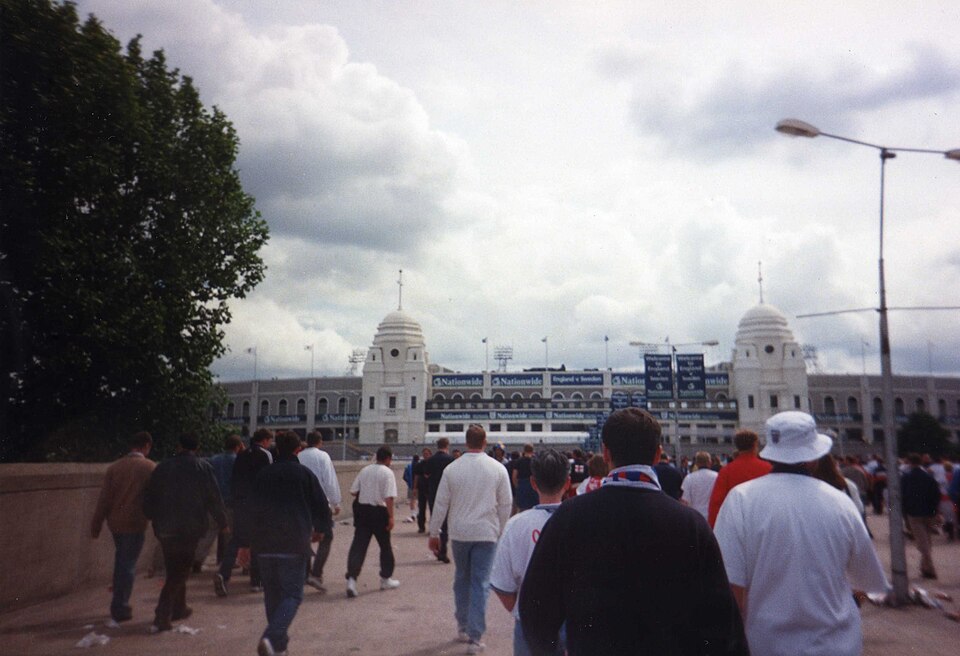
Aston Villa were in their first final since they beat Manchester United in 1957, and their supporters were the noisier by some distance. Chelsea had been there three years earlier, when Di Matteo scored after 43 seconds against Middlesbrough. The two line-ups told a story of the era: Villa's included eight Englishmen, Chelsea's one, the captain Dennis Wise, and Chelsea's bench had no place for Chris Sutton, the striker bought for 10 million pounds the previous summer. Gianluca Vialli also left out Tore Andre Flo, pairing Gianfranco Zola with George Weah, 33 and on loan from AC Milan. Mario Melchiot came in at right back for the injured Albert Ferrer.[8][4][5][12]
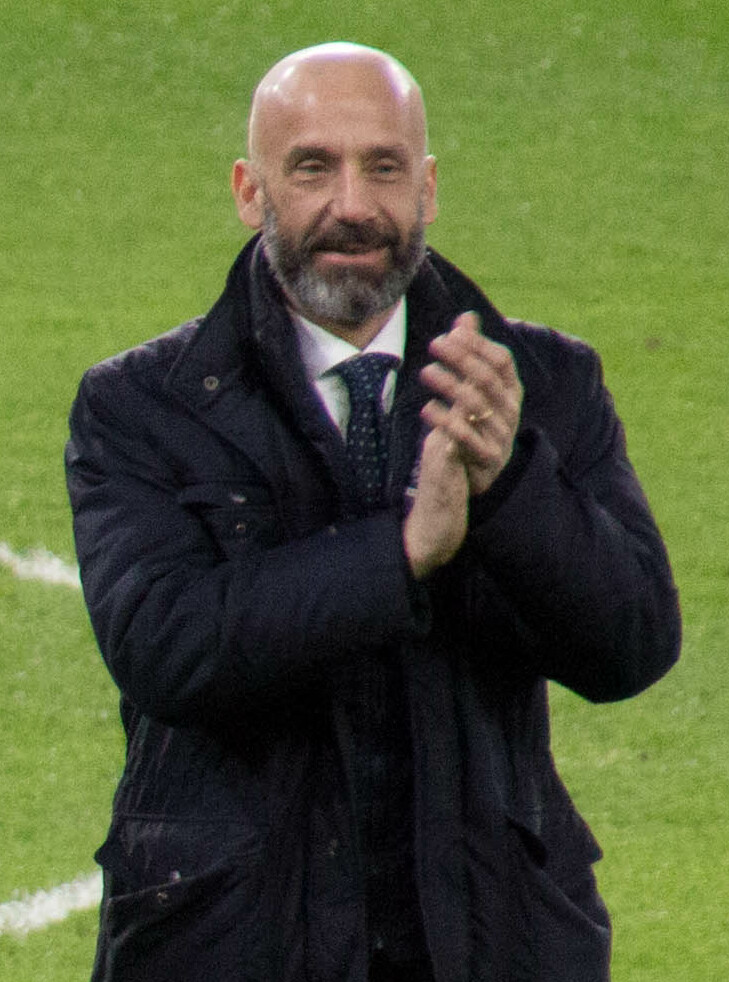
John Gregory, a pragmatist, did not try to out-pass Chelsea. George Boateng and Ian Taylor played it tight in midfield and the ball went long to Dion Dublin, and Vialli's decision to start Gus Poyet on the right flank, to use his height against Alan Wright, left Chelsea off balance. The first half produced one save, Wise's ninth-minute volley held by David James, one threatening shot, Paul Merson's volley over the bar, and three bookings for tit-for-tat fouls. Its liveliest moment came just before the interval, when Dublin hauled Frank Leboeuf to the ground by the neck in the Chelsea area and neither official saw anything wrong.[5][4][8][1]
The second half was a different match. Taylor and Gareth Southgate headed wide inside four minutes, then Weah, released by Zola, shot a foot wide, and from then on Chelsea had the better of it. James failed to hold a shot from Di Matteo and Wise poked in the rebound, only for Weah to be flagged marginally offside. Weah then missed from six yards at the far post when Zola's cross cleared everyone, and James rushed out to block his attempt to flick the ball over him.[8][1][5][4]
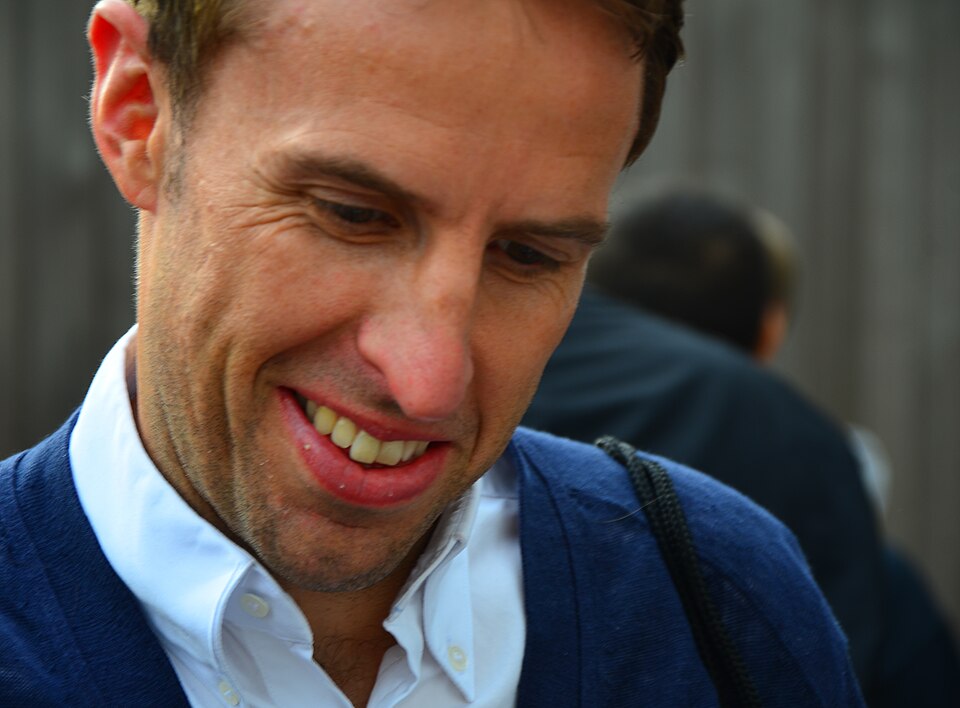
The goal came with about 17 minutes left. Melchiot, having decided he could do more than watch Benito Carbone, swapped wings, exchanged passes with Celestine Babayaro and was brought down by Taylor near the corner flag. Zola swung the free-kick into a crowded goalmouth, James came out to punch and got nowhere near it, the ball struck Southgate, and Di Matteo drove the rebound into the roof of the net. It was his third goal in Wembley finals for Chelsea, and nothing like the strike of three years before, but it was enough.[4][5][1][8]
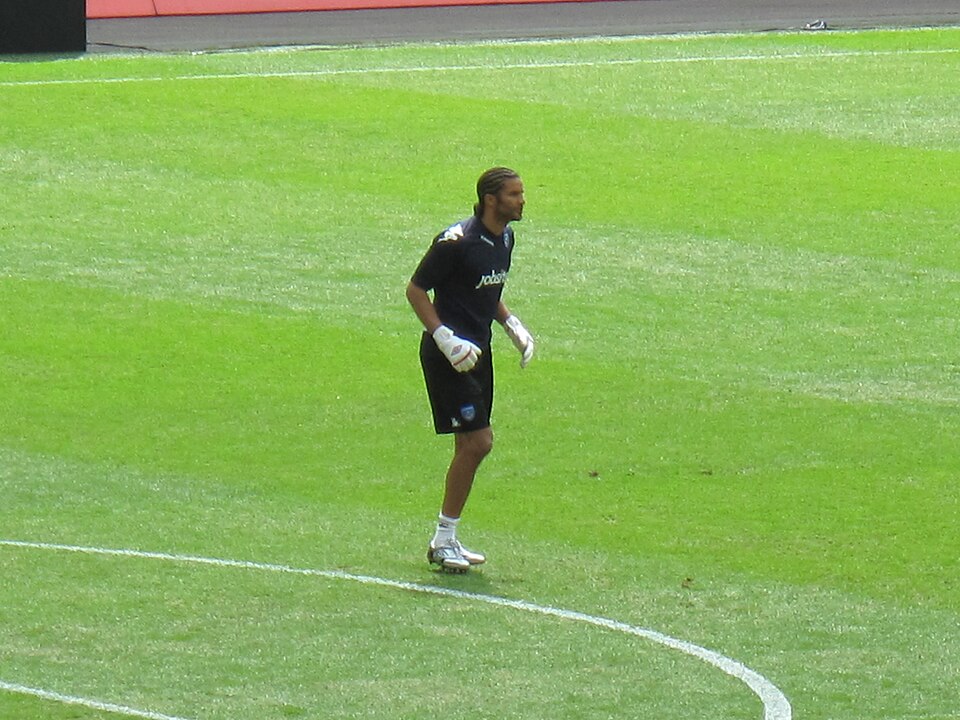
Villa's one chance to save the match came within minutes and was a mirror of the goal. Ed de Goey dropped Merson's free-kick and Carbone, with half the goal to aim at, struck the ball so weakly with his left foot that Leboeuf cleared it off the line. Gregory sent on Steve Stone and Julian Joachim for the last 12 minutes, and later Lee Hendrie, to little avail. Di Matteo's lob from the left came back off the top of the post, Ugo Ehiogu headed Villa's last chance over with Dublin better placed beside him, and James went up for a stoppage-time free-kick that Chelsea cleared before the whistle.[8][5][4][1]
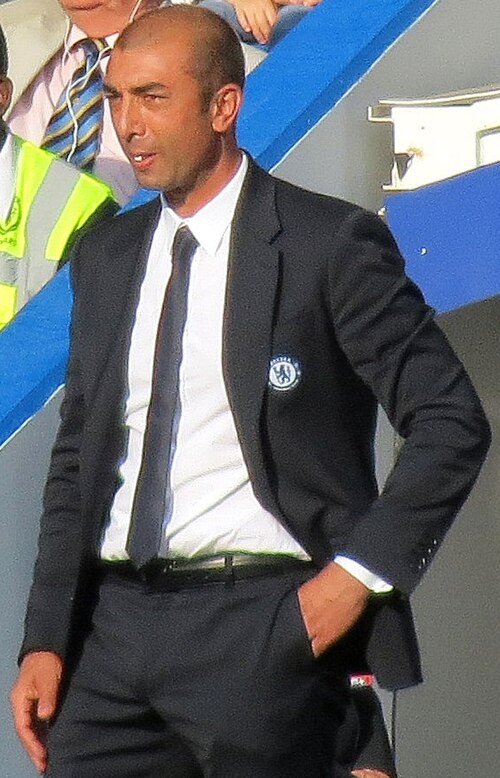
Wise took his five-month-old son Henry up to the Royal Box to collect the trophy. Gregory said Villa had not done enough in the final third, which had been the story of their season; James said individual mistakes had cost them and his was one of them. Vialli, who became the most successful manager in Chelsea's history, called Di Matteo a great man who liked to play at Wembley and score goals. The victory took Chelsea into the UEFA Cup after a league season that had ended their hopes of the Champions League, and gave Villa the consolation of the Intertoto Cup.[5][2][4][1][8]
The summer that followed was expected to bring a clear-out at Stamford Bridge, and the final changed the mood. Vialli said afterwards that he would not expect any major change, Di Matteo said he would finish his career at the club, and Wise pointed out that Chelsea had played 61 games that season and needed a big squad. Weah, whose loan was ending, said he had to go back to Milan.[7][12]
How the match unfolded
- 2'George Boateng shakes Dennis Wise with a crunching tackle that referee Graham Poll punishes only with a warning.[8]
- 9'The first save. Gareth Southgate heads out Gianfranco Zola's centre and Wise meets the clearance with a volley that David James clutches to his midriff. The Telegraph has it after ten minutes.[4][8]
- 15'George Weah wrong-foots the Villa defence with a back-flick over his own head, one of the few bright moments of the half.[1]
- 16'Gareth Barry is booked, and two minutes later Mario Melchiot follows him, for tit-for-tat fouls on each other.[12][4][8]
- 25'Paul Merson's volley from 25 yards dips over the bar, the only Villa attempt of the half that carries a threat.[8][5][1]
- 28'Wise is booked for a sly kick at Boateng's ankles.[12][4][8]
- 45'Dion Dublin hauls Frank Leboeuf to the ground by the scruff of the neck in the Chelsea area; neither the referee nor his assistant acts. Half-time, 0-0.[4][1]
- 47'Three chances in four minutes after the restart: Ian Taylor and Southgate head wide from crosses by Alan Wright and Merson, then Weah, released by Zola, shoots a foot wide.[8][1][5]
- 53'Chelsea have the ball in the net. James fails to hold Roberto Di Matteo's shot and Wise pokes in the rebound, but Weah is flagged marginally offside. The BBC times this at 56 minutes.[4][1][5][8]
- 60'Weah, unmarked at the far post as Zola's cross clears everyone, wafts the ball over from close range. The BBC places the miss three minutes after the disallowed goal.[5][4][1][8]
- 72'Goal. Melchiot swaps wings, exchanges passes with Celestine Babayaro and is fouled by Taylor near the corner flag. Zola swings the free-kick in, James comes to punch and only knocks the ball against Southgate, and Di Matteo drives the rebound into the roof of the net. Chelsea 1-0 Aston Villa. The BBC, the Telegraph and RSSSF say 72; the Guardian, Wikipedia and Chelsea themselves say 73.[1][8][10][4][5]
- 75'Villa's one real chance. Ed de Goey drops Merson's free-kick and Benito Carbone, with half the goal to aim at, scuffs a left-footed shot that Leboeuf clears off the line. The BBC places it with ten minutes to go.[5][8][1][4]
- 79'John Gregory sends on Steve Stone and Julian Joachim for Taylor and Carbone.[12][8][4]
- 80'Di Matteo's flighted lob from the left beats James and bounces off the top of the post; the BBC places it after Carbone's miss without a minute, so the 80 here is approximate.[1]
- 88'Tore Andre Flo replaces Weah; Lee Hendrie replaces Wright. Jody Morris comes on for Zola a minute later.[12][1]
- 89'Villa's last chance: from Merson's cross Ugo Ehiogu heads over with Dublin better placed beside him.[1][4][8]
- 90'Poyet and Boateng are shown late yellow cards according to the standard reference work. In stoppage time James joins the attack for a free-kick; Chelsea clear and the whistle goes. The last final at the old Wembley is over.[12][1][4]
Match facts
- Date
- Saturday 20 May 2000
- Venue
- Wembley Stadium, London
- Attendance
- 78,217The figure printed in Colin Malam's Telegraph report (the page Wikipedia cites) and repeated by the standard reference work. The Guardian's David Lacey rounded it to 78,000. No FA document we could reach prints an attendance.[8][12]
- Half-time
- 0-0
- Competition
- 1999-2000 FA Cup
Where they played
Both sides as they lined up. Choose any player to read what they did in this final.
Select a shirt for that player's note.
Route to the final
Chelsea
- Third round: Hull City (a) won 6-1 - played on 11 December 1999
- Fourth round: Nottingham Forest (h) won 2-0
- Fifth round: Leicester City (h) won 2-1
- Quarter-final: Gillingham (h) won 5-0
- Semi-final: Newcastle United (Wembley) won 2-1 - both goals by Poyet
Aston Villa
- Third round: Darlington (h) won 2-1 - Darlington entered as lucky losers; played on 11 December 1999
- Fourth round: Southampton (h) won 1-0
- Fifth round: Leeds United (h) won 3-2
- Quarter-final: Everton (a) won 2-1
- Semi-final: Bolton Wanderers (Wembley) drew 0-0 after extra time, won 4-1 on penalties
Line-ups
Chelsea · 4-4-2
- Ed de Goey Goalkeeper. Had little to do until he dropped Merson's late free-kick and needed Leboeuf to clear off the line
- Mario Melchiot Right back, a late replacement for the injured Albert Ferrer. Booked, and won the free-kick from which the goal came
- Marcel Desailly Centre back and, for the Guardian, Chelsea's outstanding player: reduced Dublin's aerial threat and carried the ball out from the back
- Frank Leboeuf Centre back. Hurled to the ground by Dublin before half-time; cleared Carbone's shot off the line
- Celestine Babayaro Left back. Exchanged passes with Melchiot in the move that produced the winning free-kick
- Gus Poyet Switched to the right flank to use his height against Alan Wright; booked for a foul on Boateng
- Didier Deschamps Central midfield, obdurate alongside Wise in a congested middle
- Dennis Wise Central midfield and captain. Volleyed the first save, was booked, had a goal disallowed, and lifted the cup with his five-month-old son
- Roberto Di Matteo Left of midfield after swapping with Poyet. Scored the only goal, his third in Wembley finals for the club
- Gianfranco Zola Forward, preferred to Flo. His free-kick from the left produced the goal; replaced by Morris in the 89th minute
- George Weah Forward, 33 and on loan from AC Milan. Missed twice from close range and was offside for the disallowed goal; replaced by Flo
Aston Villa · 5-3-2
- David James Goalkeeper. Spilled a first-half cross, presented Wise with the disallowed goal, and came for Zola's free-kick only to knock it against Southgate for the winner
- Mark Delaney Right wing-back
- Ugo Ehiogu Centre back. Headed Villa's last chance over the bar with Dublin better placed
- Gareth Southgate Centre back and captain, matched Desailly for excellence according to the Guardian. Headed over early in the second half; the ball came off his chest for the goal
- Gareth Barry Centre back, booked in the 16th minute
- Alan Wright Left wing-back, targeted by Poyet in the air; replaced by Hendrie in the 88th minute
- George Boateng Central midfield. Shook Wise with a second-minute tackle and was fouled by both Chelsea players booked later
- Ian Taylor Central midfield. Headed wide after the restart and conceded the free-kick that led to the goal; replaced by Stone
- Paul Merson Midfield. His 25-yard volley was Villa's only first-half threat, and his crosses and set pieces were their main supply line
- Benito Carbone Forward, struggling to feed off Dublin. Scuffed Villa's one clear chance; replaced by Joachim
- Dion Dublin Centre forward, the target for long balls. Won headers, hauled Leboeuf down unpunished, and was better placed than Ehiogu for the last chance
Trivia and detail
- Villa were appearing in their first final since 1957, when they beat the emerging Busby Babes of Manchester United 2-1; their supporters were much the noisier and the Chelsea end, three years on from beating Middlesbrough, seemed blase by comparison.[8][11]
- Villa's starting line-up included eight Englishmen; Chelsea's included one, Dennis Wise, with Jody Morris, John Terry and Jon Harley among the substitutes.[8]
- Chris Sutton, signed for 10 million pounds at the start of the season, was not even on the Chelsea bench.[4][8]
- The third round that season was played on 11 December 1999, and Villa's opponents Darlington had entered it as what the BBC called lucky losers.[10][3]
- Villa reached the final without scoring in the semi-final: their tie with Bolton Wanderers at Wembley finished 0-0 after extra time and was won 4-1 on penalties. Chelsea beat Newcastle United 2-1 at the same ground a week later with two goals from Poyet.[10][3]
- Di Matteo's goal was his third in Wembley finals for Chelsea: one in the League Cup and two in the FA Cup, including the 43-second strike against Middlesbrough in 1997 that remained the fastest in an FA Cup final.[1][4]
- Wise took his son Henry, five months old, up to the Royal Box to collect the trophy, and the BBC's picture gallery shows the pair with the cup.[5][2]
- Victory made Vialli the most successful manager in Chelsea's history and guaranteed the club a place in the UEFA Cup; Villa's consolation was a place in the Intertoto Cup.[1][8]
- Wise said afterwards that Chelsea had played 61 games that season and it had taken a toll on them, which was why a club needed a big squad like Manchester United's.[7]
- Leboeuf, asked about his first final before the game, said the first time was always the one you remember. Weah, at 33 and on loan, was thought to be playing his last chance of an FA Cup final.[4][8]
How well do you know the 2000 final?
Five questions. Every answer is sourced from the material on this page.
-
Who scored the only goal of the 2000 FA Cup final?
-
Why is the 2000 final a landmark in the competition's history?
-
Whose error let the goal in?
-
Why was Dennis Wise's second-half goal disallowed?
-
When had Aston Villa last played in an FA Cup final before 2000?
What is not settled
Honesty matters more than tidiness. These details are contested or unrecorded, and we have not guessed at them:
- The winning goal is timed at 72 minutes by the BBC, the Telegraph and RSSSF and at 73 by the Guardian's two reporters (one implicitly), Wikipedia and Chelsea's official site. We use 72.
- Wise's disallowed goal is placed in the 53rd minute by the Observer and the 56th by the BBC; Weah's close-range miss follows it on the hour (Guardian) or three minutes later (BBC).
- Carbone's chance is placed three minutes after the goal by the Telegraph, 15 minutes from the end by the Guardian and with ten minutes to go by the BBC.
- Poyet's booking is timed at 90 minutes by Wikipedia but described by the Observer as preceding Weah's miss on the hour. Boateng's is given as 90 by Wikipedia and is not timed by any report we read.
- Villa's shape: Wikipedia lists five defenders, four midfielders and Dublin alone, while the Guardian describes Wright as a wing-back and Carbone trying to feed off Dublin. We draw 5-3-2 on the Guardian's account and record the alternative here.
- Di Matteo's lob against the post is reported only by the BBC and without a minute; the timeline places it at 80 as an approximation between the Carbone chance and the substitutions.
- Two statistical sheets exist and disagree on every count except the yellow cards; see the feature item. Neither is official.
- The attendance of 78,217 comes from the Telegraph report and is repeated by the reference work; the Guardian printed 78,000. No FA or club document we could reach prints a figure.
- Man of the match: Wikipedia names Wise, citing The People, a page we could not fetch. No report we read names an award, so none is claimed.
- Villa's fourth-round scorer Southgate is timed at 20 minutes by RSSSF; the BBC's picture caption calls him the unlikely hero without a time.
- No footage from a rightsholder has been found for this final, so the television shows no signal rather than an unofficial upload.
How we know
Every claim on this page is tied to a numbered source below. These are the contemporary records behind it, each one fetched and matched word for word before publication rather than taken on trust:
- Paul Wilson's match report, 21 May 2000, with Gregory's and James's words · The Observer
- David Lacey's match report, 22 May 2000: tactics, Wise's son in the Royal Box, the goal timed at 17 minutes from the end · The Guardian
- Carling Opta match statistics printed on 22 May 2000: possession, shots, corners, fouls, offsides, cards · The Guardian
- Martin Thorpe, 22 May 2000: Vialli, Di Matteo, Weah, Wise and others on the summer ahead · The Guardian
- Colin Malam's Sunday Telegraph report of 21 May 2000, with attendance, referee and line-ups; the page Wikipedia cites for the attendance · The Telegraph (Colin Malam), republished by fa-cupfinals.co.uk
- Chelsea's official site, 2024: the club's own account of the 1999-2000 cup run and the final · Chelsea FC
Where a primary record and a modern account disagree, we show both rather than choosing the tidier number.
Sources
- Chelsea claim FA Cup glory · BBC Sport
- Chelsea's Wembley triumph: In pictures · BBC Sport
- Villa's route to Wembley: In pictures · BBC Sport
- Di Matteo does it again · The Observer
- Calamity ends the tedium · The Guardian
- How the Cup was won · The Guardian
- Vialli does little to clear up clear-out confusion · The Guardian
- Chelsea 1 Aston Villa 0 · The Telegraph (Colin Malam), republished by fa-cupfinals.co.uk
- Chelsea tales from the Year of the Dragon · Chelsea FC
- England FA Challenge Cup 1999-2000 · RSSSF
- England FA Challenge Cup Finals · RSSSF
- 2000 FA Cup final · Wikipedia