1997-98 FA Cup · The Final
1998 FA Cup Final: Arsenal 2-0 Newcastle United
The second double
The final that sealed Arsenal's second double is remembered as a formality, and the contemporary record agrees that it was one; what the record does not agree on is the detail, from which post Shearer hit and which defender Anelka ran past to how many players were booked, and it shows the encyclopedia getting the clubs' last league meeting wrong.
Arsenal completed the second double in the club's history by beating Newcastle United 2-0 at Wembley on 16 May 1998, Marc Overmars and Nicolas Anelka scoring in the heat, a fortnight after Arsene Wenger's side had won the Premier League in his first full season.
Saturday 16 May 1998 · Wembley Stadium
What you will not find elsewhere
The encyclopedia says Arsenal beat Newcastle 3-0 in April. The BBC's report of the match says 3-1
Wikipedia's account of the build-up states that Newcastle lost both league meetings with Arsenal that season, 1-0 at home in December 1997 and 3-0 away in April 1998. The BBC's own results round-up of 12 April 1998 reports the Highbury match as Arsenal 3-1 Newcastle, with two goals from Anelka, a long-range strike from Vieira and a consolation from Barton. The supporter who wrote up the final on the day made the same point in the opposite direction: Arsenal, he said, had repeated the two-goal margin of the recent league match. A two-goal margin is 3-1, not 3-0. We record the contemporary score and note the encyclopedia's error.[24][14][21]
Newcastle's twelfth final, not their eleventh: counting the list
Wikipedia's lead calls this Newcastle United's eleventh FA Cup final. Count them in the RSSSF list of every final: 1905, 1906, 1908, 1910, 1911, 1924, 1932, 1951, 1952, 1955 and 1974 make eleven before 1998, so Wembley in 1998 was the twelfth. The Independent's semi-final report, written six weeks earlier, had it right: Newcastle's first final since 1974 and their twelfth in all. The same count gives Arsenal twelve previous finals and makes 1998 their thirteenth, which is the figure both the encyclopedia and the contemporary press use.[23][7][24]
Four bookings or five? The reporters in the press box did not agree
Colin Malam's report lists four cautions: Shearer in first-half stoppage time, then Barton, Dabizas and Winterburn early in the second half. Ian Ridley's report in the Independent on Sunday has all four and adds a fifth, Howey, for bringing down Parlour. The standard reference work's statistics table gives Newcastle four yellow cards and Arsenal one, which matches Ridley, and its line-up notation puts Howey's booking in the 70th minute. Five is better supported, but a reader of the Telegraph on the Sunday morning would have counted four.[1][2][24]
Wenger's first double, in his own words that evening
The Independent's reporters gathered the dressing-room reaction on the night, and Arsene Wenger's verdict on his first full English season is verified against that page: this is the best moment in my sporting life. He had arrived from Japan less than two years earlier to headlines asking who he was; the double, completed by Overmars and Anelka at Wembley, was the first won by a manager from outside the British Isles.[3][2]
The footage
The match report
The 117th FA Cup final was played at Wembley on Saturday 16 May 1998 in front of 79,183 people, on a brilliant and very hot afternoon. Arsenal had won the Premier League a fortnight earlier, clinching it against Everton with two games to spare on the back of a record ten straight wins, in Arsene Wenger's first full season in charge, and the bookmakers had made them 8/11 for the double before the league was even settled. Newcastle, by contrast, had spent the season in the lower half of the table, needed points from their last games to be sure of staying up, and had lost both league meetings with Arsenal.[23][1][2][11][13][12][14]
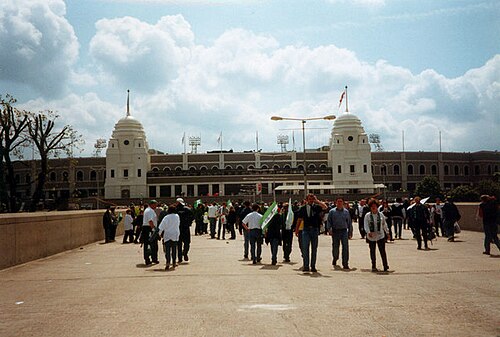
Arsenal were in their 13th final and Newcastle their 12th, and it was the third time the two clubs had met in one: Newcastle had won in 1932 and again in 1952, when George Robledo's header made him the first overseas player to score in a final. Both sides came without a key man. Dennis Bergkamp, the footballer of the year, had pulled a hamstring against Derby County in late April and did not recover; Wenger started Christopher Wreh alongside Anelka and left Ian Wright on the bench. Newcastle were without the injured winger Keith Gillespie, so Warren Barton played wide on the right, Temuri Ketsbaia was picked to support Alan Shearer, and Alessandro Pistone, the quickest player at the club, was moved to right back to deal with Marc Overmars.[23][4][7][12][1][2]
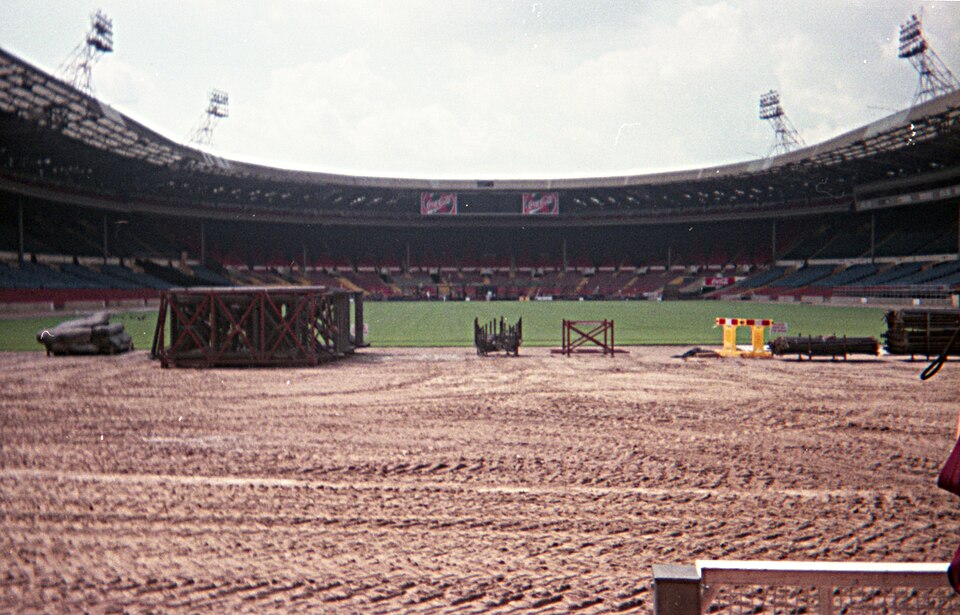
Shearer had spent the fortnight before the final answering a misconduct charge. Television pictures of Newcastle's match at Leicester City on 29 April appeared to show him kicking Neil Lennon in the face; the referee had taken no action, the FA charged him, and a three-man commission cleared him on 12 May, four days before Wembley, after Lennon himself gave evidence in his favour. Kenny Dalglish said the good guy had been vindicated, and Shearer said he could now look forward to the final and to the World Cup.[15][16][17]
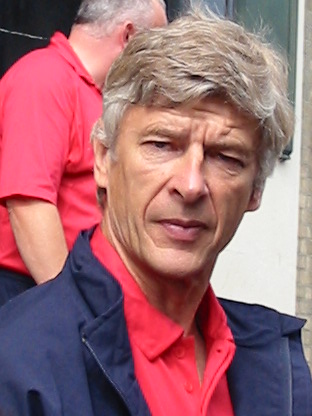
Newcastle had been told to press Patrick Vieira and Emmanuel Petit and had slightly the better of a cautious opening, Ketsbaia's low shot from 25 yards scuttling past David Seaman's post. Then Arsenal found their rhythm. After 20 minutes Vieira, Lee Dixon and Ray Parlour built a move that ended with Parlour outside Steve Howey and an unmarked Anelka heading over from six yards. Three minutes later the goal came from something simpler. Petit dropped a long pass over the top, Overmars headed it on, held off Pistone and prodded the ball under the advancing Shay Given. Arsenal had learned that a long ball beat Newcastle's defence for pace, and Parlour and Wreh both shot over from further chances made the same way.[1][2][21]
Shearer was booked for a late tackle on Tony Adams in first-half stoppage time and the second half began with more cautions, for Barton, Nikos Dabizas and Nigel Winterburn. Newcastle raised the tempo and twice hit the frame of the goal. In the 53rd minute Dabizas rose above Petit at the far post to head Rob Lee's free-kick on to the top of the bar. Then, midway through the half, Martin Keown trod on the ball and Shearer swept in to drive a left-footed shot across Seaman that came back off the post.[1][2][21][24]
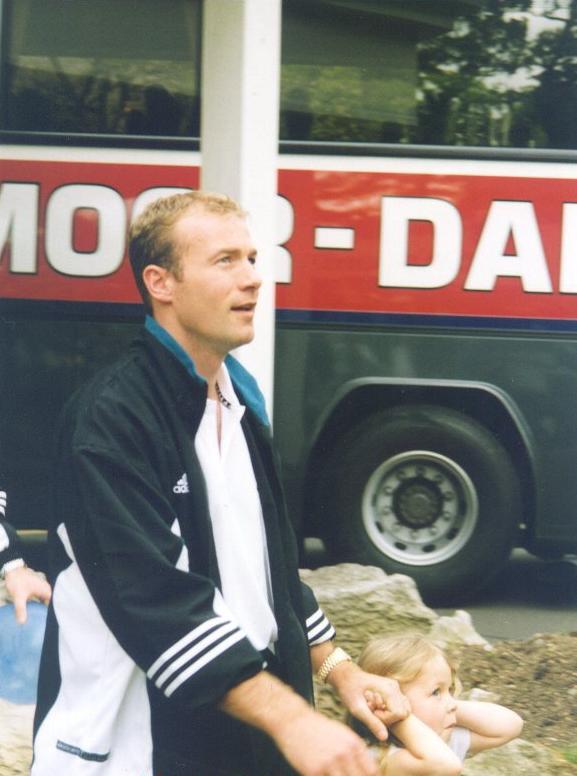
Arsenal made Newcastle pay within minutes. Parlour lifted another ball from the halfway line, Anelka took it on his chest level with a square back line, ran on and drove low past Given. Malam thought the striker might have been offside; the flag stayed down. Dalglish sent on Andreas Andersson and Steve Watson, and Shearer and Gary Speed both shot wide, but Winterburn took the ball off Shearer's toes with the goal open and Parlour, whose energy won him the man of the match award, came closest to a third. Gilles Grimandi was waiting to come on when the whistle went; Wright did not get on at all.[1][2][21][3]
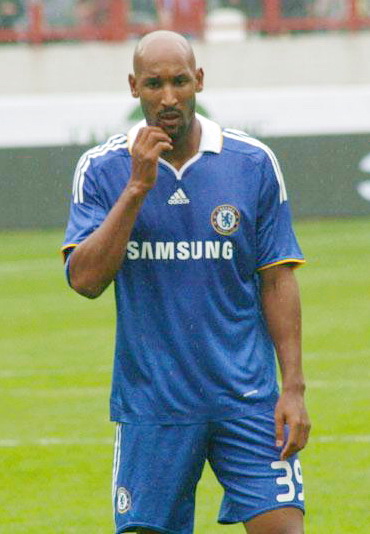
Wenger called it the best moment of his sporting life and named Shearer's shot against the post as the turning point, thanking the Newcastle supporters who applauded his team. Adams said he felt sorry for Newcastle because their fans had been fantastic, Overmars compared the win to lifting the European Cup, and Dixon said it surpassed anything the side had done before. Dalglish said he had told his players that one team sometimes has the best of the first half, and that Newcastle had shown in the second what they could do. Arsenal joined Manchester United as the only clubs to have won the double twice; their first, in 1971, had also been completed at Wembley against a side the 1998 supporters happily recalled.[3][2][21][18]
The following day the players paraded both trophies on an open-top bus from Highbury to Islington Town Hall, a two-mile drive that took 90 minutes through a crowd the BBC put at 300,000, with Wright leading the celebrations from the balcony. The final was shown live by ITV and Sky Sports, and ITV's average audience of 7.8 million was the lowest for a cup final in ten years, which the broadcaster blamed on the heatwave; another 900,000 watched on Sky.[18][5][24]
How the match unfolded
- 1'Arsenal set the tone from the kick-off: Petit outjumps Shearer, Dixon beats Speed to the ball and Adams finds Overmars for a run at Alessandro Pistone, the right back chosen to mark him.[2]
- 5'Newcastle's first effort. Temuri Ketsbaia twists to make space and his left-footed shot from about 25 yards scuttles wide of Seaman's left-hand post.[1][2][24]
- 20'The chance Arsenal should have taken. Vieira feeds Dixon, Parlour bursts down the inside-right channel on to the return pass, gets outside Howey and crosses; Anelka, unmarked six yards out, heads over.[1][2][21]
- 23'Goal. Petit drops a long ball over the top; Overmars heads it on, holds off Pistone and prods it past the advancing Shay Given. Arsenal 1-0 Newcastle. The Independent on Sunday's standfirst times it at 24.[1][2][22][24]
- 35'Parlour blazes over from Overmars' cut-back after another long pass from Petit; Wreh also shoots too high when Parlour picks him out unmarked.[1][2]
- 44'Ketsbaia's second shot goes straight at Seaman: the sum of Newcastle's first-half threat.[1][2]
- 45'Shearer is booked for a late tackle on Adams in first-half stoppage time, moments after Adams had leapt over him without punishment. Half-time: Arsenal 1-0 Newcastle.[1][2][24]
- 48'Warren Barton is booked for a foul on Petit; Nigel Winterburn (51) and Nikos Dabizas (53) follow.[1][2][24]
- 53'Dabizas wins a free-kick on the left and then rises above Petit at the far post to meet Rob Lee's delivery; the header hits the top of the bar.[1][2][21]
- 62'David Platt replaces Christopher Wreh.[24][1]
- 64'Keown treads on the ball and Shearer pounces, driving a left-footed shot across Seaman that comes back off the foot of the far post. The Independent calls it the inside of the post; the standard reference work agrees. Malam and the supporter's report say the foot of the post.[1][2][21][24]
- 69'Goal. Parlour lifts a pass from the halfway line, Anelka takes it on his chest level with a square back line and runs on to drive low past Given. Arsenal 2-0 Newcastle. RSSSF times it at 70.[1][2][22][24]
- 70'Steve Howey is booked for bringing down Parlour.[2][24]
- 73'Andreas Andersson replaces Stuart Pearce as Newcastle go for an extra forward; Steve Watson replaces Barton three minutes later.[1][24]
- 80'Newcastle's late push: a Shearer free-kick and a Speed shot both fly wide, and Winterburn whips the ball off Shearer's toes after a Ketsbaia shot is blocked.[1][21][2]
- 86'John Barnes replaces Ketsbaia. Parlour nearly adds a third: the Independent has his shot hitting the outside of a post, the standard reference work the side netting.[24][2]
- 90'Full-time: Arsenal 2-0 Newcastle United. Gilles Grimandi was waiting to come on as the whistle went; Ian Wright stayed on the bench. Wenger hugs Pat Rice and the Newcastle supporters applaud Arsenal up the steps.[21][3][24]
Match facts
Where they played
Both sides as they lined up. Choose any player to read what they did in this final.
Select a shirt for that player's note.
Route to the final
Arsenal
- Third round: Port Vale (h) drew 0-0
- Third round replay: Port Vale (a) drew 1-1 after extra time, won 4-3 on penalties
- Fourth round: Middlesbrough (a) won 2-1
- Fifth round: Crystal Palace (h) drew 0-0
- Fifth round replay: Crystal Palace (a) won 2-1
- Quarter-final: West Ham United (h) drew 1-1
- Quarter-final replay: West Ham United (a) drew 1-1 after extra time, won 4-3 on penalties
- Semi-final: Wolverhampton Wanderers (Villa Park) won 1-0
Newcastle United
- Third round: Everton (a) won 1-0
- Fourth round: Stevenage Borough (a) drew 1-1
- Fourth round replay: Stevenage Borough (h) won 2-1
- Fifth round: Tranmere Rovers (h) won 1-0
- Quarter-final: Barnsley (h) won 3-1
- Semi-final: Sheffield United (Old Trafford) won 1-0
Line-ups
Arsenal · 4-4-2
- David Seaman Goalkeeper, back from the broken finger that had given Alex Manninger his run. Watched Ketsbaia's shot pass his left-hand post and caught the other; commanded his area
- Lee Dixon Right back. His one-two with Parlour created the header Anelka missed
- Martin Keown Centre back. Trod on the ball to let Shearer in for the shot that hit the post
- Tony Adams Centre back and captain. Started the first big move from his own half and lifted the trophy
- Nigel Winterburn Left back. Booked, and whipped the ball off Shearer's toes late on
- Ray Parlour Right midfield, named man of the match. Made the chance for Anelka's header, blazed over himself, then set up the second goal
- Patrick Vieira Central midfield. Newcastle were told to pressure him and Petit and could not
- Emmanuel Petit Central midfield. His long pass over the top made the opening goal
- Marc Overmars Left midfield. Scored the opener and tormented Pistone all afternoon
- Nicolas Anelka Centre forward, aged 19. Headed the early chance over, then scored the second
- Christopher Wreh Centre forward, preferred to Ian Wright with Bergkamp injured. Replaced by Platt
Newcastle United · 4-4-2
- Shay Given Goalkeeper. Beaten by Overmars' prod under him and Anelka's low drive
- Alessandro Pistone Right back, out of position, chosen as the club's quickest player to mark Overmars
- Nikos Dabizas Centre back. Booked, then headed Lee's free-kick against the bar
- Steve Howey Centre back. Beaten by Anelka for the second goal; booked for bringing down Parlour
- Stuart Pearce Left back. Replaced by Andersson as Dalglish chased the game
- Warren Barton Right midfield, filling in for the injured Keith Gillespie. Booked; replaced by Watson
- Rob Lee Central midfield and captain. His free-kick produced the Dabizas header
- David Batty Central midfield
- Gary Speed Left midfield. Blazed a late chance wide
- Temuri Ketsbaia Withdrawn forward behind Shearer, preferred to Andersson. Newcastle's only first-half shots were his; replaced by Barnes
- Alan Shearer Centre forward, cleared by the FA four days earlier. Booked before half-time; hit the post after Keown's slip
Trivia and detail
- Arsenal and Newcastle became only the second pair of clubs to meet in three FA Cup finals, after Aston Villa and West Bromwich Albion, who met in 1887, 1892 and 1895.[4][23]
- Ian Rush, who had scored five FA Cup final goals, a record, and set a new competition record of 43 goals with the winner against Everton in the third round, was left out of Newcastle's squad through injury. John Barnes came on late to become the third player to appear in a final for three different clubs.[4][24]
- Arsenal needed three replays and two penalty shoot-outs to reach Wembley, winning 4-3 on penalties at Port Vale after Allen Tankard blazed the decisive kick over, and 4-3 again at West Ham after Bergkamp had been sent off for elbowing Steve Lomas.[8][20][4]
- Overmars scored after 68 seconds at Middlesbrough in the fourth round, which the Independent noted was 23 seconds slower than the goal that had sunk Middlesbrough in the previous year's final.[9]
- Arsenal fielded a makeshift side for the fifth-round replay at Crystal Palace, with Alex Manninger in goal and Luis Boa Morte up front, and Anelka scored after barely a minute.[10]
- Newcastle's run went through non-league Stevenage Borough, who forced a replay at Broadhall Way, and Barnsley, who had knocked out Manchester United after two mistakes by Peter Schmeichel.[4][24]
- Shearer scored five goals in the cup run, including both against Stevenage in the replay and the semi-final winner against Sheffield United at Old Trafford.[4][7]
- The Duke of Kent, president of the Football Association, attended with the Duchess of Kent and presented the trophy; the Independent's court circular for the day lists the engagement.[6][24]
- Both squads released cup final songs: Arsenal's cover of Hot Stuff reached number nine in the singles chart, while Newcastle's was written by Sting.[24]
- Alex Manninger, signed as a long-term understudy for 500,000 pounds, kept six consecutive clean sheets while Seaman was injured in the spring; Seaman was back for the final.[11][10]
- Arsenal had been eleven points behind Manchester United at the start of March. Wenger's side did not drop a point after that and won the league with two games to spare.[11][13]
How well do you know the 1998 final?
Five questions. Every answer is sourced from the material on this page.
-
Who scored Arsenal's first goal in the 1998 FA Cup final?
-
What did the win complete for Arsenal?
-
Which Newcastle player hit the post after Martin Keown trod on the ball?
-
Why was Alan Shearer in front of an FA commission four days before the final?
-
Who was named man of the match?
What is not settled
Honesty matters more than tidiness. These details are contested or unrecorded, and we have not guessed at them:
- Overmars' goal is timed at 23 minutes by the standard reference work and by Malam's account (three minutes after the 20th-minute chance), but the Independent on Sunday's standfirst prints 24. Anelka's is 69 in the Independent and the reference work, and 70 in the RSSSF archive.
- Shearer's shot: Ridley and the reference work say it struck the inside of the far post; Malam says the foot of the far post; the supporter's report says simply the post. Nobody disputes that it came back out.
- Anelka's marker for the second goal is Howey in both Malam's and Ridley's reports and Dabizas in the reference work's summary.
- Malam lists four bookings (Shearer, Barton, Dabizas, Winterburn); Ridley and the reference work's statistics add Howey. The timeline follows the five-card account.
- Substitution minutes are taken from the reference work's line-up notation (Platt 62, Andersson 73, Watson 76, Barnes 86); the contemporary reports give the substitutions in order but without minutes.
- Newcastle's shape: the reference work says both sides played 4-4-2; Malam has Ketsbaia brought in to support Shearer and Newcastle flooding midfield; the supporter's report has Shearer alone up front with Ketsbaia dropping deep. The pitch shows 4-4-2 with Ketsbaia as the second forward.
- The BBC credited Overmars with 15 goals for the season on 3 May; the reference work calls the final his 16th goal of the campaign, and a 2013 Guardian retrospective gives him 12 league goals. The record does not state a total.
- Wenger's post-match line is quoted by the Independent on Sunday as 'This is the best moment in my sporting life' and by the reference work, citing another paper, as 'the greatest moment of my sporting life'. The verified quotation is the Independent's.
- The Independent says ITV's audience was the lowest for a cup final in ten years; the reference work says more than a decade. The figures themselves (7.8 million ITV, 900,000 Sky, a 65 per cent share) are the same in both.
- Wikipedia's 3-0 for the April league meeting is contradicted by the BBC's contemporary report of 3-1; see the feature originality item.
- Wikipedia counts this as Newcastle's eleventh final; the RSSSF list and the Independent's semi-final report make it their twelfth. The record uses twelve.
- No footage from a rightsholder has been verified for this final yet, so the television shows no signal rather than an unchecked embed.
How we know
Every claim on this page is tied to a numbered source below. These are the contemporary records behind it, each one fetched and matched word for word before publication rather than taken on trust:
- Contemporary match report: the chances, both goals, the woodwork, the bookings and the substitutions, plus the page's own line-ups, referee and attendance · Electronic Telegraph, reproduced with line-ups, referee and attendance at fa-cupfinals.co.uk (Internet Archive capture, 5 April 2009)
- Ian Ridley's match report, 17 May 1998, with scorers, half-time score and attendance in its standfirst · The Independent on Sunday
- Post-match words of Wenger, Adams, Dixon, Overmars, Parlour, Rice, Dalglish and Hill-Wood, 17 May 1998 · The Independent on Sunday
- Match-day panel, 16 May 1998: both routes with scorers, records and milestones · The Independent
- 20 May 1998: ITV and Sky viewing figures for the final · The Independent
- Court circular for 16 May 1998: the Duke and Duchess of Kent at the final · The Independent
- Glenn Moore's semi-final report, Old Trafford, 6 April 1998, counting Newcastle's finals · The Independent
- Phil Shaw's report of the third-round replay at Port Vale, 15 January 1998 · The Independent
- Scott Barnes's fourth-round report from the Riverside, 26 January 1998 · The Independent
- Adam Szreter's fifth-round replay report from Selhurst Park, 26 February 1998 · The Independent
Where a primary record and a modern account disagree, we show both rather than choosing the tidier number.
Sources
- Arsenal (1) 2 Newcastle (0) 0: match report by Colin Malam · Electronic Telegraph, reproduced with line-ups, referee and attendance at fa-cupfinals.co.uk (Internet Archive capture, 5 April 2009)
- Cup Final: The Double cream team · The Independent on Sunday
- Cup Final: 'Better than anything we've done' · The Independent on Sunday
- FA Cup Final: Routes to the final · The Independent
- Sunshine 2: TV-football 0 · The Independent
- Royal engagements · The Independent
- Shearer's strike breaks the Blades · The Independent
- Arsenal let off the hook by Tankard · The Independent
- Arsenal spoil their old boy's reunion · The Independent
- Bergkamp makes decisive impact for Arsenal · The Independent
- Gunners' glory · BBC News
- Premiership D-Day looms · BBC News
- Title run-in: United steel or Arsenal grit? · BBC News
- Gunning for United · BBC News
- Shearer apologises for 'kick' · BBC News
- Shearer charged with misconduct · BBC News
- Shearer cleared in boot row · BBC News
- Arsenal and Hearts take to the streets · BBC News
- Honours even for Arsenal and West Ham · BBC News
- Arsenal and Sheffield United through on penalties · BBC News
- Arsenal vs Newcastle. FA Cup Final 16/05/98 · ArseWeb (supporter site, Internet Archive capture)
- England FA Challenge Cup 1997-98 · RSSSF
- England FA Challenge Cup Finals · RSSSF
- 1998 FA Cup final · Wikipedia