Mark Williams
Playing Style
Mark Williams plays entirely on instinct. He famously rarely practises, uses a minimal pre-shot routine, and relies on a natural feel for the game that makes him almost impossible to coach or fully explain by conventional snooker analysis. His left-handed cue action is unconventional — technically unorthodox in ways that would cause most coaches to wince — but it is devastatingly effective. His potting rate at all distances is among the best in the game's history, and the ease and confidence with which he pots balls that other players would approach with caution reflects a relationship with the sport that is primarily intuitive rather than intellectual.
At his best, he creates the impression that the pockets are simply larger for him than they are for everyone else.
His tactical play, while less celebrated than his potting, is quietly excellent — Williams has won three World Championships, and you cannot do that without a thorough understanding of match management and safety play. But his default mode is always to pot the ball if a pot is on, and his ability to do so from positions that most players would deem too risky is the central fact of his game. At his best, he creates the impression that the pockets are simply larger for him than they are for everyone else. His longevity — three world titles spread across three decades, from 2000 to 2018 — speaks to an ability that transcends any particular era of the professional game.
Career Biography
Mark Williams was born on 21 March 1975 in Cwm, a small village in the Ebbw Vale area of South Wales. He grew up in the working men's club culture of the Welsh valleys, where snooker has always been deeply embedded in the social fabric, and learned his game in the informal, competitive environment that has produced so many of Wales's professional players. He turned professional in 1992 — the same year as Ronnie O'Sullivan and John Higgins, a coincidence that underlines what an extraordinary generation Williams was part of — and made rapid progress through the rankings during the early 1990s.
Williams won World Championships in 2000, 2003, and 2018 — spanning three different decades. His 2018 triumph at 43 was among the greatest late-career achievements in any sport.
Williams won his first World Championship in 2000, defeating Mark Higgins in the final in what was then a surprise outcome — though his talent had always suggested that major titles were coming. His second world title followed in 2003, defeating Ken Doherty in the final, and by this point Williams was established as one of the sport's dominant forces alongside O'Sullivan and Higgins. He reached the world number one ranking and was a consistent presence in the latter stages of every major event he entered throughout the early-to-mid 2000s. His UK Championship victories added to a Triple Crown collection of considerable distinction.
Williams won World Championships in 2000, 2003, and 2018 — spanning three different decades. His 2018 triumph at 43 was among the greatest late-career achievements in any sport.
What makes Williams's career uniquely remarkable, however, is what happened in 2018 — fifteen years after his second world title. Now 43 years old, and ranked considerably lower than his peak, Williams returned to the Crucible and produced perhaps the most extraordinary late-career achievement in the sport's modern era. He defeated John Higgins 18-16 in a final of extraordinary quality and drama, becoming the oldest World Champion in the modern era at the age of 43. His post-match press conference, held in just a dressing gown and conducted with characteristic nonchalance, became one of the most celebrated moments in the sport's recent history — a perfect expression of a personality as distinctive as his game.
Williams has spoken candidly about his aversion to practice and preference for playing golf. That he accumulated 600+ centuries under those conditions speaks to a God-given talent essentially without parallel.
His post-match press conference, held in just a dressing gown and conducted with characteristic nonchalance, became one of the most celebrated moments in the sport's recent history.
Since 2018, Williams has continued to compete at the highest level with the casual brilliance that characterises everything he does. He wins ranking events, performs in major tournaments, and remains one of the most popular figures on the circuit — a player whose personality is as entertaining as his snooker. His 600+ career centuries from a player who claims to practise barely at all is perhaps the most remarkable statistic in the sport.
Williams has spoken candidly about his aversion to practice and preference for playing golf. That he accumulated 600+ centuries under those conditions speaks to a God-given talent essentially without parallel.
Major Career Titles
| Year | Tournament | Opponent in Final | Score |
|---|---|---|---|
| 1999 | 🏆🏆UK Championship | Matthew Stevens | 10–8 |
| 2000 | 🌍🌍World Championship | Mark Higgins | 18–16 |
| 2002 | 🏆🏆UK Championship | John Higgins | 10–9 |
| 2003 | 🌍🌍World Championship | Ken Doherty | 18–16 |
| 2004 | 🏆🏆Welsh Open | Paul Hunter | 9–2 |
| 2007 | 🏆🏆Welsh Open | Stephen Maguire | 9–5 |
| 2011 | 🏆🏆Welsh Open | Ricky Walden | 9–3 |
| 2013 | 🏆🏆Welsh Open | Michael White | 9–1 |
| 2017 | 🏆🏆Welsh Open | Tom Ford | 9–7 |
| 2018 | 🌍🌍World Championship | John Higgins | 18–16 |
| 2019 | 🏆🏆Welsh Open | Xiao Guodong | 9–5 |
| 2020 | 🏆🏆European Masters | Judd Trump | 9–6 |
Career Centuries
Mark Williams's 600+ career centuries is among the most remarkable statistics in the sport, for one very specific reason: he gets there barely practising. Williams has spoken candidly and repeatedly about his aversion to practice, his preference for playing golf or spending time away from the snooker table, and his reliance on natural ability rather than rehearsal. That he has accumulated this many centuries under those conditions speaks to a God-given talent for potting snooker balls that is essentially without parallel in the modern game.
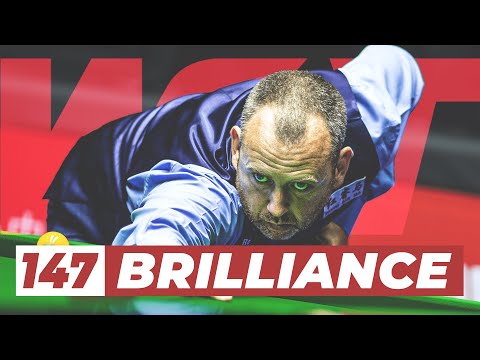
His 147 maximum break — snooker's perfect score — is a reminder that Williams's instinctive approach does not preclude the highest levels of technical execution. When the balls are running for him, Williams plays at a pace and with a confidence that reflects absolute certainty rather than calculation, and the 147 is the ultimate expression of that certainty applied across an entire frame.
Williams's centuries span from the early 1990s to the present day — a tally that has been accumulated across more than three decades of professional competition. His longevity as a century-maker is as remarkable as the volume of his production, and his ability to continue making centuries at a high rate in his late forties is a testament to the durability of his instinctive approach to the game.
At the World Championship
The Crucible has been the site of Mark Williams's greatest triumphs and some of his most memorable moments. His first world title in 2000 — defeating the relatively unknown Mark Higgins in what was considered a surprise by outside observers, though not by anyone who had followed Williams's career closely — announced him as a genuine world champion. His second in 2003, defeating Ken Doherty, confirmed his place among the sport's elite.
But it is the 2018 World Championship that defines Williams's Crucible story. Fifteen years after his second title, ranked outside the world's top ten, Williams produced a run of extraordinary snooker that culminated in a 18-16 final victory over John Higgins — himself a four-time world champion. The match was a classic, involving two players who had been competing at the highest level since the early 1990s, and Williams's victory at the age of 43 provoked a response from the sport that reflected the genuine wonder of what he had achieved.
The post-match press conference, held with Williams in his dressing gown and displaying the irreverent nonchalance that has always been one of his most endearing qualities, became one of the most-watched moments in the sport's recent media history. Williams's 2018 triumph is not just a remarkable sporting achievement — it is a story about what sustained natural talent, allied to genuine love of the game, can produce.
Career Highlights Videos
Watch Mark Williams Live
Catch the Welsh Potting Machine on TV and streaming. Check the world rankings for his current position.