1994-95 FA Cup · The Final
1995 FA Cup Final: Everton 1-0 Manchester United
The Dogs of War final
Everton's Wembley resistance makes more sense when the whole cup run is counted: six wins, thirteen goals scored, five clean sheets and only one goal conceded.
Paul Rideout's header and Neville Southall's saves gave Everton a 1-0 victory over Manchester United, completing a cup run built almost entirely on clean sheets.
Saturday 20 May 1995 · Wembley Stadium
What you will not find elsewhere
Everton conceded once in the entire competition
Add the six results from Everton's third-round entry to the final and the totals are 13 goals scored, one conceded and five clean sheets. The only opponent to score was Tottenham Hotspur in a 4-1 semi-final, and Joe Royle later described even that goal as a penalty that never was. The final's defensive stand was therefore the rule of Everton's run, not a one-day exception.[5][6][9]
From eight points in fourteen matches to forty-two in the next twenty-eight
Everton had eight league points after fourteen matches when Royle arrived and finished on 50. Subtraction gives 42 points from the remaining 28 games, exactly one and a half points per match. Extended across a full 42-match season, that rate is 63 points, which supports Royle's recollection that the post-November form belonged around sixth or seventh rather than at the bottom.[5][7]
Royle's own summary explains Everton's route to Wembley
Joe Royle's later oral history gives the defensive run its sharpest summary: Everton conceded only one goal in the entire competition, and he still regarded that Tottenham penalty as an error. The quotation has been verified against the published Sky Sports interview. Read beside the round-by-round results, it shows why the final's resistance was a continuation of Everton's cup campaign rather than an isolated display.[5][6]
The footage
The match report
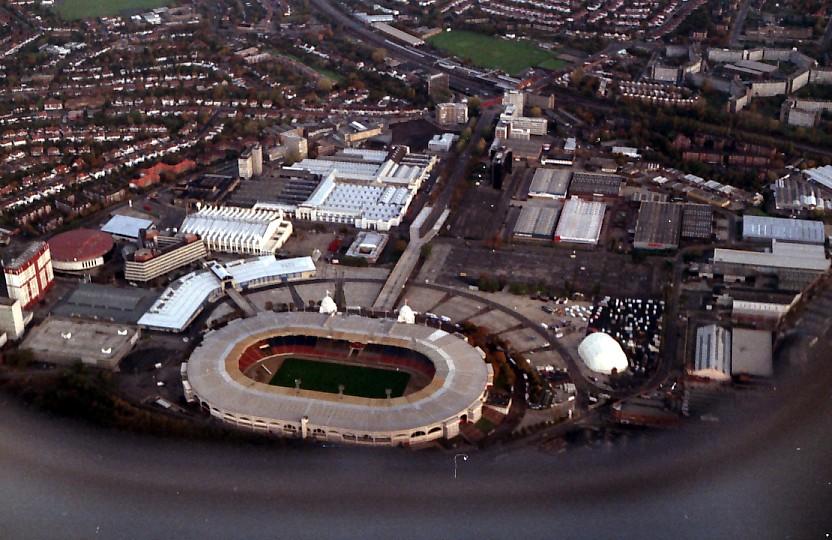
The 114th FA Cup final brought 79,592 people to the original Wembley on Saturday 20 May 1995. Everton had finished 15th in the Premier League and lost each of their previous three finals. Manchester United were the holders, needed another win to become the first club to lift the cup for a ninth time, and arrived one week after Blackburn Rovers had taken the league title from them. Everton won 1-0.[1][2][8]
That result completed a transformation which had begun in November. Joe Royle inherited a side at the bottom of the league with eight points from 14 matches. Everton finished with 50, taking 42 from their remaining 28 games. Royle and Willie Donachie began by studying recordings of the team and rebuilding its defending; the aggressive midfield that emerged became known as the Dogs of War, a label that caught the method but missed the skill supplied by Anders Limpar, Graham Stuart and Paul Rideout.[5][3][7]
Everton named the same starting side that had beaten Tottenham Hotspur in the semi-final. Duncan Ferguson passed a fitness test but began on the bench, while Earl Barrett was cup-tied. The hardest omission was John Ebbrell, who had played in most rounds but missed the semi-final through injury. Royle later explained that 4-4-2 had taken Everton to Wembley, so he kept the system and the semi-final team. The players stayed loose at their hotel with a game of header tennis before a deliberately simple team talk. United had no Eric Cantona, who was suspended, no cup-tied Andy Cole and no injured Andrei Kanchelskis. The absence of those three removed much of the speed and scoring from a side that started Mark Hughes alone at the front of the contemporary report's 4-5-1 formation.[4][1][5][12]
The opening was tight and untidy, but Everton's pressure in midfield kept producing the better moments. Limpar dispossessed Paul Ince three times in the first half. On 30 minutes Watson won another challenge with Ince, Limpar carried the loose ball forward and found Jackson overlapping on the right. Jackson cut inside and passed to Stuart, whose close-range shot struck the underside of the bar. Rideout read the rebound first and headed it past Schmeichel.[1][3][2]
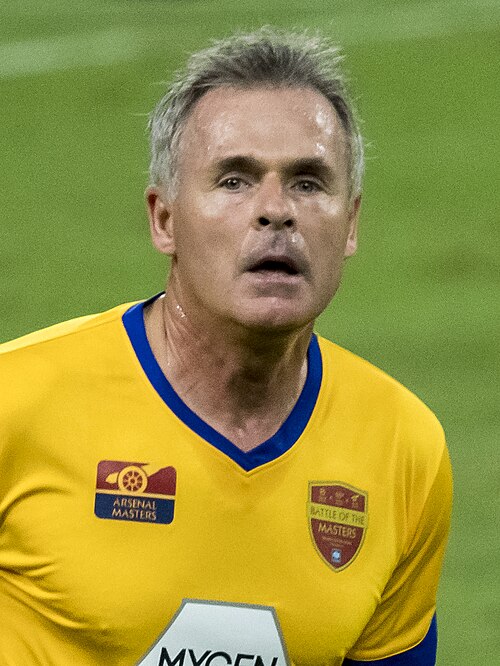
United changed shape at half-time. Bruce, carrying a hamstring injury, made way for Giggs; Keane moved to right back and Neville into the centre. Giggs supplied the width United had lacked. Southall saved from Butt, McClair headed against the bar and Scholes forced a double stop before Pallister's header was gathered. Everton had lost Limpar's invention to a hamstring strain by then, but Watson, Unsworth, Ablett and Jackson kept narrowing the route to goal. Royle remembered Ferguson having two good chances after replacing Rideout, while the contemporary report records Amokachi hesitating when Schmeichel had abandoned his goal late on. Everton could have settled it on the break, but instead had to defend the single-goal margin to the end.[1][3][5][8]
Schmeichel went into midfield for the final attacks, leaving his own goal exposed, but Everton did not need a second. The whistle confirmed the 1-0 win and a fifth FA Cup for the club, its first major trophy since the 1987 league championship. Watson, the man of the match, lifted the cup. Southall had completed the afternoon without conceding, just as he had in every round of the run except the semi-final.[1][3][8][6]
The complete route explains why Everton could survive United's pressure. Across six ties Royle's side scored 13 goals and conceded one. Derby County, Bristol City, Norwich City, Newcastle United and Manchester United all failed to score; only Tottenham did, from a penalty in Everton's 4-1 semi-final win. This was not a final in which an ordinary defence unexpectedly held out. It was the fifth clean sheet of a campaign designed around denying opponents a way through.[5][6][9]
For United, defeat completed a season without a major trophy for the first time since 1988-89. Ince and Hughes were making their final competitive appearances for the club, while Neville, Butt and Scholes were near the beginning of their careers. Everton moved into the Cup Winners' Cup and opened the following season by beating Blackburn in the Charity Shield, but this Wembley afternoon remained the summit of Royle's reign.[1][12][5][11]
How the match unfolded
- 21'Steve Bruce pulls a hamstring. The Manchester United captain stays on until half-time but is unable to move freely.[8]
- 30'Everton score on the break. Dave Watson and Anders Limpar win the ball from Paul Ince, Limpar releases Matt Jackson, and Jackson squares for Graham Stuart. Stuart hits the underside of the bar and Paul Rideout heads in the rebound.[1][2][3]
- half-timeRyan Giggs replaces the injured Bruce. Roy Keane moves to right back and Gary Neville moves into central defence as United reshape for the chase.[1]
- 51'Duncan Ferguson replaces Rideout after a challenge from Neville aggravates the goalscorer's knee problem.[1][12]
- second halfGiggs beats David Unsworth and crosses for Nicky Butt, but Neville Southall saves. Brian McClair later loops a header against the bar from another Giggs cross.[1]
- 69'Daniel Amokachi replaces Limpar, whose hamstring strain removes Everton's most creative outlet.[1]
- 72'Paul Scholes replaces Lee Sharpe. Scholes soon draws a remarkable double save from Southall, who then gathers Gary Pallister's header from Scholes's delivery.[1][3]
- full-timeEverton hold out. Dave Watson, the captain and man of the match, receives the FA Cup after the only goal of the afternoon proves enough.[1][12][8]
Match facts
Where they played
Both sides as they lined up. Choose any player to read what they did in this final.
Select a shirt for that player's note.
Route to the final
Everton
- Third round: Derby County (h) won 1-0
- Fourth round: Bristol City (a) won 1-0
- Fifth round: Norwich City (h) won 5-0
- Quarter-final: Newcastle United (h) won 1-0
- Semi-final: Tottenham Hotspur (Elland Road) won 4-1
Manchester United
- Third round: Sheffield United (a) won 2-0
- Fourth round: Wrexham (h) won 5-2
- Fifth round: Leeds United (h) won 3-1
- Quarter-final: Queens Park Rangers (h) won 2-0
- Semi-final: Crystal Palace (Villa Park) drew 2-2
- Semi-final replay: Crystal Palace (Villa Park) won 2-0
Line-ups
Everton · 4-4-2
- Neville Southall Goalkeeper. Preserved the lead with a string of second-half saves
- Matt Jackson Right back. Overlapped on the break and squared for Stuart before the goal
- Dave Watson Centre back and captain. Won the duel that began the scoring move and was named man of the match
- David Unsworth Centre back. Covered across the defence as United pressed
- Gary Ablett Left back
- Anders Limpar Right midfield. Repeatedly dispossessed Ince and launched the move for the goal
- Barry Horne Central midfield. Pressed and screened alongside Parkinson
- Joe Parkinson Central midfield. Kept Ince and Keane under pressure
- Andy Hinchcliffe Left midfield. His first-half corners tested United's defence
- Graham Stuart Second striker. Hit the underside of the bar before Rideout headed in the rebound
- Paul Rideout Centre forward. Scored the only goal with a rebound header
Manchester United · 4-5-1
- Peter Schmeichel Goalkeeper. Went forward for late set pieces as United chased an equaliser
- Gary Neville Right back before moving into central defence at half-time
- Steve Bruce Centre back and captain. Injured a hamstring in the first half and came off at the interval
- Gary Pallister Centre back. Had a late header gathered by Southall
- Denis Irwin Left back
- Nicky Butt Right midfield in the contemporary formation. Denied by Southall after Giggs crossed
- Roy Keane Central midfield before moving to right back at half-time
- Paul Ince Central midfield. Lost possession under pressure in the move for the goal
- Brian McClair Central midfield in the contemporary formation. Headed against the bar in the second half
- Lee Sharpe Left midfield. Replaced by Scholes as United increased the pressure
- Mark Hughes Lone centre forward. Played his final competitive match for United
Trivia and detail
- Everton had lost their previous three FA Cup finals: to Manchester United in 1985 and to Liverpool in 1986 and 1989.[2]
- The Prince of Wales presented the trophy. Princes William and Harry were attending their first FA Cup final.[8][12]
- Everton had also beaten Manchester United 1-0 at Goodison Park in the league that season, through a Duncan Ferguson header.[5][8]
- Daniel Amokachi entered the semi-final against Tottenham by mistake after misreading the signal from Everton's physio. The substitution stood, and he scored twice in the 4-1 win.[5][3]
- Royle remembered the fourth-round trip to Bristol City as Everton's hardest tie. Illness affected the squad, the pitch was a bog, and right-footed right back Matt Jackson won it with a left-foot half-volley.[5]
- On the journey back to Merseyside, the FA Cup was carried into a Burger King beside the M6, according to Graham Stuart's account of the celebrations.[5]
- Limpar did not normally drink, but joined in on the night of the final and was unwell the following day, Royle recalled.[5]
- Former FA chief executive Graham Kelly later wrote that the Prince of Wales initially tried to hand the trophy to United's losing captain, Steve Bruce, rather than Everton's Dave Watson.[10]
- Cantona, Kanchelskis and Cole had scored 41 goals for United between them that season; Cole had also scored another 15 for Newcastle before his transfer.[12]
How well do you know the 1995 final?
Five questions. Every answer is sourced from the material on this page.
-
Who scored the only goal of the 1995 FA Cup final?
-
Which goalkeeper protected Everton's lead with a series of second-half saves?
-
How many goals did Everton concede in their entire FA Cup run?
-
Who captained Everton and was named man of the match?
-
Which United substitute changed the attack after half-time?
Answer
Ryan Giggs. Giggs replaced the injured Bruce at the interval and supplied United's most dangerous crosses.[1]
What is not settled
Honesty matters more than tidiness. These details are contested or unrecorded, and we have not guessed at them:
- Manchester United's starting shape is given as 4-5-1 by the contemporary Independent report. Later line-up tables often group Brian McClair with Mark Hughes as a second forward. The formation pitch follows the contemporary report.
- Bruce's replacement is described as a half-time substitution in the contemporary report and as the 46th minute in later line-up notation. These describe the same interval change; the record says half-time.
- The contemporary report describes Southall making a double save from Scholes and then gathering Pallister's header. Some later summaries compress those into a double save from Scholes and Pallister. The timeline follows the contemporary sequence.
- The referee's county affiliation appears as Worcester or Worcestershire in the contemporary and historical final records. One later competition summary says Gloucestershire. The record uses Worcestershire, supported by the match report and the standard final listing.
- No standalone rightsholder upload of the full final was found. The only official candidate located is an FA compilation containing the 1995 final among Everton's five selected cup moments, so it remains a proposal rather than an embed.
How we know
Every claim on this page is tied to a numbered source below. These are the contemporary records behind it, each one fetched and matched word for word before publication rather than taken on trust:
- Glenn Moore's match report, 22 May 1995: attendance, formations, line-ups, goal, chances, substitutions and referee · The Independent
- FA historian David Barber's account: result, goal, league finish and earlier final defeats · The Football Association
Where a primary record and a modern account disagree, we show both rather than choosing the tidier number.
Sources
- Limpar's three steps to heaven · The Independent
- Memory lane: Classic Reds v Blues FA Cup Finals · The Football Association
- From 'needing snookers' to FA Cup glory - Everton 30 years on · BBC Sport
- 20 May 1995 - how the teams lined up · BBC Sport
- Everton's Dogs of War relived: 25 years on from 1995 FA Cup final win over Manchester United · Sky Sports
- England - FA Challenge Cup 1994-1995 · RSSSF
- England 1994/95 · RSSSF
- 1995 FA Cup Final · ToffeeWeb
- Everton's FA Cup Record · ToffeeWeb
- Everton v Manchester United, FA Cup Final 1995 · ToffeeWeb
- FA Cup - Manchester United Trophy Room · Manchester United FC
- 1995 FA Cup final · Wikipedia