1993-94 FA Cup · The Final
1994 FA Cup Final: Manchester United 4-0 Chelsea
The 4-0 scoreline records Manchester United's nine-minute second-half burst, but it erases the hour in which Chelsea made the better chances and seemed capable of completing a season-long hold over the champions.
Chelsea had beaten Manchester United twice in the league and hit the Wembley crossbar before two penalties broke the final open. United's late avalanche delivered the club's first Double and left a scoreline harsher than the match that produced it.
Saturday 14 May 1994 · Wembley Stadium
What you will not find elsewhere
United's cup-final song was number two on final day, not number one
Come On You Reds is remembered as a number-one cup-final single, but the timing matters. The Official Charts archive for 8 to 14 May 1994, the chart period ending on the day of the final, places it at number two behind Stiltskin's Inside. The next chart, covering 15 to 21 May after United had won the cup, moved it to number one. The song became a chart-topper because of the Wembley week; it was not yet one when the teams kicked off.[8][9]
The second penalty is not an uncontested foul inside the area
The contemporary Independent report says television replay showed the contact between Sinclair and Kanchelskis occurred outside the penalty area. The Guardian described the incident as a collision and noted that the decision did not strengthen Elleray's reputation. Sinclair later told Chelsea's official site that he did not think it was a foul. The correct historical description is therefore a disputed penalty, not a settled foul clearly committed inside the box.[2][1][6]
Chelsea won two of three meetings, but United won the aggregate
Chelsea beat United 1-0 at home and 1-0 away in the league, then lost the final 4-0. Across the season Chelsea therefore won two of the three meetings, yet United led the aggregate score 4-2. It is a compact explanation of why the final looked plausible for an hour and emphatic only at the end: Chelsea's method had already worked twice, until the penalties broke it.[14][6][10]
Sinclair's own verdict supports treating the second penalty as disputed
Frank Sinclair later told Chelsea's official site that he knew the decision was a mistake at the time and did not even think the challenge was a foul. That verified recollection cannot overturn the referee's decision, but it belongs beside the contemporary reports that placed the contact outside the area. Together they justify preserving the dispute instead of writing the second penalty as an uncontested foul.[6][2][1]
The footage
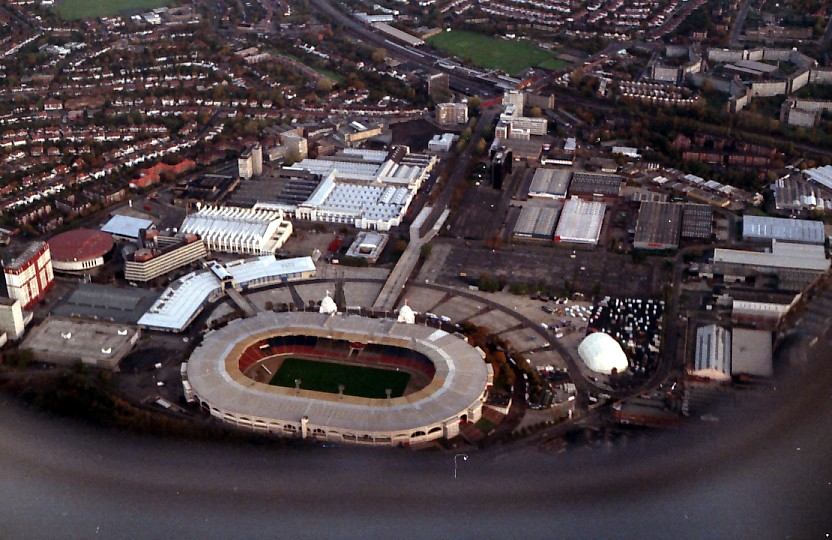
The match report
Manchester United beat Chelsea 4-0 at Wembley on Saturday 14 May 1994, but the most familiar fact about the final is also the least faithful summary of it. There was no United goal in the first half and no sense, for an hour, that four were coming. Contemporary reports agree that Chelsea had been the better side before the first penalty. The league champions eventually produced the biggest winning margin in a final since 1903, yet the avalanche belonged to the last half-hour rather than to the whole afternoon.[1][2][4]
Chelsea had reasons to believe the champions could be beaten. Glenn Hoddle's side had won both league meetings 1-0, at Stamford Bridge and Old Trafford, even though it finished fourteenth while United won the title. Chelsea had not appeared in an FA Cup final for 24 years, but its narrow diamond unsettled United again. Eddie Newton protected the back four, Gavin Peacock broke from behind John Spencer and Mark Stein, and Dennis Wise and Craig Burley denied United the comfortable midfield rhythm expected of a champion side.[14][6][11][2]
The chance that defined the first half came after 25 minutes. Spencer crossed, Peacock reached the ball and struck the crossbar with Peter Schmeichel beaten. Chelsea also forced openings for Stein and Spencer, while United's attacks repeatedly ended in blocks or hurried finishes. The teams went in at 0-0. Ian Ridley's contemporary report described Chelsea as the better team up to that point; David Lacey's account judged the final score severe on a side whose resistance had been real rather than cosmetic.[1][2]
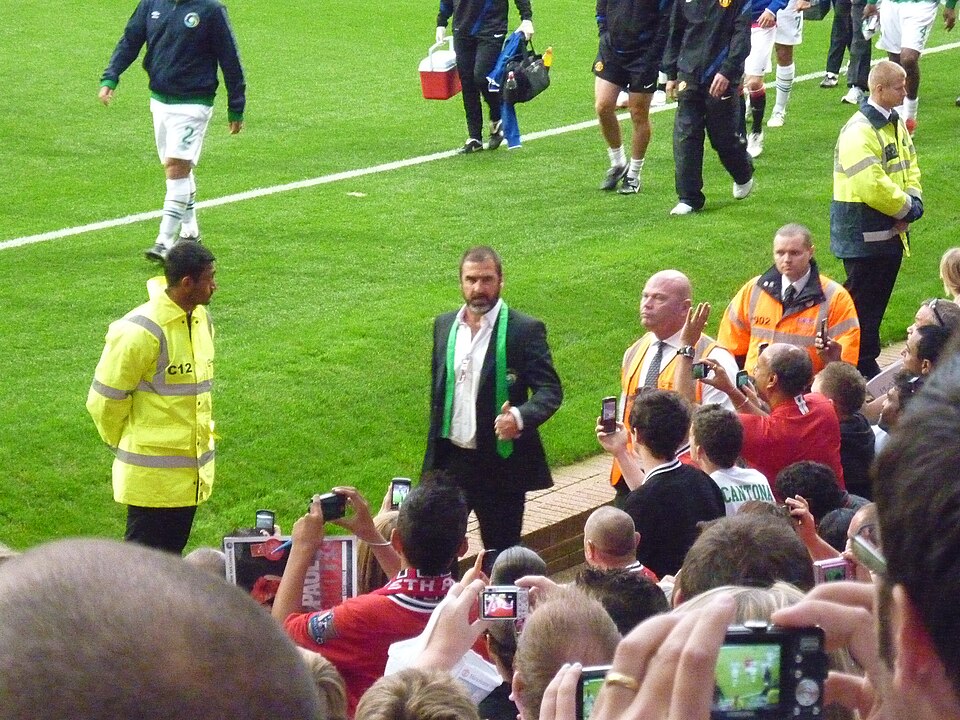
The match turned on the hour. Newton lunged at Denis Irwin and David Elleray pointed to the spot, a decision that brought little argument. Eric Cantona waited for Kharine to move and placed the penalty the other way. Six minutes later Elleray gave another when Sinclair met Kanchelskis near the edge of the area. This one never settled into an agreed fact. The Independent's report said television replay located the contact outside the box, the Guardian called it a collision, and Sinclair later told Chelsea's official site that he did not believe it was a foul at all. Cantona repeated the same finish and United led 2-0.[1][2][6][3]
Once the second penalty went in, Chelsea's structure disappeared. Three minutes later a partial clearance dropped to Mark Hughes, who controlled it and drove in the third. Hoddle had already sent himself on and Tony Cascarino followed, but the changes could not restore the contest. The decisive sequence had taken nine minutes: Cantona at 60 and 66, Hughes at 69. A final that had been level and competitive became a rout before Chelsea could absorb the first setback.[1][2][10]
Brian McClair completed the score in stoppage time, six minutes after replacing Irwin. Paul Ince broke into the area and squared for the substitute to finish. The fourth did not change the trophy, but it fixed the public memory of the match: a perfect expression of United's superiority rather than a late enlargement of it. Even Lacey, writing from the final, concluded that the scoreline was harsh on Chelsea. United had been ruthless at the exact point when the game stopped being balanced.[1][2][10]
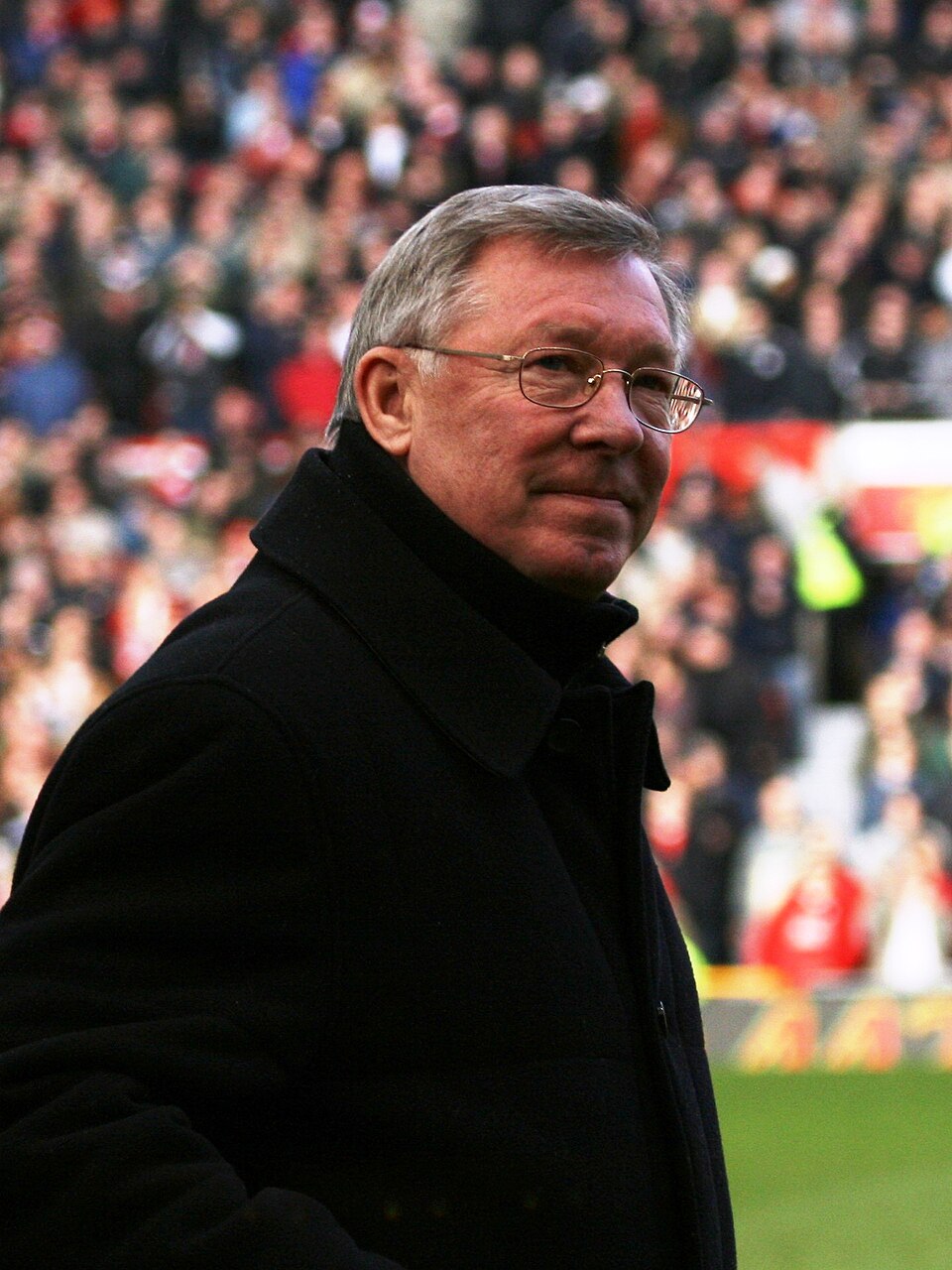
The victory made United the fourth club in the twentieth century to complete the League and FA Cup Double, and the first in the club's history. It also brought an eighth FA Cup, drawing level with Tottenham Hotspur's record at the time. The domestic treble had vanished in March, when Aston Villa beat United in the League Cup final, but Ferguson's side had turned the disappointment into the two trophies that mattered most. The club's official history still marks 1994 as the first of Ferguson's Doubles.[1][2][5][13]
Chelsea's reward came from the competition United had already won. Because the champions entered the European Cup, the FA Cup place in the following season's Cup Winners' Cup passed to the runners-up. Chelsea returned to European competition and reached the semi-finals. The final therefore divided two futures as sharply as it divided the afternoon: United left with the Double and the song that would become number one on the next chart, while Chelsea left with a 4-0 defeat that concealed both its best hour at Wembley and the European run the occasion opened.[7][8][9][1]
How the match unfolded
- 25'Gavin Peacock reaches John Spencer's cross and strikes the crossbar. Chelsea have made the clearer chances in the goalless first half.[1][2]
- 45'Half-time arrives with the score 0-0. Contemporary reports agree that Chelsea have made the better chances, with Peacock's shot against the bar the closest either side has come.[1][2]
- 60'Eddie Newton lunges at Denis Irwin inside the area. Elleray awards the first penalty and Eric Cantona sends Dmitri Kharine the wrong way.[1][2]
- 66'Frank Sinclair and Andrei Kanchelskis collide near the edge of the area. Elleray gives another penalty, although television replays put the contact outside the box. Cantona again sends Kharine the wrong way.[1][2][6]
- 68'Chelsea player-manager Glenn Hoddle substitutes himself for Craig Burley as Chelsea chase the match.[2][12]
- 69'A Chelsea clearance falls to Mark Hughes, who controls and scores United's third. The contemporary Guardian scorer line records the goal at 69 minutes.[1][10]
- 84'United make a double substitution: Lee Sharpe replaces Kanchelskis and Brian McClair replaces Irwin.[10][12]
- 90'Paul Ince squares the ball for McClair to score in stoppage time and complete the 4-0 win.[1][2]
Match facts
Where they played
Both sides as they lined up. Choose any player to read what they did in this final.
Select a shirt for that player's note.
Route to the final
Manchester United
- Third round: Sheffield United (a) won 1-0
- Fourth round: Norwich City (a) won 2-0
- Fifth round: Wimbledon (a) won 3-0
- Quarter-final: Charlton Athletic (h) won 3-1
- Semi-final: Oldham Athletic (Wembley) drew 1-1 after extra time
- Semi-final replay: Oldham Athletic (Maine Road) won 4-1
Chelsea
- Third round: Barnet (Stamford Bridge, nominally away) drew 0-0
- Third-round replay: Barnet (h) won 4-0
- Fourth round: Sheffield Wednesday (h) drew 1-1
- Fourth-round replay: Sheffield Wednesday (a) won 3-1
- Fifth round: Oxford United (a) won 2-1
- Quarter-final: Wolverhampton Wanderers (h) won 1-0
- Semi-final: Luton Town (Wembley) won 2-0
Line-ups
Manchester United · 4-4-2
- Peter Schmeichel Goalkeeper
- Paul Parker Right back
- Steve Bruce Captain and centre back
- Gary Pallister Centre back
- Denis Irwin Left back. Won the first penalty
- Andrei Kanchelskis Right midfield. Won the disputed second penalty
- Roy Keane Central midfield
- Paul Ince Central midfield. Supplied McClair for the fourth goal
- Ryan Giggs Left midfield
- Eric Cantona Forward. Scored both penalties
- Mark Hughes Forward. Scored United's third goal
Chelsea · 4-1-2-1-2
- Dmitri Kharine Goalkeeper
- Steve Clarke Right back
- Jakob Kjeldbjerg Centre back
- Erland Johnsen Centre back
- Frank Sinclair Left back. Penalised for the disputed second penalty
- Eddie Newton Holding midfield. Conceded the first penalty
- Craig Burley Central midfield
- Dennis Wise Captain and central midfield
- Gavin Peacock Played behind the forwards and struck the crossbar
- John Spencer Forward. Crossed for Peacock's first-half chance
- Mark Stein Forward
Trivia and detail
- Cantona became the first player to score two penalties in an FA Cup final. He sent Kharine the wrong way with both kicks.[1][2]
- Hoddle was Chelsea's player-manager and brought himself on for Burley during the second half.[2][12]
- McClair entered as a substitute in the 84th minute and still scored the fourth goal in stoppage time.[10][1]
- United needed a semi-final replay. Hughes equalised against Oldham Athletic at the end of extra time in the first match, before United won the replay 4-1 at Maine Road.[13][15]
- Barnet's nominal home tie against Chelsea was played at Stamford Bridge after the venue was switched. It ended 0-0, and Chelsea won the replay at the same ground 4-0.[14][16]
- Chelsea had not reached the final since defeating Leeds United after a replay in 1970.[4][12]
- The win was United's eighth FA Cup, matching Tottenham Hotspur's competition record at the time.[1][5]
- Chelsea reached the Cup Winners' Cup semi-finals in the following season, losing to eventual winners Real Zaragoza.[7]
How well do you know the 1994 final?
Five questions. Every answer is sourced from the material on this page.
-
Which Chelsea player struck the crossbar in the first half?
-
Who scored both of Manchester United's penalties?
-
Where was Come On You Reds in the official chart covering the day of the final?
-
Why did Chelsea enter the Cup Winners' Cup after losing the final?
Answer
United had qualified for the European Cup. United's league title took them into the European Cup, so the FA Cup's European place passed to the runners-up.[7]
-
Which United substitute scored the fourth goal?
What is not settled
Honesty matters more than tidiness. These details are contested or unrecorded, and we have not guessed at them:
- Mark Hughes's goal is recorded at 69 minutes by the contemporary Guardian scorer line and MUFCInfo, but at 68 in several later summaries. The record uses 69 because the contemporary source and match database agree.
- Glenn Hoddle's substitution is recorded at 68 minutes by the contemporary Independent report, but at 66, 67 or 68 in later databases. Tony Cascarino's is variously 78 or 79. The record follows the contemporary report's 68 and 78.
- The second penalty remains disputed. The contemporary Independent says replay showed the contact outside the area, the Guardian describes a collision, Sinclair says he did not think it was a foul, and Elleray defended his decision after the match. The record reports the disagreement rather than deciding it.
- Chelsea's 4-1-2-1-2 formation is a representational reconstruction from the contemporary tactical description of Newton ahead of the back four and Peacock breaking from deep. Later databases sometimes flatten the same selection into a 4-4-2 with a double pivot.
- No Football Association page reached in this session prints the attendance. The contemporary Independent report and MUFCInfo independently give 79,634, so the field carries both citations.
- A possible official Manchester United video could not receive the brief's required oEmbed confirmation because YouTube returned HTTP 401 to repeated requests. It was excluded from video_candidates and the record remains video.state none.
How we know
Every claim on this page is tied to a numbered source below. These are the contemporary records behind it, each one fetched and matched word for word before publication rather than taken on trust:
- David Lacey's contemporary match report, 16 May 1994: score, scorers, match sequence, line-ups, referee and historical context · The Guardian
- Ian Ridley's contemporary match report, 14 May 1994: attendance, match sequence, chances, substitutions and second-penalty replay · The Independent
- Contemporary follow-up on David Elleray's penalty decisions · The Independent
- FA retrospective: goalless first half, second-half four-goal burst and scorers · The Football Association
- Contemporary tactical preview describing Newton ahead of the back four and Peacock breaking from deep · The Independent
Where a primary record and a modern account disagree, we show both rather than choosing the tidier number.
Sources
- Small beer, large Double · The Guardian
- Football / FA Cup Final: Cantona's double take · The Independent
- Football / FA Cup Final: Conscience clear for man on spot · The Independent
- Chelsea v Manchester United preview · The Football Association
- FA Cup - Manchester United Trophy Room · Manchester United FC
- Cup final exclusive: Frank Sinclair · Chelsea FC
- Long read: The story of Chelsea's return to European glory · Chelsea FC
- Official Physical Singles Chart, 8 May 1994 to 14 May 1994 · Official Charts Company
- Official Physical Singles Chart, 15 May 1994 to 21 May 1994 · Official Charts Company
- Chelsea 0 Manchester United 4, 14 May 1994 · MUFCInfo
- Ferguson ready for the highest honour · The Independent
- 1994 FA Cup final · Wikipedia
- 1993-94 Manchester United F.C. season · Wikipedia
- 1993-94 Chelsea F.C. season · Wikipedia
- FA Cup 1993-1994 - all matches · WorldFootball.net
- Chelsea previous cup results, 1993-94 · MyChelseaFC