1995-96 FA Cup · The Final
1996 FA Cup Final: Manchester United 1-0 Liverpool
Cantona's late double-Double final
Liverpool reached Wembley after a nineteen-goal cup run, yet one late clearance and one Cantona volley decided the trophy.
Manchester United beat Liverpool with the only goal of a final remembered more often for its clothes than its football. The match itself was a patient midfield contest, settled when Eric Cantona turned a weak punch into history.
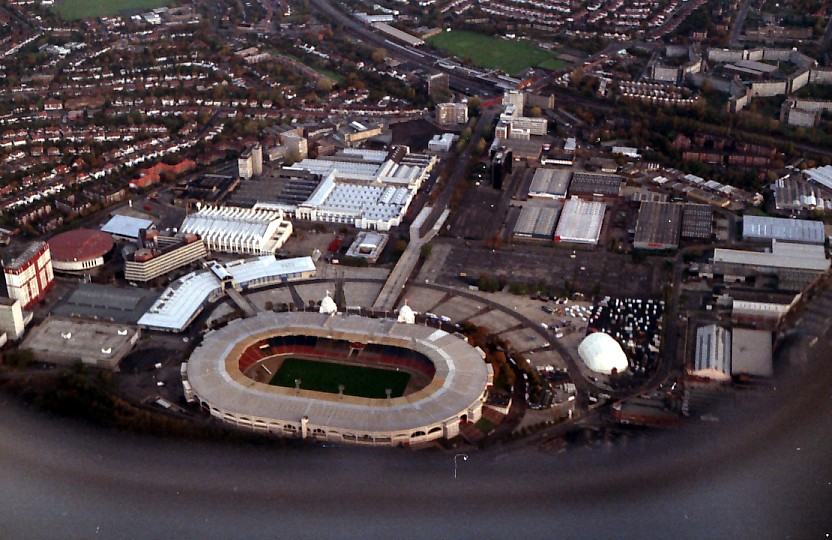
Saturday 11 May 1996 · Wembley Stadium
What you will not find elsewhere
A nineteen-goal route ended scoreless; the less fluent cup run won
Added directly from the round-by-round records, Liverpool reached Wembley with nineteen goals scored and one conceded. Manchester United arrived with thirteen scored and five conceded, after Sunderland forced a replay and both Manchester City and Chelsea led against them. The final reversed those profiles: Liverpool's only concession before Wembley became irrelevant when they could not score there, while United produced another one-goal win. This is not a claim about which team deserved the cup. It is the arithmetic of how radically the final departed from the routes that preceded it.[3][6][4]
The white suits explain the memory, not the result
Liverpool's official retrospective records Roy Evans rejecting the idea that the players' white suits caused the defeat. His football explanation is plainer: neither team performed, Manchester United scored and Liverpool did not. The contemporary match report supports that distinction by describing imprecise passing, wasteful shooting and one finish of exceptional quality. Treating the outfit as a cause mistakes the most reusable photograph for evidence about the match.[9][1]
Evans rejected the story that the white suits caused the defeat
Roy Evans stated plainly in Liverpool's official retrospective that the white suits did not cost his team the game. The verified words are valuable because they separate a memorable visual detail from a football explanation. Manchester United scored and Liverpool did not; the contemporary report describes a poor final settled by Cantona's exceptional finish, not by what either side wore before kick-off.[9][1]
The footage
The match report
Manchester United beat Liverpool 1-0 at Wembley on Saturday 11 May 1996. Eric Cantona scored the only goal late in the match, giving United a record ninth FA Cup and making them the first English club to complete the league and FA Cup Double twice. Manchester United's own history records the 1994 and 1996 Doubles together; the contemporary report treated this one as history arriving through a single flawless volley.[1][7][4]
The attacking promise was real before kick-off. Liverpool had scored nineteen goals and conceded once on their route to Wembley, including emphatic wins over Rochdale, Shrewsbury Town, Leeds United and Aston Villa. United's route was rougher: Sunderland forced a replay, Manchester City led at Old Trafford and Chelsea scored first in the semi-final. Nor was the final isolated from the rivalry's season. Liverpool had beaten United 2-0 at Anfield and drawn 2-2 at Old Trafford, with Robbie Fowler scoring all four Liverpool goals. The Old Trafford match was Cantona's return from an eight-month suspension: he created Nicky Butt's early goal and converted the equalising penalty. Wembley therefore paired the forward who had repeatedly hurt United with the player around whom United's season had been rebuilt. The final contradicted both the cup journeys and those league meetings. Liverpool's free-scoring side did not score, while United found a way through after a match of few clear chances.[3][6][4][12][11]
United established the firmer midfield shape. Roy Keane and Nicky Butt denied Steve McManaman room, Ryan Giggs moved infield to crowd Jamie Redknapp and John Barnes, and Cantona drifted right to pull at Liverpool's back three. That movement posed a recurring choice for the wing-backs: follow Cantona and leave width elsewhere, or pass him on and give United's captain space. Andy Cole volleyed an early chance wide. The better opening came when Phil Neville released Giggs, whose pass left David Beckham shooting from the edge of the area; David James turned it aside. Liverpool's response was to involve Stan Collymore more directly. He demanded the ball and at least began shooting, even when David May's pressure made the attempts hurried and inaccurate.[1]
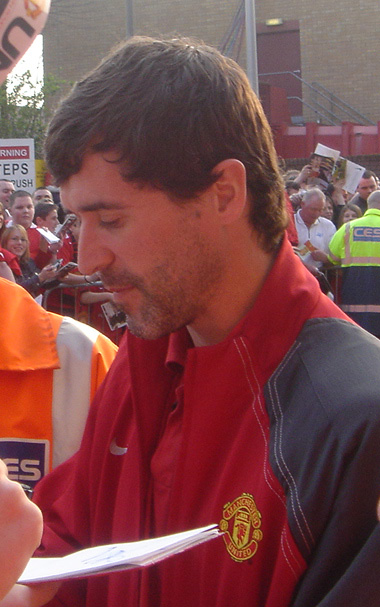
Liverpool came closest before the interval. McManaman reached the byline, Mark Wright laid his pass back and Redknapp shot over. Early in the second half Cantona met Beckham's deep cross and James saved one-handed. Liverpool then found more patient possession and McManaman began to carry the ball farther, but the finishing remained poor. A later Redknapp drive was held by Peter Schmeichel. United's back line remained compact enough that Schmeichel was rarely forced into a difficult save.[1]
The substitutions supplied their own false ending. Paul Scholes replaced Cole, while Ian Rush came on for Stan Collymore in his final Liverpool appearance. A late Beckham corner should have been cleared. James stretched to punch but drove the ball down, Rush diverted it into Cantona's path, and the United captain stepped back before sending a right-footed volley through the bodies between him and goal.[1][2][11]
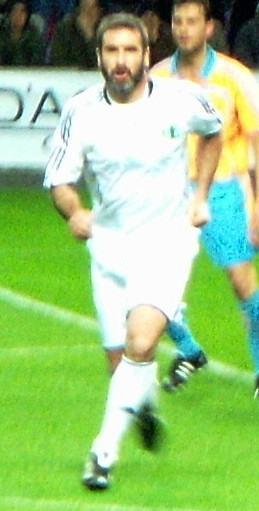
Accounts label the goal as either the 85th or the 86th minute. The contemporary Independent headline and Liverpool's match archive use 85, while a later Guardian reconstruction calls it a volley in the 86th. This page records 85 as the event label and preserves the other convention here rather than pretending the sources agree. They describe the same late strike, not two different moments.[1][2][11]
The white suits became the easier story, but Liverpool's own account rejects them as an explanation. Roy Evans later said the clothing did not cost Liverpool the game and argued that neither side truly performed; United simply scored and Liverpool did not. That reading matches the contemporary report, which called the football imprecise and the shooting wasteful. The fashion survives because it is visible in a photograph. The defeat came from a corner, a punch and a volley.[9][1]
Cantona lifted the cup as United's captain after Steve Bruce was omitted from the side, while Keane was named man of the match for controlling the midfield. For Liverpool the afternoon closed an era more quietly: Rush's substitute appearance was his last for the club. United's ninth cup and second Double were the official records, but the decisive image was simpler - Cantona moving backwards to meet a loose ball while almost everyone else moved towards the goal.[1][11][12][7]
How the match unfolded
- Opening minutesCantona heads David May's forward ball into Andy Cole's path, but the striker volleys wide. United settle first, with Roy Keane and Nicky Butt closing the Liverpool midfield.[1]
- First halfPhil Neville releases Ryan Giggs on the left. Giggs rolls the ball to the edge of the area and David Beckham's powerful shot is turned aside by David James.[1]
- Before half-timeSteve McManaman reaches the byline and finds Mark Wright, whose lay-off gives Jamie Redknapp a clear shooting chance. Redknapp drives over from inside the area.[1]
- 45'Half-time: Liverpool 0-0 Manchester United. Neither side has converted the few openings created.[2][4]
- Early second halfCantona outjumps Jason McAteer to meet Beckham's deep cross and shoots as the ball drops. James saves one-handed.[1]
- 65'Paul Scholes replaces Andy Cole as Alex Ferguson changes United's attack.[2][1]
- 74'Ian Rush replaces Stan Collymore for what proves to be Rush's final Liverpool appearance.[1][12]
- 85'Goal. James punches Beckham's corner down rather than clear. Rush diverts the loose ball towards Cantona, who steps back and drives a right-footed volley through the crowded penalty area. Liverpool 0-1 Manchester United.[1][2][10]
- 89'Gary Neville replaces Beckham as United protect the lead in the closing moments.[2][5]
- 90'Full-time: Manchester United have won their ninth FA Cup and become the first English club to complete the league and FA Cup Double twice.[1][7]
Match facts
Where they played
Both sides as they lined up. Choose any player to read what they did in this final.
Select a shirt for that player's note.
Route to the final
Liverpool
- Third round: Rochdale (h) won 7-0
- Fourth round: Shrewsbury Town (a) won 4-0
- Fifth round: Charlton Athletic (h) won 2-1
- Quarter-final: Leeds United (a) drew 0-0
- Quarter-final replay: Leeds United (h) won 3-0
- Semi-final: Aston Villa (Old Trafford) won 3-0
Manchester United
- Third round: Sunderland (h) drew 2-2
- Third round replay: Sunderland (a) won 2-1
- Fourth round: Reading (a) won 3-0
- Fifth round: Manchester City (h) won 2-1
- Quarter-final: Southampton (h) won 2-0
- Semi-final: Chelsea (Villa Park) won 2-1
Line-ups
Liverpool · 3-4-1-2
- David James Goalkeeper. Saved from Beckham and Cantona before his punch from the late corner fell into the path of the winner
- John Scales Right of the back three. Helped contain Cole before the striker was substituted
- Mark Wright Centre of the back three. His lay-off created Redknapp's best first-half chance
- Phil Babb Left of the back three
- Jason McAteer Right wing-back. Contested the deep cross from which Cantona forced a second-half save
- Jamie Redknapp Central midfield. Had Liverpool's clearest first-half opening but shot over
- John Barnes Captain and central midfielder, denied time and space by United's pressing
- Rob Jones Left wing-back. Replaced by Michael Thomas late in the match
- Steve McManaman Played behind the two forwards. Created the move that ended with Redknapp shooting over
- Robbie Fowler Forward. United's midfield pressure repeatedly forced him away from goal
- Stan Collymore Forward. Replaced by Ian Rush in the second half
Manchester United · 4-4-1-1
- Peter Schmeichel Goalkeeper. Held Redknapp's long-range effort and kept a clean sheet
- Denis Irwin Right back and an experienced presence in United's youthful starting side
- Gary Pallister Centre back
- David May Centre back. His forward pass began United's first opening for Cole
- Phil Neville Left back. Released Giggs in the move that led to Beckham's saved shot
- David Beckham Right midfield. His shot forced an early save and his late corner created the goal
- Roy Keane Central midfield and man of the match. Led United's pressure on Liverpool's creators
- Nicky Butt Central midfield. Partnered Keane in closing down Liverpool
- Ryan Giggs Left midfield. Set up Beckham's first-half shot
- Eric Cantona Captain and supporting forward. Scored the only goal with a late volley
- Andy Cole Centre forward. Missed an early volley and was replaced by Scholes
Trivia and detail
- Cantona became the first captain from outside the British Isles to lift the FA Cup.[11]
- United were appearing in a third consecutive final: they beat Chelsea in 1994, lost to Everton in 1995 and beat Liverpool in 1996.[7][4]
- The match rules still required a replay if the sides remained level after extra time. It was scheduled for Thursday 16 May at Wembley.[12]
- Only three substitutes could be named and each side could use no more than two. Both managers made their full allocation of changes.[12][2]
- The other match officials were assistant referees Anthony Bates of Staffordshire and Peter Walton of Northamptonshire, with Paul Durkin of Dorset as fourth official.[12]
- Both clubs released cup-final singles. Liverpool's Pass & Move (It's the Liverpool Groove) reached number four in the UK chart, while United's Move Move Move (The Red Tribe) reached number six.[12]
- Neil Ruddock was left out of Liverpool's squad despite playing in both the quarter-final and semi-final and starting each of the club's final six league matches.[12]
- Lee Sharpe was United's unused substitute. It was his final involvement in a United matchday squad before he moved to Leeds United that summer.[5][12]
How well do you know the 1996 final?
Five questions. Every answer is sourced from the material on this page.
-
Who scored the only goal of the 1996 FA Cup final?
-
Who was named man of the match?
-
Which Liverpool substitute was making his final appearance for the club?
-
What did the win make Manchester United the first English club to do?
-
How many goals had Liverpool scored on their route to Wembley?
Answer
Nineteen. Adding their six pre-final match results gives nineteen scored and only one conceded.[3]
What is not settled
Honesty matters more than tidiness. These details are contested or unrecorded, and we have not guessed at them:
- The goal minute is a presentation conflict, not a disputed event. The contemporary Independent headline and Liverpool's match archive label it 85; later sources including The Guardian call it the 86th minute. This page uses 85 and records both conventions.
- Michael Thomas replacing Rob Jones is logged at 85 by the contemporary Independent player assessment, at 86 by the standard line-up table, and appears at 74 in LFChistory's compressed timeline display. The substitution is recorded at 85 but the minute should not be treated as fully resolved.
- Paul Scholes replacing Andy Cole is variously shown at 64, 65 and described as after 63 minutes. The contemporary Independent assessment and Liverpool match archive support 65, which is used here.
- Liverpool's shape is reconstructed as 3-4-1-2 from the listed roles: three centre-backs, two wing-backs, two central midfielders, McManaman behind two forwards. No contemporary source consulted prints a formation label, so the personnel are confirmed but the shape remains an interpretation.
- No reachable Football Association document was found that prints the attendance. The figure 79007 is independently repeated by LFChistory and RSSSF.
- The official Manchester United archive has a full-match stream on MUTV, but the project video verifier accepts YouTube candidates. No rightsholder YouTube upload of this final was found, so video remains none.
How we know
Every claim on this page is tied to a numbered source below. These are the contemporary records behind it, each one fetched and matched word for word before publication rather than taken on trust:
- Ian Ridley match report and Norman Fox player assessments, 12 May 1996 · The Independent on Sunday
Where a primary record and a modern account disagree, we show both rather than choosing the tidier number.
Sources
- Cantona the incomparable · The Independent on Sunday
- Liverpool 0-1 Manchester United, 11 May 1996 · LFChistory.net
- Liverpool in the FA Cup, season by season · LFChistory.net
- England FA Cup finals 1946-2000 · Rec.Sport.Soccer Statistics Foundation
- 1996 FA Cup final line-up · mufcinfo.com
- Manchester United FA Cup record · mufcinfo.com
- FA Cup trophy room · Manchester United FC
- Match Rewind: 1996 FA Cup final · Manchester United FC
- 60 years ago today: the start of Roy Evans' Liverpool career · Liverpool FC
- The history of Liverpool and Manchester United · Liverpool FC
- Golden Goal: Eric Cantona for Manchester United v Liverpool · The Guardian
- 1996 FA Cup final · Wikipedia