1966-67 FA Cup · The Final
1967 FA Cup Final: Tottenham Hotspur 2-1 Chelsea
The Cockney Cup Final
The BBC did not televise this final live, the broadcaster that did has lost the tape, and the most complete surviving record of the first all-London final is a highlights film with a hole in the second half.
Tottenham beat Chelsea in the first final between two London clubs, and then the only complete recording of it was thrown away.
Saturday 20 May 1967 · Wembley Stadium
What you will not find elsewhere
The BBC missed the first all-London final, and the complete recording is gone
The broadcast archive that logs BBC and ITV coverage of the final season by season, from the middle of the nineteen fifties to the end of the nineteen sixties, records a live BBC transmission for every final it covers except this one. In 1967 the BBC stayed off the air until the evening. ITV took the whole match live inside World of Sport, with Hugh Johns and Billy Wright commentating, while the BBC waited until that night and ran a 50 minute highlights programme on Match of the Day with Kenneth Wolstenholme. The consequence is the part that still matters. ITV's live coverage has never resurfaced, and researchers who have gone looking report that it is not in the ITV Sport archive. The commercial DVD sold as the full match contains the BBC highlights instead, and those highlights are missing the start of the second half. The most complete surviving record of the first final between two London clubs is therefore an edited film with a hole in it.[14][15][16]
Which foot did Robertson score with? The record does not agree with itself
The standard account of the opening goal has Jimmy Robertson striking it with his right foot. The fullest surviving match report, archived from fa-cupfinals.co.uk, says twice that he was shooting with his left: it describes his earlier fourteenth-minute effort as a powerful left-foot volley and the goal itself as coming again left-footed. Robertson, talking to Tottenham's own website 50 years afterwards, said he had been an outside left whom Bill Nicholson moved to the right wing even though he was right-footed. Two of the three readings cannot be right, and with the live film gone there is no way to settle it, so this page records the goal without a foot attached to it.[1][10][18]
Five finals, five wins: Tottenham had still never lost one
This was Tottenham's fifth FA Cup and also their fifth final. They won in 1901 after a replay, in 1921, in 1961, in 1962 and again here, and had never been beaten in the fixture. The record held through two more wins, in 1981 and in 1982, and ended in 1987 against Coventry City.[5][1]
The man who settled it never played international football
Frank Saul turned in the goal that decided the first all-London final. He is also the member of that Tottenham eleven whose published playing record carries no senior international appearance of any kind, which is why Joe Kinnear's recollection for the club's own website, that the side contained eleven full internationals, does not quite hold. Saul was sold the following year, valued at 45000 pounds as the makeweight in the deal that took Martin Chivers to White Hart Lane.[8][18]
The scorer described his own goal as a golf shot
Jimmy Robertson opened the scoring, and describing it later he reached for the driving range rather than the usual football language: If you play golf, it's like hitting it with a sweet one iron - you just get it moving straight, it hits the back of the stanchion, goal.
No match report in existence captures the stroke as well as the man who played it, which is why his words lead here.[18]
What Tottenham's captain said in the Wembley tunnel
Chelsea were much the younger side and Tottenham's captain made sure his own players had noticed. Alan Mullery remembered Dave Mackay glancing along the tunnel and saying these are a load of kids, you know
Spurs then won without ever looking troubled.[18]
The fullest surviving report contradicts the scorer about his own foot
The correction above leaves the foot off Robertson's goal, and this is the reason. The most detailed contemporary report says he cracked the ball, again left-footed, low past Bonetti's right hand
while Robertson himself said he was right-footed. Both cannot be true, so this page declines to pick one.[10]
The footage
The match report
Two clubs from London had never met in an FA Cup final before. Tottenham Hotspur and Chelsea did it at Wembley on 20 May 1967, in a match the papers called the Cockney Cup Final, a label that strictly fitted neither of them: Tottenham play in the north of the city and Chelsea in the west, while Cockney belongs to the East End. Tottenham came into it third in the First Division. Chelsea, ninth, were in only their second final and their first since 1915, when they lost the Khaki Cup Final to Sheffield United at Old Trafford. They had never won the competition.[1][3][9][19]
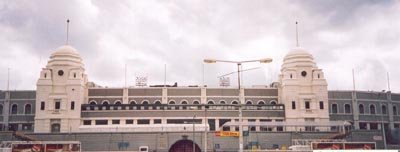
Bill Nicholson had built his third Tottenham cup-winning side in seven years around Pat Jennings in goal, Mike England at centre half and Dave Mackay as captain, with Jimmy Greaves and Alan Gilzean in front of them. Tommy Docherty's Chelsea were younger, and in Peter Bonetti, Charlie Cooke and Bobby Tambling they had enough to worry anybody. The two leading scorers in that season's competition, Greaves and Tambling, were on opposite sides. Only one of them scored at Wembley, and it was Tambling.[1][2][10]
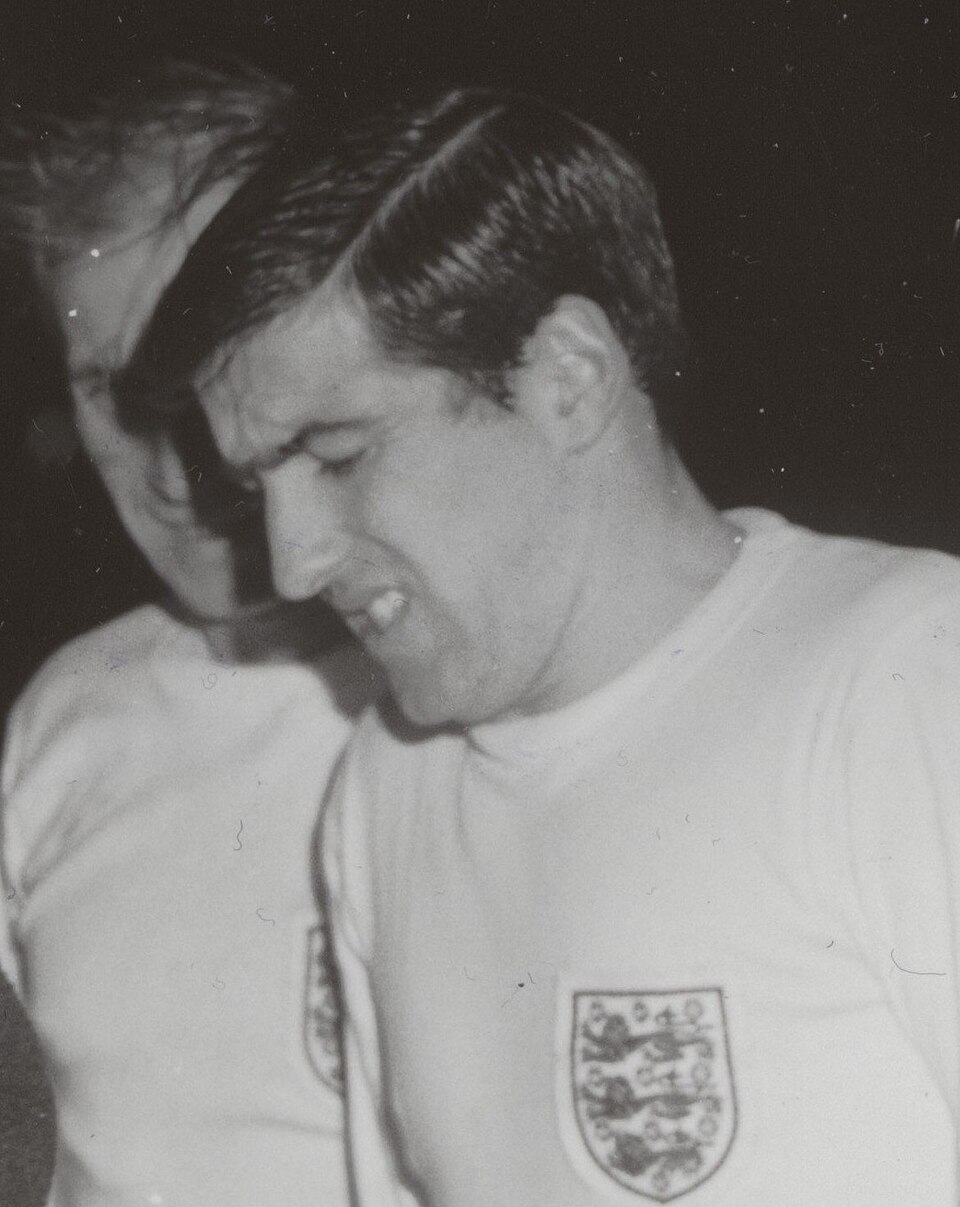
Tottenham started the better of the two. Robertson forced Bonetti to turn a shot round the post in the fourteenth minute and put a second effort just over the bar soon afterwards, while Cooke replied with a dribbling run that ended with Jennings punching clear. The goal, when it came five minutes before half-time, was a rebound. Alan Mullery struck from outside the area, Allan Harris got in the way, and the ball ran to Robertson, who hit it low past Bonetti. Tottenham led at the interval and never trailed.[10][16][18]
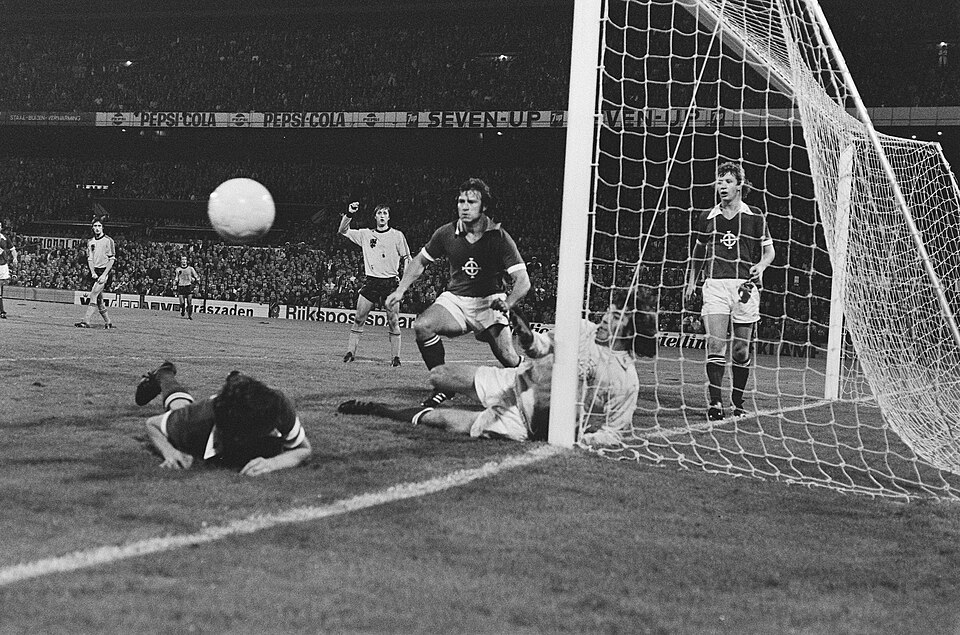
The second half went the way of the first. Tottenham kept the ball, Chelsea chased it, and the match was settled midway through the half. Mackay took a long throw from the left, Robertson headed it on, and Frank Saul turned and hooked it in. Accounts differ over whether that arrived in the sixty-seventh minute or the sixty-eighth, which is the kind of detail that goes missing when nobody keeps the film.[1][10][12]
With the match gone Tottenham slowed it down and passed it among themselves, working the ball in neat squares and triangles. Chelsea got something back in the eighty-fifth minute, John Boyle crossing from the right for Tambling to head past Jennings. Five minutes was not enough. The Duke of Kent presented the cup to Mackay, who was then carried around the pitch on his team mates' shoulders while the photographers followed him.[10][12]
The shape of the win was Nicholson's. Cyril Knowles, who had spent the season overlapping down the left, was held back to cover the ageing Mackay, while Joe Kinnear went the other way and attacked from right back, so Chelsea spent the afternoon defending a flank they had not expected to have to defend. Mike England took Tony Hateley out of the game in the air. Hateley had scored the goal that beat Leeds United in the semi-final; he won nothing at Wembley, and Docherty sold him before the next season began.[17][2][7]
Almost none of this survives on film, and the reason is a broadcasting decision. The broadcast archive that logs BBC and ITV cup final coverage season by season records a live BBC transmission of every final it covers except this one. ITV did, inside World of Sport, with Hugh Johns and Billy Wright at the microphone. The BBC settled for a highlights programme on Match of the Day that night, introduced and commentated by Kenneth Wolstenholme. The live transmission has never resurfaced, the commercial DVD sold as the full match turned out to contain the BBC highlights instead, and those highlights are missing the start of the second half. What is left whole are two colour newsreels, one from British Pathe and one from British Movietone, each running to a few minutes.[14][15][16][12]
Tottenham's fifth FA Cup was also their fifth final, and they had still never lost one. That would wait until 1987. The win took them into the European Cup Winners' Cup. Chelsea went away with a grudge, and the Evening Standard traces the modern hostility between the two clubs to this afternoon rather than to anything that came before it. Chelsea won the competition themselves three years later, and the two clubs have never met in an FA Cup final again.[5][9][19][1]
How the match unfolded
- 14'Jimmy Robertson strikes from distance and Peter Bonetti turns it round the post. A second Robertson effort soon afterwards clears the bar.[10][16]
- 30'Charlie Cooke beats several Tottenham players on a dribbling run and Pat Jennings punches his shot clear.[10][16]
- 40'Alan Mullery shoots from outside the area, Allan Harris blocks, and the ball rebounds to Robertson, who drives it low past Bonetti.[10][18][16]
- half-timeTottenham lead by one goal and have had much the better of it.[10][1]
- 67'Dave Mackay hurls a long throw in from the left, Robertson heads it on, and Frank Saul pivots and hooks it into the net.[1][10][12]
- 85'John Boyle crosses from the right and Bobby Tambling heads Chelsea's goal past Jennings.[12][10][1]
- full-timeTottenham win. The Duke of Kent presents the trophy to Mackay, who is carried around the pitch shoulder high by his team mates.[12][14]
Match facts
Where they played
Both sides as they lined up. Choose any player to read what they did in this final.
Select a shirt for that player's note.
Route to the final
Tottenham Hotspur
- Round 3: Millwall (a) drew 0-0, replay (h) won 1-0
- Round 4: Portsmouth (h) won 3-1
- Round 5: Bristol City (h) won 2-0
- Round 6: Birmingham City (a) drew 0-0, replay (h) won 6-0
- Semi-final: Nottingham Forest (Hillsborough) won 2-1
Chelsea
- Round 3: Huddersfield Town (a) won 2-1
- Round 4: Brighton and Hove Albion (a) drew 1-1, replay (h) won 4-0
- Round 5: Sheffield United (h) won 2-0
- Round 6: Sheffield Wednesday (h) won 1-0
- Semi-final: Leeds United (Villa Park) won 1-0
Line-ups
Tottenham Hotspur · 4-4-2
- Pat Jennings Goalkeeper. Beaten only once all afternoon
- Joe Kinnear Right back, pushed forward to attack the Chelsea left
- Mike England Centre half, and the man who took Tony Hateley out of the air
- Dave Mackay Captain. Wore the number six shirt and threw the long ball in for the second goal
- Cyril Knowles Left back, held back from his usual overlap to cover Mackay
- Jimmy Robertson Outside right. Scored the first and headed on the second
- Alan Mullery Right half. His blocked shot became the opening goal
- Terry Venables Inside left, playing against the club he had left the year before
- Frank Saul Outside left. Scored the goal that settled it
- Jimmy Greaves Inside right. Joint leading scorer in the competition that season
- Alan Gilzean Centre forward
Chelsea · 4-4-2
- Peter Bonetti Goalkeeper. Saved twice from Robertson before the opening goal
- Allan Harris Right back. His block sent the ball to Robertson for the first goal
- Marvin Hinton Centre half
- Ron Harris Captain, wearing the number six shirt
- Eddie McCreadie Left back
- Charlie Cooke Outside right. Chelsea's best first-half chance came from his run
- John Hollins Right half
- Tommy Baldwin Inside right
- John Boyle Outside left. Crossed for Tambling's goal
- Tony Hateley Centre forward. Scored the semi-final winner against Leeds United
- Bobby Tambling Inside left. Joint leading scorer in the competition that season, and Chelsea's scorer here
Trivia and detail
- Jimmy Greaves and Bobby Tambling finished the season as joint leading scorers in the competition with six goals each, and lined up against one another in the final.[2]
- Chelsea's only previous final was the 1915 Khaki Cup Final, moved from Crystal Palace to Old Trafford to keep crowds away from wartime London and watched by a ground full of uniformed soldiers.[3]
- Terry Venables was playing against the club that made him. He had left Chelsea for Tottenham the previous year after 202 league appearances and a League Cup win.[6]
- Tottenham went into the final unbeaten in 24 league and cup matches, a run that began after a defeat at Manchester United in the middle of January.[17]
- Neither named substitute got on. Cliff Jones sat it out for Tottenham and Joe Kirkup for Chelsea. No substitute appeared in an FA Cup final until the following year, when Dennis Clarke replaced the injured John Kaye for West Bromwich Albion.[1][4][17]
- British Pathe catalogued its colour film of the match simply as The Cup Final, film identifier 2031.01, and its shot list records the Duke and Duchess of Kent watching from the royal box.[12]
- British Movietone released its own colour reel as part of what it called a Sport in Colour Service, and dated the story 22 May 1967, two days after the match.[13]
How well do you know the 1967 final?
Five questions. Every answer is sourced from the material on this page.
-
Who scored Tottenham's opening goal?
-
Why is this match known as the Cockney Cup Final?
-
Which broadcaster showed the 1967 final live?
-
Which club had Terry Venables left the year before the final?
Answer
Chelsea. Venables joined Tottenham from Chelsea in 1966, so he spent this afternoon playing against the club where he had made his name.[6]
-
Who presented the FA Cup to Dave Mackay?
Answer
The Duke of Kent. British Pathe's shot list for its colour newsreel records the Duke and Duchess of Kent in the royal box and the Duke making the presentation.[12]
What is not settled
Honesty matters more than tidiness. These details are contested or unrecorded, and we have not guessed at them:
- Sources disagree on which foot Jimmy Robertson scored with. Wikipedia says right; the archived fa-cupfinals.co.uk report says left, twice; and Robertson told Tottenham's own website that he was a right-footed player converted from outside left. The record leaves the foot off the goal.
- Frank Saul's goal is timed at 67 minutes by Wikipedia and by the ITV broadcast listings archive, and at 68 by the archived fa-cupfinals.co.uk report. The record uses 67 and shows the disagreement.
- The attendance of 100000 is the figure every source prints for a Wembley final of this period. It is a stated capacity rather than an audited turnstile return, and no published gate figure was found.
- The formations are a reconstruction. No source consulted prints a shape for either side, so the pitch draws the positional labels the standard match article assigns, which makes both teams 4-4-2. Contemporary descriptions put Dave Mackay in midfield rather than in a back four, with Cyril Knowles held back to cover him, so the real shape was probably a back four with Mackay in front of it.
- Why the BBC did not televise this final live is not settled by any document we could reach. Lost-media researchers attribute the decision to the presence of two London clubs, but that explanation traces to fan-archive discussion rather than to a BBC or Radio Times statement. The BBC Genome listings that would settle it refuse automated access.
- Whether any copy of ITV's live transmission survives in private hands is unknown. What is documented is that it has never resurfaced and that researchers who have looked report it is not held in the ITV Sport archive.
- Cliff Jones and Joe Kirkup are recorded as the named substitutes. That neither was used follows from Spurs Odyssey describing Jones as a non-playing substitute and from the first substitute in an FA Cup final not appearing until 1968, rather than from a team sheet.
How we know
Every claim on this page is tied to a numbered source below. These are the contemporary records behind it, each one fetched and matched word for word before publication rather than taken on trust:
- The Cup Final (1967), FILM ID 2031.01 (archive film and catalogue shot list) · British Pathe (official YouTube catalogue)
- THE CUP FINAL (22 May 1967), Sport in Colour Service · British Movietone via AP Archive (official YouTube catalogue)
Where a primary record and a modern account disagree, we show both rather than choosing the tidier number.
Sources
- 1967 FA Cup final · Wikipedia
- 1966-67 FA Cup · Wikipedia
- 1915 FA Cup final · Wikipedia
- 1968 FA Cup final · Wikipedia
- List of FA Cup finals · Wikipedia
- Terry Venables · Wikipedia
- Tony Hateley · Wikipedia
- Frank Saul · Wikipedia
- 1966-67 Football League First Division · Wikipedia
- FA Cup Final 1967: match report, line-ups and round by round results · fa-cupfinals.co.uk, archived by the Internet Archive
- England FA Cup 1966-67, full results · Rec.Sport.Soccer Statistics Foundation
- The Cup Final (1967), FILM ID 2031.01 (archive film and catalogue shot list) · British Pathe (official YouTube catalogue)
- THE CUP FINAL (22 May 1967), Sport in Colour Service · British Movietone via AP Archive (official YouTube catalogue)
- Cup Finals on ITV 1955/56 to 1967/68 · Carousel (ITV broadcast listings archive), archived by the Internet Archive
- FA Cup Finals of the 60s (discussion thread) · Missing Episodes Forum
- 1967 FA Cup Final (partially found footage of football match; 1967) · The Lost Media Wiki, archived by the Internet Archive
- Recalling the 1967 FA Cup Final, by Brian Judson · Spurs Odyssey
- Kinnear, Robertson, England and Mullery: 1967 FA Cup heroes on playing Chelsea at Wembley · Tottenham Hotspur FC, archived by the Internet Archive
- The Cockney Cup Final: when Tottenham and Chelsea's fierce rivalry began · Evening Standard