1967-68 FA Cup · The Final
1968 FA Cup Final: West Bromwich Albion 1-0 Everton
Astle's Final
The one detail in this final that almost nobody repeats comes from The FA's own archive: interviewed on thefa.com, Tony Brown says the deflection that set up Jeff Astle's winning goal came off an Albion team-mate, not the Everton defender every published account names.
West Bromwich Albion beat Everton with an extra-time goal from a centre-forward who had scored in every round, on a Wembley pitch a rugby league final had churned up a week earlier, in the first FA Cup final shown live in colour.
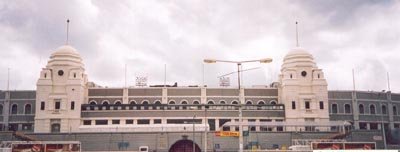
Saturday 18 May 1968 · Wembley Stadium
What you will not find elsewhere
The deflection that made the winning goal may have come off an Albion player
Every published account of Jeff Astle's goal puts the rebound on an Everton man. FA Cup Finals names Colin Harvey, Historical Football Kits says the shot struck an Everton defender, and Albion's own anniversary match report says it cannoned into a defender. The FA's own archive says something different. Interviewed on thefa.com, Tony Brown, who was on the pitch, says the first shot hit Albion's own Graham Lovett, and that Lovett has claimed the assist ever since. Neither version can be settled from the surviving newsreel synopses, so we record the rebound and name nobody.[11][6][7][8]
More people watched the quarter-final than watched the final
Albion needed three matches to get past Bill Shankly's Liverpool in the sixth round: a goalless draw at The Hawthorns in front of 53,062, a 1-1 draw at Anfield in front of 54,273, and a second replay at Maine Road on a wet midweek night that drew 56,000. Added up, that is 163,335 paying spectators for one tie, against the 100,000 Wembley could hold for the final. The round Albion nearly went out in was watched by more than half as many people again as the round they won.[2][15]
A rugby league final had churned the pitch seven days earlier
Accounts of this final almost all call it dull without saying why. Albion's own history gives a reason nobody else picks up: the Rugby League Challenge Cup final of 11 May 1968, the Watersplash Final, had been played on the same Wembley turf a week before in near-waterlogged conditions, and torrential overnight rain undid what recovery the ground had managed. Read The League reaches the same conclusion independently. Two sides both known for attacking football met on a surface that punished it.[8][3][15]
Albion won the cup with their centre-forward's strike partner playing centre-half
John Kaye began the season as Jeff Astle's partner up front. An injury to Eddie Colquhoun pushed him back into central defence next to John Talbut, where Albion's own history says he looked a natural, and the team quietly became what that history calls effectively 4-5-1. Kaye then headed Joe Royle's effort off the line in the second half of the final while playing on a damaged ankle, and had to be taken off at the end of normal time, which is how an FA Cup final came to use a substitute for the first time.[9][8][1]
The team-mate who says the deflection came off an Albion player
Published accounts put the deflection for the winning goal on an Everton defender. Tony Brown, who was on the pitch, tells it differently: It came back to him and Jeff smashed it in on the half volley right into the top corner but Graham Lovett, still to this day, says he has an assist for getting hit up the backside on the first shot.
That is the whole basis of the correction featured above.[11]
Everton's centre-forward blamed neither the pitch nor the referee
It would be easy to build a losing case around the churned turf and the extra half hour. Joe Royle did not: West Brom were a physical side and they did set about us. I'm afraid we didn't respond to that challenge as well as we might have and we could have no complaints.
A losing side conceding the point is worth more than a neutral saying it for them.[12]
The first substitute ever used in an FA Cup final
Substitutes were still new to the competition, and this final produced the first one. Albion's own club history records it plainly: Dennis Clarke becoming the first substitute in FA Cup final history. He slotted in at right-back, Doug Fraser moving into the centre.
He came on in extra time and finished the match at right-back.[8]
The footage
The match report
Everton went to Wembley on 18 May 1968 as favourites, and the season backed them. They had beaten West Bromwich Albion twice in the league that year, 2-1 at Goodison Park and 6-2 at The Hawthorns, where Alan Ball scored four. Albion's captain Graham Williams turned that record inside out in the dressing room, reminding his players how rare it is for one side to beat another three times in a season. What followed was not a spectacle. It was settled by a single goal in extra time, scored by a centre-forward who had scored in every round, and it remains the last FA Cup final West Bromwich Albion have reached.[1][8][15]
The pitch had already had a hard week. Seven days earlier the Rugby League Challenge Cup final, remembered ever since as the Watersplash Final, had been played on the same turf at Wembley in conditions close to waterlogged. Albion's own account of the day records that the ground had begun to recover before torrential overnight rain left it heavy again, and blames that as much as anything for a final far less entertaining than two attacking sides had promised.[8][3][15]
Both managers arrived with a shape built to smother. Alan Ashman had moved John Kaye, who had been Jeff Astle's strike partner, back into central defence alongside John Talbut after an injury to Eddie Colquhoun, and the club's own history describes the side that resulted as effectively 4-5-1. Harry Catterick's Everton were arranged much the same way, four at the back, the Kendall, Harvey and Ball midfield reinforced by Jimmy Husband and Johnny Morrissey out wide, and Joe Royle alone in front. Ashman had one selection call left, the right side of midfield, and he gave it to Graham Lovett to blunt Ray Wilson.[9][1][8][15]
The first half produced trips, body-checks and very little else. Tony Brown cleared the bar from distance after good work by Doug Fraser, Graham Lovett was too slow with a chance in front of the Everton goal, and Everton's best moment came shortly before the interval, when Johnny Morrissey cut in from the left and John Osborne dived to save. Albion went in level with two problems: Fraser needed a strapping on his left knee, and Kaye was limping heavily on an injured right ankle.[6][8]
Everton were the better side for much of the second half without making it count. Kaye, hobbling, headed a Joe Royle effort off the line with Osborne beaten, and Alan Ball got in the way when Royle might have scored with a header. Their clear opening came in the closing minutes: Morrissey crossed, Jimmy Husband was unmarked six yards out, and he headed it over the bar. Everton's own reference history calls that miss the closest they came.[6][8][12]
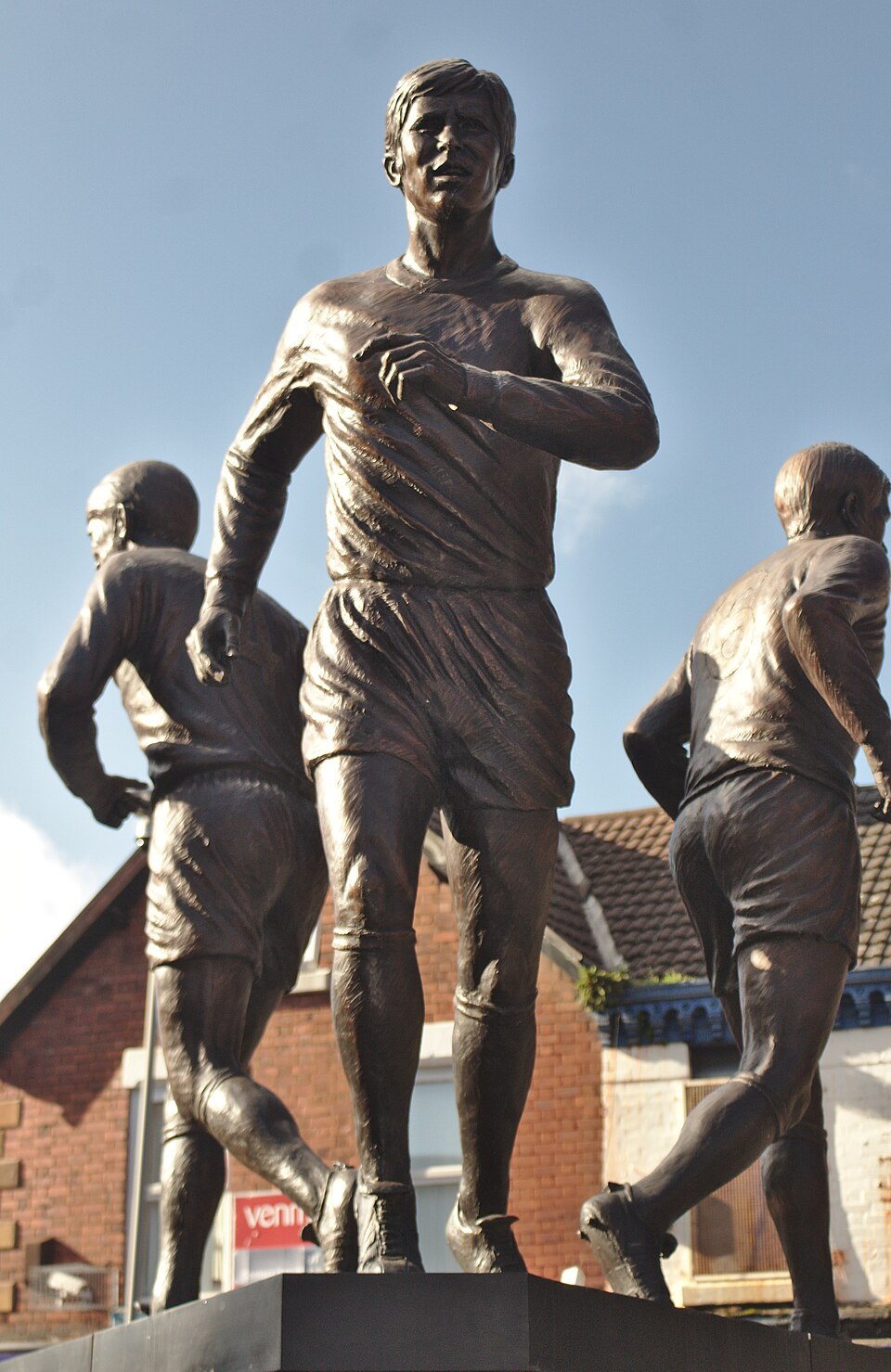
Kaye's ankle gave way at the end of normal time. Dennis Clarke came on for him and became the first substitute ever used in an FA Cup final, slotting in at right back while Fraser moved into the centre. It is the kind of first that gets a line in a record book and nothing more, except that it arrived in the same minute the game changed.[1][8]
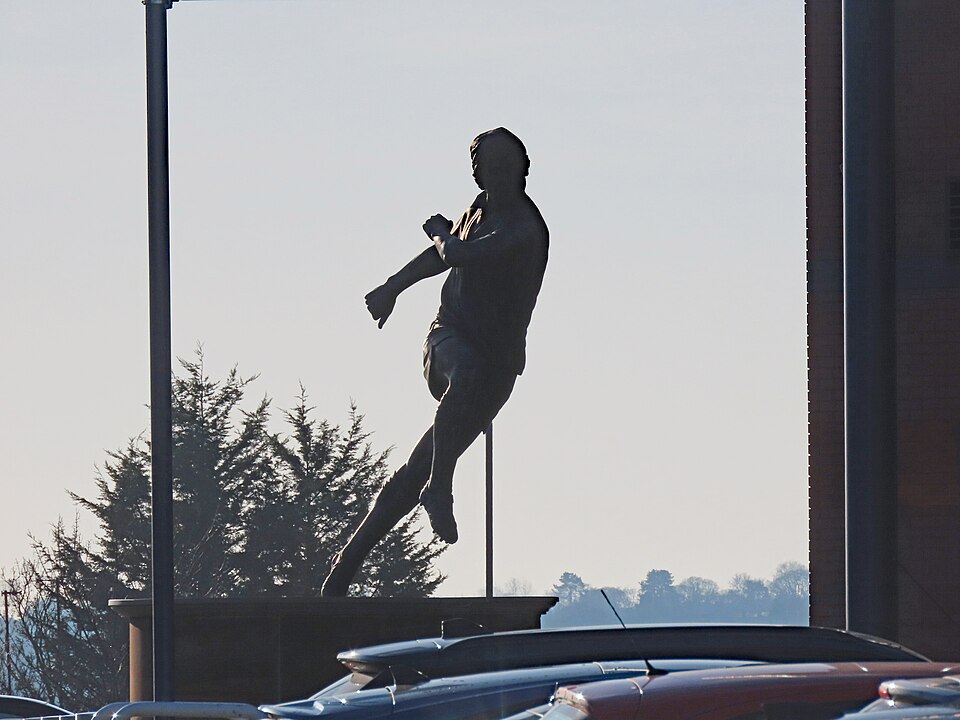
Three minutes into extra time the final turned. Jeff Astle collected the ball inside the Everton half, went past Howard Kendall and shot right footed from the edge of the box. The ball came straight back to him off a body, and he hit it first time with his left foot past Gordon West. The record gives it as the 93rd minute, and it was the only goal of the game.[6][7][1][15]
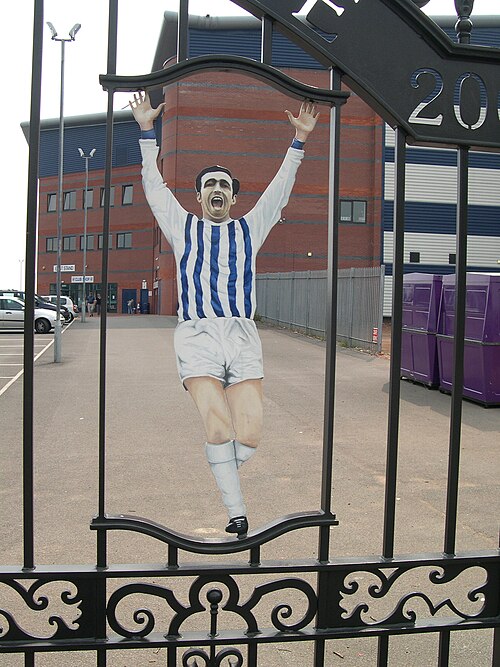
Whose body it came off is not settled, and the least repeated answer is the most interesting. Every standard account puts the deflection on an Everton player: one names Colin Harvey, another says simply an Everton defender, and Albion's own anniversary match report says the shot cannoned into a defender. Tony Brown, interviewed by The FA, says it hit Albion's own Graham Lovett, and that Lovett has claimed the assist ever since.[6][7][8][11]
The goal completed the run that made Astle's name: he had scored in every round Albion played. The hardest was the sixth, a trilogy against Bill Shankly's Liverpool that needed a goalless draw at The Hawthorns, a 1-1 draw at Anfield and a second replay at Maine Road. Those three matches drew 163,335 people between them, well over the 100,000 who saw the final itself.[1][2][11][15]
Princess Alexandra presented the cup to Graham Williams, and the whole thing went out live in colour on BBC2, the first FA Cup final ever broadcast that way. It was Albion's fifth FA Cup and their tenth final, then a record shared with Newcastle United. They have not been back.[13][4][1][6]
How the match unfolded
- 15:00Kick-off, in front of BBC2's colour cameras.[1][4]
- first halfTony Brown has the first opportunity of the match after good work by Doug Fraser, crashing a shot from distance just over the bar.[8]
- first halfGraham Lovett is too slow to take advantage of a chance in front of the Everton goal, and Jimmy Husband's hurried shot for Everton goes just wide.[6]
- shortly before half-timeJohnny Morrissey drifts in from the left and shoots; John Osborne dives to save, and the sides go in level.[8]
- half-timeGoalless. Doug Fraser has a strapping put on his left knee, and John Kaye is limping heavily on a right ankle hurt earlier in the game.[8][6]
- second halfEverton's best period. John Kaye heads Joe Royle's effort off the line with Osborne beaten, and Alan Ball gets in the way when Royle might have scored with a header.[6]
- late in normal timeEverton's clear chance. Morrissey's centre finds Jimmy Husband unmarked six yards out and he heads it over the bar.[6][12][8]
- full-timeGoalless after ninety minutes, and the final goes to extra time.[1][7][13]
- start of extra timeJohn Kaye's ankle gives way. Dennis Clarke replaces him and becomes the first substitute ever used in an FA Cup final, going in at right back with Doug Fraser moving into the centre.[1][8]
- 93'Jeff Astle collects the ball inside the Everton half, goes past Howard Kendall and shoots right footed from the edge of the box. The ball rebounds to him and he hits it first time with his left foot past Gordon West.[6][7][8][15]
- late in extra timeAlbion nearly make it two. Osborne starts a breakaway three against one, the ball reaches Graham Lovett and he shoots over. The final whistle follows almost at once.[8][15]
- after the matchPrincess Alexandra presents the FA Cup to Albion's captain Graham Williams, and the Albion players begin a lap of honour.[13]
Match facts
Where they played
Both sides as they lined up. Choose any player to read what they did in this final.
Select a shirt for that player's note.
Route to the final
West Bromwich Albion
- Round 3: Colchester United (a) drew 1-1 (16,981), replay (h) won 4-0 (40,448)
- Round 4: Southampton (h) drew 1-1 (32,987), replay (a) won 3-2 (26,036)
- Round 5: Portsmouth (a) won 2-1 (45,642)
- Round 6: Liverpool (h) drew 0-0 (53,062), replay (a) drew 1-1 (54,273), second replay (Maine Road) won 2-1 (56,000)
- Semi-final: Birmingham City (Villa Park) won 2-0 (60,831)
Everton
- Round 3: Southport (a) won 1-0 (18,795)
- Round 4: Carlisle United (a) won 2-0 (25,000)
- Round 5: Tranmere Rovers (h) won 2-0 (62,634)
- Round 6: Leicester City (a) won 3-1 (43,519)
- Semi-final: Leeds United (Old Trafford) won 1-0 (63,000)
Line-ups
West Bromwich Albion · 4-5-1
- John Osborne Goalkeeper; dived to keep out Johnny Morrissey shortly before half time and started the late breakaway that ended with Graham Lovett shooting over
- Doug Fraser Right back; had a strapping put on his left knee at half time and moved inside when Dennis Clarke came on
- John Talbut Centre back
- John Kaye Centre back; a converted centre-forward, injured his right ankle early, headed a Joe Royle effort off the line, and was replaced at the end of normal time
- Graham Williams Captain, left back; received the cup from Princess Alexandra
- Graham Lovett Right side of midfield; chosen to blunt Ray Wilson, having watched the 1967 final from a hospital bed after a car crash broke his neck
- Tony Brown Midfield; had the first opportunity of the match, clearing the bar from distance
- Ian Collard Midfield
- Bobby Hope Midfield; the team's playmaker
- Clive Clark Outside left
- Jeff Astle Centre-forward; scored the only goal and had by then scored in every round of the competition
Everton · 4-5-1
- Gordon West Goalkeeper; beaten by Jeff Astle's left-foot finish in extra time
- Tommy Wright Right back
- Brian Labone Captain, centre back
- John Hurst Centre back
- Ray Wilson Left back; the World Cup winner Albion picked Graham Lovett specifically to contain
- Jimmy Husband Right side of midfield; headed over from close range with the goal at his mercy near the end of normal time
- Alan Ball Midfield; had scored four times in Everton's 6-2 league win at The Hawthorns earlier in the season
- Howard Kendall Midfield; Astle went past him in the move that produced the goal
- Colin Harvey Midfield; named by one account as the player Astle's first shot rebounded from
- Johnny Morrissey Left side of midfield; forced a save from John Osborne before the interval and crossed for Husband's late chance
- Joe Royle Centre-forward; had an effort headed off the line by John Kaye
Trivia and detail
- This was the 87th final of the FA Cup.[2][1]
- The Rugby League Challenge Cup final played at Wembley on 11 May 1968, one week before, is remembered as the Watersplash Final: Leeds beat Wakefield Trinity 11-10 in front of 87,100 on a saturated pitch.[3]
- British Movietone's cinema newsreel of the match was billed as the eighth successive year the company had filmed the FA Cup final in colour, and was issued on 20 May 1968.[14]
- Both clubs played in change strips: West Bromwich Albion in white shirts and shorts with red socks, Everton in gold shirts and blue shorts.[1]
- Graham Lovett had watched the 1967 final from a hospital bed. A car crash in December 1966 broke his neck, and he had never been to Wembley as a spectator before he walked out to play there.[8]
- Astle scored again at Wembley two years later, in Albion's 2-1 League Cup final defeat by Manchester City, becoming the first player to score in the finals of both major English cup competitions at the stadium.[5]
- When Albion marked Astle Day in 2015 the team wore replicas of the 1968 kit, with the outfield players numbered 2 to 11 and the goalkeeper unnumbered, as in the final.[5]
- Everton lost only twice at Goodison Park in the league that season, winning 18 and drawing one of their 21 home games, but won only five times away from home.[8]
- WBA TV's archive of the day includes the BBC build-up, with Walter Winterbottom giving tactical analysis and Kenneth Wolstenholme interviewing Graham Williams, John Talbut, Clive Clark, Jeff Astle, Graham Lovett, Tony Brown and Dennis Clarke on the pitch before kick-off.[10]
How well do you know the 1968 final?
Five questions. Every answer is sourced from the material on this page.
-
Who scored the only goal of the 1968 FA Cup final?
-
Who became the first substitute ever used in an FA Cup final?
-
What made the television coverage of this final a first?
-
Which other sport's cup final had been played on the same Wembley pitch a week earlier?
-
Who lifted the cup for West Bromwich Albion?
What is not settled
Honesty matters more than tidiness. These details are contested or unrecorded, and we have not guessed at them:
- The minute of the goal is not quite settled. The standard record, and this page, give the 93rd minute, and Historical Football Kits independently places it in the third minute of extra time. The Everton Encyclopedia instead puts it four minutes from the end of extra time, which would be roughly the 116th minute. The weight of evidence, including British Pathe's own shot list, is for the early reading.
- What the shot rebounded from is disputed. FA Cup Finals names Colin Harvey, Historical Football Kits says an Everton defender, and Albion's anniversary report says only a defender. Tony Brown, interviewed by The FA, says it struck Albion's own Graham Lovett. We record the rebound without naming the player.
- The formations shown here, 4-5-1 for both sides, are read from the positional labels in the standard line-up record, and for Albion are corroborated by the club's own history of Alan Ashman. Everton's front line of Husband, Royle and Morrissey is often described instead as a 4-3-3. The pitch diagram should be read as the best supported arrangement, not a photograph.
- The attendance of 100,000 is the Wembley capacity figure repeated by every source we could reach. No separate turnstile count for this final appears to have been published.
- Wikipedia's own figures for Albion's route disagree between its article on the final and its article on the competition: the fourth-round tie at The Hawthorns is given as 30,987 and 32,987, the fifth round at Fratton Park as 43,642 and 45,642, and the second replay at Maine Road as 56,189 and a rounded 56,000. We use the competition-page figures, which carry per-match references and, for Fratton Park, match a contemporary retelling of more than 45,000.
- No video has been verified for this page yet. Two official archive candidates, from British Pathe and British Movietone, are listed in the proposals file.
How we know
Every claim on this page is tied to a numbered source below. These are the contemporary records behind it, each one fetched and matched word for word before publication rather than taken on trust:
- West Brom legend Bomber Brown recalls his finest moment in The FA Cup · The Football Association
- Wembley - Cup Final (1968), FILM ID 2061.01 (archive film and catalogue synopsis) · British Pathe (official YouTube catalogue)
- News in Colour: The Cup Final - West Bromwich Albion v Everton, issue of 20 May 1968 · British Movietone (official YouTube catalogue, AP Archive)
Where a primary record and a modern account disagree, we show both rather than choosing the tidier number.
Sources
- 1968 FA Cup final · Wikipedia
- 1967-68 FA Cup · Wikipedia
- 1968 Challenge Cup final (the Watersplash Final) · Wikipedia
- Timeline of football on UK television · Wikipedia
- Jeff Astle · Wikipedia
- 1968 FA Cup Final: West Brom vs Everton · FA Cup Finals
- FA Cup Finals 1960-1969 · Historical Football Kits
- Albion 1 Everton 0 (aet) · West Bromwich Albion FC
- Cup winner Ashman in profile · West Bromwich Albion FC
- Cup Final fever (WBA TV archive of the 1968 build-up) · West Bromwich Albion FC
- West Brom legend Bomber Brown recalls his finest moment in The FA Cup · The Football Association
- Everton v. West Bromwich Albion, 1967/68 (FA Cup final) · Everton Encyclopedia (Mount Vernon Publishing)
- Wembley - Cup Final (1968), FILM ID 2061.01 (archive film and catalogue synopsis) · British Pathe (official YouTube catalogue)
- News in Colour: The Cup Final - West Bromwich Albion v Everton, issue of 20 May 1968 · British Movietone (official YouTube catalogue, AP Archive)
- FA Cup 1967-68: Astle's Day · Read The League