1969-70 FA Cup · The Final
1970 FA Cup Final: Chelsea 2-2 Leeds United (won after a replay)
Two things everybody knows about this final are wrong. The Wembley pitch was not ruined by the Horse of the Year Show, which had been an indoor event held in a different building since 1959, and the replay was not moved to Old Trafford because of the state of the turf. This page sets out what actually happened to the pitch, and puts the three modern re-refereeings of the replay side by side, because no two of them agree.
Chelsea and Leeds United drew 2-2 at Wembley on a pitch covered in sand, then met again eighteen days later at Old Trafford, where Chelsea won 2-1 after extra time to lift the FA Cup for the first time.
Saturday 11 April 1970 · Wembley Stadium
What you will not find elsewhere
The Horse of the Year Show did not wreck the Wembley pitch, and could not have
Almost every retelling of this final blames the sand and the mud on a horse show held at Wembley a week earlier, and the show usually named is the Horse of the Year Show. It is the wrong show. The Horse of the Year Show is held in autumn and has been staged indoors since it was founded; its own official history records that it moved to Wembley Arena, the indoor hall beside the stadium, in 1959. The horses that did damage the Wembley pitch belonged to the Royal International Horse Show, staged on the grass in July 1968 and again in July 1969. The Football Association dug the whole pitch up afterwards and relaid it at a cost of ten thousand pounds, and it was the replacement turf, not any horse, that failed through the winter that followed. The misattribution is old: it was already in print in 1973, in the Hamlyn Book of World Soccer, and Historical Football Kits still tells readers the pitch had been ruined by an equestrian event without saying which one or when.[14][13][2][15]
Three modern referees have re-refereed the replay and none of them agree
Eric Jennings showed one card in the replay, to Ian Hutchinson. Three top-flight officials have since sat down with the film and delivered a modern verdict, and the results are further apart than the legend suggests. David Elleray in 1997 made it 6 red cards and 20 yellows. Michael Oliver in 2020 made it 11 reds and 16 yellows, two of the reds to Eddie McCreadie alone. Graham Scott in 2026 made it 10 reds and 25 yellows, and added that Don Revie would have gone to the stands for lighting a cigar on the bench. Set side by side, the three reviews differ by 5 red cards and 9 bookings. What they agree on is only the direction, not the number.[12][9]
The replay was not moved to Old Trafford because of the pitch
Wikipedia's account says the Football Association chose Old Trafford because the Wembley surface was in such a state after the first match, and marks the claim as needing a citation. It needed one because it is not what happened. The replay venue had been settled by the FA weeks before the final was played, so nothing that occurred on the Wembley grass on 11 April could have influenced it. What the choice did produce was an FA Cup final decided at Old Trafford for the first time since Chelsea lost the Khaki Cup Final there in 1915.[13][9][2]
Chelsea won the cup without leading for all but 16 minutes of it
Across the two matches Chelsea fell behind three separate times and were never in front until David Webb's header in the 104th minute of the replay. Counting from that goal to the final whistle, Chelsea led this FA Cup final for 16 minutes out of 240. Leeds led for 66: from Jack Charlton's goal to Peter Houseman's reply, for the two minutes between Mick Jones and Ian Hutchinson at Wembley, and from Jones' goal in the replay until Peter Osgood equalised.[10][9][8]
No horse jumped at Wembley before this final
The ruined pitch is almost always blamed on show-jumping staged days earlier. The historian who went back to the records found nothing of the kind: No show-jumping took place at Wembley Stadium in the days, weeks, or even nine months before Chelsea took on Leeds United
That is the correction this page is built around.[13]
How the refereeing looked from the press box
Both matches are remembered for what the referee allowed rather than what he punished. Hugh McIlvanney put it better than anyone has since: it appeared that Mr Jennings would give a free-kick only on production of a death certificate
Modern officials who have re-watched the tie broadly agree.[4]
What the surface felt like to the players standing on it
Sand had been spread across the worst of it and the players still could not get a footing. Terry Cooper of Leeds put the experience in five words: You needed hoofs to play on the Wembley pitch
Chelsea's own club historian records that the sand made matters worse rather than better.[2]
The footage
The match report
The 1970 final was played on 11 April, weeks earlier than an FA Cup final normally fell, because England were the holders of the World Cup and the Football Association wanted Alf Ramsey's squad in Mexico in good time to acclimatise. The whole season had been compressed to suit them. It left Leeds United, who had entered April chasing the league title, the European Cup and the FA Cup, arriving at Wembley for their fourth match of the month with nothing else left to win.[9][13][16]
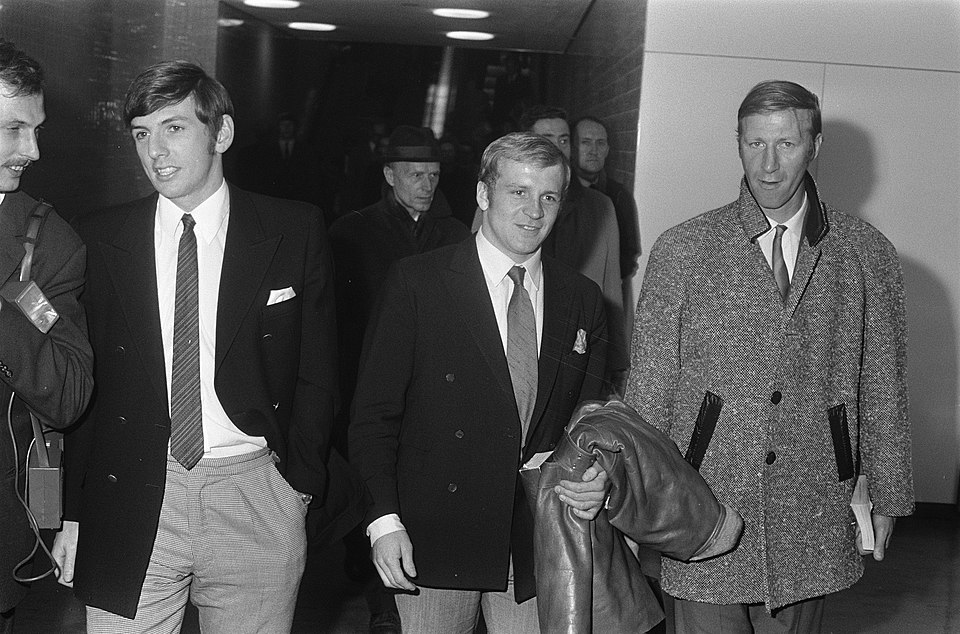
What they arrived on was barely a football pitch. Wembley's turf had been dug up and relaid the previous summer, the new grass had not taken through a long, cold, wet winter, and on the morning of the final the worst of the bare ground was covered with sand. Chelsea's club historian put the amount at one hundred tons. Two of the four goals came directly out of it: Jack Charlton's header in the 20th minute died on the surface instead of bouncing up to be cleared, and Peter Houseman's shot four minutes before half-time skidded under Gary Sprake.[2][13][15]
The match itself was the first FA Cup final at Wembley to finish level. Leeds led twice and hit the woodwork three times; Chelsea equalised twice, the second time through Ian Hutchinson's header from John Hollins' cross with four minutes to go. Extra time produced nothing, Ron Harris limped off for Marvin Hinton, and at the end the two squads walked round together. Eddie Gray was man of the match and David Webb, the full-back he had tormented, went home to think about it.[1][9][2]
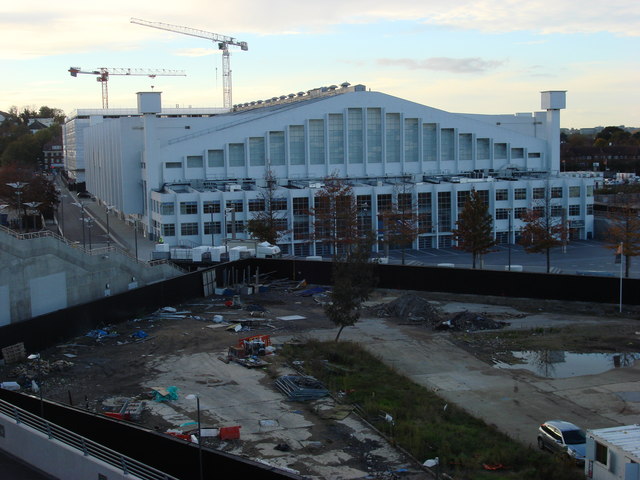
The story that the pitch had been wrecked by the Horse of the Year Show a week earlier was already circulating before the replay, and it is still repeated today. It is not true. The Horse of the Year Show has been an indoor event since its beginning, and its own official history records that it moved to Wembley Arena, a separate building from the stadium, in 1959. What did happen on the Wembley grass was the Royal International Horse Show, staged there in July 1968 and again in July 1969. The hooves and the landings after the jumps wrecked the turf and the drains beneath it, the Football Association dug the whole pitch up at a cost of ten thousand pounds, and the replacement never recovered from the winter that followed. The show itself moved to the Empire Pool for 1970.[13][14][2]
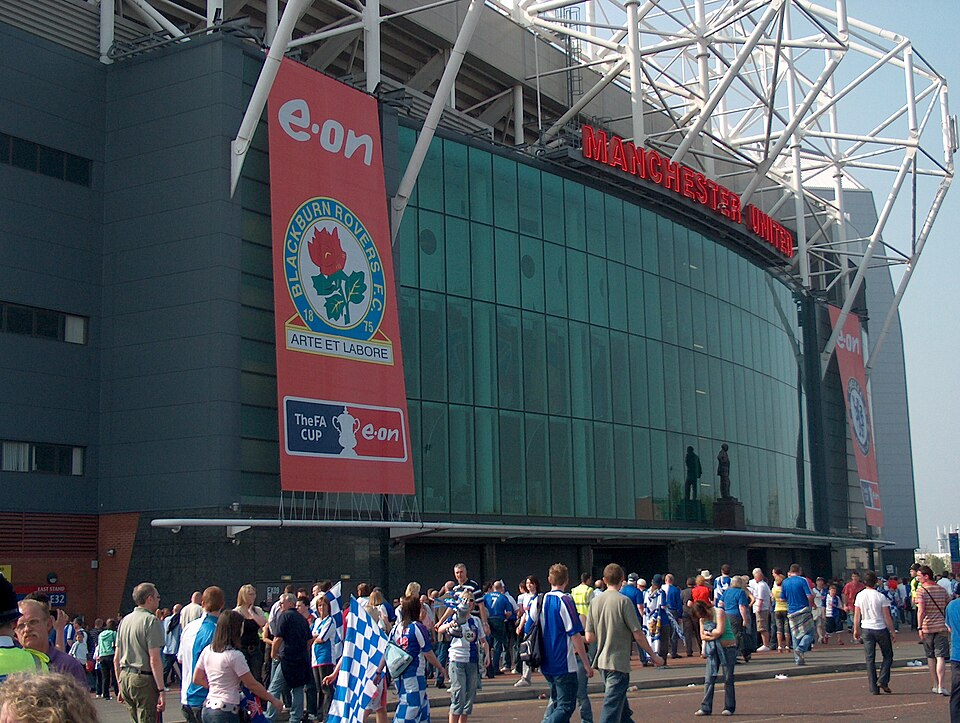
The replay went to Old Trafford, which had not staged a final since Chelsea lost there in 1915. The choice is often explained by the state of Wembley, but the venue had been fixed by the FA weeks in advance and the Wembley pitch had nothing to do with it. Leeds made the only change across the two matches, David Harvey coming in for Sprake. Chelsea kept the same eleven and moved two of them: Harris went to right-back to mark Gray, and Webb moved inside to take Allan Clarke. Webb later said the swap was agreed on the coach home from Wembley.[13][2][3][9]
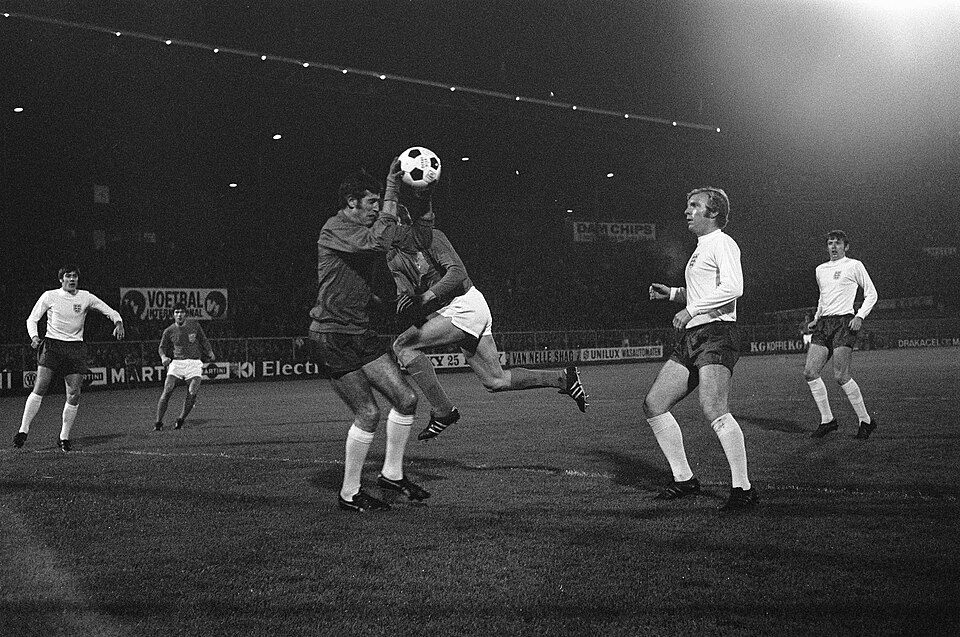
Leeds led again, Mick Jones scoring in the 35th minute past a Peter Bonetti who was already limping after Jones had bundled him into the net. Charlie Cooke's chipped pass and Peter Osgood's diving header levelled it twelve minutes from the end, and in the first period of extra time Hutchinson's long throw glanced off Charlton and Webb headed Chelsea in front for the first time in the whole tie. It was Chelsea's first FA Cup, at the end of 240 minutes of football.[8][9][3][6]
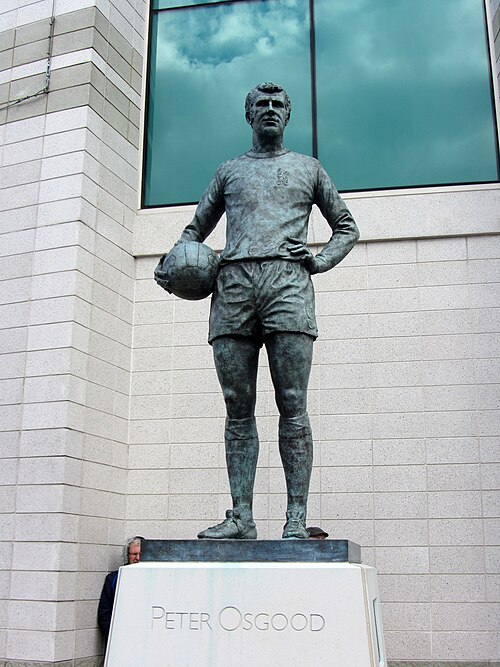
Eric Jennings, refereeing in his last season in the Football League, showed one card in the replay, to Hutchinson. Three modern officials have since watched the same film and reached three different verdicts. David Elleray, reviewing it in 1997, said he would have shown 6 red cards and 20 yellows. Michael Oliver, doing the same exercise in 2020, made it 11 reds and 16 bookings. Graham Scott, writing in 2026, arrived at 10 reds and 25 yellows. The spread is the point: there is no settled modern reading of this match, only agreement that the contemporary one was extraordinary.[12][9]
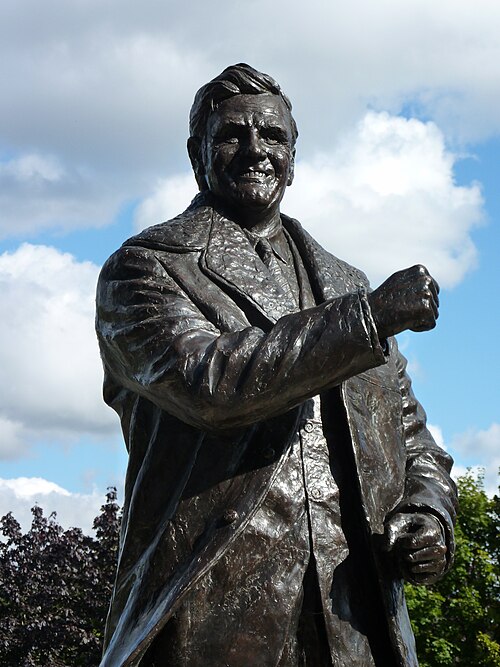
The replay was carried live by both the BBC and ITV and drew 28.49 million viewers in the United Kingdom, a figure Chelsea's own history still cites and which remains among the largest audiences British television has ever recorded. Neither club reached the last eight of the competition the following season, and both won a first European trophy instead: Chelsea the Cup Winners' Cup, after another replayed final, and Leeds the Fairs Cup.[4][2][12][9]
How the match unfolded
- 3pm kick-offLeeds get the final under way at Wembley. Princess Margaret, Lord Snowdon and Viscount Linley are in the royal party, filmed by the Movietone cameras as the teams are presented.[1][7]
- 10'Peter Bonetti twice comes off his line to claim crosses ahead of Peter Lorimer. The surface is already breaking up.[1]
- 20'Leeds lead. Eddie Gray's corner is met by Jack Charlton, whose downward header does not bounce on the sanded turf; Eddie McCreadie and Ron Harris both swing at the ball on the line and it rolls in.[1][9][2]
- 38'Charlton, back on his own goal line, blocks a Peter Osgood shot that had beaten Gary Sprake.[1][16]
- 41'Chelsea equalise. Peter Houseman drives a low, ordinary-looking shot from outside the area and it squirms under Sprake's body.[1][9][11]
- 79'Gray cuts inside and strikes the Chelsea crossbar. Leeds hit the woodwork three times across the afternoon.[1][2]
- 84'Leeds lead again. An Allan Clarke header comes back off the post and Mick Jones drills the rebound low past Bonetti.[1][9][5]
- 86'Chelsea equalise again. Ian Hutchinson gets in front of his marker to head John Hollins' cross into the net.[1][9][11][5]
- 90'Full time at Wembley, 2-2. Marvin Hinton replaces a spent Ron Harris for extra time, the first Chelsea substitute ever used in an FA Cup final.[9][2]
- 98'David Webb clears Johnny Giles' shot off the Chelsea line with Bonetti beaten.[1][2]
- 104'Clarke hammers the Chelsea crossbar on the stroke of the extra-time interval.[1]
- full-time after extra timeIt finishes 2-2, the first drawn final in Wembley's history. Ron Harris climbs to the royal box to collect medals rather than the trophy, and the two squads take a joint lap of honour at Eddie McCreadie's suggestion.[2][9][15]
The replay
Eighteen days after the draw, and with the season already over for both clubs in every other competition, the final was replayed under floodlights at Old Trafford. Chelsea kept the same eleven but reorganised the defence; Leeds changed a goalkeeper. What followed is the most re-refereed match in English football.
- Date
- Wednesday 29 April 1970
- Venue
- Old Trafford
Changes from the first match
- Leeds made the only personnel change of the two matches: David Harvey replaced Gary Sprake in goal. Sprake had been injured in the European Cup semi-final against Celtic, and had also let Houseman's shot through at Wembley.[9][2][11]
- Chelsea named the same eleven but rearranged it: Ron Harris moved from centre-back to right-back to mark Eddie Gray, and David Webb switched inside to centre-back alongside John Dempsey to take Allan Clarke. Gray had been named man of the match at Wembley after a torrid afternoon for Webb; the players say the swap was agreed on the coach home.[9][3][11]
- 9'Hutchinson's long throw causes the first alarm in the Leeds area, with David Harvey uncertain under it.[8]
- 35'Leeds lead. Bonetti has already been hurt in a collision with Mick Jones; Clarke's run releases Jones, who shoots past the limping goalkeeper.[9][11][8]
- 52'Jack Charlton and Peter Osgood square up after Osgood scythes through Charlton's back. No booking is given, and the referee brings them together instead.[8]
- 56'Billy Bremner slides in on Hutchinson with both legs; Hutchinson swings a boot back at him. Play continues.[8]
- 78'Chelsea equalise. Cooke lofts a diagonal pass over a static Leeds defence and Osgood dives full length to head it past the advancing Harvey.[8][3][9]
- 85'Eddie McCreadie launches a high kick at Bremner's head inside the Chelsea area as the Leeds captain goes to head the ball. The referee waves play on. Don Revie called it a penalty afterwards.[8][9]
- 90'Full time, 1-1, and a second period of extra time in eighteen days.[8][10]
- 104'Chelsea lead for the first time in the tie. Hutchinson's long throw skims off Charlton's head and Webb heads in at the far post.[8][9][6]
- 112'Marvin Hinton replaces Peter Osgood as Chelsea shore up the lead.[9][8]
- full-timeRon Harris goes up for the cup and Peter Bonetti for the base. Hutchinson wears Norman Hunter's Leeds shirt on the lap of honour.[8]
Match facts
- Date
- Saturday 11 April 1970
- Venue
- Wembley Stadium, London
- Attendance
- 100,000The stated Wembley figure for the era, and effectively the ticketed capacity rather than a turnstile count. Chelsea's own club history records the same crowd paying gate receipts of 128,000 pounds.[2][9][11]
- Half-time
- 1-1
- Competition
- 1969-70 FA Cup
Where they played
Both sides as they lined up. Choose any player to read what they did in this final.
Select a shirt for that player's note.
Route to the final
Chelsea
- Round 3: Birmingham City (h) won 3-0
- Round 4: Burnley (h) drew 2-2, replay (a) won 3-1
- Round 5: Crystal Palace (a) won 4-1
- Round 6: Queens Park Rangers (a) won 4-2
- Semi-final: Watford (White Hart Lane) won 5-1
Leeds United
- Round 3: Swansea (h) won 2-1
- Round 4: Sutton United (a) won 6-0
- Round 5: Mansfield Town (h) won 2-0
- Round 6: Swindon Town (a) won 2-0
- Semi-final: Manchester United (Hillsborough) drew 0-0, replay (Villa Park) drew 0-0, second replay (Burnden Park) won 1-0
Line-ups
Chelsea · 4-4-2
- Peter Bonetti Goalkeeper
- David Webb Right-back, marking Eddie Gray at Wembley
- John Dempsey Centre-back
- Ron Harris Centre-back and captain, replaced for extra time
- Eddie McCreadie Left-back
- Tommy Baldwin Midfield, right
- John Hollins Midfield, crossed for the second equaliser
- Peter Houseman Midfield, scored Chelsea's first
- Charlie Cooke Midfield, left
- Peter Osgood Forward
- Ian Hutchinson Forward, scored Chelsea's second
Leeds United · 4-2-4
- Gary Sprake Goalkeeper
- Paul Madeley Right-back
- Jack Charlton Centre-back, scored the opening goal
- Norman Hunter Centre-back
- Terry Cooper Left-back
- Billy Bremner Midfield and captain
- Johnny Giles Midfield
- Peter Lorimer Right side of attack
- Allan Clarke Forward
- Mick Jones Forward, scored in both matches
- Eddie Gray Left wing, named man of the match at Wembley
Trivia and detail
- Peter Osgood's header in the replay made him the last player to score in every round of a single FA Cup campaign. He was the ninth to do it, two years after Jeff Astle became the eighth.[9][8]
- Marvin Hinton, on for Ron Harris at the end of normal time at Wembley, was the first substitute Chelsea ever used in an FA Cup final.[2]
- Harris was the first captain to climb the Wembley steps to the royal box at the end of a final and not lift the trophy, because there was nothing to lift.[2]
- Had the replay also been drawn, a third match was booked for Highfield Road, Coventry. Because Leeds had lost their European Cup semi-final to Celtic, there was just enough room left in the calendar for it; the FA had otherwise been considering sharing the trophy or tossing a coin.[2]
- Old Trafford had last staged an FA Cup final in 1915, the wartime Khaki Cup Final, in which Chelsea were the beaten side.[2]
- The replay was Leeds' 63rd match of the season and Chelsea's 54th. Leeds finished it with nothing, having led the First Division a month earlier and reached a European Cup semi-final.[2]
- Chelsea wore their second-choice blue and gold strip for the replay rather than their usual first kit.[2]
How well do you know the 1970 final?
Five questions. Every answer is sourced from the material on this page.
-
Where was the 1970 FA Cup final replay played?
-
Which change did Leeds United make for the replay?
-
Who scored Chelsea's winner, and how?
-
How many cards did referee Eric Jennings show in the replay?
-
Which horse show actually damaged the Wembley pitch?
What is not settled
Honesty matters more than tidiness. These details are contested or unrecorded, and we have not guessed at them:
- Sources disagree on the minute of Jack Charlton's opening goal at Wembley. Chelsea's own minute-by-minute account and Wikipedia both give the 20th minute; fa-cupfinals.co.uk and Historical Football Kits both say fifteen minutes. This page follows the 20th minute, which the two fullest accounts share.
- The television audience for the replay is given as 28.49 million by Chelsea's club history, 28.5 million by TNT Sports and simply 28 million by Wikipedia. All three are describing the same broadcast; the precise figure is not independently auditable at this distance.
- Chelsea's own history of the rivalry names the referee Hugh Jennings. Every other source, including Chelsea's other pages, the FA Cup final records and the contemporary reports, gives Eric Jennings. This page uses Eric Jennings.
- Wikipedia places Jennings in Stourbridge and fa-cupfinals.co.uk gives Worcester. Stourbridge was administratively in Worcestershire at the time, so the two are probably the same registration rather than a real conflict, but no governing-body document confirming his affiliation has been found.
- The Wembley attendance of 100,000 is the standard figure quoted for the stadium in this period and is effectively the ticketed capacity rather than an audited turnstile count. No FA document giving a counted figure has been found.
- Wikipedia's line-up table shows Marvin Hinton replacing Ron Harris on 90 minutes; Chelsea's live account of the match records the change as the extra-time period began, a minute later. The substitution itself is not in doubt.
- Wikipedia states that the Football Association decided to stage the replay at Old Trafford because of the state of the Wembley pitch, but flags the claim as uncited. Johnny Meynell's research finds the venue had been settled weeks before the final was played. This page follows Meynell.
- Leeds' third-round opponents are given as Swansea City by Wikipedia and simply as Swansea by RSSSF. The club was renamed from Swansea Town to Swansea City in 1970, so the name it carried on the day of the tie is genuinely ambiguous; this page uses the neutral form.
How we know
Every claim on this page is tied to a numbered source below. These are the contemporary records behind it, each one fetched and matched word for word before publication rather than taken on trust:
- FA CUP FINAL - COLOUR - NO SOUND (13 Apr 1970), cuts for story 95823, scoreboard and goals · British Movietone / AP Archive
- CUP REPLAY (Chelsea V Leeds) (4 May 1970), AP Archive catalogue entry · British Movietone / AP Archive
- FA CUP FINAL - COLOUR - NO SOUND (13 Apr 1970), cuts for story 95823, royal party and teams · British Movietone / AP Archive
Where a primary record and a modern account disagree, we show both rather than choosing the tidier number.
Sources
- Match centre rewind: 1970 FA Cup final - Chelsea vs Leeds · Chelsea FC (official site)
- 50th Anniversary Pre-Match Briefing: 1970 FA Cup final replay · Chelsea FC (official site), by club historian Rick Glanvill
- Long read: 1970 FA Cup final memories of those who won it for Chelsea · Chelsea FC (official site)
- Chelsea vs Leeds: An epic rivalry resumes · Chelsea FC (official site), by club historian Rick Glanvill
- FA CUP FINAL - COLOUR - NO SOUND (13 Apr 1970), cuts for story 95823, scoreboard and goals · British Movietone / AP Archive
- CUP REPLAY (Chelsea V Leeds) (4 May 1970), AP Archive catalogue entry · British Movietone / AP Archive
- FA CUP FINAL - COLOUR - NO SOUND (13 Apr 1970), cuts for story 95823, royal party and teams · British Movietone / AP Archive
- Chelsea 2-1 Leeds United (aet): 1970 FA Cup final replay - as it happened · The Guardian
- 1970 FA Cup final · Wikipedia
- England - FA Challenge Cup 1969-1970 · Rec.Sport.Soccer Statistics Foundation
- 1970 FA Cup Final: Chelsea vs Leeds United · fa-cupfinals.co.uk
- Chelsea and Leeds United to renew FA Cup rivalry, 56 years after infamously brutal 1970 final replay · TNT Sports
- Showjumping at Wembley (1970) · Johnny Meynell, for The Football History Boys
- Heritage: the history of Horse of the Year Show · Horse of the Year Show (official site)
- The FA Cup Finalists 1970-1979 · Historical Football Kits
- Pitch imperfect: the 1970 FA Cup final · Samtimonious.com