1968-69 FA Cup · The Final
1969 FA Cup Final: Manchester City 1-0 Leicester City
The final everybody files under Manchester City is barely in the official record at all: Parliament preserved it as a question about crowd behaviour, the Royal Mint as the debut of a coin nobody could yet spend, and the newsreel that filmed it lost the goal.
Manchester City beat a Leicester City side already sliding out of the First Division, in a final started with a coin the public could not yet spend and filmed by a newsreel that lost the only goal.
Saturday 26 April 1969 · Wembley Stadium
What you will not find elsewhere
The 1969 final was started with a coin nobody in the ground could spend
The Royal Mint's own record of the seven-sided 50p states that the coin was used to determine who started the match at the 1969 FA Cup final. British Pathe's cataloguers noticed it independently, twice: the cut newsreel story says the captains tossed with a new fifty pence piece, and the reel of selected originals holds a close-up of it. The coin was not released to the public until 14 October 1969, nearly six months after the final, and when it was, it was confused with the round 10p and the half crown and attacked by a group of self-styled Anti-Heptagonists. Two captains at Wembley therefore tossed with a piece of currency that no spectator in the stadium could have had in a pocket. It is in the Mint's account of the coin and in the archive's account of the film, and in none of the football histories consulted for this page.[12][9][10][7]
Tony Book was 34 at Wembley, not 35
Wikipedia and Manchester City both describe Book as the third oldest captain in FA Cup final history, at 35. His recorded date of birth is 4 September 1934, which made him 34 on 26 April 1969; he turned 35 that September. The usual figure is a year out, and it may be out by more than that in the opposite direction: Manchester City's own profile of Book records that Malcolm Allison advised him to doctor his birth certificate at Plymouth Argyle to show he was 28 instead of 30. This page gives the age his recorded birth date supports and leaves the rest in the uncertainties, because a doctored certificate is not a figure anyone can compute from.[4][1][16][13]
The newsreel that filmed this final lost the goal
British Pathe's colour story on the 1969 final survives, and its catalogue entry carries an apology: the section of film showing the only goal of the match is missing, and the surviving print is scratched because the negative has gone. The archive checked its own offcuts as well, and records that the goal does not turn up in the reel of selected originals either. A one-goal final whose newsreel record contains everything except the goal is an unusual gap, and it is why the archive footage proposed for this page is offered as a record of the afternoon rather than of the moment that decided it.[9][10]
What Parliament actually said about the Leicester crowd
Summaries of this final record that the good conduct of both sets of supporters was praised in Parliament. The exchange survives in Hansard for 1 May 1969, and it is thinner than that makes it sound. The praise came in supplementary questions hung on a question about football hooliganism: the member who tabled the question asked the Home Secretary to acknowledge how the crowd had behaved and was pulled up by the Speaker for a long supplementary, and a colleague then asked him to make clear that no criticism attached to the city of Leicester. James Callaghan did not join in on either occasion. He said it would be best to wait for the report of the working party, and answered the Leicester point with a joke about being glad to hear there was a football team there.[8][1]
Both clubs in this final had been relegated in a season they reached it
Leicester City were relegated three weeks after this final, becoming only the second club to reach an FA Cup final and go down in the same season. The first was Manchester City, in 1926, the club standing opposite them at Wembley. It has happened once more since, to Wigan Athletic in 2013, whose relegation followed a final also played against Manchester City. The 1969 fixture is therefore the only FA Cup final in which both clubs belonged to that list, one of them on the day itself.[1][2]
Manchester City's website gives two different minutes for its most famous goal
The club's 2013 account of Neil Young's winner says it came after 24 minutes. The club's 2019 retrospective, built on interviews with the players who were there, calls it a twenty-third minute finish. Wikipedia, 11v11 and the FA Cup Finals database all say 24, so that is the figure carried in the data on this page, but a page that claims every fact on it is sourced should say plainly when a club's own archive disagrees with itself about its own goal.[15][13][1][17]
The Royal Mint's own record of the coin used for the toss
The claim that this final was started with a coin the public could not yet spend does not rest on folklore. It is in the Royal Mint's own account, which says the coin used to determine who started the match upheld a sporting tradition
The coin did not reach circulation until the following autumn.[12]
The Home Secretary answered the tribute with a joke
Leicester's supporters were praised in the Commons for their conduct in defeat. The Home Secretary, James Callaghan, met the tribute with a straight bat and a raised eyebrow: I am very glad to hear that there is a football team at Leicester.
Hansard records no answer to the point that had actually been raised.[8]
How the winning goal beat one of the finest goalkeepers in the game
Leicester had a teenage goalkeeper who would go on to win more caps than any other England player. Manchester City's own account of the goal is blunt about how little that helped: The childhood City fan fired an unstoppable shot into the roof of the net, leaving Peter Shilton grasping at empty air.
It was the only goal of the afternoon.[15]
The footage
The match report
Manchester City came to Wembley on Saturday 26 April 1969 as the reigning champions of England. Leicester City came from the relegation places, with a fixture list wrecked by a frozen winter and a manager, Frank O'Farrell, who had only arrived from Torquay United in December. City were clear favourites, and the one serious question in the build-up was whether Leicester would sit in and defend or try to play. It was also an unfamiliar date: the first FA Cup final staged in April since 1951.[1][3][2]
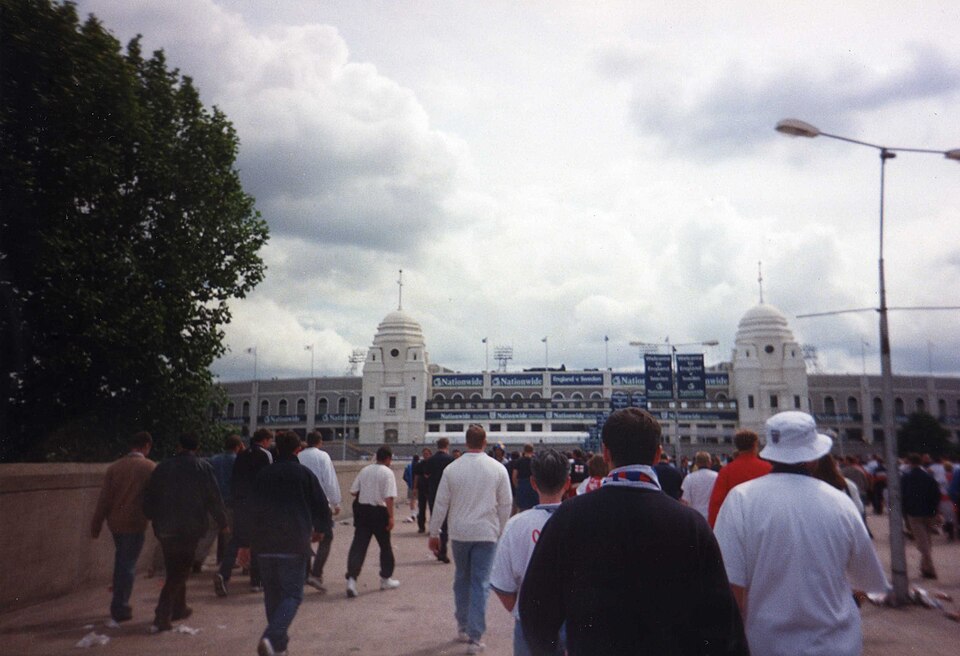
Leicester named a fourteen-man squad and trained at Bisham. Manchester City travelled south on the Thursday, went to the Footballer of the Year dinner, an award Tony Book shared that season with Dave Mackay, and then settled at the Oatlands Park Hotel in Weybridge, a teetotal establishment at the time. Leicester lost John Sjoberg to a groin injury in a practice match against Brentford and handed his shirt to Alan Woollett. Each club was given 16,000 tickets by the Football Association, and both the BBC and ITV cleared their Saturday afternoon for the match.[1][13][16]
Both clubs play in blue, so both changed. Leicester wore white. Manchester City wore the red and black stripes that Malcolm Allison had taken from AC Milan, a change kit they had already used earlier in the run and one City supporters have voted a favourite ever since. Princess Anne, at her first Cup final, was the guest of honour, King Hussein of Jordan watched from the stand, and the two captains tossed up with a seven-sided fifty pence piece. Allison was not on the bench for any of it: he was serving a touchline ban and had to watch from a seat in the stand behind the dugout.[9][13][1][12]
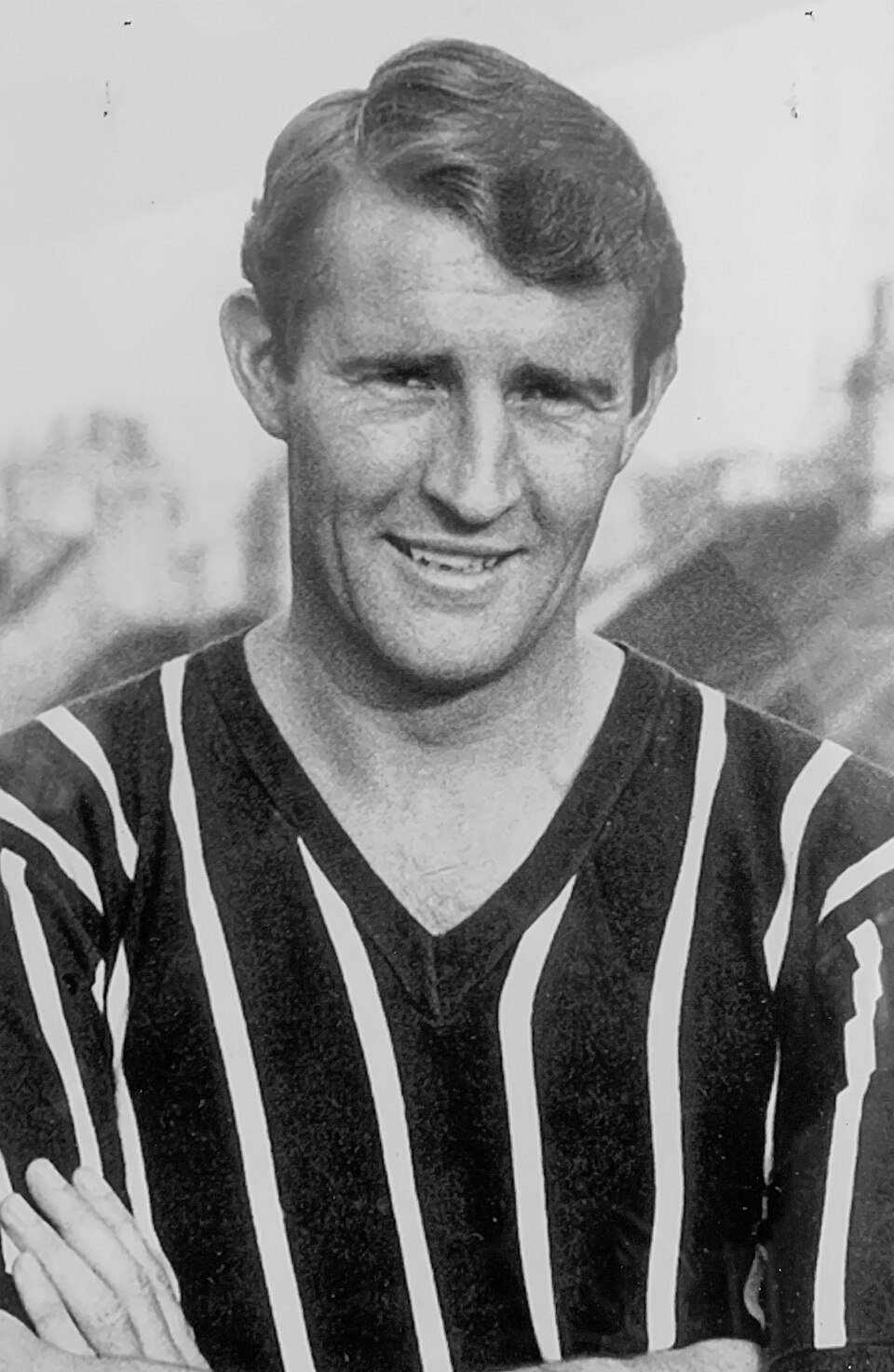
The mismatch never arrived. Leicester attacked from the start, and Allan Clarke, whom the press would vote man of the match on the losing side, ran at the City defence and forced Harry Dowd into the best save of the half. Peter Rodrigues then slid in to meet a low cross and sliced it wide from close range. Three minutes later the final was settled. Mike Summerbee took the ball to the right byline, held off Woollett and pulled it back towards the penalty spot, and Neil Young hit it first time with his left foot into the roof of Peter Shilton's net on 24 minutes.[1][19][20][15]
Leicester's best chance came straight after the interval, Clarke heading the ball down for Andy Lochhead, who lifted his shot over the bar. City took hold of the second half after that. Len Glover, pulled back into defence as Leicester tried to keep the deficit at one goal, was hurt and went off on 70 minutes for Malcolm Manley: the only substitution of the day, because each club named 12 players and was allowed to use one of them. City's substitute, David Connor, who had man-marked Alan Ball in the semi-final, stayed on the bench.[1][17][13]
Princess Anne presented the trophy to Tony Book. It was Manchester City's fourth FA Cup, and it made Joe Mercer the first person to win the league championship and the FA Cup both as a captain and as a manager. The team came home by train to Wilmslow the following evening and rode 13 miles into Manchester on an open-topped bus, with 25,000 people along the route and 3,000 more packed into Albert Square. The Cup took City into Europe, and within a year they had beaten Gornik Zabrze to win the Cup Winners' Cup.[1][13][14]
Leicester's season did not finish at Wembley. The winter had left them five league matches still to play after the final, and they were still playing them three weeks later. They beat Tottenham Hotspur, lost at Ipswich Town, beat Sunderland, drew with Everton, and then went to Old Trafford on 17 May needing a win to stay up at Coventry City's expense. They lost 3-2. Leicester finished 21st on 30 points from 42 league games, in a season of 53 matches in all competitions, and went down with Queens Park Rangers.[2][18]
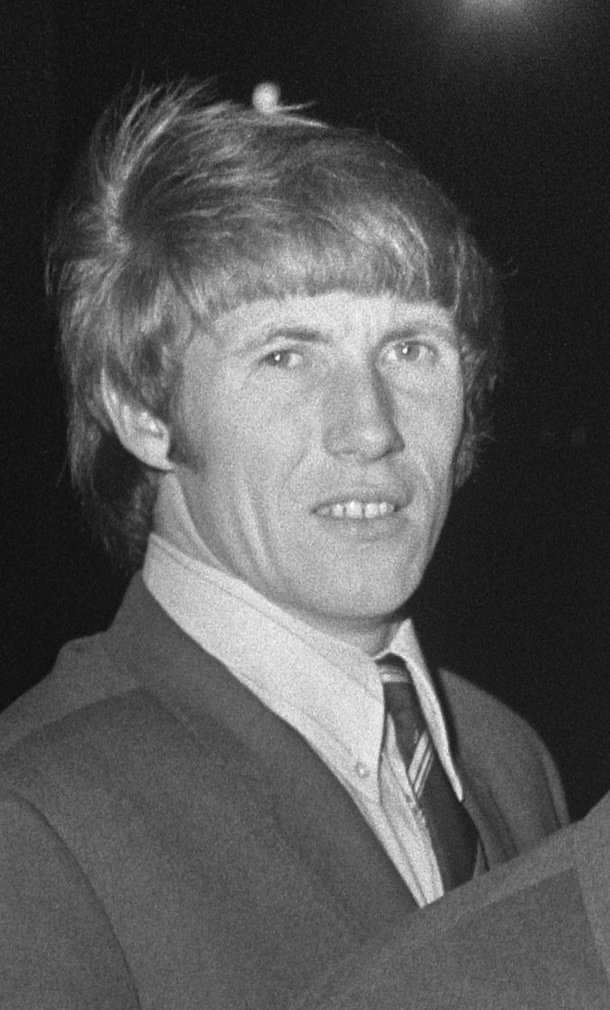
The break-up was quick. Allan Clarke, already the most expensive footballer in Britain when Leicester signed him, went to Leeds United that June for 165,000 pounds and won the league and the FA Cup there. Peter Shilton, 19 on the day of the final and in goal only because Leicester had backed him over Gordon Banks, went down to the Second Division with them, came back up as champions two seasons later under O'Farrell, and finished as England's most capped men's international. Manchester City kept winning for another year. Leicester, beaten in a fourth final, had to wait a very long time for a first.[5][6][3][1]
How the match unfolded
- 15:00Kick-off. The captains toss up with a seven-sided fifty pence piece, a coin that will not be released to the public until the autumn.[17][9][12]
- first halfAllan Clarke runs at the Manchester City defence and drives a shot towards the top corner that Harry Dowd tips round the post, the best save of the half.[19][13]
- three minutes before the goalPeter Rodrigues slides in to meet a low cross for Leicester and slices it wide from close range.[19][20]
- 24'Mike Summerbee reaches the right byline and pulls the ball back towards the penalty spot; Neil Young hits it first time with his left foot past Peter Shilton. Manchester City lead.[1][15][19]
- half-timeLeicester City 0 Manchester City 1. Leicester have played far more openly than the build-up predicted and the final has been a contest.[1][19]
- just after half-timeLeicester's best chance of the match. Allan Clarke heads a ball down for Andy Lochhead, whose shot goes over the bar.[1]
- 70'Len Glover, pulled back into defence as Leicester try to hold the deficit at one, is injured and replaced by Malcolm Manley. It is the only substitution of the afternoon.[1][17]
- full-timeManchester City win 1-0. Princess Anne, at her first Cup final, presents the trophy to Tony Book.[13][9][21]
Match facts
Where they played
Both sides as they lined up. Choose any player to read what they did in this final.
Select a shirt for that player's note.
Route to the final
Leicester City
- Third round: Barnsley (a) drew 1-1, replay (h) won 2-1
- Fourth round: Millwall (a) won 1-0
- Fifth round: Liverpool (h) drew 0-0, replay (a) won 1-0
- Sixth round: Mansfield Town (a) won 1-0
- Semi-final: West Bromwich Albion (Hillsborough) won 1-0
Manchester City
- Third round: Luton Town (h) won 1-0
- Fourth round: Newcastle United (a) drew 0-0, replay (h) won 2-0
- Fifth round: Blackburn Rovers (a) won 4-1
- Sixth round: Tottenham Hotspur (h) won 1-0
- Semi-final: Everton (Villa Park) won 1-0
Line-ups
Leicester City · 4-4-2
- Peter Shilton Goalkeeper, nineteen years old and already Leicester's first choice ahead of the departed Gordon Banks
- Peter Rodrigues Right back; captained Southampton to the FA Cup seven years later
- Alan Woollett Centre back, in the side because John Sjoberg pulled a groin muscle in a practice match days before
- Graham Cross Defender
- David Nish Left back and captain, the youngest captain of an FA Cup finalist
- Rodney Fern Midfield; scored the quarter-final winner at Mansfield Town
- Bobby Roberts Midfield
- Dave Gibson Midfield; a fitness doubt in the week of the final
- Len Glover Left side; dropped back into defence in the second half, then injured and substituted
- Allan Clarke Forward; the journalists' choice as man of the match on the losing side
- Andy Lochhead Centre forward; put Leicester's best second-half chance over the bar
Manchester City · 4-2-4
- Harry Dowd Goalkeeper; tipped Allan Clarke's first-half drive round the post
- Tony Book Right back and captain; joint Footballer of the Year that season with Dave Mackay
- Mike Doyle Centre back
- Tommy Booth Centre back; scored the semi-final winner against Everton in his first season
- Glyn Pardoe Left back
- Alan Oakes Midfield
- Colin Bell Midfield
- Mike Summerbee Right side; made the goal from the byline
- Francis Lee Forward; scored in three rounds on the way to Wembley
- Neil Young Forward; scored the only goal of the final
- Tony Coleman Left side
Trivia and detail
- Leicester's fifth-round tie with Liverpool was postponed six times before it was finally played on 1 March. The replay at Anfield turned on Peter Shilton saving a Tommy Smith penalty.[1]
- Mike Summerbee was sent off in Manchester City's fourth-round replay against Newcastle United, and City won it 2-0 with ten men.[1][14]
- Leicester reached the final on four separate 1-0 wins, over Millwall, Liverpool, Mansfield Town and the holders West Bromwich Albion.[1][21]
- Tommy Booth's semi-final winner against Everton came from a corner Neil Young had won and then taken himself, with barely a minute of the game left.[1][13]
- The day before the final, Joe Mercer described the Wembley pitch as a cabbage patch.[1][15]
- British Movietone packaged the afternoon as Cup Final Fiesta, a colour round-up that ran the Wembley final alongside the Celtic and Rangers Scottish Cup final at Hampden Park the same weekend.[11]
- Peter Rodrigues, Leicester's right back that afternoon, went back to Wembley as Southampton's captain in 1976 and won the Cup.[13]
How well do you know the 1969 final?
Five questions. Every answer is sourced from the material on this page.
-
Who scored the only goal of the 1969 FA Cup final?
-
What did the two captains toss up with before kick-off?
-
What happened to Leicester City in the weeks after the final?
-
Who presented the trophy to Manchester City?
-
What is missing from British Pathe's surviving colour film of this final?
What is not settled
Honesty matters more than tidiness. These details are contested or unrecorded, and we have not guessed at them:
- The minute of the goal is not settled. Wikipedia, 11v11, the FA Cup Finals database and Manchester City's own 2013 account all place it in the twenty-fourth minute; the club's 2019 retrospective calls it a twenty-third minute finish. This record uses 24 and shows the disagreement rather than hiding it.
- The attendance is given as a flat 100,000 by every source consulted. That is Wembley's all-ticket capacity for a final rather than a counted gate, and no exact turnstile figure was found for this match.
- Tony Book's age is contested in both directions. He is almost universally described as 35 on the day, his recorded date of birth of 4 September 1934 makes him 34, and Manchester City's own profile says Malcolm Allison advised him to alter his birth certificate at Plymouth Argyle, so the recorded date may itself understate him.
- The formations drawn here are reconstructions. Contemporary team sheets were printed by shirt number, not by shape. The 4-4-2 and 4-2-4 shown follow the positional labels in the fullest modern records of the two line-ups; other accounts describe Manchester City as 4-3-3 with Neil Young withdrawn.
- The order of Leicester's two central defenders, Alan Woollett and Graham Cross, is not fixed by any source consulted. The shirt numbers suggest one arrangement and the modern positional labels another, so the pitch graphic should not be read as a claim about which of them played on which side.
- Hansard prints the Leicester member who spoke on 1 May 1969 as Tam Boardman; secondary accounts of the same exchange call him Tom Boardman. No source consulted resolves the spelling.
- No clock times were found for the early chances. Match reports place Allan Clarke's shot and Peter Rodrigues's miss in the first half, the second of them three minutes before the goal, but give no minutes, so they are recorded here without them.
- British Pathe's own catalogue notes that the negative of its colour story is missing and the surviving print is scratched, so the film that does exist is not the film as it was issued.
How we know
Every claim on this page is tied to a numbered source below. These are the contemporary records behind it, each one fetched and matched word for word before publication rather than taken on trust:
- HC Deb 01 May 1969 vol 782 cc1596-7 · Hansard, House of Commons
- Cataloguer's synopsis of the cut newsreel story, including the missing goal and the coin used for the toss · British Pathe (official YouTube catalogue)
- Offcuts and rushes for newsreel story 69/35, including a close-up of the new fifty pence piece · British Pathe (official YouTube catalogue)
- Colour round-up of the Wembley and Hampden cup finals of that weekend, issued 28 April 1969 · British Movietone via AP Archive (official YouTube catalogue)
Where a primary record and a modern account disagree, we show both rather than choosing the tidier number.
Sources
- 1969 FA Cup final · Wikipedia
- 1968-69 Football League First Division · Wikipedia
- Frank O'Farrell · Wikipedia
- Tony Book · Wikipedia
- Allan Clarke (footballer) · Wikipedia
- Peter Shilton · Wikipedia
- Fifty pence (British coin) · Wikipedia
- Football (Hooliganism), HC Deb 01 May 1969 vol 782 cc1596-7 · Hansard, House of Commons
- The Cup Final (1969), FILM ID 2203.2 (archive film and catalogue synopsis) · British Pathe (official YouTube catalogue)
- Selected Originals - The Cup Final (1969), FILM ID 2203.22 (archive film and catalogue synopsis) · British Pathe (official YouTube catalogue)
- CUP FINAL FIESTA - A COLOUR PRESENTATION (28 April 1969) · British Movietone via AP Archive (official YouTube catalogue)
- Superstitions and Traditions - 1969 Elizabeth II 50p · The Royal Mint
- 1969 Revisited · Manchester City FC
- FA Cup glory: 1969 · Manchester City FC
- Great FA Cup goals: Neil Young · Manchester City FC
- Manchester City legends: Tony Book · Manchester City FC
- Leicester City v Manchester City, 26 April 1969 · 11v11 (AFS Enterprises)
- Leicester City match record: 1968-69 · 11v11 (AFS Enterprises)
- 1969 FA Cup Final: Man City vs Leicester City · FA Cup Finals
- The FA Cup Finalists 1960-1969 · Historical Football Kits
- England FA Challenge Cup 1968-69 · Rec.Sport.Soccer Statistics Foundation