1979-80 FA Cup · The Final
1980 FA Cup Final: West Ham United 1-0 Arsenal
The Last Second Division Winners
West Ham's enduring upset was a tactical win before it became a defensive one: John Lyall's 4-5-1 changed the midfield arithmetic and forced weary holders Arsenal to attack a shape they never solved.
Second Division West Ham United beat holders Arsenal 1-0 as John Lyall's compact 4-5-1 protected Trevor Brooking's early header and delivered the last FA Cup win by a club outside the top flight.
Saturday 10 May 1980 · Wembley Stadium
What you will not find elsewhere
The line-up says two forwards; the match plan says 4-5-1
Statistical line-ups list Pearson as a forward beside Cross, which can make West Ham look like a 4-4-2 side. West Ham's official history and the Guardian both describe Pearson in a withdrawn role and Cross as the lone striker. That distinction is not cosmetic: the extra midfielder is the tactical mechanism that explains how West Ham restricted Brady and protected the lead.[1][6][7]
Brooking kept the winner among his great career moments
The goal was an unusual header produced by a mishit shot, but its place in Trevor Brooking's memory was uncomplicated: "It was one of the great moments of my career". The verified recollection belongs beside the tactical explanation because a disciplined plan still needed one player to read the broken move before anyone else.[6][1]
Paul Allen was Wembley's youngest finalist, not the youngest everywhere
Allen was 17 years and 256 days old and became the youngest player in an FA Cup final at Wembley. The often-shortened claim that he was the youngest finalist outright is inaccurate: James Prinsep was 17 years and 245 days old when he played at Kennington Oval in 1879. The venue qualifier preserves both achievements.[7][14]
The footage
The match report
The final looked unequal on paper. Arsenal were the holders, had reached Wembley for a record third successive FA Cup final and were heading for fourth place in the First Division. West Ham had been relegated in 1978 and came from the Second Division, where a fading promotion challenge left John Lyall's side outside the leading places. Terry Neill therefore brought the favourites; Lyall brought a team with enough top-level experience to distrust that label. Bonds later remembered that West Ham did not think of themselves as ordinary underdogs, and the starting eleven explains why: Parkes, Bonds, Brooking and Pearson supplied senior authority around emerging players such as Martin, Devonshire and Allen.[1][2][6][4]
Their roads to Wembley created a second imbalance, this time in West Ham's favour. Lyall's team played seven matches: a replay against West Bromwich Albion, single wins over Orient, Swansea City and Aston Villa, then an extra-time semi-final replay against Everton at Elland Road. Arsenal played ten matches. Cardiff City and Bolton Wanderers both forced replays, while Liverpool stretched the semi-final across four matches before Brian Talbot finally scored at Highfield Road. Neill's players were also pursuing the European Cup Winners' Cup. West Ham had the lower league status, but Arsenal carried the heavier knockout workload into Wembley.[10][11][12][13]
Lyall's selection then altered the contest. A team sheet could make Pearson and Cross look like a conventional forward pair, yet the club's own account describes Cross operating alone and Pearson withdrawing into midfield. The resulting 4-5-1 placed another West Ham body around Brady, Talbot and Price without abandoning Brooking or Devonshire as outlets. Allen shared the midfield labour, Bonds and Martin stayed together in front of Parkes, and the full-backs did not need to chase the game. Arsenal's 4-4-2 still offered accomplished passers and two established forwards, but it now had to play through a numerical crowd before reaching Stapleton and Sunderland.[1][6][4][7]
The decisive move came before Arsenal could impose that quality. Devonshire accelerated down the left and delivered across the penalty area. Cross challenged for the first ball, Pearson met the next phase but did not strike it cleanly, and his attempt travelled across goal rather than towards the intended corner. Brooking read the accident quicker than the defenders. Leaning back and then stooping, he steered a header past Jennings from eight yards in the 13th minute. A move initiated by West Ham's width was finished through their extra midfielder arriving where Arsenal's centre-backs had lost the second ball.[1][3][9][6]
Once ahead, West Ham did not need to pretend they were Arsenal's equals in possession. The holders saw more of the ball, particularly as Brady tried to organise attacks, but possession repeatedly met the same layers: Cross at the front, Pearson dropping back, five midfielders narrowing the passing lanes, then Bonds and Martin protecting Parkes. The goalkeeper and defence held firm through the rest of the first half. What could look like Arsenal failing to accelerate was also West Ham controlling where acceleration was possible. Lyall had given up a second fixed striker in order to keep Arsenal's best passer receiving amid pressure rather than facing the back line.[6][1][9][4]
Neill changed his left back in the 61st minute, sending Sammy Nelson on for John Devine, but not the central problem. Arsenal continued to have most of the second-half possession and West Ham continued to defend the spaces that mattered. Parkes was protected from the sequence of clear chances the favourites required. The pattern resists the simple giant-killing script: West Ham were under pressure, yet the BBC's retrospective records only one save of note from Parkes, from Sunderland after half-time. This was a lead defended by a shape that kept working, not a succession of desperate interventions.[7][8][6][4]
The clearest late opening belonged instead to West Ham. Allen broke beyond Arsenal with Jennings the remaining obstacle, and Young stopped him from behind just outside the penalty area in the 87th minute. Referee George Courtney showed yellow, the sanction available under the interpretation then applied. The episode became more than a footnote: the foul sparked national debate, and the instruction making that offence an automatic red card followed two years later. It also completed the tactical reversal. The team expected to spend the day resisting had created the final's last decisive one-against-one, while the favourites were reduced to stopping it illegally.[7][1][5]
Courtney's final whistle confirmed a 1-0 victory and West Ham's third FA Cup. Bonds climbed the Wembley steps to lift the trophy, five years after captaining another winning West Ham side there. The result has lasted as a boundary in the competition's history: no club from outside the top division has won the FA Cup since. Brooking supplied the image, Parkes and the defence supplied the clean sheet, but Lyall supplied the explanation. His formation turned a nominal mismatch into a crowded, disciplined game in which Arsenal's superior share of the ball never became superiority where the score was decided.[3][2][7][6][8]
How the match unfolded
- opening phaseWest Ham settle into John Lyall's 4-5-1, with David Cross alone at the front and Stuart Pearson working behind him in midfield.[1][6]
- 13'Alan Devonshire breaks down the left and crosses. David Cross contests the ball, Stuart Pearson sends a mis-hit shot across goal and Trevor Brooking stoops to head it beyond Pat Jennings from eight yards.[1][3][9]
- after the goalArsenal take more of the possession, but Billy Bonds and Alvin Martin protect Phil Parkes while West Ham's crowded midfield restricts Liam Brady's room.[6][4][9]
- first halfWest Ham continue to deny Arsenal a route through the centre. The holders reach the interval without finding a way past Parkes.[1][9]
- half-timeWest Ham lead 1-0 through Brooking's header.[8][1]
- second halfBrady directs much of Arsenal's attacking play, but West Ham's compact shape keeps the holders from turning possession into an equaliser.[9][6]
- 61'Arsenal replace John Devine with Sammy Nelson, the only substitution used in the final.[7][1][8]
- 87'Paul Allen breaks clear with only Jennings ahead. Willie Young brings him down from behind just outside the penalty area and is shown a yellow card under the law then in force.[7][1][5]
- full-timeWest Ham win 1-0. Captain Billy Bonds receives the FA Cup after his side preserves its lead for the rest of the match.[3][8][6]
Match facts
Where they played
Both sides as they lined up. Choose any player to read what they did in this final.
Select a shirt for that player's note.
Route to the final
West Ham United
- Third round: West Bromwich Albion (a) drew 1-1, replay (h) won 2-1
- Fourth round: Orient (a) won 3-2
- Fifth round: Swansea City (h) won 2-0
- Sixth round: Aston Villa (h) won 1-0
- Semi-final: Everton (Villa Park) drew 1-1 after extra time, replay (Elland Road) won 2-1 after extra time
Arsenal
- Third round: Cardiff City (a) drew 0-0, replay (h) won 2-1
- Fourth round: Brighton & Hove Albion (h) won 2-0
- Fifth round: Bolton Wanderers (a) drew 1-1, replay (h) won 3-0
- Sixth round: Watford (a) won 2-1
- Semi-final: Liverpool (Hillsborough) drew 0-0 after extra time; replays at Villa Park drew 1-1 after extra time twice; third replay (Highfield Road) won 1-0
Line-ups
West Ham United · 4-5-1
- Phil Parkes Goalkeeper. Kept a clean sheet as Arsenal held most of the possession
- Ray Stewart Right back
- Billy Bonds Centre back and captain. Lifted the FA Cup for the second time in five seasons
- Alvin Martin Centre back. Partnered Bonds in West Ham's compact defence
- Frank Lampard Left back. His extra-time semi-final winner had taken West Ham to Wembley
- Geoff Pike Right-sided midfielder
- Paul Allen Midfielder. Broke clear late in the match before Willie Young brought him down
- Stuart Pearson Played a withdrawn midfield role behind David Cross; his mis-hit shot became the assist for Brooking
- Trevor Brooking Central midfielder. Scored the only goal with a stooping header
- Alan Devonshire Left-sided midfielder. Began the winning move with a run and cross
- David Cross Lone centre forward in Lyall's 4-5-1
Arsenal · 4-4-2
- Pat Jennings Goalkeeper. Beaten by Brooking's first-half header
- Pat Rice Right back and captain
- David O'Leary Centre back
- Willie Young Centre back. Booked late after bringing down Paul Allen
- John Devine Left back. Replaced by Sammy Nelson in the second half
- David Price Right midfield
- Brian Talbot Central midfield
- Liam Brady Central midfield. Arsenal's principal creative player
- Graham Rix Left midfield
- Alan Sunderland Forward
- Frank Stapleton Centre forward
Trivia and detail
- West Ham returned to Wembley for the Charity Shield at the start of the following season and lost 1-0 to Liverpool.[2]
- Brian Clough's pre-match jibe was that Brooking 'floats like a butterfly - and stings like one!'[1]
- West Ham wore an all-white change strip beneath Wembley's twin towers rather than their familiar claret-and-blue shirts.[1]
- The match was the 99th FA Cup final and the 52nd staged at Wembley.[7]
- An estimated 50,000 West Ham supporters were inside Wembley when Bonds raised the trophy.[3]
- Four days after Wembley, Arsenal lost the European Cup Winners' Cup final to Valencia on penalties in Brussels.[15][1]
- West Ham won promotion in the following season by taking the Second Division title, losing only four of 42 league matches.[2]
- Allen won the FA Youth Cup with West Ham in the season after he had already won the senior FA Cup, an order his youth-team manager joked was back to front.[14]
- The Cockney Rejects' version of I'm Forever Blowing Bubbles, released for the cup-final season, reached number 35 in the UK singles chart.[16]
How well do you know the 1980 final?
Five questions. Every answer is sourced from the material on this page.
-
Who scored West Ham's winning goal in the 1980 FA Cup final?
-
Which formation did John Lyall use to crowd Arsenal's midfield?
-
Which Arsenal defender brought down Paul Allen during the late breakaway?
-
Which player did Sammy Nelson replace for Arsenal?
-
Who captained West Ham at Wembley?
What is not settled
Honesty matters more than tidiness. These details are contested or unrecorded, and we have not guessed at them:
- West Ham's official match history and the Guardian describe the winning goal as the 13th minute. Some narrative accounts begin the move in the 12th minute. The record uses the conventional scorer minute, 13.
- 11v11 times Young's foul on Allen at 87 minutes. Several official club accounts call it only late in the match, so 87 is retained as the database timing rather than presented as a universally printed minute.
- West Ham's 4-5-1 is explicitly described by the club and the Guardian, but no consulted source publishes a formation diagram or exact left-to-right midfield ordering. The pitch reconstruction follows stated roles, with Pearson withdrawn behind lone striker Cross.
- Arsenal are shown as 4-4-2 from the confirmed XI and listed player roles. No consulted source supplies a contemporary formation graphic, and exact midfield positioning may have varied during play.
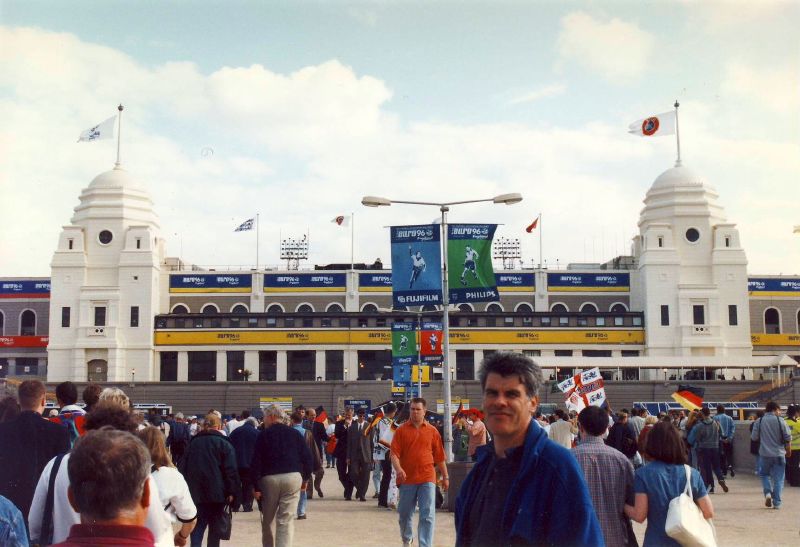
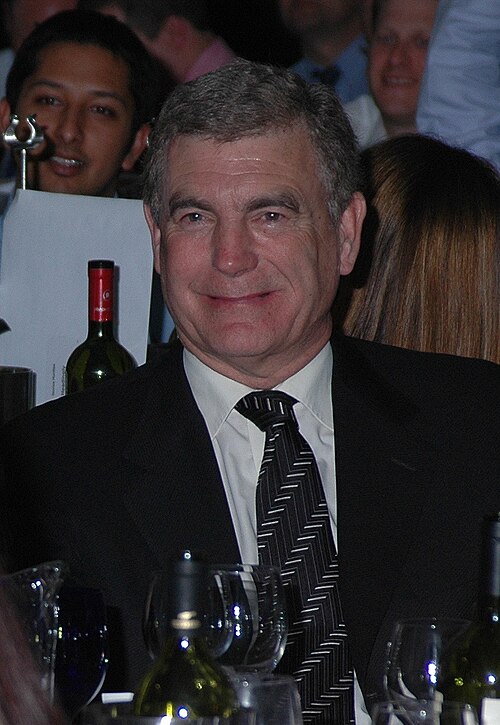
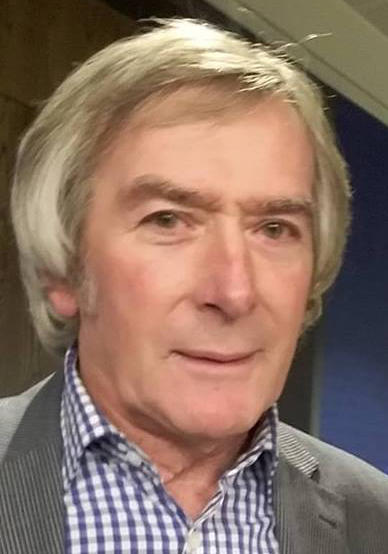
- No suitably licensed photograph taken during the final was found on Wikimedia Commons. Proposed images are clearly identified later portraits and later photographs of the original Wembley; images remains empty until separate verification.
How we know
Every claim on this page is tied to a numbered source below. These are the contemporary records behind it, each one fetched and matched word for word before publication rather than taken on trust:
- Official club match history: context, tactics, goal, teams, referee and attendance · West Ham United FC
- Official decade history: divisional context, cup route and following promotion season · West Ham United FC
- Official retrospective: goal sequence, tactical shape, trophy presentation and supporter allocation · West Ham United FC
- Official club history of the four-match 1980 semi-final against Arsenal · Liverpool FC
Where a primary record and a modern account disagree, we show both rather than choosing the tidier number.
Sources
- 1980 - West Ham United 1-0 Arsenal · West Ham United FC
- Club history: 1980s · West Ham United FC
- On This Day: West Ham win third FA Cup with win over Arsenal · West Ham United FC
- When Brooking won the FA Cup for West Ham · BBC Sport
- Former Arsenal defender Willie Young dies aged 73 · BBC News
- Happy Hammers: revisiting West Ham's 1980 FA Cup triumph - in pictures · The Guardian
- Arsenal v West Ham United, 10 May 1980 · 11v11
- England - FA Cup Finals 1946-2000 · Rec.Sport.Soccer Statistics Foundation
- 1980 FA Cup Final: West Ham vs Arsenal · FA-CupFinals.co.uk
- F.A. Cup results 1979/80 · footballsite.co.uk
- Arsenal results 1979/80 · footballsite.co.uk
- Memorable FA Cup semi-finals featuring non top-flight clubs · The Football Association
- Coin tosses, seven-hour battles and more: Liverpool's long-winded cup ties · Liverpool FC
- Spurs stories: Paul Allen - West Ham, Spurs, and a hat-trick of FA Cup Finals · Tottenham Hotspur FC
- European Competitions 1979-80 · Rec.Sport.Soccer Statistics Foundation
- Why does West Ham's musical heritage celebrate blowing bubbles? · Newham Heritage Month