1996-97 FA Cup · The Final
1997 FA Cup Final: Chelsea 2-0 Middlesbrough
The long wait ends
The famous opening strike did more than settle a final: contemporary coverage shows two clubs taking opposite paths through the new international market, while the surviving record cannot even agree whether Wembley history arrived after 42 or 43 seconds.
Roberto Di Matteo's long-range strike inside the first minute and Eddie Newton's late finish gave Chelsea a 2-0 victory over Middlesbrough at Wembley, ending the London club's long wait for a major trophy and completing a season of three separate blows for Boro.
Saturday 17 May 1997 · Wembley Stadium
What you will not find elsewhere
Wembley's famous goal has two surviving times
It is routinely called the 43-second goal, and that is the time printed by two contemporary Independent reports and by Chelsea's detailed anniversary recollection. But the reproduced Telegraph report explicitly says 42 seconds, and Chelsea's own later survey of its cup wins also says 42. The match clock had no bearing on the result, but an encyclopedia should not turn a one-second source disagreement into false certainty. The timeline records both figures and treats the first official minute as the stable match notation.[1][2][9][10][12]
The same number of matches, very different journeys
Both clubs played six FA Cup matches before the final, but Chelsea needed one replay and Middlesbrough needed a semi-final replay after extra time. Chelsea scored seventeen goals and conceded five across that route; Middlesbrough scored eighteen and conceded five. The near symmetry hides the character of the runs: Chelsea's comeback from two goals down against Liverpool became a statement victory, while Middlesbrough survived a six-goal semi-final with third-tier Chesterfield before winning the replay.[16][5][6][19]
Even Di Matteo did not expect the final to change so quickly
Roberto Di Matteo later told Chelsea's official site that scoring so early was unexpected. The verified remark is a useful counterweight to the goal's familiarity: the strike now feels like the inevitable opening image of the final, but in the moment it abruptly replaced both managers' plans before the match had settled. The surviving timing disagreement does not alter that shared memory.[10][1][9]
The footage
The match report
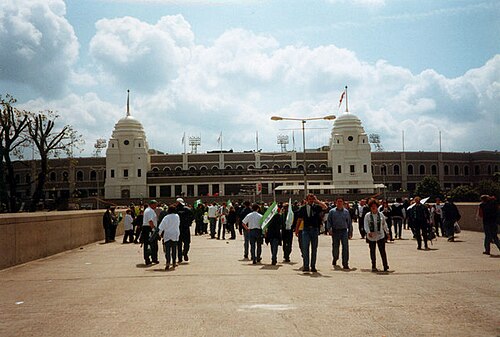
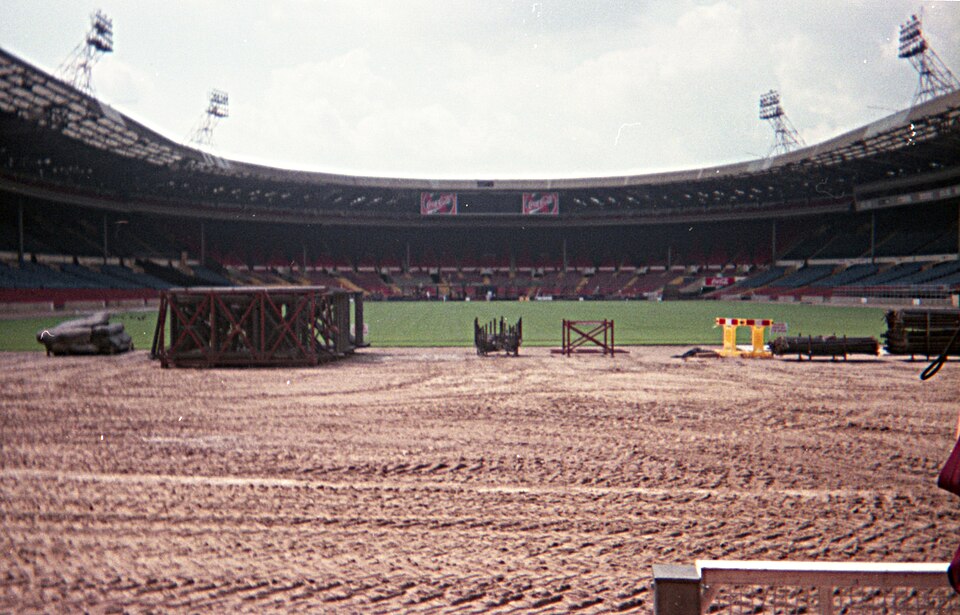
The 116th FA Cup final brought Chelsea and Middlesbrough to the original Wembley on Saturday 17 May 1997 before 79,160 spectators. It was Middlesbrough's first appearance in this final and Chelsea's first since the 4-0 defeat by Manchester United in 1994. More than a rematch with Wembley was at stake for Chelsea: the club's previous major trophy had come 26 years earlier, when the FA Cup was won for the first time in 1970.[19][1][15][10]
The pre-match story was the international turn in English football after the Bosman ruling. The Independent counted players from Italy, Brazil, Romania, Norway and France among those expected to appear, with Italians in an FA Cup final for the first time. Yet the comparison was not merely about passports. Chelsea's imported players had been fitted into a functioning side; Middlesbrough had collected celebrated individuals but arrived after relegation and a League Cup final defeat. Gullit's team looked integrated and Robson's exhausted.[4][3][1][2][17]
Even the formation is evidence of that changing game, and the sources do not describe it in the same language. The Independent's post-match notation calls both teams 4-4-2: Sinclair at right back and Petrescu in midfield for Chelsea, with Juninho paired with Ravanelli for Middlesbrough. The modern reference record assigns Chelsea three centre backs and two wing-backs, implying 3-5-2, while it places Juninho and Hignett either side of Ravanelli, implying 4-3-3. Those descriptions can all resemble phases of the same match, but a formation pitch has to choose. This page follows the contemporary newspaper's explicit labels, while preserving the later positional interpretation as an uncertainty rather than quietly treating one diagram as settled fact. The drawing is therefore a sourced reading, not a claim that players stayed inside fixed lanes.[2][3][19]
Middlesbrough kicked off and the contest was altered almost immediately. Mustoe surrendered possession to Wise, who passed to Di Matteo inside Chelsea's half. Hughes ran across Pearson's line and the defenders continued to retreat, allowing Di Matteo to travel before driving a shot that climbed over Roberts, dipped and struck the underside of the bar. The surviving clocks disagree by a second: two contemporary Independent pieces and Chelsea's later recollection say 43, while the reproduced Telegraph report and another Chelsea history page say 42. Either reading made it the fastest goal scored in a Wembley FA Cup final at the time.[1][2][9][10][12]
Robson's gamble on Ravanelli then failed. The forward had admitted that his back was not right, but he started and soon limped off after chasing a through ball against Sinclair. Mustoe followed him to the bench, Vickers went into defence and Festa moved into midfield. Pearson cleared Petrescu's lob from the line and Roberts stopped a Zola free-kick, but Festa appeared to level in first-half stoppage time when he headed Stamp's cross past Grodas. The flag was raised for offside. One contemporary report called it correct; another called it marginal.[9][2][19]
Chelsea controlled the second half without turning that control into an early clinching goal. Di Matteo stopped Juninho at the edge of the area with a foul that the Independent thought should have counted against his man-of-the-match award. Pearson poked a loose ball wide, Roberts twice denied Zola, and Vickers finally made Grodas save after Juninho released him. That was Middlesbrough's first effort to force a stop, while Chelsea's defensive line repeatedly caught Boro offside.[2][9]
The second goal arrived from Chelsea's best combination of the afternoon. Newton and Petrescu exchanged the ball on the break; Petrescu chipped towards Zola at the far post, and Zola improvised an outside-of-the-foot flick back into the goalmouth. Newton followed the move and guided the bouncing ball in with his left foot. For a player who had conceded the penalty that opened Chelsea's 1994 final defeat, it was a precise piece of personal repair. Vialli replaced Zola and Chelsea closed out a 2-0 win.[9][2][11][19]
Gullit became the first manager from outside the British Isles to win the FA Cup, in his first season as Chelsea's player-manager. He directed his thoughts after the match towards Matthew Harding, the club director and benefactor killed in a helicopter crash during the season. Middlesbrough left Wembley having lost both domestic cup finals and their Premier League place. Chelsea left with proof that the rebuilding begun under Glenn Hoddle and accelerated by Gullit could produce silverware, not simply style.[1][2][8][17]
How the match unfolded
- 1'Robbie Mustoe loses the ball to Dennis Wise. Roberto Di Matteo carries it out of his own half and drives over Ben Roberts from long range, the shot dipping in off the crossbar. Contemporary accounts timed the goal at either 42 or 43 seconds.[2][1][10][9]
- 21'Fabrizio Ravanelli, selected despite a back problem, limps off after trying to beat Frank Sinclair to a through ball. Mikkel Beck replaces him. The formal substitution records give 24 minutes.[9][2][19]
- 29'Steve Vickers replaces Mustoe and joins Nigel Pearson in central defence, allowing Gianluca Festa to move forward into midfield.[9][2][19]
- 45'Festa heads Phil Stamp's cross past Frode Grodas in first-half stoppage time, but an offside flag rules the goal out. The Independent called the decision marginal; the reproduced Telegraph account called it correct.[2][9][19]
- 55'Juninho breaks towards the penalty area and Di Matteo brings him down on its edge. The Independent argued that the cynical foul should have counted against Di Matteo in the man-of-the-match decision.[2]
- 64'Blackmore's long throw reaches Beck, whose back-header is not cut out by Frank Leboeuf. Pearson prods the loose ball wide.[9]
- 79'Juninho takes a quick free-kick and releases Vickers on the left. Grodas comes out and makes Middlesbrough's first save-forcing effort of the final with his legs.[2][9]
- 83'Chelsea break as Newton and Petrescu exchange passes. Petrescu chips towards Zola, whose improvised outside-of-the-foot flick falls for Newton to guide left-footed into the net. Some contemporary notation gives 82 minutes.[9][2][11][19]
- 89'Gianluca Vialli replaces Zola for the closing moments as Chelsea see out a 2-0 victory.[2][15][19]
Match facts
Where they played
Both sides as they lined up. Choose any player to read what they did in this final.
Select a shirt for that player's note.
Route to the final
Chelsea
- Third round: West Bromwich Albion (h) won 3-0
- Fourth round: Liverpool (h) won 4-2
- Fifth round: Leicester City (a) drew 2-2
- Fifth round replay: Leicester City (h) won 1-0 after extra time
- Quarter-final: Portsmouth (a) won 4-1
- Semi-final: Wimbledon (Highbury) won 3-0
Middlesbrough
- Third round: Chester City (h) won 6-0
- Fourth round: Hednesford Town (a) won 3-2
- Fifth round: Manchester City (a) won 1-0
- Quarter-final: Derby County (a) won 2-0
- Semi-final: Chesterfield (Old Trafford) drew 3-3 after extra time
- Semi-final replay: Chesterfield (Hillsborough) won 3-0
Line-ups
Chelsea · 4-4-2
- Frode Grodas Goalkeeper. Raced out to beat Stamp to Juninho's through ball and saved from Vickers late on
- Frank Sinclair Right back in the contemporary 4-4-2 notation. Ravanelli was hurt while trying to beat him to a through ball
- Frank Leboeuf Centre back. The contemporary press praised both his defending and his distribution
- Steve Clarke Centre back in the contemporary 4-4-2 notation
- Scott Minto Left back
- Dan Petrescu Right midfield. His chip to the far post began the decisive second goal
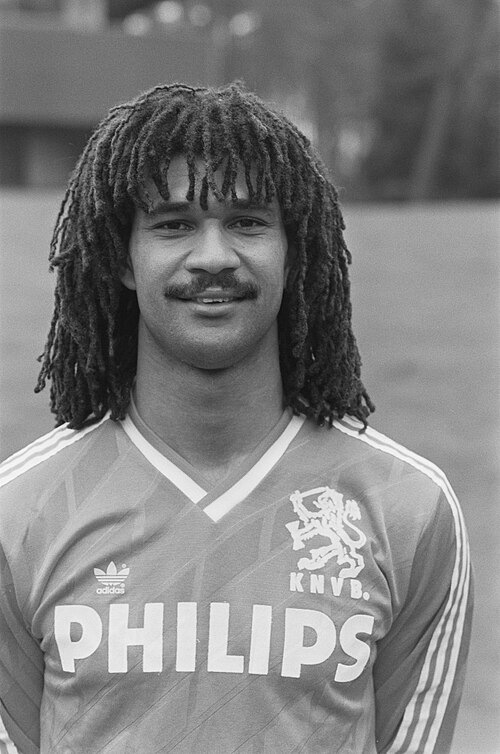
- Roberto Di Matteo Central midfield. Scored from long range inside the first minute and was named man of the match
- Eddie Newton Central midfield. Scored the late second goal
- Dennis Wise Left midfield and captain. Won the ball from Mustoe and passed to Di Matteo for the opener
- Gianfranco Zola Forward. His improvised flick created Newton's goal; replaced by Vialli late on
- Mark Hughes Forward. His run drew Pearson away as Di Matteo advanced for the opening goal
Middlesbrough · 4-4-2
- Ben Roberts Goalkeeper. Beaten by Di Matteo's dipping drive off the crossbar and saved twice from Zola
- Clayton Blackmore Right back in the contemporary 4-4-2 notation. His long throw led to Pearson's chance
- Nigel Pearson Centre back and captain. Cleared Petrescu's lob from the line and tried to stop Newton's goal
- Gianluca Festa Centre back at kick-off, then moved into midfield. Had a header disallowed for offside
- Curtis Fleming Left back in the contemporary 4-4-2 notation
- Phil Stamp Right midfield. Nearly reached Juninho's through ball and crossed for Festa's disallowed header
- Emerson Central midfield
- Robbie Mustoe Central midfield. Lost possession before the opener; replaced during the first half
- Craig Hignett Left midfield. Replaced by Kinder late on
- Juninho Forward. Created Boro's best openings and was singled out by the contemporary press
- Fabrizio Ravanelli Forward. Started despite a back problem and limped off in the first half
Trivia and detail
- Chelsea came from 2-0 down at half-time to beat Liverpool 4-2 in the fourth round. Mark Hughes came off the bench at the interval, scored the first and helped make the second before Vialli scored twice.[5]
- Middlesbrough's semi-final against third-tier Chesterfield finished 3-3 after extra time. David Elleray later accepted that Jonathan Howard's shot had crossed the line, while maintaining that he had already blown for an infringement before it was struck.[6][7]
- Mark Hughes collected a fourth FA Cup winner's medal, having already been on Manchester United's winning sides in 1985, 1990 and 1994.[1][19]
- Roberto Di Matteo was named man of the match. Eddie Newton's goal was his first in 18 months, according to the contemporary analysis.[2][9]
- Chelsea and Middlesbrough returned to Wembley in the following season's League Cup final. Chelsea again won 2-0, after extra time, and Di Matteo again scored the opening goal.[10][18]
- The final's two goals were scored by midfielders who had started Chelsea's 4-0 defeat by Manchester United in 1994. Newton had conceded the penalty for the opening goal in that earlier final.[15][11]
- Blue Day, recorded by Suggs with Chelsea's squad, was the club's official cup-final song. Chelsea's archive says it was played over Wembley after the victory and remains part of the club's matchday soundtrack.[13][14]
- Frank Sinclair recalled that the team took the cup through the streets around Stamford Bridge on an open-top bus the following day, with 100,000 supporters attending the celebration.[14]
How well do you know the 1997 final?
Five questions. Every answer is sourced from the material on this page.
-
Who scored Chelsea's opening goal in the 1997 final?
-
Which Middlesbrough player had a first-half header ruled out?
-
Why did Fabrizio Ravanelli leave the field early?
-
Who supplied the improvised flick for Eddie Newton's goal?
-
What distinction did Ruud Gullit earn with this victory?
What is not settled
Honesty matters more than tidiness. These details are contested or unrecorded, and we have not guessed at them:
- Di Matteo's opening goal is timed at 43 seconds by two Independent reports and Chelsea's detailed anniversary recollection, but at 42 seconds by the reproduced Telegraph report and Chelsea's own later survey of its cup wins. The record preserves both figures and uses minute 1 as the stable match notation.
- Newton's goal is shown at 83 minutes by Chelsea's club archive and the standard reference work, while the Independent's event notation gives 82. The record uses 83 and notes the alternative.
- Ravanelli's departure is described as after 21 minutes by the reproduced Telegraph report and after 22 minutes by the Independent's Sunday report. Formal line-up notation in the Independent's later analysis and the reference work records Beck entering at 24. The structured substitution uses 24 while the timeline preserves the narrative timing.
- Chelsea's formation is contested. The Independent's final analysis explicitly prints 4-4-2, with Petrescu in midfield and Sinclair at right back. The reference work labels Sinclair, Leboeuf and Clarke as centre backs and Petrescu and Minto as wing-backs, implying 3-5-2. The pitch follows the contemporary newspaper's stated 4-4-2.
- Middlesbrough's shape is also described differently. The Independent prints 4-4-2; the reference work labels Hignett and Juninho as wide forwards around Ravanelli. The pitch follows the contemporary newspaper and should not be read as denying that Juninho frequently dropped away from the front line.
- The reproduced Telegraph page has corrupt header metadata that calls the venue Crystal Palace and dates the match to 20 May. Its report body, line-ups and match events align with the reliable sources, but its header is not used for date or venue.
- Official video candidates have been proposed and confirmed through YouTube oEmbed, but none is placed in the record until the separate verification pass.
How we know
Every claim on this page is tied to a numbered source below. These are the contemporary records behind it, each one fetched and matched word for word before publication rather than taken on trust:
- Ian Ridley's match report, 18 May 1997: the 43-second opening goal, Gullit's place in history, Hughes's medals and the dedication to Matthew Harding · The Independent on Sunday
- Glenn Moore's post-final analysis, 19 May 1997: attendance, line-ups, substitutions, chances, both goals, offside count and post-match consequences · The Independent
- Match-day preview, 17 May 1997: probable teams, referee, tactical expectations and the contrast between the clubs · The Independent
- Match-day feature on the first Italians in an FA Cup final and the contrasting integration of foreign players at the two clubs · The Independent
- Fourth-round report, 27 January 1997: Chelsea's comeback from 2-0 down to win 4-2 · The Independent
- Semi-final report, 14 April 1997: Middlesbrough 3-3 Chesterfield after extra time · The Independent
- 14 April 1997: Elleray on Howard's unawarded semi-final shot and the preceding infringement · The Independent
- 22 May 1999: Gullit recalling that he was the first foreign coach to win the FA Cup · The Independent
- Contemporary match report with line-ups, referee, attendance, chances, substitution sequence and the 42-second timing · Electronic Telegraph report reproduced at fa-cupfinals.co.uk
- Club anniversary feature with Di Matteo's recollection, the 43-second timing and the cup run · Chelsea FC
- Club account of both 1997 goals and Newton's connection to the 1994 defeat · Chelsea FC
- Club retrospective that gives Di Matteo's goal as 42 seconds and the final score as 2-0 · Chelsea FC
- Club interview identifying Blue Day as the official 1997 final song and recalling it being played after the Wembley win · Chelsea FC
- Sinclair's recollection of recording Blue Day and the next day's open-top bus celebration · Chelsea FC
Where a primary record and a modern account disagree, we show both rather than choosing the tidier number.
Sources
- The Chelsea Power Show · The Independent on Sunday
- Chelsea cruelly expose Boro fault lines · The Independent
- FA Cup Final: Wembley's continental style challenge · The Independent
- FA Cup Final: Azzurri return to the twin towers · The Independent
- Liverpool fold as Hughes sparks Chelsea onslaught · The Independent
- Hewitt keeps the Chesterfield dream alive · The Independent
- Referee Elleray admits 'the ball crossed the line' · The Independent
- Gullit delights in being different · The Independent
- 1997 FA Cup Final: Chelsea vs Middlesbrough · Electronic Telegraph report reproduced at fa-cupfinals.co.uk
- Di Matteo recalls that Wembley goal and the magic of the FA Cup · Chelsea FC
- Relive every FA Cup final goal scored by Chelsea · Chelsea FC
- Chelsea's eight FA Cup final wins · Chelsea FC
- Suggs on Our House and Chelsea's home · Chelsea FC
- Cup final exclusive: Frank Sinclair - I enjoyed every minute of that final, I had energy to burn · Chelsea FC
- England - FA Cup Finals 1946-2000 · RSSSF
- England - FA Challenge Cup 1996-1997 · RSSSF
- England 1996/97 · RSSSF
- England - FA Challenge Cup Finals · RSSSF
- 1997 FA Cup final · Wikipedia