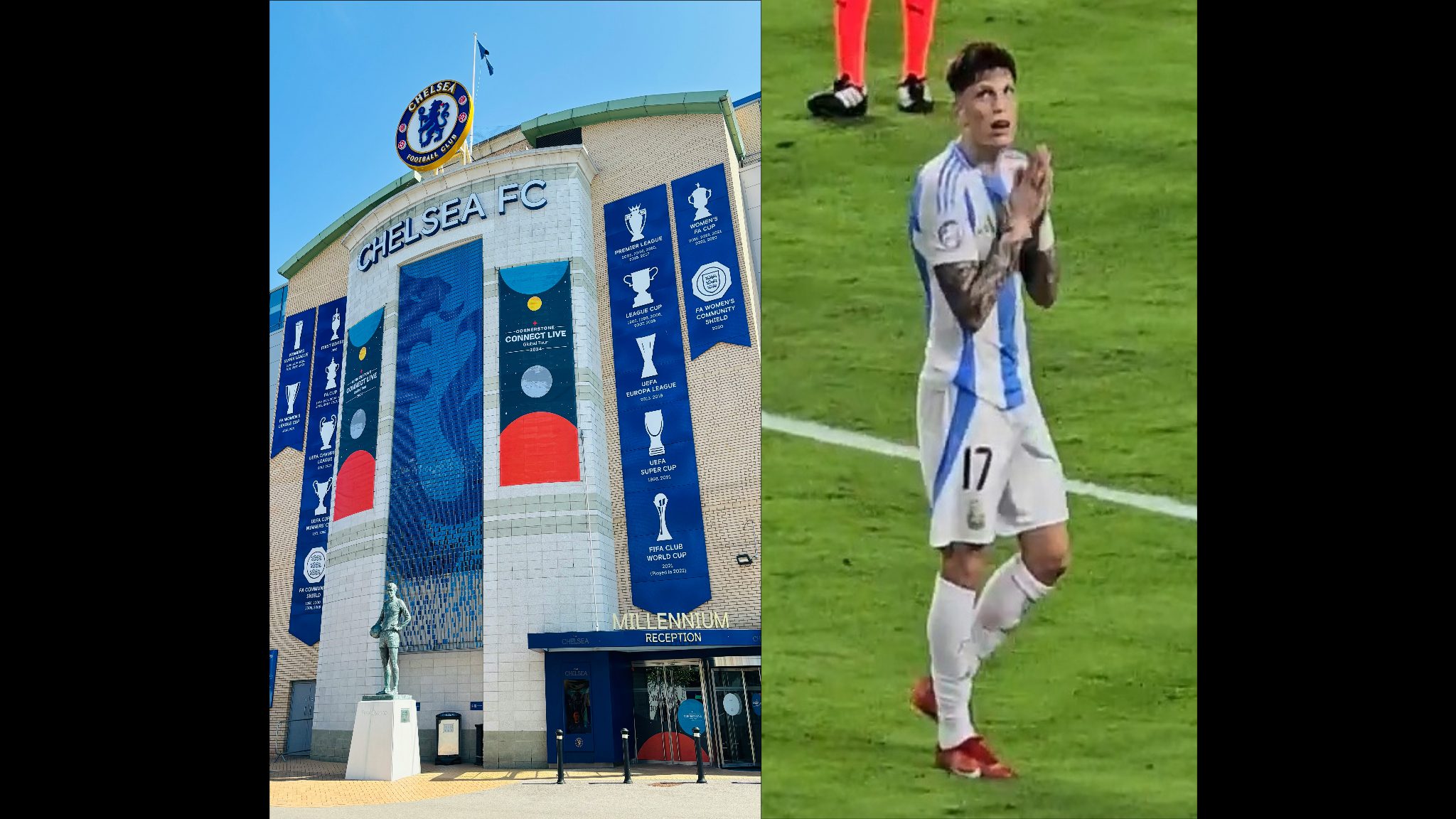
Alejandro Garnacho: Chelsea Winger Under the Microscope
Alejandro Garnacho arrived at Chelsea for £40 million last summer carrying the promise of a player who had already scored in an FA Cup final. Halfway through his debut season at Stamford Bridge, though, the questions are mounting. This piece digs into why the Argentine winger has found the going so difficult, what his statistics truly tell us, and whether his Chelsea story has a strong second chapter to come.
When Chelsea paid £40 million to bring Alejandro Garnacho across London last summer, the expectation was that a player of 21 with an FA Cup final goal already on his CV would hit the ground running. Instead, the Argentine has found himself marooned on the fringes of Liam Rosenior’s thinking, starting just seven of the manager’s first 20 games in charge, with most of those opportunities arriving in cup ties against Pafos, Charlton, Hull City, and Wrexham rather than in the matches that define Premier League campaigns.
The situation invites a straightforward question: is this a player still finding his feet at a new club, or is there a more fundamental concern about whether Garnacho can deliver the consistent performances that a club of Chelsea’s ambition demands at this level?
The honest answer sits somewhere between the two. There are genuine mitigating factors, genuine statistical concerns, and genuine uncertainty about what the summer holds for a player who has not yet persuaded his manager that he belongs in the first XI week after week.
A Difficult Start Rooted in His Own Admission
To understand Garnacho’s first season at Stamford Bridge, it helps to understand the circumstances of his departure from Manchester United. He has been candid on the subject, acknowledging in a recent interview with Premier League Productions that his final months at Old Trafford were troubled by his own making as much as anyone else’s. “I started to do some bad things,” he admitted, referring to a period during which accusations of ill-discipline and a series of public social media posts, including involvement from his brother, contributed to a breakdown under then-manager Ruben Amorim. Garnacho eventually ran down his contract before securing the Chelsea move, and it left a shadow over his reputation as a professional.
That context matters because the same questions about application and concentration have followed him to west London. He has been criticised for switching off at set-pieces and failing to track back when Chelsea conceded in Premier League defeats against Brentford, Bournemouth, and West Ham. Those are exactly the kinds of defensive habits that modern wide forwards are expected to maintain as a baseline, and for a manager trying to build a coherent defensive structure across the team, those lapses are difficult to overlook, regardless of what a player offers at the other end of the pitch.
To his credit, Garnacho has not sulked publicly. He has spoken warmly of vice-captain and compatriot Enzo Fernandez, describing him as being “like my dad” within the dressing room, and has repeatedly stated he is happy at the club. Rosenior, too, has defended him. “He’s got huge ability and potential,” the manager said last month. “He’s shown really good signs, not just in training, but in meetings, that he’s on a really good track.” It is the language of a manager who believes in a player but cannot yet justify picking him ahead of alternatives who are doing the basics more reliably.
The Numbers Tell a Complicated Story
Garnacho’s headline figures across all competitions look passable for a winger in his first season at a new club. Eight goals and four assists in 37 appearances, combined with a scoring rate of one goal every 4.6 games, represents a marginal improvement on the one goal every 5.5 games he managed across all competitions during his time at Manchester United. Taken in isolation, that progression is something to build on.
The Premier League numbers, however, are a different picture entirely. One league goal from 1,122 minutes of top-flight football, while generating an expected goals figure of 3.11 from 28 shots, means Garnacho is significantly underperforming the chances he is creating for himself. He is getting into positions, pulling the trigger, and repeatedly failing to convert. That is a finishing concern that cannot be excused by deployment patterns or fixtures alone. A gap of more than two goals between expected and actual output can sometimes be attributed to bad luck over a short run, but across 28 shots it becomes harder to dismiss as variance. It points instead to real problems with his decision-making and composure in front of goal at the top level, whether in his choice of shot, the weight of contact, or a tendency to go for power when placement is required.
There is also the matter of his international career. Garnacho was part of Argentina’s Copa America-winning squad in 2024, a significant achievement for a player still only 21. Yet he has not added to his eight caps since joining Chelsea, which raises questions about whether his domestic form has persuaded Lionel Scaloni to look elsewhere. Being frozen out of international consideration while playing for one of the Premier League’s biggest clubs is an unusual position, and it adds another layer of pressure to his situation.
His Best Moments and What They Suggest
Garnacho’s standout performance this season came in the Carabao Cup semi-final first leg against Arsenal at Stamford Bridge, when he scored twice in a 3-2 defeat. It was the kind of showing that briefly silenced his critics and reminded observers of the electric player who scored that acrobatic overhead kick for United in 2023. The problem is that moments like that have been rare in league competition, and cup goals against sides Chelsea are expected to beat or in a losing cause against Arsenal do not fully answer the question of whether he can be relied upon when points matter most.
What those two goals did demonstrate is that the quality is there. A player who can hurt Arsenal at Stamford Bridge is not fundamentally limited. The gap between that performance and his league output this season is therefore a question of consistency, not of ceiling, and that distinction is important when assessing his long-term prospects. The concern, viewed honestly, is that Garnacho has produced that level of performance in one high-profile game rather than across a sustained run, and one-off showings are easier for a manager to appreciate than to select around. Rosenior’s public comments suggest he sees the potential the same way, but consistent managers eventually have to align their words with their team selections, and Garnacho has not yet given him sufficient reason to do so regularly in the Premier League.
His own perspective, shared with Premier League Productions, acknowledges the difficulty of the transition: “I joined two months after the rest without pre-season, then you need time to adapt to a different club and a different place. Sometimes the first season is harder but I will work very hard in the games we have left.” The late pre-season start is a genuine factor. Players who miss the formative weeks of a new manager’s preparation often spend the whole season catching up, tactically and physically, and that lag can be enough to explain some of the inconsistency without excusing all of it.
What the Summer Could Bring
The uncertainty around Garnacho’s future is the aspect of this story that adds the most intrigue. Chelsea have denied that any decisions have been made, despite reports linking him with a loan move to Argentine giants River Plate. The financial reality of his situation is notable: at £40 million, he is not among the club’s highest earners, which makes him an attainable option for several European clubs if Chelsea decide to move him on. And the club are already planning to add further attacking options, with Sporting’s Geovany Quenda having been signed in March 2025 to join the squad from next season. With squad depth increasing and places at a premium, some players currently at Stamford Bridge will not be there come August.
There is also the question of left-wing competition. Jamie Gittens, the other option on that side, has been sidelined for three months with recurring hamstring problems. His absence has opened the door for Garnacho to cement a place in the side during the final weeks of the season, and Rosenior has confirmed that door remains ajar. Whether Garnacho walks through it or allows the opportunity to pass may well determine whether Chelsea view him as a long-term fixture or a profitable sale.
Verdict: A Crossroads Approaching Fast
Alejandro Garnacho is 21 years old, has an FA Cup winner’s medal, a Copa America-winners’ medal, and a Premier League goal involvement record that, across all competitions, is heading in the right direction. Those are not the credentials of a player who should be written off. The talent is visible; the ceiling is high; and his best moments at Stamford Bridge, however sporadic, have been genuinely compelling to watch.
Yet the trend lines are concerning in a way that cannot be brushed aside with youth as a defence. One Premier League goal from 1,122 minutes, defensive lapses that have directly contributed to goals conceded, persistent questions about professionalism, and an absence from the Argentina squad all point to a player who has not yet found a way to make his talent work consistently at the highest level. For United, those issues were manageable for a long time because of the occasional flashes of brilliance. At Chelsea, with resources to replace him and decisions about the squad’s shape already being made, the margin for error is narrower.
The final weeks of this season represent his clearest opportunity yet to shift the narrative. With Gittens injured and a starting berth more available than it has been for months, Garnacho has the chance to end the campaign on a high and force Chelsea’s hand into keeping him. If he cannot take that opportunity, the summer conversation about his future will have an obvious answer. The potential is unquestioned. The evidence that it will be fulfilled at Stamford Bridge remains, for now, stubbornly elusive.
Sources: Match statistics, quotes, and background information sourced from BBC Sport’s feature on Alejandro Garnacho published in June 2025, drawing on interviews with Premier League Productions and statements from Chelsea head coach Liam Rosenior.