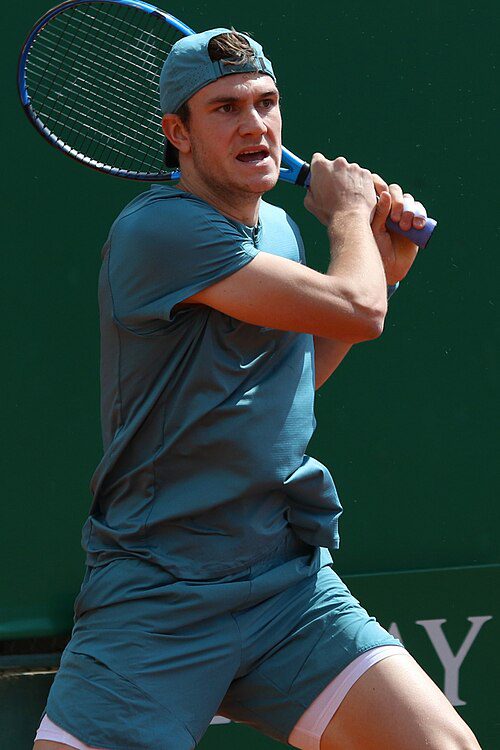
Jack Draper French Open Withdrawal: Knee Tendon Injury
Jack Draper’s fragile return to professional tennis has been dealt another serious blow, with the 24-year-old forced to withdraw from the French Open due to a knee tendon injury sustained at the Barcelona Open. With Wimbledon now also in genuine doubt, this article examines what the setback means for Draper’s season, his ranking, and the broader state of British tennis heading into the grass-court campaign.
Less than twelve months ago, Jack Draper was sitting inside the world’s top four, spoken about in the same breath as Carlos Alcaraz and Jannik Sinner as a potential future Grand Slam champion. Today, he is watching Roland Garros from the sidelines, nursing a knee tendon injury that has not only ended his French Open hopes but placed a serious question mark over his participation at Wimbledon this summer. It is a brutal reminder of how quickly tennis can unravel, even for the sport’s most exciting prospects.
Draper confirmed the withdrawal on his Instagram story on Wednesday evening, explaining that despite having resumed hitting practice, medical advice was unambiguous: returning to five-set clay-court tennis at this stage carried too great a risk. The tone of his message was measured, even if the circumstances behind it were deeply frustrating for both player and supporters.
The knee tendon problem first flared during his first-round match against Tomas Etcheverry at the Barcelona Open earlier this month, forcing him to retire from that contest. That retirement was itself only his ninth match across five events since returning to the tour in February following an arm injury that had kept him sidelined for the best part of eight months. He has barely had time to find his feet again before the ground has shifted beneath him once more.
A Comeback Undermined at Every Turn
Context matters enormously when assessing where Draper finds himself. His return from the arm injury was always going to require patience, given how prolonged the absence was and how restricted his training load had been throughout the recovery period. The knee problem did not emerge in isolation; it developed against a backdrop of a body that has had precious little time to rebuild its physical foundations after such a lengthy layoff. Players returning from extended absences are well-documented to be at elevated injury risk precisely in those first weeks back, when match intensity outpaces physical conditioning, and Draper’s situation fits that pattern almost exactly. Draper himself acknowledged this in his statement, noting that the limitations imposed by the arm injury have had a knock-on effect on his overall physical condition, and that allowing himself proper time to heal is the only path back to the level he wants to operate at.
What makes the situation particularly difficult is the ranking arithmetic. Draper is almost certain to slip outside the world’s top 100 by the time he returns to competition. The points accumulated during his run to the top four will continue to fall off the rolling rankings, while he accumulates little to replace them. That will have practical consequences: seedings, direct entry into certain tournaments, and the mental weight of rebuilding from a lower base are all factors he will need to manage carefully. It is a position that requires a specific kind of psychological resilience, and how he handles that challenge will be as revealing as anything he does on the court.
The most optimistic scenario on the calendar at this point is the grass-court tournament in Stuttgart, which begins on 8 June. Draper won his maiden ATP title there in 2024, and the surface suits his aggressive, left-handed game considerably better than clay. His flat, left-handed serve skids through the turf and pulls opponents wide on the deuce side in ways that become genuinely difficult to handle; on grass, that is a structural advantage rather than a situational one. If the knee responds well to treatment over the coming weeks, Stuttgart represents a realistic target for a return to match play ahead of the HSBC Championships at Queen’s Club the following week. Wimbledon itself begins in late June, meaning the timeline, though tight, is not impossible if recovery progresses without further complication.
British Tennis Facing a Difficult Grass-Court Summer
Draper’s withdrawal does not sit in isolation. It is the latest chapter in a deeply frustrating period for British tennis as a whole, and the picture across the board makes for uncomfortable reading. Emma Raducanu, the British women’s number one, has been sidelined since February after contracting an illness that left her dealing with post-viral symptoms. She has returned to training and a decision on her French Open participation is expected later this week, with the Foro Italico in Rome representing another possible warm-up option. Her situation remains fluid, and there is clearly no desire to rush her back prematurely.
Sonay Kartal, who had been building some momentum on the WTA circuit, has already confirmed she will miss Roland Garros with a back injury picked up at the Miami Open last month. Fran Jones and Jacob Fearnley have both been dealing with their own fitness problems. The cumulative effect is stark: at the current Madrid Open, Cameron Norrie and Katie Boulter were the only British singles players in the draw. Norrie, who is set to re-enter the world’s top 20 next month, is one of the few carrying the flag with some consistency, and it looks likely that the Rome draw will look similarly sparse in terms of British representation.
The Bigger Picture: Draper’s Place in the Elite Conversation
There is an uncomfortable irony in the timing of Draper’s absence. Roland Garros this year will also be missing Carlos Alcaraz, meaning the tournament loses two of its most compelling young narratives before a ball is struck. For Draper specifically, missing a second Grand Slam in succession while his ranking slides is damaging not just logistically but in terms of the momentum and confidence that come from competing at the highest level regularly. The gap between talking about a player’s potential and actually seeing it realised on the biggest stages grows wider with every absent fortnight.
That said, Draper’s talent is not in question. His left-handed serve, the variety in his game, and the physical intensity he brings when fit have all pointed to a player capable of genuine Grand Slam contention. The problem has been continuity. Top-level tennis is an ecosystem where physical durability is a prerequisite for sustained success, and Draper has repeatedly found that prerequisite slipping beyond his grasp through no fault of his own. Two significant injuries in the space of roughly a year is simply bad fortune, and it would be premature to draw any conclusions about his long-term ceiling based on a period defined by the treatment table rather than the practice court.
The challenge now, both for Draper and for those around him, is to construct the most sensible path back without creating the conditions for a third setback. That means resisting the temptation to rush Stuttgart if the knee is not genuinely ready, and accepting that Wimbledon, for all its symbolic importance to a British player of his profile, is secondary to his long-term physical health. A conservative approach taken now could pay significant dividends in the second half of the season and beyond.
Stuttgart and Wimbledon: The Targets That Matter Most
Draper’s own words suggest he understands the situation clearly. The acknowledgement in his statement that building properly rather than rushing back is the route to becoming “the player I want to be out there” reflects a maturity that has sometimes been underestimated in assessments of him. He is not simply a big serve and a backhand; there is a self-awareness about his game and his body that will serve him well through this period.
Stuttgart on 8 June is the immediate focus, and it is a sensible one. Grass is kinder on the body than clay, the tournament carries real meaning for Draper given his 2024 title there, and success in that week would provide both ranking points and a crucial confidence boost ahead of Queen’s and then Wimbledon. A run at the All England Club, even a modest one, would go some way to stabilising his ranking and re-establishing his presence among the sport’s elite. His trajectory before the injuries suggested he belonged there. The task now is simply getting back onto the court long enough to prove it again.
Verdict: Patience Is the Only Sensible Strategy
Jack Draper’s French Open withdrawal is the kind of setback that tests a player’s character as much as his body. The physical side of the equation is being managed by medical professionals who have clearly erred on the side of caution, and rightly so given what happened at Barcelona when a return to competition proved premature. The mental side, the weight of watching rankings slide while peers compete at Grand Slams, is something only Draper himself can navigate.
The grass-court swing remains a genuine opportunity. If he can get three or four weeks of proper practice behind him before Stuttgart, arrive there physically sound and mentally refreshed, a deep run is far from fanciful. He knows the venue, he knows the surface, and he knows what is at stake. A strong fortnight in Germany could reset the narrative entirely and make the Wimbledon question academic rather than anxious.
For now, British tennis fans are left scanning a depleted landscape and hoping that the convergence of injuries affecting Draper, Raducanu, Kartal and others is a temporary statistical cluster rather than something more systemic. With Norrie and Boulter holding things together at the big clay events, the expectation is that the grass season will bring a fuller complement of British players back into the conversation. Whether Draper is among them remains uncertain, but his determination to get it right rather than get back quickly is, at least, an encouraging sign.
Frequently Asked Questions
The injury first flared during his first-round match against Tomas Etcheverry at the Barcelona Open, where he was forced to retire from the contest. Medical advice following a return to hitting practice was clear that competing in five-set clay-court tennis at this stage carried too great a risk of aggravating the problem further.
He is expected to drop outside the world’s top 100 as the points he accumulated during his rise to the top four continue to fall off the rolling rankings without anything to replace them. That will have real consequences for seedings and direct entry into certain tournaments when he does return to competition.
He returned to the tour in February after an arm injury that had kept him out for close to eight months, leaving his body with very little time to rebuild its physical foundations before competitive play resumed. Players returning from prolonged absences are well-documented to face elevated injury risk in their first weeks back, when match intensity outpaces their conditioning, and Draper’s knee problem fits that pattern.
The grass-court tournament in Stuttgart, beginning on 8 June, represents the most optimistic scenario outlined in the article. Draper won his maiden ATP title there in 2024, and grass suits his aggressive, left-handed game considerably better than clay, making it a logical target if the knee responds well to treatment.
He had played only nine matches across five events between his return in February and the Barcelona retirement. That figure underlines just how limited his time back on tour had been before this second injury interrupted his comeback.
Sources: Match information, player statements, and biographical details sourced from Sky Sports Tennis coverage of the French Open withdrawal announcement, published 29 April 2026.