1961-62 FA Cup · The Final
1962 FA Cup Final: Tottenham Hotspur 3-1 Burnley
The Chessboard Final
Everyone repeats that Burnley's equaliser was the hundredth goal scored in an FA Cup final at Wembley. We added them up. Then we checked the three fullest accounts of this match against each other and found that each one records those goals differently.
Tottenham retained the Cup with a penalty, Burnley lost a league title and a final inside a fortnight, and the newsreel, the archived match report and the local paper each get something different wrong about the four goals.
Saturday 5 May 1962 · Wembley Stadium
What you will not find elsewhere
We counted every goal ever scored in a Wembley final. Robson's really was the hundredth
Every account of this match repeats that Jimmy Robson's equaliser was the 100th goal scored in an FA Cup final at Wembley, and none of them shows the working. So we did it. Thirty-three finals were played at Wembley between 1923 and 1961 inclusive, none of which needed a replay, so no goals go missing from the count. Add up the published scorelines of all thirty-three and you get 98 goals. Greaves, in the third minute here, scored the ninety-ninth. Robson, five minutes into the second half, scored the hundredth. Bobby Smith took it to a hundred and one within about a minute, and Blanchflower's penalty made it a hundred and two. The claim everyone repeats survives the arithmetic exactly.[2][1]
British Pathe's own catalogue gives Burnley's goal to the wrong man
British Pathe filmed this final in colour, and the catalogue shot list still attached to that film today says that Gordon Harris scored for Burnley, equalising. Harris did not score. He was the outside left who delivered the cross, fast and low from the touchline, and Jimmy Robson turned it in from about eight yards. Robson has described the goal himself in an interview published by The FA, and both the archived contemporary match report and the modern record credit it to him. The film is the best surviving record of the afternoon, and the note filed with it is wrong about the most historically significant goal it contains.[11][14][8][1]
The match report Wikipedia cites prints the wrong score at the top of its own page
Wikipedia's article on this final links, as its match report, an Internet Archive capture of fa-cupfinals.co.uk. The heading on that page reads Tottenham Hotspur 3 Burnley 0. The report printed a few lines below it says that Burnley were level a few minutes after the interval, that Robson diverted Harris's centre between Brown and a post, and that it was the one hundredth goal to be scored in a Wembley final. The page contradicts itself, and the scoreline in the heading is the part that is wrong. The final finished 3-1.[8][1][9][10]
The local paper that watched it timed three of the four goals differently
The Burnley Express match report, reproduced by the Burnley Civic Trust from the paper's own microfilm, sets out the goals under the headings Three Minutes, 49 Minutes, 50 Minutes and 82 Minutes. The modern record, followed by Wikipedia and the 11v11 database, has 3, 50, 51 and 80. Only the opening goal is agreed. Nothing here is anybody's carelessness: a reporter in the press box timing goals off a wristwatch and a statistician working from later compilations are doing different jobs. This page uses the modern times because two independent modern sources agree on them, and prints the contemporary ones beside them so the reader can see that a two-minute uncertainty sits under a fact usually stated flat.[13][1][9]
The highest-scoring team in England finished the season with nothing
Working through the final First Division table for 1961-62: Burnley scored 101 league goals, more than any other club in the division and eight more than the champions. They took 53 points from 42 matches. Ipswich Town, promoted the previous summer, took 56. Tottenham, the side that beat Burnley here, took 52, which means Burnley finished the league season above the club that beat them at Wembley. Champions two years before, top scorers in England, league runners-up and cup runners-up, and the sum of it was two second places.[3][5]
Ten years since anyone had held on to the Cup
Retaining the FA Cup was rare enough by 1962 to be worth stating precisely. Reading the winners off the published list of finals from the war onwards: Derby County, Charlton Athletic, Manchester United, Wolverhampton Wanderers, Arsenal, Newcastle United, Newcastle United again in 1952, then Blackpool, West Bromwich Albion, Newcastle United, Manchester City, Aston Villa, Bolton Wanderers, Nottingham Forest, Wolverhampton Wanderers and Tottenham. Newcastle in 1952 are the only back-to-back winners in that run. Tottenham here were the first club in ten years to do it, and Tottenham did it again in 1982.[2]
The man who scored the hundredth goal knew exactly what it was worth
Our count above makes Jimmy Robson's equaliser the hundredth goal scored in a Wembley final. Robson knew, and he also knew what it was not: It was the 100th FA Cup Final goal at Wembley, but we didn't go on to win the game
A milestone and a losing medal arrived in the same afternoon.[14]
Why it is remembered as the Chessboard Final
The nickname is not ours and it is not modern. The fullest surviving report of the afternoon set the tone: The 'Chessboard Final' of 1962 was a mixture of patience and artistry, rather than fire and passion
Both sides were built on passing, and neither wanted to be the first to break shape.[8]
Burnley believe they scored a second that was never given
The scoreline records one Burnley goal. Robson has always maintained there should have been another: The second goal came when I was put through, I took it around the 'keeper and scored, but the Spurs defence had already appealed and when I looked the flag was up.
No newsreel angle settles it, so the page records the claim rather than ruling on it.[14]
The footage
The match report
Burnley came to Wembley as the strongest available argument that the centre of gravity of English football had moved north. They had been champions two seasons earlier, they spent much of the winter at the top of the First Division, and they scored 101 league goals that season, more than any other club in the division and eight more than the side that finished above them. What they did not have was a trophy. Ipswich Town, promoted the year before and managed by Alf Ramsey, took the championship by three points, and the only FA Cup ever won by Burnley had been lifted in 1914.[3][5][1]
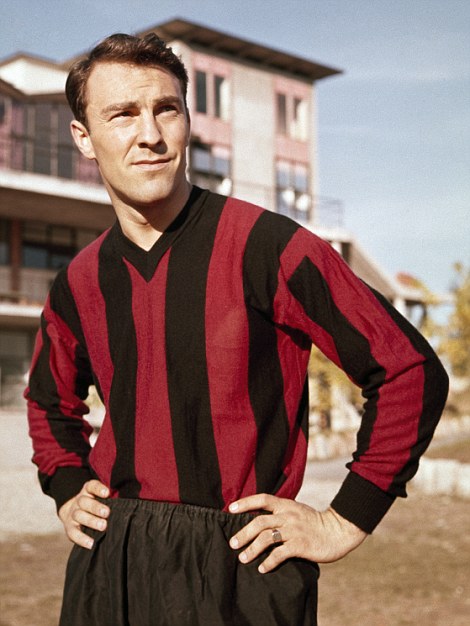
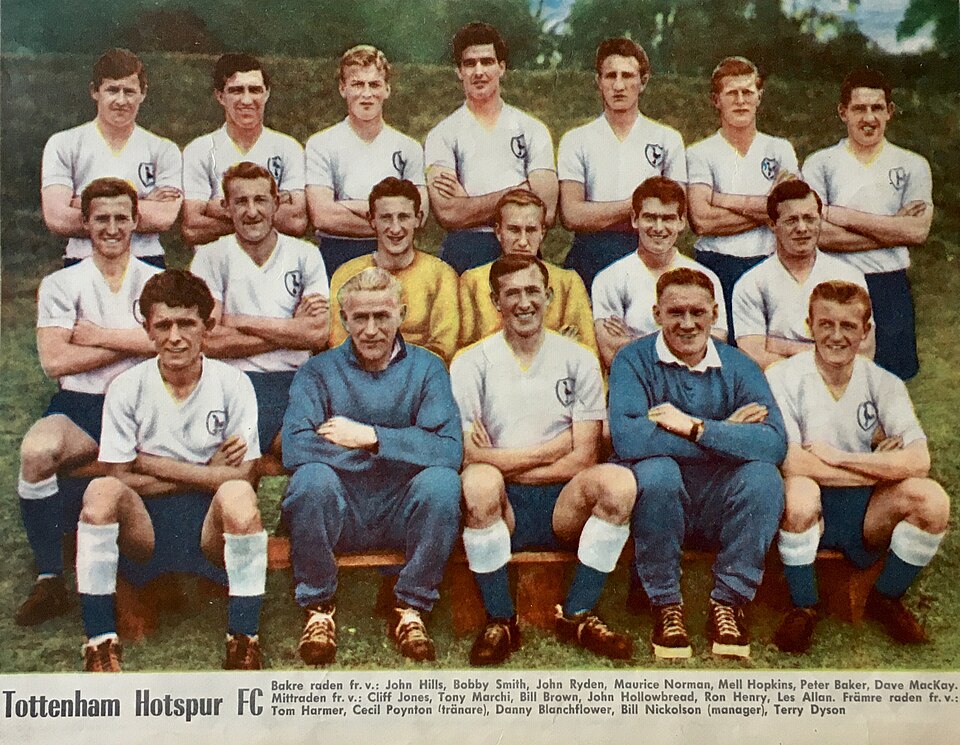
Tottenham arrived as holders, and as a side whose season had been a long accumulation of near misses. Bill Nicholson's Double team went out of the European Cup in the semi-final to Benfica, who went on to win it, beaten in Lisbon and unable to make up the difference in the return at White Hart Lane. In the league they finished third, a point behind the team they were about to play. What they had that Burnley did not was Jimmy Greaves, bought back from AC Milan in December and free to play from the third round onward.[4][3][7]
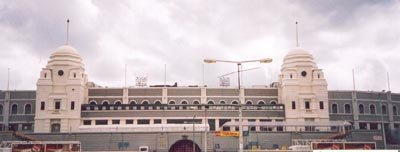
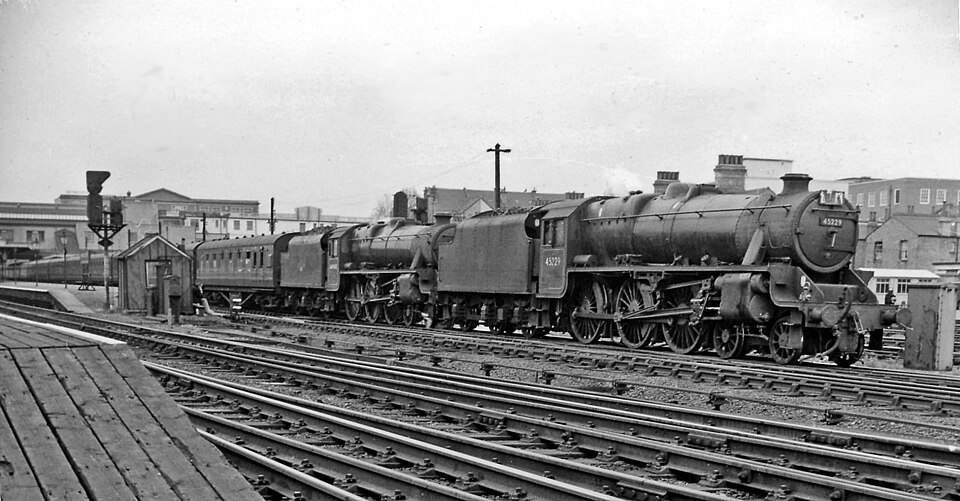
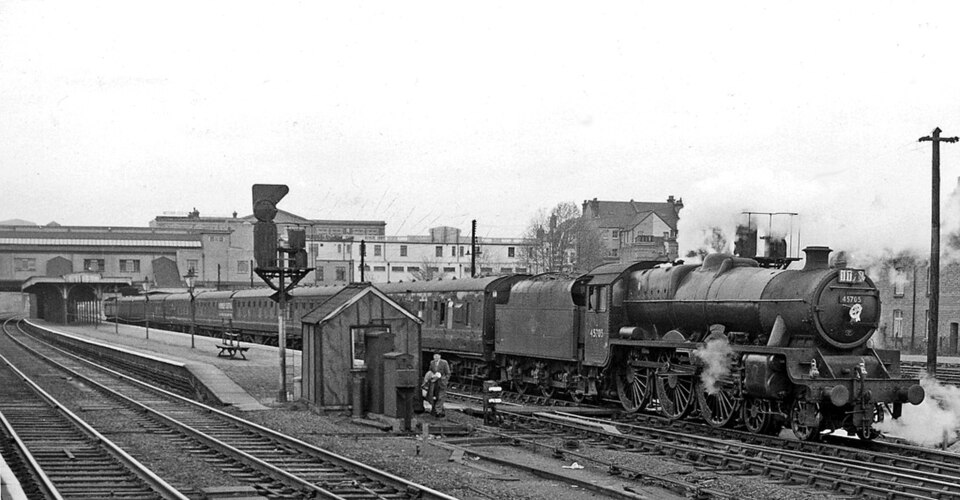
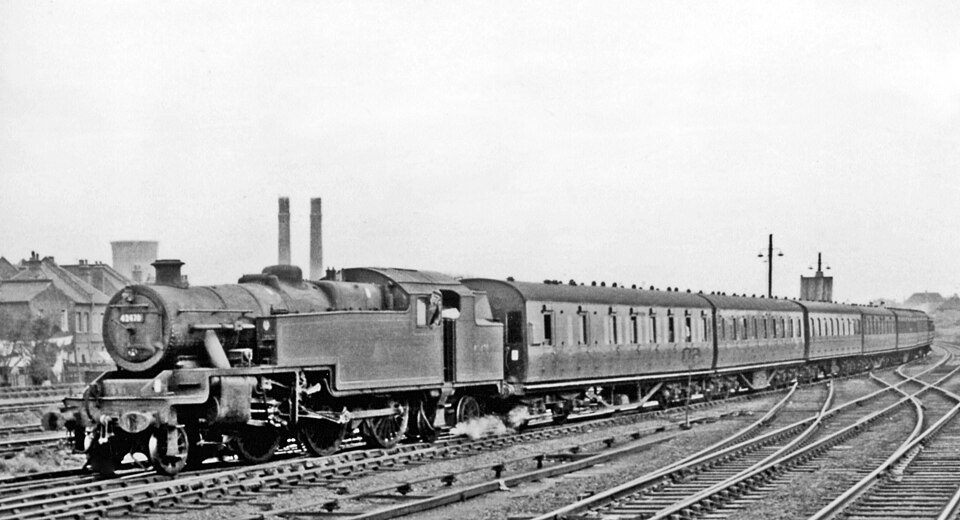
Cup final day still ran on the railway timetable. Shuttle trains worked Euston to Wembley Central and Marylebone to Wembley Stadium station, and on top of those came the Specials from the provinces, one of which brought Burnley's supporters down the West Coast Main Line behind a Jubilee locomotive while another came in from Colne double-headed by two Black Fives. A railway photographer stood on the platforms at Wembley Central that afternoon and took the pictures, which is why this final has more free-licensed photography from the day itself than most of its neighbours. Inside the stadium the crowd, given as 100,000 in every published account, sang Pack Up Your Troubles and Glory, Glory Hallelujah before the teams came out, according to the shot list of the newsreel that filmed them.[15][16][17][11]
The match was decided almost before Burnley had settled. In the third minute Greaves worked himself into space in front of a line of defenders and hit a low shot that Adam Blacklaw, unsighted behind his own players, could not reach. The archived match report describes it as only half hit, trickling inside the far post. It was the kind of goal that flatters nobody and changes everything, and it set the tone for an afternoon the papers afterwards called the Chessboard Final: careful, technical and strangely quiet, two very good teams cancelling one another out.[1][8][13]
Burnley were much the better side for the first quarter of an hour after the interval, and they got what they deserved. Ray Pointer swept the ball wide to Gordon Harris on the left, Harris crossed it fast and low, and Jimmy Robson met it from about eight yards to put it between Bill Brown and the post. Robson said afterwards that the cross was travelling so quickly that the ball went straight through the goalkeeper's legs. Burnley were level for roughly a minute. Tottenham went back up the field and Bobby Smith, given far too much room, struck it past Blacklaw before the Burnley defence had reorganised.[14][1][13]
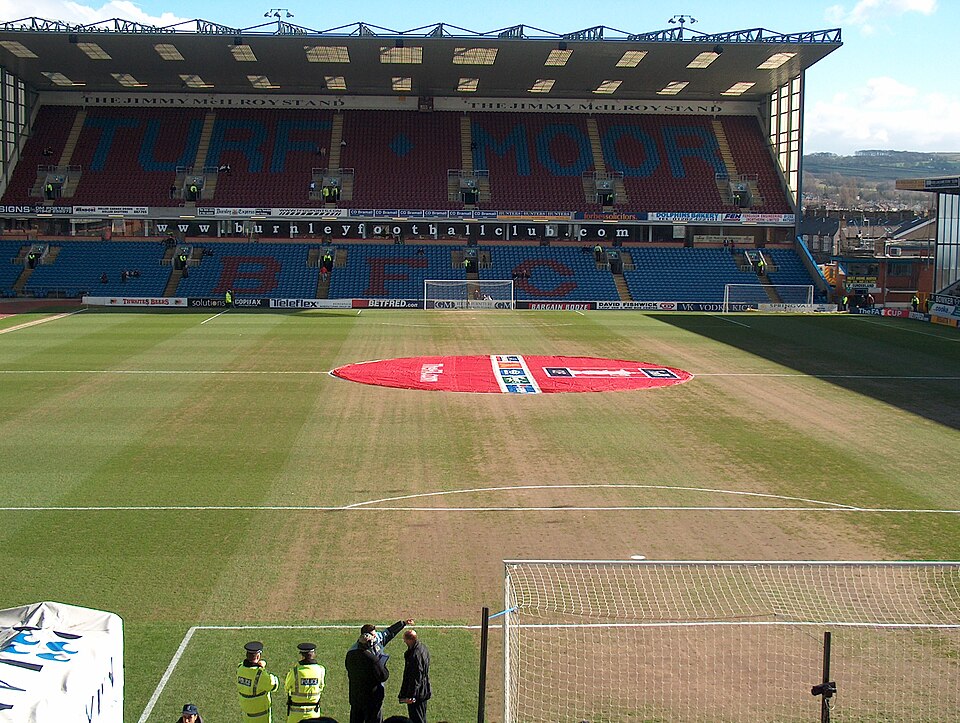
The rest of the final turned on two decisions. Robson was put through again and, by his own account, took the ball round Brown and scored, only to look up and find the linesman's flag raised for offside. Ten minutes from the end John White lobbed the ball into the middle, Smith challenged Blacklaw for it in a way Burnley thought was a foul, and when Terry Medwin hit the loose ball goalwards Tommy Cummings handled it on the line. Danny Blanchflower took the penalty and sent Blacklaw one way and the ball the other. Nobody in a claret shirt argued.[14][8][1]
What has happened since to those four goals is the reason this page exists. British Pathe filmed the match in colour, and the catalogue entry still attached to that film credits Burnley's equaliser to Gordon Harris, who crossed it, rather than to Robson, who scored it. The archived match report that Wikipedia links as its source for this final heads the fixture Tottenham Hotspur 3 Burnley 0, on a page whose own text goes on to describe Burnley equalising. And the Burnley Express, writing from the press box, timed the goals at 3, 49, 50 and 82 minutes, where the modern record has 3, 50, 51 and 80. Three accounts, three different versions of the same four goals, and not one of them is a bad source.[11][8][13][1]
Tottenham became the first club to retain the FA Cup since Newcastle United, ten years earlier, and the win sent them into the European Cup Winners' Cup, which they took the following season to become the first British club to win a European trophy. Burnley were left with the consolation prizes. Jimmy Adamson was voted Footballer of the Year, the team came home on the Monday to a civic reception and an open-topped tour of the town, and the club has not reached an FA Cup final since. Robson's own summary, given to The FA half a century later, was that it was unfortunate to come so close after scoring in a final, because it was a tight game and the teams were well matched.[2][1][6][13][14]
How the match unfolded
- 3'Jimmy Greaves works into space in front of a line of Burnley defenders and hits a low shot inside the far post. Adam Blacklaw is unsighted behind his own players.[1][8][13]
- half-timeTottenham lead by a single goal in a cautious, technical match that the newsreels and the reports both describe as short on passion.[8][11]
- 50'Ray Pointer sweeps the ball wide to Gordon Harris on the left. Harris crosses fast and low and Jimmy Robson turns it between Bill Brown and the post. The Burnley Express timed this at 49 minutes.[1][8][13][14]
- 51'Tottenham go straight back up the field and Bobby Smith strikes past Blacklaw before Burnley have reorganised. The Burnley Express timed this at 50 minutes.[1][9][13]
- second halfRobson is put through again and, by his own account, takes the ball round Brown and scores. The linesman's flag is up for offside and the goal is disallowed. No surviving film of the incident was found.[14][1]
- 80'John White lobs the ball into the middle, Smith and Blacklaw challenge for it, and when Terry Medwin hits the loose ball goalwards Tommy Cummings handles on the line. The Burnley Express timed the penalty at 82 minutes.[8][1][13]
- full-timeTottenham win and Queen Elizabeth II presents the trophy to Danny Blanchflower. Jimmy Adamson leads Burnley up for the runners-up medals.[11][13]
Match facts
- Date
- Saturday 5 May 1962
- Venue
- Wembley Stadium, London
- Attendance
- 100,000The round figure printed by every account of this match. It is the stated Wembley capacity of the period rather than a published turnstile return, and no audited gate figure was found.[1][9][8]
- Half-time
- 1-0
- Competition
- 1961-62 FA Cup
Where they played
Both sides as they lined up. Choose any player to read what they did in this final.
Select a shirt for that player's note.
Route to the final
Tottenham Hotspur
- Round 3: Birmingham City (a) drew 3-3, replay (h) won 4-2
- Round 4: Plymouth Argyle (a) won 5-1
- Round 5: West Bromwich Albion (a) won 4-2
- Round 6: Aston Villa (h) won 2-0
- Semi-final: Manchester United (Hillsborough) won 3-1
Burnley
- Round 3: Queens Park Rangers (h) won 6-1
- Round 4: Leyton Orient (h) drew 1-1, replay (a) won 1-0
- Round 5: Everton (h) won 3-1
- Round 6: Sheffield United (a) won 1-0
- Semi-final: Fulham (Villa Park) drew 1-1, replay (Filbert Street) won 2-1
Line-ups
Tottenham Hotspur · 3-2-2-3
- Bill Brown Goalkeeper, shirt 1
- Peter Baker Right back, shirt 2
- Maurice Norman Centre half, shirt 5
- Ron Henry Left back, shirt 3
- Danny Blanchflower Right half and captain, shirt 4. Scored the penalty that settled it.
- Dave Mackay Left half, shirt 6
- John White Inside right, shirt 8. Lobbed the ball in for the move that won the penalty.
- Jimmy Greaves Inside left, shirt 10. Scored after three minutes.
- Terry Medwin Outside right, shirt 7. His shot was handled on the line.
- Bobby Smith Centre forward, shirt 9. Scored in this final and in the one before it.
- Cliff Jones Outside left, shirt 11
Burnley · 3-2-2-3
- Adam Blacklaw Goalkeeper, shirt 1
- John Angus Right back, shirt 2
- Tommy Cummings Centre half, shirt 5. Handled on the line to concede the penalty.
- Alex Elder Left back, shirt 3
- Jimmy Adamson Right half and captain, shirt 4. Footballer of the Year for this season.
- Brian Miller Left half, shirt 6
- Jimmy McIlroy Inside right, shirt 8
- Jimmy Robson Inside left, shirt 10. Scored the equaliser and had a second effort disallowed.
- John Connelly Outside right, shirt 7
- Ray Pointer Centre forward, shirt 9. Began the move for the equaliser.
- Gordon Harris Outside left, shirt 11. Crossed for the equaliser.
Trivia and detail
- A railway photographer at Wembley Central recorded Burnley's own supporters' train arriving on the up slow line, hauled by the LMS Jubilee locomotive number 45705, named Seahorse. He noted underneath that he was far more interested in watching the Specials than in the football.[15]
- A second Special that afternoon came in from Colne, about eight miles from Turf Moor, routed via Stockport and double-headed by two Stanier Black Five locomotives.[16]
- The Burnley Express published an eight page souvenir supplement three days before the match, headed Make C-Day Our V-Day, carrying goodwill messages from readers in America, Canada, Australia, New Zealand and Singapore.[13]
- Jimmy Adamson had already been named Footballer of the Year when the supplement went to press: the caption under a photograph of the two captains introduces him with the title and notes that both he and Danny Blanchflower were wing halves.[13][6]
- Burnley's post-match banquet was held that evening in the Napoleon Room at the Cafe Royal in London, with about three hundred guests including survivors of the club's 1914 and 1947 cup final sides.[13]
- Bill Nicholson bought Greaves back from Italy for a fee of ninety nine thousand nine hundred and ninety nine pounds, one pound short of the round figure, so that nobody would be able to call him the first hundred thousand pound footballer.[7]
- British Movietone also filmed the match in colour and issued its reel two days later, so this is a final with two surviving colour newsreels from rival companies.[12][11]
- Bobby Smith scored in this final and in the one before it, which by the account Wikipedia gives made him the last man to score in successive FA Cup finals until Freddie Ljungberg did it for Arsenal in 2001 and 2002.[1]
- Burnley were beaten by Tottenham in the FA Cup in three consecutive seasons, in the semi-final of 1961, in this final, and in the third round of 1963, when Burnley finally won 3-0 at White Hart Lane on a pitch cleared of snow for a Wednesday afternoon kick-off.[14]
How well do you know the 1962 final?
Five questions. Every answer is sourced from the material on this page.
-
What milestone did Jimmy Robson's equaliser mark?
-
Why is this match known as the Chessboard Final?
-
How did Tottenham get the penalty that settled the final?
-
Where did Burnley finish in the First Division that season?
-
Which club had been the last to retain the FA Cup before Tottenham did it here?
Answer
Newcastle United. Newcastle United won in 1951 and again in 1952. Nobody held the Cup for two seasons in the ten years between that and this final.[2]
What is not settled
Honesty matters more than tidiness. These details are contested or unrecorded, and we have not guessed at them:
- The goal times are not settled. Wikipedia and the 11v11 match record give 3, 50, 51 and 80 minutes. The Burnley Express match report, written within days of the match and reproduced by the Burnley Civic Trust from the newspaper's own microfilm, gives 3, 49, 50 and 82. This record uses the modern times because two independent modern sources agree on them, and shows the contemporary times beside them rather than choosing silently.
- British Pathe's catalogue shot list for its own film of this match says that Gordon Harris scored Burnley's equaliser. Every other source consulted, including the interview The FA published with the scorer, says Harris crossed and Jimmy Robson scored. The catalogue appears to be wrong.
- The archived fa-cupfinals.co.uk page, which Wikipedia cites as its match report for this final, heads the fixture Tottenham Hotspur 3 Burnley 0 while its own report describes Burnley equalising. The scoreline in that heading is wrong.
- The formations are a reconstruction. No contemporary source consulted prints a shape for either side. The record draws both as the W-M of the period, because the positional labels attached to the Burnley eleven by the 11v11 match record are W-M labels throughout: two full backs and a centre half, two wing halves, two inside forwards and three forwards. Other accounts describe Bill Nicholson's Tottenham as a 2-3-5 and Harry Potts's Burnley as a 4-4-2, and neither claim is drawn here.
- The attendance of 100000 is the figure every account prints for a Wembley final of this period. It is the stated capacity rather than an audited turnstile return, and no published gate figure was found.
- Who struck the shot that Cummings handled is given only by the archived match report, which names Terry Medwin. Wikipedia does not name the player.
- Whether Bobby Smith fouled Adam Blacklaw in the build-up to the penalty is contested. The archived report says Smith appeared to foul him and that the opposite linesman had flagged before the handball, and that the referee pointed to the spot anyway.
- Jimmy Robson's disallowed second goal is described differently by the man who scored it and by the standard account. Robson told The FA he took the ball round the goalkeeper and scored before seeing the flag. No film of the incident was found in either surviving newsreel.
- How badly Burnley collapsed in the league run-in is not settled. Wikipedia's club history says they won only one of their last ten matches; other accounts say two of the last thirteen. Neither figure is used here.
- The Burnley Express report transcribed by the Burnley Civic Trust calls this the best final in the 99-year history of the competition. The FA Cup began in 1871, which would make 1962 its ninety-first year. This may be an error in the paper or in the transcription, and the figure is not used anywhere on this page.
How we know
Every claim on this page is tied to a numbered source below. These are the contemporary records behind it, each one fetched and matched word for word before publication rather than taken on trust:
- Tottenham Hotspur v Burnley: 1962 FA Cup Final: The Chessboard Final, FILM ID 1703.19 (archive film and catalogue shot list) · British Pathe (official YouTube catalogue)
- CUP FINAL - 1962 (IN COLOUR), issued 7 May 1962 · British Movietone via AP Archive (official YouTube catalogue)
Where a primary record and a modern account disagree, we show both rather than choosing the tidier number.
Sources
- 1962 FA Cup final · Wikipedia
- List of FA Cup finals · Wikipedia
- 1961-62 Football League (First Division final table and results grid) · Wikipedia
- 1961-62 European Cup · Wikipedia
- Burnley F.C. (club history) · Wikipedia
- Jimmy Adamson · Wikipedia
- Jimmy Greaves · Wikipedia
- FA Cup Final 1962: match report, line-ups and round by round results · fa-cupfinals.co.uk, archived by the Internet Archive
- Tottenham Hotspur v Burnley, 05 May 1962 (match record) · 11v11 / AFS Enterprises
- England FA Challenge Cup 1961-1962, full results · Rec.Sport.Soccer Statistics Foundation
- Tottenham Hotspur v Burnley: 1962 FA Cup Final: The Chessboard Final, FILM ID 1703.19 (archive film and catalogue shot list) · British Pathe (official YouTube catalogue)
- CUP FINAL - 1962 (IN COLOUR), issued 7 May 1962 · British Movietone via AP Archive (official YouTube catalogue)
- The 1962 FA Cup Final, built from Burnley Express articles and microfilm scans of January to June 1962 · Burnley Civic Trust Heritage Image Collection
- Former Burnley striker Jimmy Robson recalls historic FA Cup Final goal against Spurs · The Football Association
- Wembley (Central) Station, with Cup Final Special (from Burnley), 5 May 1962 · Ben Brooksbank / Geograph Britain and Ireland
- Cup Final Special from Colne at Wembley Central, 5 May 1962 · Ben Brooksbank / Geograph Britain and Ireland
- Wembley Central special Cup Final local shuttle train from Euston, 5 May 1962 · Ben Brooksbank / Geograph Britain and Ireland