1963-64 FA Cup · The Final
1964 FA Cup Final: West Ham United 3-2 Preston North End
Everybody agrees West Ham won 3-2 with a header at the death. Almost every other number attached to this final, including the goal times, the half-time score and the age of the youngest player ever to appear in a final at Wembley, is reported differently depending where you look, so this page prints the disagreements instead of smoothing them.
Second Division Preston led twice at Wembley and lost to a header in the final minute, and West Ham United won the first major trophy in their history.
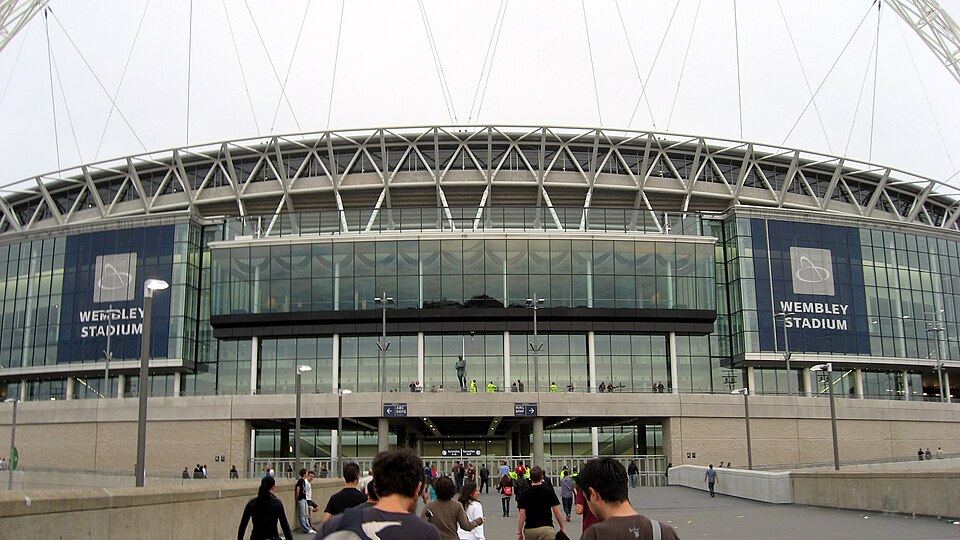
Saturday 2 May 1964 · Wembley Stadium
What you will not find elsewhere
The most repeated number on this page is one day out
Howard Kendall's age at Wembley is printed everywhere, by West Ham United, by Wikipedia and by his newspaper obituaries, as 17 years and 345 days. Counted day by day from his birth on 22 May 1946 to the final on 2 May 1964, it is 346 days: 1964 was a leap year and 29 February sits inside the count. The two comparable figures in the same story both check out exactly when counted the same way, James Prinsep at 17 years and 245 days in 1879 and Paul Allen at 17 years and 256 days in 1980, so the odd one out is Kendall's. We have left the published figure in the record and flagged the arithmetic here rather than quietly changing a number that every source prints.[2][21][12][10]
Kendall was Wembley's youngest finalist, not the youngest anywhere
West Ham United's own match archive calls Kendall "the youngest player to appear in an FA Cup final", and The Scotsman's obituary of him says the same. The record is a Wembley record. James Prinsep played for Clapham Rovers in the 1879 final at Kennington Oval aged 17 years and 245 days, younger than Kendall on either arithmetic. The same qualifier applies to Paul Allen in 1980, which this encyclopedia sets out on its page for that final.[12][21][10][2]
Four sources, four versions of when the goals went in
Put the accounts side by side and the timings scatter. Preston's opener: 10 minutes (West Ham United, Wikipedia, 11v11) or nine (the archived fa-cupfinals report). Sissons's equaliser: 11 (West Ham United, Wikipedia), 12 (11v11), or one minute after the opener (fa-cupfinals). Dawson's header is agreed at 40. Hurst's equaliser is agreed at 52, and the archived report gets there independently by saying Preston held their lead for twelve minutes of playing time. The winner is timed at 90 by the databases and called a stoppage-time goal by the accounts closest to the day, one of which puts it two minutes into injury time. The page uses the majority timings and shows the spread rather than picking one and hiding the rest.[16][15][12][1][23]
The databases say ninety, the man who watched it says stoppage time
This record times Ronnie Boyce's winner at 90 minutes, because that is the figure the match databases print and a record should say what its sources say. The accounts written from Preston's side of the day do not agree. Ivan Ponting, in his obituary of the beaten captain, put it this way: though Preston of the Second Division were pipped by a stoppage-time goal as the top-flight Hammers prevailed 3-2, many neutral observers made Lawton the man of a rollercoaster of a contest in which his plucky side had twice led
The archived fa-cupfinals match report goes further and places the goal two minutes into injury time. Neither overturns the recorded minute, and neither is treated here as doing so. What they show is that the flat 90 is a convention for a goal the people at the ground remember arriving after the ninety had gone.[23][16][15]
Sissons's scoring record needs the same venue qualifier
The archived fa-cupfinals match report says Sissons "became the youngest scorer in a Final". The careful form, which Wikipedia uses, is the youngest player to score in an FA Cup final at Wembley: the ages of scorers in the finals played before 1923 are not established by any source consulted here. The Wembley record then stood until Norman Whiteside scored in the 1983 final, which this encyclopedia also covers.[16][3]
The youngest finalist only played because of an injury days earlier
The record above turns on an age that is almost always printed wrongly. Howard Kendall's own account explains how he came to be there at all: Three days before the final Ian's world collapsed and I was catapulted centre stage
He was still at an age when most players are nowhere near a first team.[21]
The scorer of the last-minute winner describes the silence
Ronnie Boyce headed the goal that settled it with the match in its final moments, and what he remembers is not noise: when I headed the ball, I could see it going in, yet it seemed like an eternity before there was a reaction from the crowd
Wembley took a beat to understand what it had seen.[13]
What the hymn sounds like from the pitch
Every account of a Wembley final mentions the singing. Preston's captain, Nobby Lawton, described what it actually felt like to stand in it: All of a sudden the wave of punishing noise from the 100,000 crowd just ebbed away, and the band struck up the first verse of Abide With Me
It is the best first-hand description of the ritual this project has found.[23]
The footage
The match report
West Ham United came to Wembley as the First Division club and as a club that had won nothing. They had finished fourteenth that season, with 40 points from 42 games, and had spent sixty-nine years without a major trophy. Preston North End came as the Second Division side, third in their division on 56 points and beaten to promotion by 5, and their manager Jimmy Milne sent out a team built round two men Manchester United had let go. Preston were the underdogs on paper and for most of the afternoon they did not play like it.[7][12][13][15][21]
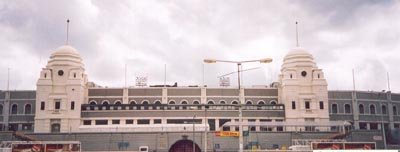
The final was settled by teenagers at both ends of it. Preston's left half was Howard Kendall, then aged 17, who was in the side only because the club's regular left half Ian Davidson had been dropped days before the final. West Ham's outside left was John Sissons, aged 18, who had been moved to the wing by Ron Greenwood and would score before the game was a quarter of an hour old. Kendall left Wembley with a loser's medal and later became the most successful manager in Everton's history.[2][21][3][14]
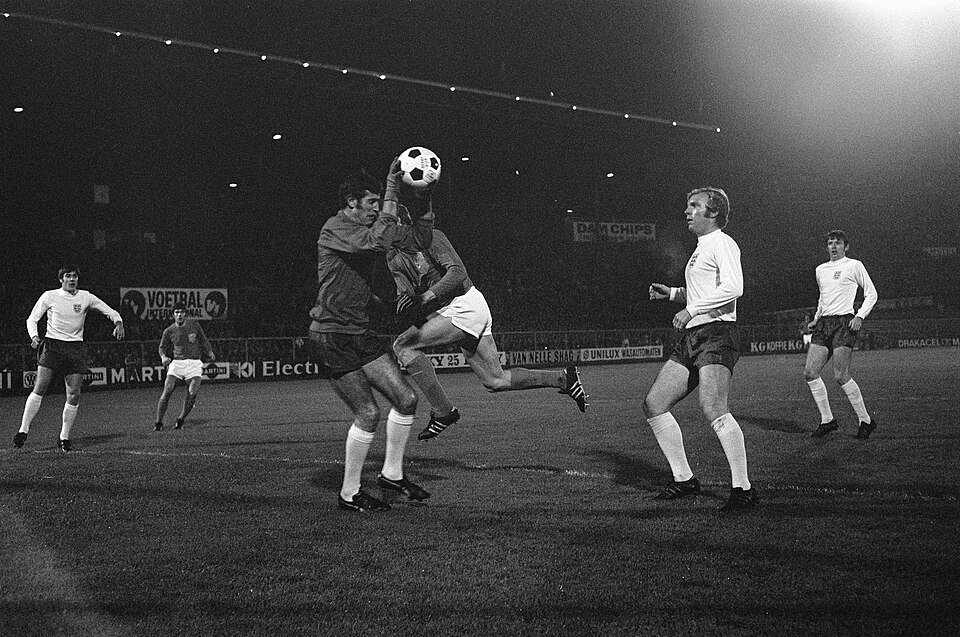
Preston scored first, on 10 minutes. Dawson shot low, Jim Standen could not hold it, and Doug Holden followed in to put the rebound away. It was a peculiar sort of homecoming for Holden, who had already played in two finals at this ground for Bolton Wanderers, losing the Matthews final and winning in 1958. West Ham answered inside about 90 seconds: Johnny Byrne found Sissons and the eighteen year old scored with an angled shot across the goalkeeper.[16][12][4]
Preston went back in front five minutes before the interval, and the goal came from the other Manchester United old boy. Dave Wilson swung over a corner and Alex Dawson, who had played in the 1958 final for United against Holden's Bolton, headed it in with the power that made his name at Deepdale. No source consulted prints a half-time score for this match, but the goal times leave Preston ahead 2-1 at the break, and the archived contemporary-style report describes them holding that lead for twelve minutes of playing time before it went.[16][22][5]
The equaliser arrived on 52 minutes and its detail is genuinely unsettled. Peter Brabrook put in a corner, Geoff Hurst got his head to it, and the ball came off the woodwork and dropped over the line. West Ham's own account says it hit the underside of the crossbar and bounced down; the archived match report says it hit both the crossbar and the prostrate goalkeeper before rolling in. Whichever it was, it is a goal worth pausing on: two years later, on the same pitch, Hurst would score a World Cup final goal off the same crossbar that people are still arguing about.[12][16][11]
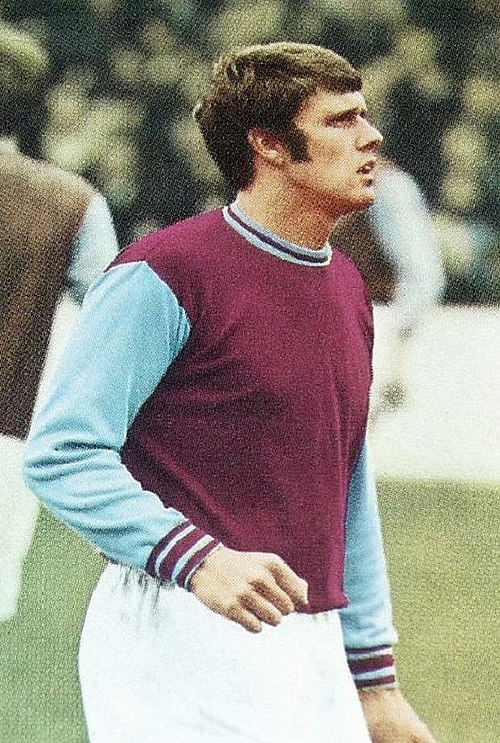
From there the match ran towards extra time. Preston had matched a First Division side for eighty-odd minutes and looked entirely capable of holding on. Then, with the game effectively over, Hurst carried the ball and pushed it wide to Brabrook, the cross came over from the right, and Ronnie Boyce ran in unmarked to head it past Alan Kelly. The databases time it at 90 minutes. The accounts closest to the day call it a stoppage-time goal, one of them putting it two minutes into injury time, and Nobby Lawton's obituarist wrote that Preston were pipped by a stoppage-time goal after twice leading.[12][16][23][15]
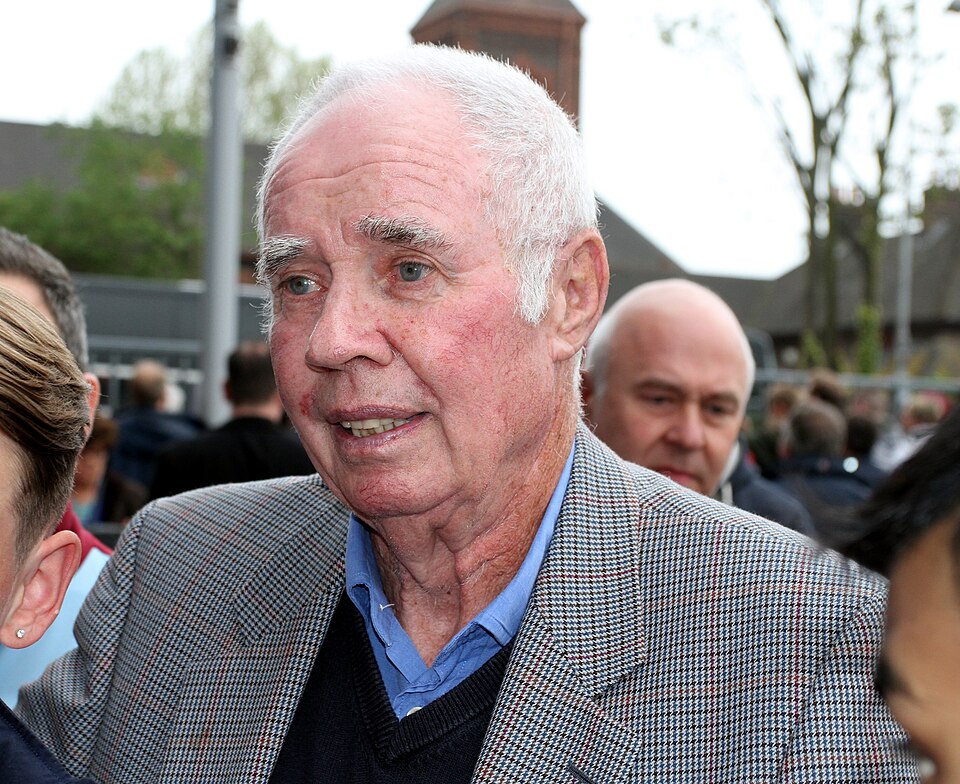
Bobby Moore went up the famous steps to take the trophy from the Earl of Harewood, and the newsreel cameras filmed the lap of honour, the Grenadier Guards band on the pitch and the prime minister of the day watching from the stand. The following morning an open-top bus carried the cup through Mile End, Stratford and Plaistow to Newham Town Hall. Moore was named Footballer of the Year for the season. Within two years he and Hurst would be back at Wembley to win a World Cup, and West Ham would win a European trophy there in between.[13][19][18][6][14]
For Preston it was the end of something rather than the start. They have not reached another FA Cup final since, and the teenager who only played because a teammate was dropped went on to become the most successful manager in Everton's history. For West Ham it was the first of three trophies in three seasons for players from the same dressing room, and the club's first major honour of any kind.[9][21][12]
How the match unfolded
- 15:00Kick-off. The Grenadier Guards band has played the crowd in, and the two sides come out of the tunnel with Nobby Lawton leading Preston and Bobby Moore leading West Ham.[15][19][23]
- 10'Preston lead. Jim Standen cannot hold a low shot from Alex Dawson and Doug Holden puts in the rebound.[12][16][1]
- 11'West Ham are level almost at once. Johnny Byrne feeds John Sissons, who scores with an angled cross-shot.[12][1][16]
- 40'Preston lead again. Dawson heads in powerfully from a Dave Wilson corner.[12][16][1]
- half-timePreston go in ahead. No source consulted prints a half-time score; the goal times give Preston 2, West Ham 1.[16][15]
- 52'Geoff Hurst equalises with a header from a Peter Brabrook corner. Accounts differ on how it crossed the line: off the underside of the bar and down, or off the bar and the grounded goalkeeper.[12][16][15]
- 90'Ronnie Boyce heads the winner from Brabrook's cross from the right, unmarked, past Alan Kelly.[12][16][15]
- full-timeWest Ham win 3-2. Moore climbs the steps to take the trophy from the Earl of Harewood, and the players are filmed on a lap of honour with the cup.[13][19][18]
Match facts
Where they played
Both sides as they lined up. Choose any player to read what they did in this final.
Select a shirt for that player's note.
Route to the final
West Ham United
- Round 3: Charlton Athletic (h) won 3-0
- Round 4: Leyton Orient (a) drew 1-1, replay (h) won 3-0
- Round 5: Swindon Town (a) won 3-1
- Round 6: Burnley (h) won 3-2
- Semi-final: Manchester United (Hillsborough) won 3-1
Preston North End
- Round 3: Nottingham Forest (a) drew 0-0, replay (h) won 1-0
- Round 4: Bolton Wanderers (a) drew 2-2, replay (h) won 2-1
- Round 5: Carlisle United (h) won 1-0
- Round 6: Oxford United (a) won 2-1
- Semi-final: Swansea Town (Villa Park) won 2-1
Line-ups
West Ham United · 2-3-5
- Jim Standen Goalkeeper
- John Bond Right back
- Jack Burkett Left back
- Eddie Bovington Right half
- Ken Brown Centre half
- Bobby Moore Left half, captain, and the Football Writers' Association Footballer of the Year for this season
- Peter Brabrook Outside right, supplied the crosses for the second and third goals
- Ronnie Boyce Inside right, scored the winner and had scored twice in the semi-final
- Johnny Byrne Centre forward
- Geoff Hurst Inside left, scored the equaliser
- John Sissons Outside left, aged 18 years and 215 days, the youngest player to score in an FA Cup final at Wembley
Preston North End · 2-3-5
- Alan Kelly Goalkeeper
- George Ross Right back
- Jim Smith Left back
- Nobby Lawton Right half, captain
- Tony Singleton Centre half
- Howard Kendall Left half, aged 17 years and 345 days, then the youngest player to appear in an FA Cup final at Wembley
- Dave Wilson Outside right, took the corner for the second goal
- Alec Ashworth Inside right
- Alex Dawson Centre forward, scored, and had played in the 1958 final for Manchester United
- Alan Spavin Inside left
- Doug Holden Outside left, scored, and had played in the 1953 and 1958 finals for Bolton Wanderers
Trivia and detail
- Preston's two goalscorers had faced each other in the 1958 final: Doug Holden won it with Bolton Wanderers, Alex Dawson lost it with Manchester United. Holden had also played in the 1953 Matthews final, and was the last surviving member of that team when he died.[4][22]
- Howard Kendall played only because Preston's regular left half Ian Davidson was dropped. Accounts of why differ: one says he was suspended by the club for an unauthorised trip to Scotland, another that he told the club he had to attend a funeral in Edinburgh and it turned out to be untrue.[2][21]
- Ronnie Boyce had scored twice in the semi-final win over Manchester United at Hillsborough before heading the winner at Wembley.[13][17]
- West Ham conceded eight goals at home that season, beaten 8-2 by Blackburn Rovers on Boxing Day. It was the biggest away win in the First Division that year.[7][8]
- The British Movietone shot list for the film of this match records the prime minister Sir Alec Douglas-Home in the crowd, coaches bringing Preston supporters to the ground, and Moore carrying an outsized hammer at the celebrations.[19][20]
- British Pathe issued the film in two versions, a longer black and white Techniscope reel and a shorter Technicolor one, and its own catalogue note says it is not clear whether the colour copy is the complete newsreel.[18]
How well do you know the 1964 final?
Five questions. Every answer is sourced from the material on this page.
-
Who scored the winning goal in the last minute of the 1964 final?
-
Which division were Preston North End in when they reached this final?
-
What record did Preston's Howard Kendall set by playing in this final?
-
What was this trophy for West Ham United?
-
Which of Preston's goalscorers had played in the 1958 FA Cup final for Manchester United?
What is not settled
Honesty matters more than tidiness. These details are contested or unrecorded, and we have not guessed at them:
- The goal times do not agree between sources. Preston's first is given as 10 minutes by West Ham United, Wikipedia and 11v11, and as nine minutes by the archived fa-cupfinals report. Sissons's equaliser is 11 minutes at West Ham United and Wikipedia, 12 at 11v11, and a minute after the opener in the archived report. This page uses the majority timings of 10 and 11.
- The winning goal is timed at 90 minutes by the databases, but the archived match report places it two minutes into injury time and Nobby Lawton's obituarist called it a stoppage-time goal. The record keeps 90 because that is what the sourced data says, while noting that the film and the contemporary-style reports suggest it came after the ninety.
- No source consulted prints a half-time score. The 1-2 recorded here (West Ham first, as the winners) is derived from the goal times, which put Preston 2-1 up at the interval.
- Howard Kendall's age is given as 17 years and 345 days by every source consulted. Counted day by day from 22 May 1946 to 2 May 1964 the figure is 346 days, because 29 February 1964 falls inside the count. The record carries the sourced figure and flags the arithmetic rather than overwriting the published number.
- Both sides are drawn here as 2-3-5, and that shape is a reading of the printed positional labels rather than a shape any source names. Wikipedia's match details give every one of the twenty-two players a label from the traditional list (goalkeeper, right back, left back, right half, centre half, left half, outside right, inside right, centre forward, inside left, outside left), and West Ham United's own archive and the archived fa-cupfinals report both print the two teams in that same order. Two backs, three halves and five forwards is what those labels add up to. 11v11's database modernises the labels instead: its version would make West Ham a back four with two in midfield and Preston a back three with three in midfield, but it also calls Doug Holden an outside right when he wore the number eleven shirt, so its labels are the weaker evidence and the traditional reading is the one drawn. The caveat that matters is that by 1964 those labels described shirt numbers more faithfully than they described where people stood, so this pitch is a notation and not an observation of the day.
- Accounts of Hurst's equaliser differ. West Ham United's history says his header hit the underside of the crossbar and bounced down over the line; the archived fa-cupfinals report says it hit both the crossbar and the grounded goalkeeper before crossing.
- Why Ian Davidson missed the final is told two ways: suspended by the club for an unauthorised trip to Scotland (Wikipedia), or dropped after claiming falsely that he had to attend a funeral in Edinburgh (The Scotsman's obituary of Kendall, drawing on Kendall's memoirs).
- John Sissons's record is usually written as the youngest player to score in an FA Cup final at Wembley. The archived fa-cupfinals report drops the venue qualifier and calls him the youngest scorer in a final outright. No source consulted establishes the ages of scorers in the pre-Wembley finals, so the qualified form is the one used here.
- Attendance is given as the round number 100000 by every source consulted, with no turnstile count anywhere, so the true figure is not known to the nearest thousand.
How we know
Every claim on this page is tied to a numbered source below. These are the contemporary records behind it, each one fetched and matched word for word before publication rather than taken on trust:
- British Pathe, The Cup Final (1964), Techniscope version · British Pathe (official archive channel)
- British Movietone story 88267, issued 4 May 1964 · British Movietone (AP Archive)
- British Movietone, issued 4 May 1964 · British Movietone (AP Archive)
Where a primary record and a modern account disagree, we show both rather than choosing the tidier number.
Sources
- 1964 FA Cup final · Wikipedia
- Howard Kendall · Wikipedia
- John Sissons · Wikipedia
- Doug Holden · Wikipedia
- Alex Dawson · Wikipedia
- Bobby Moore · Wikipedia
- 1963-64 Football League · Wikipedia
- 1963-64 West Ham United F.C. season · Wikipedia
- List of FA Cup finals · Wikipedia
- James F. M. Prinsep · Wikipedia
- 1966 FIFA World Cup final · Wikipedia
- 1964 - West Ham United 3-2 Preston North End · West Ham United FC
- From East End boy to East End hero: Ronnie Boyce on heading West Ham United to FA Cup glory in 1964 (archived) · West Ham United FC, via the Internet Archive
- Ron Greenwood, club managers · West Ham United FC
- West Ham United v Preston North End, 02 May 1964 · 11v11 (AFS Enterprises)
- FA Cup Final 1964 (archived match report and round-by-round) · fa-cupfinals.co.uk, via the Internet Archive
- England FA Challenge Cup 1963-1964 · RSSSF
- The Cup Final (1964), Techniscope version: newsreel and catalogue description · British Pathe (official archive channel)
- The Cup Final (Cinemascope), colour, no sound: shot list for story number 88267 · British Movietone (AP Archive)
- The Cup Final (Cinemascope), colour: Wembley highlights · British Movietone (AP Archive)
- Obituary: Howard Kendall, footballer and manager of Everton · The Scotsman
- Former Preston North End and Manchester United striker Alex Dawson has died aged 80 · Lancashire Evening Post
- 'Cultured' Nobby Lawton, a Cup Final captain who led Brighton · In Parallel Lines
- English FA Cup 1963-1964: Final (archived) · Statto Organisation, via the Internet Archive