1965-66 FA Cup · The Final
1966 FA Cup Final: Everton 3-2 Sheffield Wednesday
The pre-match story was Everton's untouched defence and a 5-1 win over Wednesday in August. Both were true and both were misleading, and the league table and the head-to-head record say so.
Everton were two down with half an hour left, and had not conceded a goal on the way to Wembley at all. They scored three times in fifteen minutes and took the cup home for the first time since 1933.
Saturday 14 May 1966 · Wembley Stadium
What you will not find elsewhere
The favourites tag was built on half of the head-to-head record
Everton went to Wembley as firm favourites, and the number everyone reached for was the 5-1 they had beaten Sheffield Wednesday by at Goodison Park on 31 August 1965. Six days earlier the same two teams had played at Hillsborough and Wednesday had won 3-1. Taken together the season series was one thumping each, in the same week. The league table says the same thing about both clubs: Everton finished eleventh with 56 goals scored and 62 conceded, Wednesday seventeenth with 56 scored and 66 conceded. Two sides that had each scored exactly 56 league goals, and each conceded more than they scored, contested this final. Nothing in that record justified anybody being a firm favourite.[10][11][3][16]
Everton were not the first side to reach a final without conceding, and the record they were chasing was a different one
ToffeeWeb's history of this match says Everton came to Wembley as the first team ever to reach an FA Cup final without conceding a goal. That is not what the competition record says. Wikipedia's page for the 1965-66 FA Cup states that Everton were trying to become the first side since Bury in 1903 to win the cup without conceding, and Bury had done exactly that. Everton's run stands on its own terms, seven matches and twelve goals without reply, but the record itself went in the fourth minute at Wembley and the page should say so.[17][2][1]
Wednesday played every round away, with one thing worth adding
The line repeated about Sheffield Wednesday's run is that they played every round away from home. The rounds break down as four ties drawn away, at Reading, Newcastle United, Huddersfield Town and Blackburn Rovers, then a semi-final at neutral Villa Park and a final at Wembley. So the sharper version of the claim is the one nobody prints: Wednesday reached an FA Cup final without playing a single tie at Hillsborough. The semi-final and the final were not away matches, they were neutral ones, and the run is more unusual stated accurately than stated loosely.[1][2][8]
Three sources, three different ways of naming the referee
Wikipedia's article on this final gives the referee as Jack Taylor of Staffordshire. Wikipedia's own article on the 1965-66 competition gives him as Jack Taylor of Wolverhampton. The FA Cup Finals database prints only J Taylor. The nearest thing to a contemporary record is British Pathe's catalogue description of its own film of this match, which says the newsreel includes shots of Referee Jack Taylor of Wolverhampton with his linesmen in their dressing room. This page follows the film catalogue.[1][2][8][19]
Trebilcock's whole FA Cup record for Everton: two games, two goals, both in the final
Mike Trebilcock joined Everton from Plymouth Argyle on the last day of 1965 and played fourteen matches for the club in two and a half seasons. The Everton Encyclopedia's appearance table breaks that down: eleven league games with three goals, and two FA Cup games with two goals. The two cup appearances were the semi-final against Manchester United and this final, and both of the cup goals were scored on this afternoon. A player whose entire FA Cup record for the club is one scoreless semi-final and a two-goal final is not a common thing to find in a club's appearance ledger.[14][5]
The substitute striker found out he was playing days before the final
Mike Trebilcock expected to watch this final from the stand in a new suit. Instead he was told he would replace an injured England centre forward: Instead he told me I would be playing in place of the England centre forward Fred Pickering, who had been injured. If ever I have fallen off the back of my seat, that was it.
He then scored twice in the second half.[14]
The mistake that decided it, described by the man who punished it
The winning goal came from an error rather than a move, and Derek Temple has never dressed it up: Colin Harvey hit a long ball and Gerry Young mis-trapped it.
He ran through and finished, and the comeback was complete.[16]
A reporter who had seen the Matthews final rated this one higher
Everton were two goals down with less than half an hour to play. Jack Rowe of the Liverpool Daily Post reached for the strongest comparison available to him and called it the finest fight-back in the history of Wembley
He had watched the Matthews final in person and said he placed this above it.[16]
The footage
The match report
Everton reached Wembley on 14 May 1966 with a record that had not been matched for a very long time. Seven cup ties, twelve goals scored, none conceded: no side had got to an FA Cup final with its goal untouched since Bury in 1903. The league season had gone nothing like as well. Everton finished 11th in the First Division and Sheffield Wednesday 17th, and both clubs ended the year having let in more goals than they scored. The final drew the 100,000 that Wembley took in those years and kicked off at three in the afternoon.[2][9][3][1]
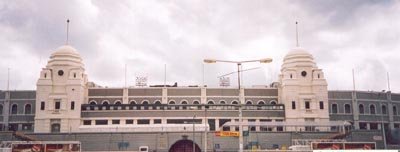
Everton were firm favourites, and the evidence usually produced was the 5-1 they had put on Wednesday at Goodison Park at the end of August. That is only half of the record. Six days before it, the same two sides had met at Hillsborough and Sheffield Wednesday had won 3-1. Each club had taken one heavy home win off the other inside a week, which is a poorer guide to a Wembley afternoon than the build-up allowed.[10][11][3][16]
Harry Catterick named his team on the Friday morning. Fred Pickering, the England centre-forward, had a knee that had been troubling him since the quarter-finals and was left out for the second round running; Mike Trebilcock kept the place he had taken for the semi-final. Trebilcock had arrived from Plymouth Argyle for twenty thousand pounds on the last day of 1965 and had played eight games for the club. Sandy Brown lost the other selection argument, to Tommy Wright at right back.[16][14][5]
Wednesday scored in the fourth minute, and it was the kind of goal no defensive record prepares anybody for. David Ford squared it, Jim McCalliog mistimed his shot from the edge of the area, and the deflection took it past Gordon West. Alex Young then had a goal disallowed for offside and went down under Ron Springett without a penalty. Everton went in at the interval a goal behind, having conceded for the first time in the competition.[8][17][16][20]
Twelve minutes after the restart it was two. John Fantham struck a shot that West could not hold, and Ford followed it in. Wednesday had the match where they wanted it, and the commentator Kenneth Wolstenholme told the country it was Wednesday's cup.[17][12][9]
Everton were level inside five minutes. Derek Temple got the ball down to Trebilcock, who hit it first time from around twelve yards on 59 minutes, and on 64 Alex Scott chipped a free-kick into the area for Trebilcock to meet on the half-volley from the edge of it. In between the goals an Everton supporter called Eddie Cavanagh climbed out of the crowd and ran across the pitch. One policeman was left holding his empty jacket, a second threw his hat down, and a third brought him down before he reached the goal.[16][14][15][19]
The winner came on 74 minutes and turned on a touch that did not happen. Colin Harvey hit a long ball forward, Gerry Young, playing as Wednesday's last defender, let it run under his foot, and Temple was clear with time to pick his corner past Springett. Wednesday pushed but never seriously threatened again; West punched a cross out to Fantham near the end and the header went over.[1][16][17]
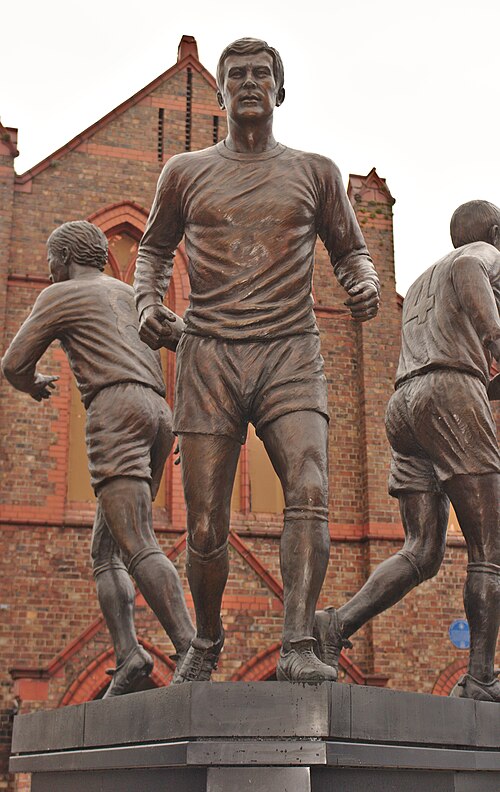
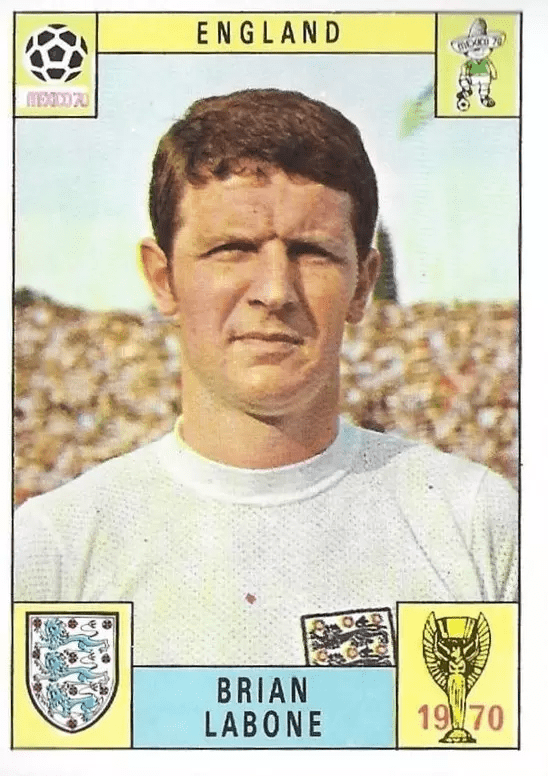
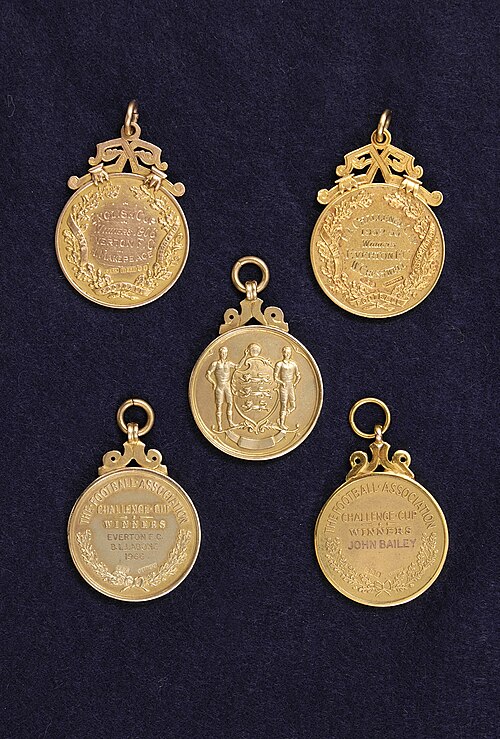
Princess Margaret presented the cup to Brian Labone, and then the afternoon produced something Wembley had not seen. Don Megson led the beaten Sheffield Wednesday side round the pitch, the first losing captain to take his team on a lap of honour at an FA Cup final, and Everton paraded the trophy after them. British Pathe filmed all of it in Technicolor for the cinema newsreel, which is why the colour of the two kits survives: Everton in royal blue, Wednesday in the white change strip they had worn in every round of the competition.[17][4][18][19]
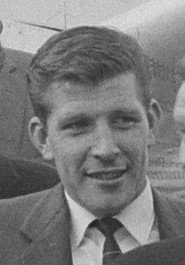
It was Everton's third FA Cup and their first for 33 years, and it took them into the European Cup Winners' Cup the following season. Sheffield Wednesday, 17th in the table, finished with nothing but the manner of the defeat. Eleven weeks later the same stadium staged the World Cup final, and Ray Wilson was in the England side that won it.[3][13][6][16]
How the match unfolded
- 15:00Kick-off. Everton in royal blue, Sheffield Wednesday in the white change strip they had worn in every round.[1][18][2]
- 4'Jim McCalliog scores. David Ford squares the ball, McCalliog mistimes his shot from the edge of the area and it deflects past Gordon West. Everton have conceded for the first time in the competition.[8][17][16]
- first halfAlex Young has a goal ruled out for offside and then goes down under Ron Springett without a penalty being given.[17][12][20]
- half-timeSheffield Wednesday lead by a goal.[1][17]
- 57'David Ford makes it two. West cannot hold a shot from John Fantham and Ford follows it in.[17][9][1]
- 59'Mike Trebilcock pulls one back, hitting Derek Temple's knock-down first time from about twelve yards.[16][14][17]
- 64'Trebilcock equalises. Alex Scott's free-kick is half cleared and Trebilcock strikes it on the half-volley from the edge of the area.[16][14][17]
- after the equaliserEddie Cavanagh climbs out of the Everton end and runs across the pitch. One policeman is left holding his jacket, a second throws down his hat, and a third brings him down with a tackle.[15][19][9]
- 74'Derek Temple scores the winner. Colin Harvey plays a long ball forward, Gerry Young lets it run under his foot, and Temple runs clear and finishes past Springett.[1][16][17]
- 89'Wednesday's last chance. West punches a cross out to Fantham, whose header clears the crossbar.[17]
- full-timeEverton win 3-2. Princess Margaret presents the cup to Brian Labone, and both sides take a lap of honour.[17][16][18]
Match facts
- Date
- Saturday 14 May 1966
- Venue
- Wembley Stadium, London
- Attendance
- 100,000Printed as 100,000 by every account consulted. That is the stated Wembley capacity of the period rather than a separately published turnstile return, as with the other finals of these years.[1][8][9]
- Scorers
- Jim McCalliog 4'
David Ford 57'
Mike Trebilcock 59'
Mike Trebilcock 64'
Derek Temple 74'[1][8][9][12] - Half-time
- 0-1
- Competition
- 1965-66 FA Cup
Where they played
Both sides as they lined up. Choose any player to read what they did in this final.
Select a shirt for that player's note.
Route to the final
Everton
- Round 3: Sunderland (h) won 3-0
- Round 4: Bedford Town (a) won 3-0
- Round 5: Coventry City (h) won 3-0
- Round 6: Manchester City (a) drew 0-0, replay (h) drew 0-0, second replay (Molineux) won 2-0
- Semi-final: Manchester United (Burnden Park) won 1-0
Sheffield Wednesday
- Round 3: Reading (a) won 3-2
- Round 4: Newcastle United (a) won 2-1
- Round 5: Huddersfield Town (a) won 2-1
- Round 6: Blackburn Rovers (a) won 2-1
- Semi-final: Chelsea (Villa Park) won 2-0
Line-ups
Everton · 4-2-4
- Gordon West Goalkeeper. Beaten by a deflection after four minutes and by a shot he could not hold after fifty-seven
- Tommy Wright Right back. Chosen ahead of Sandy Brown on the Friday before the final
- Brian Labone Centre half and captain. Collected the cup from Princess Margaret
- Brian Harris Wing half who had started as a winger and dropped back
- Ray Wilson Left back. McCalliog's opening shot went in off him
- Jimmy Gabriel Wing half. Ran the ball into the corner to use up time at the end
- Colin Harvey Wore the number ten but played deep. Hit the long ball that led to the winning goal
- Alex Scott Outside right. Took the free-kick from which Trebilcock equalised
- Mike Trebilcock Scored twice. In the side because Fred Pickering's knee was not right
- Alex Young Centre forward. Had a goal ruled out for offside and a penalty appeal turned down
- Derek Temple Outside left. Scored the winner and set up the first Everton goal
Sheffield Wednesday · 4-3-3
- Ron Springett Goalkeeper, and a rival to Gordon Banks for the England jersey
- Wilf Smith Full back. Marked Derek Temple until Temple drifted infield for the winner
- Sam Ellis Centre half
- Gerry Young Played as the last defender. The ball ran under his foot for Everton's winner
- Don Megson Left back and captain. Led his beaten side on a lap of honour
- Peter Eustace Midfield
- Graham Pugh Midfield. Eighteen years old on the day of the final
- John Quinn Midfield
- John Fantham Forward. His shot was spilled by West for Wednesday's second goal
- Jim McCalliog Scored the opening goal after four minutes
- David Ford Made the first goal and scored the second
Trivia and detail
- Mike Trebilcock's entire FA Cup career for Everton was two appearances and two goals, and both goals were scored in this final. He played fourteen times for the club in all competitions before joining Portsmouth in January 1968.[14][5]
- John Lennon and Paul McCartney of The Beatles were at the match.[1][9]
- Sheffield Wednesday did not play a single tie of this cup run at Hillsborough. They were drawn away in all four rounds that had a home side, and their semi-final and the final were on neutral ground.[1][2][8]
- Everton were fined 2000 pounds for fielding a weakened team at Leeds United the weekend before the semi-final, having rested players for the cup tie.[16]
- British Pathe's own catalogue entry for its film of the day records the Royal Marines' Band providing the half-time entertainment, and notes that a fan ran onto the pitch twice in the second half.[19]
- Graham Pugh of Sheffield Wednesday was eighteen on the day of the final and his team-mate Sam Ellis nineteen.[7][21]
How well do you know the 1966 final?
Five questions. Every answer is sourced from the material on this page.
-
How many goals had Everton conceded on the way to this final?
-
Who scored Everton's two equalising goals?
-
What did Don Megson do after the final that no losing captain had done before?
-
What colour did Sheffield Wednesday play in at Wembley?
-
Whose mistake let in Derek Temple for the winning goal?
What is not settled
Honesty matters more than tidiness. These details are contested or unrecorded, and we have not guessed at them:
- The referee's association is given three ways. Wikipedia's page for this final says Staffordshire, Wikipedia's page for the 1965-66 competition says Wolverhampton, and the FA Cup Finals database prints only 'J Taylor'. British Pathe's catalogue entry for its own film of the match says Jack Taylor of Wolverhampton, and this page follows it.
- Neither side's formation is stated by any 1966 source found. The two shapes drawn here are reconstructed from the positional labels 11v11 publishes for all twenty-two players, the shirt numbers printed by Wikipedia and ToffeeWeb, and Derek Temple's own account of Colin Harvey playing deep in front of the centre-half and wing-halves and of Gerry Young playing as Wednesday's last man. A strict reading of the 11v11 labels alone would give Wednesday only three defenders, which the eyewitness account contradicts, and it groups Jim McCalliog with the midfielders although he wore the number nine and scored from the edge of the area. Treat both pitches as a reconstruction, not as a claim made by a contemporary source.
- Shirt numbers differ between sources. Wikipedia and ToffeeWeb both number Alex Young nine and Colin Harvey ten; the FA Cup Finals database reverses them. This page does not print squad numbers.
- Derek Temple's winning goal is timed at 74 minutes by Wikipedia, the FA Cup Finals database and 11v11, and at 73 minutes by the Everton Encyclopedia.
- Nobody agrees on what McCalliog's opening shot deflected off. Derek Temple says it went in off Ray Wilson's heel, ToffeeWeb says it cannoned in off a defender's heel without naming him, and the FA Cup Finals database says only that the shot was deflected.
- Accounts of Trebilcock's first goal differ on how the ball reached him. The Liverpool Daily Post report quoted by the Everton FC Heritage Society has Derek Temple flicking it down to him; the Everton Encyclopedia says a Temple header was blocked into his path.
- The attendance of 100,000 is the figure every account prints, and it matches the stated Wembley capacity of the period rather than a published turnstile count. No separate gate return was found for this final.
- Wikipedia's route table records Everton's second replay against Manchester City only as a neutral venue. The Everton FC Heritage Society names the ground as Molineux, and the route line on this page follows it.
- The Everton Encyclopedia reports Kenneth Wolstenholme calling it 'Wednesday's Cup' on the television commentary at 2-0. No recording or transcript of the commentary was located to confirm the wording, so the page describes what he said rather than quoting him.
How we know
Every claim on this page is tied to a numbered source below. These are the contemporary records behind it, each one fetched and matched word for word before publication rather than taken on trust:
- British Pathe film ID 1795.07, The Cup Final, Colour by Technicolor · British Pathe (official YouTube catalogue)
- AP Archive story CAN976, 14 May 1966 · AP Archive
Where a primary record and a modern account disagree, we show both rather than choosing the tidier number.
Sources
- 1966 FA Cup final · Wikipedia
- 1965-66 FA Cup · Wikipedia
- 1965-66 Football League, First Division final table · Wikipedia
- Don Megson · Wikipedia
- Mike Trebilcock · Wikipedia
- Ray Wilson (English footballer) · Wikipedia
- Graham Pugh · Wikipedia
- 1966 FA Cup Final: Everton vs Sheff Wed · FA Cup Finals
- Everton v Sheffield Wednesday, 14 May 1966 (match record) · AFS Enterprises (11v11)
- Sheffield Wednesday v Everton, 25 August 1965 (match record) · AFS Enterprises (11v11)
- Everton v Sheffield Wednesday, 31 August 1965 (match record) · AFS Enterprises (11v11)
- Everton v Sheffield Wednesday, FA Cup final 1965/66 · Everton Encyclopedia
- Everton, season 1965/66 · Everton Encyclopedia
- Trebilcock, Mike · Everton Encyclopedia
- Cavanagh, Eddie · Everton Encyclopedia
- Derek Temple and the Story of Everton's 1966 Cup Glory, by Rob Sawyer with Derek Temple, quoting the Liverpool Daily Post reports of Jack Rowe and Horace Yates · Everton FC Heritage Society
- 1966 FA Cup Final: Everton claim glory in dramatic comeback · ToffeeWeb
- The FA Cup Finalists 1960-1969 · Historical Football Kits
- The Cup Final. Colour by Technicolor, film 1795.07 (archive film and catalogue synopsis) · British Pathe (official YouTube catalogue)
- CAN976 Everton wins 1966 FA Cup Final (archive film and catalogue synopsis) · AP Archive
- Sam Ellis (footballer) · Wikipedia