1983-84 FA Cup · The Final
1984 FA Cup Final: Everton 2-0 Watford
This final is best understood as a struggle over the wide areas: Watford's early threat through Barnes faded as Steven and Stevens established Everton's right flank, creating the sequence that decided both goals.
Everton beat Watford 2-0 at Wembley, with Graeme Sharp breaking an initially balanced final before Andy Gray's disputed challenge on Steve Sherwood supplied the lasting controversy.
Saturday 19 May 1984 · Wembley Stadium
What you will not find elsewhere
Sharp's goal is published in two different minutes
11v11 and the FA Cup Finals match record place Graeme Sharp's opener in the 38th minute. Watford's official centenary history instead says 36 minutes. The timeline follows the two detailed match sources but retains the club-history discrepancy rather than laundering it away.[8][11][6]
Everton's route was tighter; Watford's was louder
Counting every match before Wembley, including replays, Everton scored eleven goals and conceded one. Watford scored fifteen and conceded seven. The final followed Everton's pattern: limited exposure, then ruthless use of the chances that survived.[11][9][12]
The later description and the on-field ruling are separate facts
The FA's retrospective says Gray headed the ball from Sherwood's grip. John Hunting nevertheless awarded the goal, and the formal match records preserve Everton's 2-0 result. This page reports the later FA description alongside the referee's decision without treating either as evidence for a claim the sources do not make.[1][8][10]
Inside Watford, Wembley still felt beyond extraordinary
Watford's rapid climb can look inevitable in a results list. Ed Coan, the club's public relations officer during the run, remembered the destination very differently: "Watford in the Cup Final? It was beyond extraordinary. After 35 years, it's just about sunk in." His recollection restores the surprise inside an institution that had risen from the basement division in six years.[2]
The footage
The match report
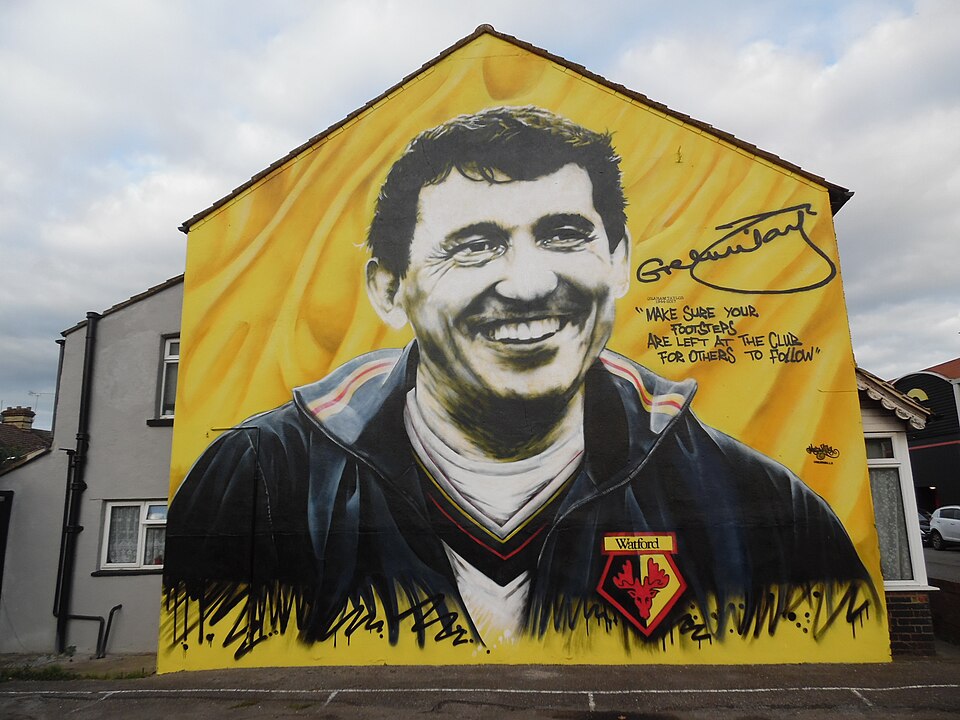
Watford's journey to Wembley was the public proof of a transformation led by Graham Taylor and chairman Elton John. The Museum of Watford describes the rise as meteoric, while the FA's retrospective places the club in the basement division only six years before this occasion. Everton arrived by a different route: Howard Kendall had survived a deeply difficult winter, taken his team to the League Cup final and then built a run that made them favourites here. One club was discovering the national stage; the other was trying to turn recovery into silverware.[7][2][4][11]
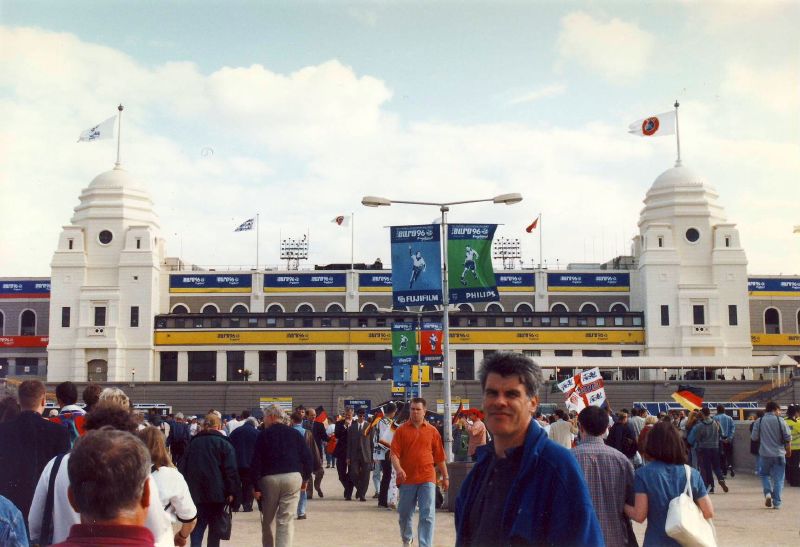
Their cup paths had already tested different qualities. Everton won at Stoke City, eventually subdued Gillingham, beat Shrewsbury Town and Notts County, then needed Adrian Heath's extra-time goal against Southampton at Highbury. Watford survived a high-scoring third-round replay with Luton Town before eliminating Charlton Athletic, Brighton & Hove Albion and Birmingham City. George Reilly's semi-final goal against Plymouth Argyle completed the route. The totals reveal the contrast: Watford scored more freely but Everton reached Wembley having conceded only once.[11][9][12][13]
Both managers selected aggressive line-ups that can reasonably be reconstructed as 4-3-3. Everton placed Peter Reid behind Kevin Richardson and Trevor Steven, with Heath and Gray working around Sharp. Watford used Les Taylor and Kenny Jackett centrally, Callaghan to the right and Barnes from the left around Johnston and Reilly. That made the full-backs crucial. Barnes immediately tested Gary Stevens, but Everton's right side also contained their cleanest route forward: Trevor Steven's delivery and movement would progressively force Watford back.[8][10][1][11]
Watford began without inhibition. Reilly's flick gave Barnes an early header that Southall held, and Barnes later ran onto Les Taylor's pass, stepped inside Gary Stevens and drew a vital block from Mountfield. Taylor's follow-up also failed to find the net. Everton had warnings, but they were finding their own chances: Sharp headed wide from Trevor Steven's cross and Richardson made Sherwood save. The opening phase belonged to Watford's speed; the middle of the half showed Everton learning where the space was.[11][1]
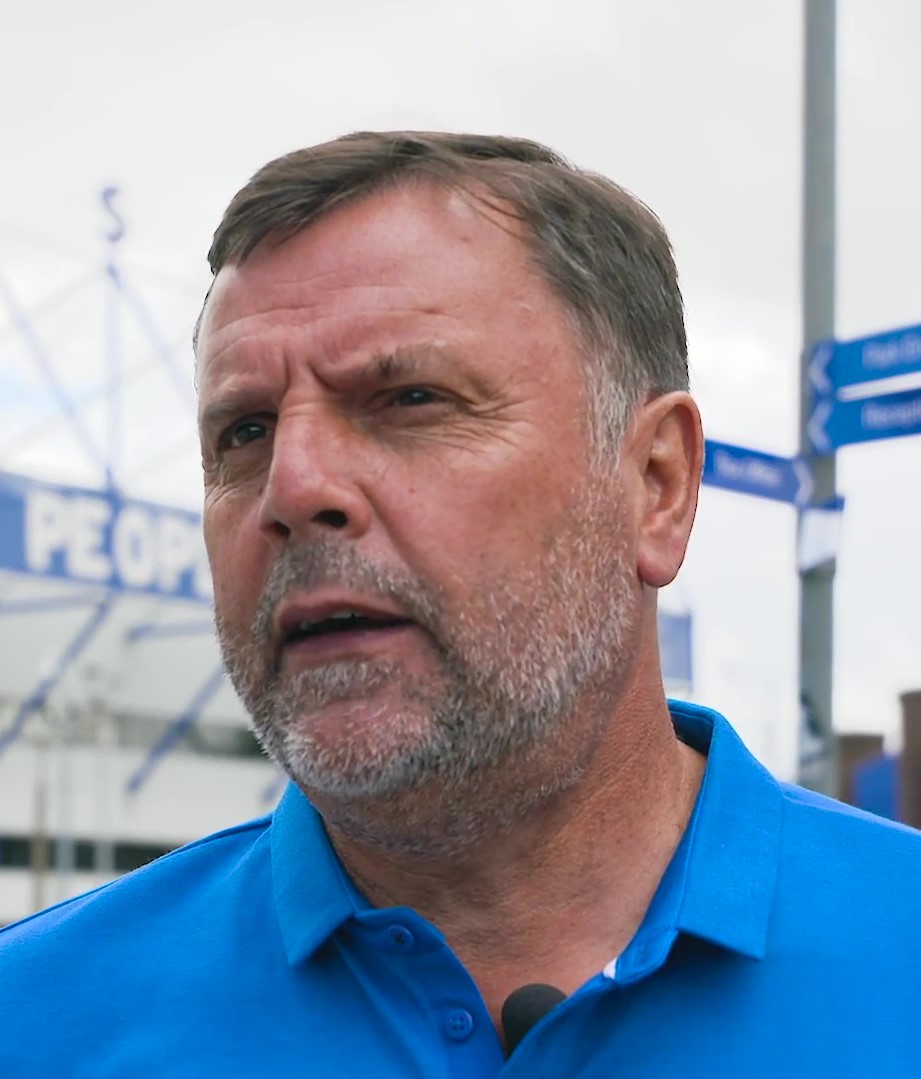
The breakthrough came in the 38th minute from an attack that looked broken. Richardson's cross was headed out and Gary Stevens attempted a shot from distance, but his mishit travelled to Sharp inside the area. The striker controlled it and drove a right-footed finish off the left post. Watford's official centenary history gives the goal two minutes earlier, a discrepancy preserved on this page, but 11v11 and FA Cup Finals support the 38th-minute convention. More important tactically, Everton had turned a loose second ball into the lead.[8][11][6]
Everton struck again in the 51st minute through the same side of the pitch. Trevor Steven crossed close to Sherwood, Gray attacked the dropping ball and headed it into the goal while the goalkeeper tried to secure it. Hunting allowed the score. Later descriptions remain divided in tone: the FA says Gray headed the ball from Sherwood's grip, while the statistical record simply preserves a legal goal. The responsible account is therefore neither to erase the challenge nor to rewrite the referee's decision after the fact. Everton led 2-0; the argument survived the match.[1][3][8][11]
Taylor responded by replacing Price with Atkinson, sacrificing a defender for another attacker. Watford kept pushing and Johnston found the net, only for the effort to be disallowed for offside. Everton no longer needed to chase the game. Ratcliffe and Mountfield protected the centre, Southall remained unbeaten and Reid helped control the space in front of them. Peter Reid later remembered that, once Sharp scored, Everton controlled the final and Steven was particularly effective on the right. The sequence of the match supports that recollection.[8][10][11][1]
The final whistle confirmed a 2-0 Everton victory and a decisive turn in Kendall's first spell as manager. The club's own history treats the season as a watershed: a League Cup final defeat had been followed by an FA Cup win, and the momentum carried into the championship and European success that followed. For Watford, the defeat did not reduce the scale of reaching Wembley after the club's rapid climb. The score belongs to Everton, but the enduring image has two stories in it: a team beginning an era of trophies and a challenger discovering how narrow the last step could be.[4][5][7][10]
How the match unfolded
- opening minutesGeorge Reilly flicks the ball on for John Barnes, whose early header goes straight to Neville Southall.[11]
- first halfTrevor Steven crosses from the right and Graeme Sharp heads wide as Everton begin to answer Watford's fast start.[11]
- first halfKevin Richardson shoots left-footed and Steve Sherwood makes the save.[11]
- before Everton's openerBarnes cuts inside Gary Stevens after Les Taylor's pass. Derek Mountfield blocks the shot, and Taylor's follow-up is deflected wide.[11]
- 38'Gary Stevens' mishit long-range effort reaches Sharp, who controls and drives a right-footed shot in off the left post to put Everton ahead.[8][11][10]
- half-timeEverton lead 1-0 after Watford's promising opening spell gives way to Everton pressure.[10][11]
- 51'Steven crosses close to Sherwood. Andy Gray challenges the goalkeeper and heads the ball into the net; referee John Hunting awards the goal.[8][1][11]
- 58'Watford replace left back Neil Price with forward Paul Atkinson while chasing the game.[8][10]
- second halfMo Johnston puts the ball in the net for Watford, but the effort is ruled out for offside.[11]
- full-timeEverton complete a 2-0 victory and captain Kevin Ratcliffe receives the FA Cup.[4][10]
Match facts
Where they played
Both sides as they lined up. Choose any player to read what they did in this final.
Select a shirt for that player's note.
Route to the final
Everton
- Third round: Stoke City (a) won 2-0
- Fourth round: Gillingham (h) drew 0-0, replay (a) drew 0-0 after extra time, second replay (a) won 3-0
- Fifth round: Shrewsbury Town (h) won 3-0
- Sixth round: Notts County (a) won 2-1
- Semi-final: Southampton (Highbury) won 1-0 after extra time
Watford
- Third round: Luton Town (a) drew 2-2, replay (h) won 4-3
- Fourth round: Charlton Athletic (a) won 2-0
- Fifth round: Brighton & Hove Albion (h) won 3-1
- Sixth round: Birmingham City (a) won 3-1
- Semi-final: Plymouth Argyle (Villa Park) won 1-0
Line-ups
Everton · 4-3-3
- Neville Southall Goalkeeper. Held Barnes' early header and kept a clean sheet
- Gary Stevens Right back. His mishit shot became the supply for Sharp's opener
- Derek Mountfield Centre back. Blocked Barnes during Watford's strongest first-half attack
- Kevin Ratcliffe Centre back and captain
- John Bailey Left back
- Peter Reid Central midfield
- Trevor Steven Right-sided midfield. Crossed for Gray's second goal
- Kevin Richardson Left-sided midfield. Tested Sherwood before the opening goal
- Adrian Heath Forward. Had scored the extra-time semi-final winner
- Graeme Sharp Centre forward. Scored Everton's first goal
- Andy Gray Forward. Headed Everton's second goal
Watford · 4-3-3
- Steve Sherwood Goalkeeper. Saved from Richardson before conceding twice
- David Bardsley Right back
- Steve Terry Centre back
- Lee Sinnott Centre back
- Neil Price Left back. Replaced by Paul Atkinson in the second half
- Les Taylor Central midfield and captain. Released Barnes for a first-half chance
- Kenny Jackett Central midfield
- Nigel Callaghan Right-sided midfield
- John Barnes Left-sided forward. Watford's chief early threat
- Mo Johnston Forward. Had a second-half effort ruled out for offside
- George Reilly Centre forward. Flicked on the early chance for Barnes
Trivia and detail
- The 1984 match was the first FA Cup final in which club sponsors were allowed to appear on the shirts.[2]
- Watford had appointed Caroline Gillies as the country's first football-club marketing manager three years before the final.[2]
- Ed Coan joined Watford as public relations officer after the quarter-final at Birmingham; his first job was preparing a Road to Wembley brochure in case the club won its semi-final.[2]
- Watford had finished runners-up in the old First Division in the season before reaching Wembley.[2]
- Demand for Watford's allocation overwhelmed a club whose average attendance was 16,510; the allocation comprised 16,000 terrace and 9,000 stand places.[6]
- The finalists' league meetings that season produced an Everton 1-0 win at Goodison Park and a 4-4 draw at Vicarage Road.[11]
- This was Everton's fourth FA Cup triumph, following victories in 1906, 1933 and 1966.[10]
- Everton needed a replay and then a second replay to get past Gillingham in the fourth round.[9][12]
- Watford's team was delayed in motorway traffic before the semi-final and reached Villa Park at 2.30, so late that the players discussed changing on the bus.[13]
How well do you know the 1984 final?
Five questions. Every answer is sourced from the material on this page.
-
Who scored Everton's opening goal in the final?
-
Who captained Watford at Wembley?
-
Which club forced Everton into both a replay and a second replay?
-
What commercial first did this FA Cup final introduce?
Answer
Club sponsors on the shirts. The FA's retrospective identifies it as the first final permitting club sponsors on shirts.[2]
-
Which substitute replaced Neil Price as Watford chased the match?
What is not settled
Honesty matters more than tidiness. These details are contested or unrecorded, and we have not guessed at them:
- {'topic': 'Sharp goal minute', 'note': "11v11 and FA Cup Finals give the opener as 38 minutes, while Watford's official centenary history says 36 minutes. The structured record follows the two detailed match sources and preserves the disagreement.", 'cite': ['src:11v11-final', 'src:facupfinals', 'src:watford-history']}
- {'topic': 'Gray goal description', 'note': "The FA retrospectively describes Gray heading the ball from Sherwood's grip. Referee John Hunting awarded the goal, and the statistical sources record it without qualification. The page reports the challenge and the ruling without claiming a definitive foul judgment.", 'cite': ['src:fa-reid', 'src:11v11-final', 'src:rsssf']}
- {'topic': 'Formations', 'note': 'The starting XIs and broad player roles are confirmed, but no consulted source publishes a formation diagram. Both 4-3-3 shapes are editorial reconstructions from those roles.', 'cite': ['src:11v11-final', 'src:rsssf']}
- {'topic': 'Match-day imagery', 'note': 'No suitable free-licensed photograph taken during the final was located on Wikimedia Commons. The proposals use clearly dated later portraits and a later view of the original Wembley.', 'cite': []}
- {'topic': 'Video scope', 'note': 'The official FA candidate is a compilation of Everton cup moments that includes 1984 footage, not a complete match upload. It remains outside the record until the verifier checks it.', 'cite': ['src:fa-top-five']}
How we know
Every claim on this page is tied to a numbered source below. These are the contemporary records behind it, each one fetched and matched word for word before publication rather than taken on trust:
- Official club history connecting the 1984 FA Cup to the championship and European success that followed · Everton FC
- Municipal museum summary identifying Watford's first final and the leadership of Graham Taylor and Elton John · Museum of Watford
Where a primary record and a modern account disagree, we show both rather than choosing the tidier number.
Sources
- Former Everton man Peter Reid: You can't beat The FA Cup · The Football Association
- Former Watford employee Ed Coan looks back on 1984 FA Cup Final · The Football Association
- Watch Everton's top five Emirates FA Cup moments on FATV · The Football Association
- Howard Kendall · Everton FC
- 1984/85 Championship win · Everton FC
- Living life in the fast lane: 1982-1987 · Watford Gold - Oliver Phillips' Official Centenary History of Watford FC
- Watford Football Club's 1984 FA Cup Final · Museum of Watford
- Everton v Watford, 19 May 1984 · 11v11
- FA Cup 1984 - matches · 11v11
- England - FA Cup Finals 1946-2000 · Rec.Sport.Soccer Statistics Foundation
- 1984 FA Cup Final: Everton vs Watford · FA Cup Finals
- F.A. Cup 1983-84 · Football Club History Database
- The match that still makes Graham Taylor sweat · The Guardian