1985-86 FA Cup · The Final
1986 FA Cup Final: Liverpool 3-1 Everton
The decisive passage was not simply Liverpool finding their finishing touch: Grobbelaar's save from Sharp and Molby's immediate counterattack turned an Everton lead into a Liverpool lead in little more than a minute.
Liverpool came from behind to beat Everton 3-1 at Wembley, with Ian Rush scoring twice as Kenny Dalglish's side completed the League and FA Cup Double.
Saturday 10 May 1986 · Wembley Stadium
What you will not find elsewhere
Craig Johnston called the goal the biggest moment of his life
Everton were close to retaking the lead when Bruce Grobbelaar denied Graeme Sharp, but Liverpool swept to the other end and Craig Johnston scored. Johnston's verified reflection gives the seventy-second swing its human weight: "It is the biggest moment of my life - it always will be."[10][2][4]
The four goal times have two legitimate notations
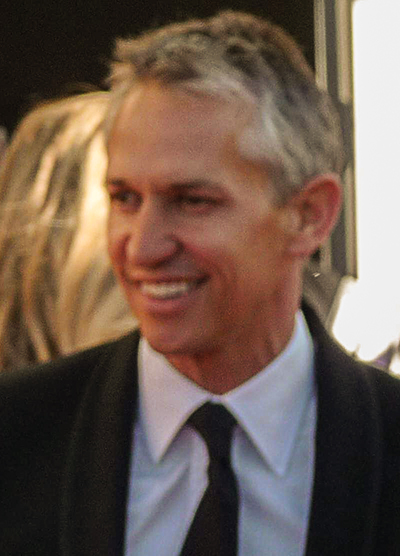
The conventional elapsed-minute record gives Lineker 27, Rush 56 and 83, and Johnston 62. LFChistory's event display labels the same goals 27, 57, 63 and 84, while the FA historian describes Lineker's goal as arriving in the 28th minute. These are not different plays: they reflect whether a source prints completed minutes or the ordinal minute then in progress.[13][9][1]
The same two clubs finished first and second twice
Liverpool finished two points above Everton in the league and then beat the same opponents in the FA Cup final. Everton's runners-up double is the mirror image of Liverpool's trophy Double: across the two major domestic competitions, the same city supplied every winner and every runner-up place.[1][2][7]
The footage
The match report
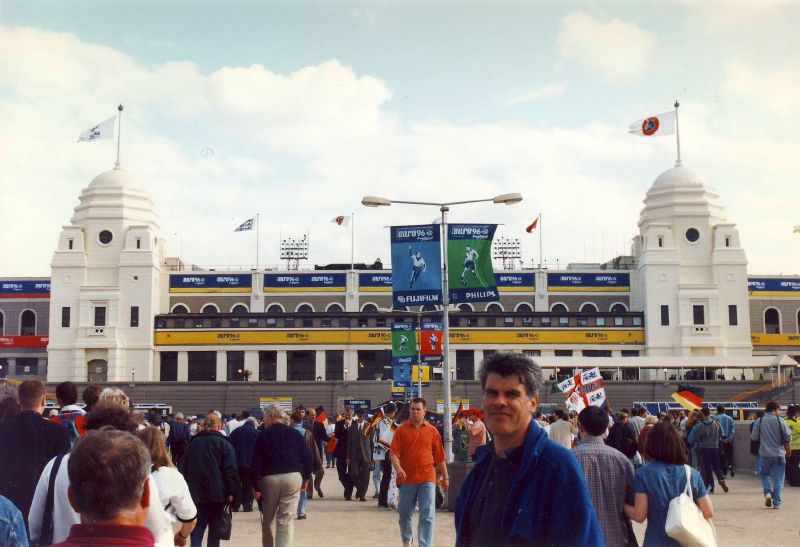
For the first time, the FA Cup final was a Merseyside derby. Liverpool arrived at Wembley as league champions, having overtaken Everton in the final stretch and secured the title seven days earlier; Howard Kendall's side had finished runners-up. The neighbours were not merely local antagonists but the two strongest teams in England, separated by two points in the championship. It was the first Wembley final contested by the top two in the league. A crowd of 98,000 watched supporters who had travelled south together divide the old stadium into red and blue.[1][2][11][8]
Everton were appearing in a third consecutive final, but goalkeeper Neville Southall was missing with an ankle injury and Bobby Mimms continued in his place. Mimms had handled his sudden promotion impressively, conceding only three goals across nine league appearances before Wembley. Liverpool restored Mark Lawrenson to partner Alan Hansen in defence, while player-manager Kenny Dalglish again selected himself alongside Rush. Dalglish's return to the side had helped drive the late title surge. On the day he became the first player-manager to win the FA Cup, his starting team contained no English player.[11][9][15][7]
Everton settled first. Rush headed a Nicol cross wide in the fifth minute, but Liverpool otherwise struggled to connect midfield and attack. Reid and Bracewell closed the middle while Sheedy and Steven gave Everton width, and their forwards pulled Liverpool's back line into repeated races. Everton repeatedly sought Lineker behind the defence and believed Nicol had fouled Sharp in the penalty area, an appeal Robinson rejected. In the 27th minute Reid collected a loose Dalglish touch and sent Lineker clear. Grobbelaar blocked the first effort, only for the striker to gather the rebound and score. Everton deserved their 1-0 half-time lead.[11][2][9]
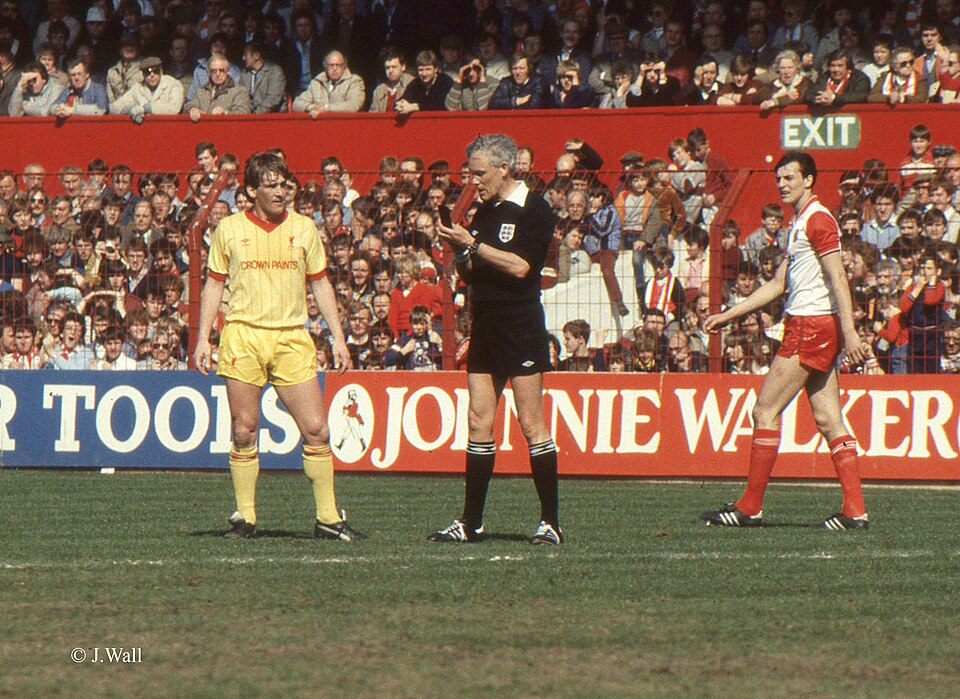
The interval did not immediately settle Liverpool. Sheedy flashed a shot wide, then forced Grobbelaar into a full-length save. The goalkeeper soon became embroiled in a furious argument with Beglin as both tried to deal with a loose ball inside the area. The confrontation made the champions look close to unravelling rather than close to equalising. Yet the disorder concealed the turning point. Hansen recovered to beat Lineker to another dangerous pass, and Liverpool finally assembled a clean move through Whelan and Molby. Rush ran beyond the blue line, rounded Mimms and rolled in the equaliser.[11][10][2]
Everton almost answered at once. Hansen's attempted clearance looped towards Sharp, whose header seemed bound for the top corner until Grobbelaar backpedalled and tipped it over. That save became the hinge of the final, denying Everton the chance to restore control before Liverpool could settle. Seventy seconds later Beglin sent Rush down the left, Rush brought Molby into the move and the Dane drove a low ball across goal. Dalglish could not reach it, but Johnston arrived at the far post and finished. Liverpool had moved from a goal down to 2-1 ahead in a passage Everton never absorbed.[10][2][4]
Molby now controlled the spaces Everton had owned before half-time. Kendall sacrificed Stevens for Heath, but the change left room for Liverpool's counterattacks. In the 83rd minute Nicol headed clear, Johnston and Rush linked, and Molby switched the play to Whelan on the left. Whelan's cross found Rush, who controlled and drove past Mimms. The shot knocked over a camera behind the goal, a vivid final image of a sweeping move that began near Liverpool's own penalty area.[10][2][3][5]
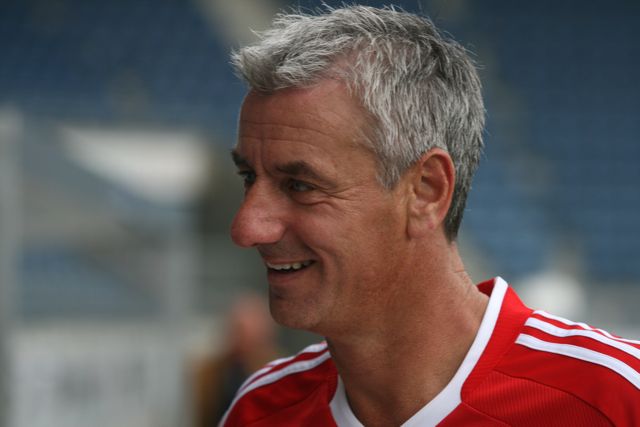
The 3-1 victory completed Liverpool's first League and FA Cup Double and made Dalglish's first season in management historic. Liverpool became only the fifth club to win both competitions in one season and the first northern side to do it since Preston North End in 1889. Hansen lifted Liverpool's third FA Cup, their first since 1974. The achievement was collective, but the final belonged to Grobbelaar's recovery, Molby's vision and Rush's ruthless movement against a defence that had controlled him for most of an hour.[2][1][10][3]
For Everton, the loss completed a brutal domestic reversal: second to Liverpool in the league and second to them again at Wembley. Their performance had been stronger than the score suggests for much of the afternoon, but Kendall conceded that defensive errors against Liverpool would be punished. European exclusion meant neither club received the continental place its achievement ordinarily earned. Everton did recover the league title the following season, yet this final remains the moment when a campaign that had offered them everything ended with Liverpool holding both major domestic prizes.[10][11][7][6]
How the match unfolded
- 5'Steve Nicol crosses and Ian Rush heads wide, Liverpool's clearest opening in an uneasy start.[11]
- during the first halfEverton appeal for a penalty after Nicol challenges Graeme Sharp. Referee Alan Robinson lets play continue.[11][10]
- 27'Peter Reid sends Gary Lineker beyond Liverpool's defence. Bruce Grobbelaar blocks the first shot, but Lineker scores from the rebound to put Everton ahead.[2][9][11]
- half-timeEverton lead 1-0 after controlling much of the opening half.[9][10]
- early in the second halfKevin Sheedy shoots narrowly wide and then forces Grobbelaar into a full-length save from a free kick. Soon afterwards the goalkeeper and Jim Beglin argue furiously over a loose ball.[2][11]
- 56'Ronnie Whelan intercepts Gary Stevens' pass and feeds Jan Molby, whose through ball releases Rush. Rush rounds Bobby Mimms and rolls in Liverpool's equaliser.[2][10][13]
- moments after the equaliserAlan Hansen's attempted clearance presents Sharp with a headed chance, but Grobbelaar backpedals and tips the ball over the bar.[2][10]
- 62'Molby drives down the left and sends the ball across goal. Craig Johnston arrives at the far post to put Liverpool in front.[2][10][13]
- 72'Everton replace right back Gary Stevens with forward Adrian Heath as they chase an equaliser.[9][10]
- 83'A sweeping Liverpool move ends with Whelan crossing from the left. Rush controls and drives past Mimms, knocking over a camera behind the goal as Liverpool go 3-1 ahead.[2][3][13]
- full-timeLiverpool win 3-1 and captain Alan Hansen lifts the FA Cup, completing the club's first League and FA Cup Double.[1][10][2]
Match facts
Where they played
Both sides as they lined up. Choose any player to read what they did in this final.
Select a shirt for that player's note.
Route to the final
Liverpool
- Third round: Norwich City (h) won 5-0
- Fourth round: Chelsea (a) won 2-1
- Fifth round: York City (a) drew 1-1, replay (h) won 3-1
- Sixth round: Watford (h) drew 0-0, replay (a) won 2-1
- Semi-final: Southampton (White Hart Lane) won 2-0 after extra time
Everton
- Third round: Exeter City (h) won 1-0
- Fourth round: Blackburn Rovers (h) won 3-1
- Fifth round: Tottenham Hotspur (a) won 2-1
- Sixth round: Luton Town (a) drew 2-2, replay (h) won 1-0
- Semi-final: Sheffield Wednesday (Villa Park) won 2-1 after extra time
Line-ups
Liverpool · 4-4-2
- Bruce Grobbelaar Goalkeeper. Saved Sharp's looping header shortly before Liverpool took the lead
- Steve Nicol Right back. Made an important late header at the start of the move for Liverpool's third goal
- Mark Lawrenson Centre back. Recovered to deny Lineker a clear opening before Everton's goal
- Alan Hansen Centre back and captain. Lifted the cup after the final
- Jim Beglin Left back. Argued with Grobbelaar during Liverpool's chaotic spell after half-time
- Craig Johnston Right midfield. Scored Liverpool's second goal at the far post
- Jan Molby Central midfield. Created the first two Liverpool goals and launched the move for the third
- Kevin MacDonald Central midfield
- Ronnie Whelan Left midfield. Started the equaliser and supplied Rush for the third goal
- Kenny Dalglish Forward and player-manager in his first season in charge
- Ian Rush Centre forward. Scored Liverpool's equaliser and clinching third goal
Everton · 4-4-2
- Bobby Mimms Goalkeeper. Deputised for the injured Neville Southall
- Gary Stevens Right back. Replaced by Adrian Heath as Everton chased the game
- Kevin Ratcliffe Centre back and captain
- Derek Mountfield Centre back
- Pat Van Den Hauwe Left back
- Trevor Steven Right midfield
- Peter Reid Central midfield. His long pass created Everton's goal
- Paul Bracewell Central midfield
- Kevin Sheedy Left midfield. Went close twice early in the second half
- Gary Lineker Forward. Scored Everton's first-half goal
- Graeme Sharp Forward. Denied by Grobbelaar's recovery save soon after Liverpool equalised
Trivia and detail
- Liverpool needed replays to eliminate both York City and Watford, then required extra time to beat Southampton in the semi-final.[2]
- Craig Johnston became the first Australian to score in an FA Cup final.[15][4]
- Rush led Liverpool's FA Cup scoring with six goals on the run, while Molby scored three.[2]
- The league derbies had produced one away win each: Liverpool won 3-2 at Goodison Park and Everton won 2-0 at Anfield.[8]
- The clubs were also due to meet over two legs in the Football League Super Cup final. Those matches were delayed until the next season, when Liverpool won 7-2 on aggregate.[6]
- Lineker later remembered that both squads returned to Liverpool on separate open-top buses, but the defeated Everton players spent much of the parade downstairs.[12]
- A charity rematch was staged at Anfield in 2006 for the Marina Dalglish Appeal; Liverpool won that game 1-0.[15]
- The final was broadcast live by both BBC and ITV, a detail preserved in Everton's season record.[8]
How well do you know the 1986 final?
Five questions. Every answer is sourced from the material on this page.
-
Who gave Everton the lead in the first half?
-
Who created Liverpool's equaliser with a through ball?
-
Which Everton player was denied by Grobbelaar shortly before Johnston scored?
-
Who was Liverpool's player-manager in the final?
-
Which Everton substitute replaced Gary Stevens?
What is not settled
Honesty matters more than tidiness. These details are contested or unrecorded, and we have not guessed at them:
- Goal-minute labels differ by one minute across otherwise agreeing sources. This record uses the elapsed-minute convention of 27, 56, 62 and 83. LFChistory displays 27, 57, 63 and 84, while the FA historian calls Lineker's strike a 28th-minute goal. The events themselves are not disputed.
- Liverpool's shape is represented as 4-4-2, with Dalglish alongside Rush and Whelan on the left. Transfermarkt labels the same selection 4-4-1-1, reflecting Dalglish's deeper role. The named XI is confirmed; the formation label is interpretive.
- No Football Association page reached during this research pass prints the attendance. LFChistory, Everton Results, FA Cup Finals and Transfermarkt independently agree on 98,000.
- No official rightsholder YouTube upload was located. Unofficial full-match and highlights videos exist but cannot be proposed under the project rules, so the record honestly remains video.state none.
How we know
Every claim on this page is tied to a numbered source below. These are the contemporary records behind it, each one fetched and matched word for word before publication rather than taken on trust:
- Official club retrospective, 12 May 2022; match narrative, route and post-match reaction · Liverpool FC
- Official club interview with Craig Johnston, including his first-person account of scoring in the final · Liverpool FC
- Official club interview with Ian Rush on his goals and the camera behind the net · Liverpool FC
- Liverpool's official history of the one-off competition created after the European ban, including the delayed all-Merseyside final and Liverpool's 7-2 aggregate win · Liverpool FC
Where a primary record and a modern account disagree, we show both rather than choosing the tidier number.
Sources
- Memory lane: Classic Reds v Blues FA Cup Finals · The Football Association
- Rush sinks Everton as Liverpool clinch the double · Liverpool FC
- Honours: FA Cup · Liverpool FC
- I was no good when I joined Liverpool · Liverpool FC
- Why scoring in an FA Cup final came at a cost for Ian Rush · Liverpool FC
- Honours: Football League Super Cup · Liverpool FC
- Howard Kendall · Everton FC
- Everton's Record in 1985-86 · Everton Results
- Liverpool 3-1 Everton, 10 May 1986 · LFChistory.net
- Everton 1-3 Liverpool: 1986 FA Cup final - as it happened · The Guardian
- How Everton lost the FA Cup and league and Super Cup to Liverpool in 1986 · The Guardian
- Match of the Day Top 10: FA Cup finals · BBC Sport
- 1986 FA Cup Final: Liverpool vs Everton · FA Cup Finals
- Liverpool FC - Everton FC, 10 May 1986 - match sheet · Transfermarkt
- 1986 FA Cup final · Wikipedia