1988-89 FA Cup · The Final
1989 FA Cup Final: Liverpool 3-2 Everton
The football is inseparable from the mourning around it, but contemporary reports also preserve a tactically rich final whose five goals were concentrated among only three players.
Five weeks after Hillsborough, Liverpool and Everton gave a grieving city a shared Wembley afternoon before Ian Rush settled a remarkable extra-time final.
Saturday 20 May 1989 · Wembley Stadium
What you will not find elsewhere
Dalglish said this victory meant more than any other game
The final came five weeks after Hillsborough, with football deliberately placed behind remembrance and solidarity. Kenny Dalglish's immediate reaction made the day's scale unmistakable: "This has meant more to me than any other game in which I’ve been involved." The verified words belong beside the score because they explain why an extraordinary five-goal final was never only a sporting result.[1]
Why the same goals appear in different minutes
The conventional match record labels Ian Rush's goals 95 and 104, while LFCHistory's event log labels them 94 and 103. The same one-minute offset appears in several substitutions because one presentation counts elapsed minutes and another names the minute of play. Stuart McCall's second is a separate conflict: 11v11 and LFCHistory give 102, while the contemporary Sunday Times table gives 101. We use the widely corroborated 95, 102 and 104 labels and preserve every alternative here.[8][6][15]
The finalists survived the same five rounds in very different numbers of matches
Liverpool won each round at the first attempt and played five matches before Wembley. Everton drew their opening ties at West Bromwich Albion and Plymouth Argyle, won both replays at Goodison Park, then recorded three consecutive one-goal wins. Everton therefore needed seven matches to cross the same five rounds. The final itself became their eighth FA Cup match of the campaign and Liverpool's sixth.[1][9]
The footage
The match report
Liverpool's fourth FA Cup was won on an afternoon when the result could not be the only story. Five weeks had passed since the abandoned semi-final at Hillsborough. Liverpool and Everton arrived together from a city in mourning, both sets of players wore black armbands and Gerry Marsden led Wembley in You'll Never Walk Alone. Liverpool's own archive remembers an atmosphere of Scouse solidarity rather than ordinary derby hostility; the BBC account likewise describes supporters of both clubs sitting and singing together. The match mattered, but the shared act of remembrance gave it its meaning.[1][14][8]
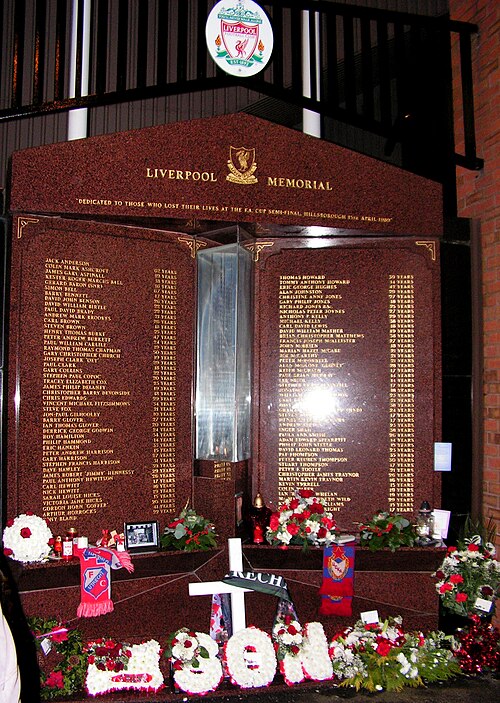
Once play began, the opening was anything but ceremonial. Everton won an immediate corner and Steve McMahon cleared after Steve Nicol misjudged Kevin Sheedy's delivery. Liverpool answered with a move as quick as it was precise. Peter Beardsley took the ball from Sheedy, Nicol drove it forward and McMahon's touch sent John Aldridge clear. Aldridge scored in the fourth minute, a release after his penalty miss in the previous year's final and his first Liverpool goal against Everton. Liverpool had seized control with their first sustained attack.[15][2][13]
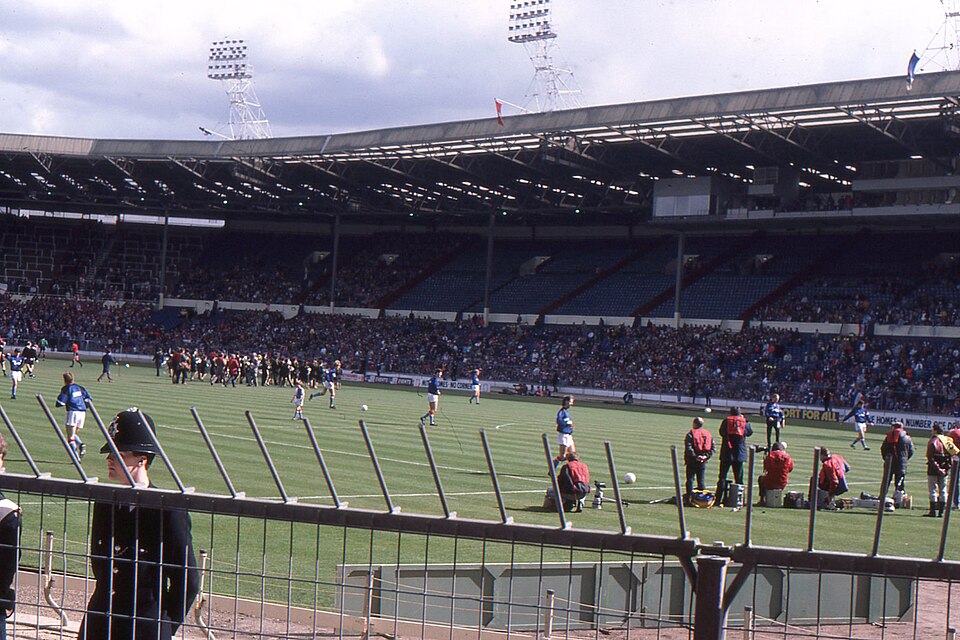
The lead should have grown. John Barnes supplied Aldridge with a flying header that went narrowly wide, then headed Ray Houghton's cross into Southall's hands. Beardsley was sent through soon after the interval and Southall blocked with his legs. Liverpool's midfield, driven by Ronnie Whelan and McMahon, kept recovering the ball, while the contemporary Sunday Times report judged Everton's final pass consistently poor. Yet Southall kept the contest within one moment of changing, and Liverpool began to manage the margin rather than finish the game.[15][6]
Colin Harvey changed its shape by replacing Paul Bracewell with Stuart McCall. Pat Nevin, Everton's clearest route around Liverpool, increasingly attacked the tiring Steve Staunton. In the final minute Nevin worked the ball into the danger area, Dave Watson's effort was pushed away by Bruce Grobbelaar and McCall drove in the loose ball. Everton had found an equaliser with their last attack of normal time. Dalglish then sent Barry Venison on for Staunton, a change the contemporary press thought had been delayed until the damage was done.[15][5][6]
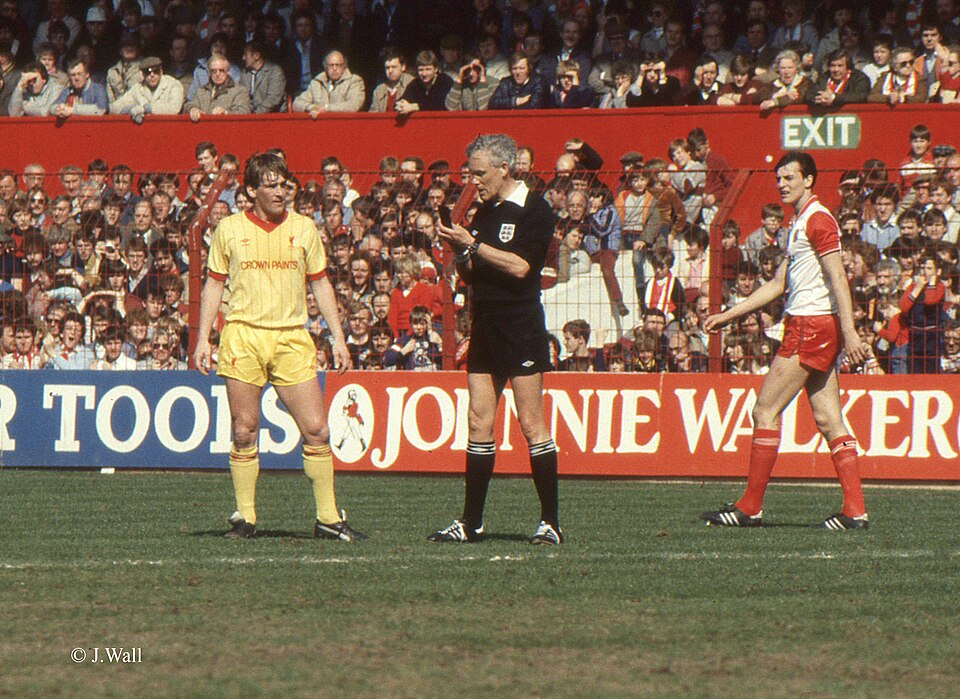
Extra time became a contest between the substitutes. Ian Rush, already introduced for Aldridge, spun onto Nicol's delivery and drove Liverpool ahead again. McCall answered with the finest Everton finish of the afternoon, controlling Hansen's wayward header and volleying into the corner from the edge of the area. The second parity lasted only moments. Barnes crossed from the left and Rush angled a header beyond Southall. Everton had recovered twice, but there was no third recovery, and Liverpool held a three-to-two lead to the end.[1][5][15]
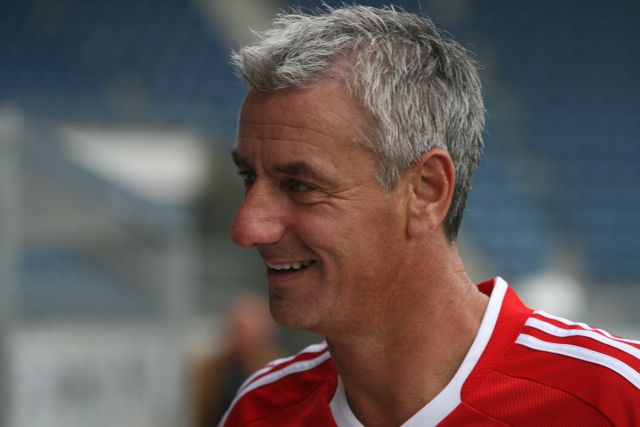
The sequence created an extraordinary statistical shape. Aldridge was the only starter to score; McCall and Rush came from the benches and supplied the remaining four goals. The Football Association records McCall as the first substitute to score twice in an FA Cup final, with Rush matching him before extra time was over. This was not simply a late flurry. It was a final redirected by both managers' changes, with Harvey's first alteration rescuing Everton twice and Dalglish's first producing both Liverpool goals after normal time.[11][8][1]
For Dalglish, the cup could not be detached from the weeks before it. A later Liverpool interview records him choosing this victory as the most poignant highlight of his career because it displayed a club and a city holding together after Hillsborough. Colin Harvey's immediate response was equally revealing: his concern was that both teams had played and the crowd had watched in the right spirit. Liverpool's victory belonged to one side, but the testimony around it describes an afternoon that both halves of Merseyside had carried.[3][5][4]
There was little time for Liverpool to absorb it. The Sunday Times called this the club's sixth fixture in seventeen days and warned that the extra half-hour might damage a league challenge still alive. Six days later Arsenal won at Anfield and took the championship in the final match. Everton, meanwhile, had now lost two Wembley finals in the space of three weeks, the other an extra-time Full Members' Cup defeat by Nottingham Forest. The FA Cup was therefore both a cathartic peak and one part of an exhausting end to a season transformed by disaster.[15][17][9]
How the match unfolded
- before kick-offLiverpool and Everton wear black armbands, the crowd observes a silence for those killed at Hillsborough and Gerry Marsden leads Wembley in You'll Never Walk Alone.[1][13][8]
- 4'Peter Beardsley wins the ball from Kevin Sheedy, Steve Nicol sends it forward and Steve McMahon's touch releases John Aldridge, who finishes beyond Neville Southall for Liverpool's early lead.[15][1][8]
- 59'Everton introduce Stuart McCall for Paul Bracewell. LFCHistory's elapsed-minute log labels the change 58.[8][6][15]
- 73'Kenny Dalglish sends Ian Rush on for Aldridge. The conventional match table gives 73; LFCHistory's elapsed-minute log gives 72.[8][6][16]
- 78'Everton make their second change, Ian Wilson replacing Kevin Sheedy. The contemporary and elapsed-minute tables label it 77.[8][6][15]
- 89'Pat Nevin attacks Liverpool's tiring left side and Dave Watson's effort is pushed loose by Bruce Grobbelaar. McCall drives in the rebound to force extra time.[15][1][5]
- 91'Barry Venison replaces the exhausted Steve Staunton as extra time begins.[8][6][15]
- 95'Rush controls Steve Nicol's ball, spins and shoots past Southall to restore Liverpool's lead. LFCHistory labels the goal 94 on its elapsed-minute clock.[8][6][1]
- 102'McCall controls Alan Hansen's misdirected header and volleys past Grobbelaar from the edge of the area for his second equaliser.[8][6][5]
- 104'John Barnes crosses from the left and Rush angles a header beyond Southall for the winning goal. LFCHistory's elapsed-minute log labels it 103.[8][6][1]
- after extra timeLiverpool win 3-2. Contemporary reporting records pitch incursions after the goals and says Liverpool were unable to complete a lap of honour.[16][1][5]
Match facts
- Date
- Saturday 20 May 1989
- Venue
- Wembley Stadium, London
- Attendance
- 82,80082,800 is printed by the contemporary Sunday Times match table and the Liverpool, Everton and 11v11 match archives. RSSSF alone gives 82,500, so that minority figure is retained in uncertainties rather than silently discarded.[15][8][5][10]
- Half-time
- 1-0
- Competition
- 1988-89 FA Cup
Where they played
Both sides as they lined up. Choose any player to read what they did in this final.
Select a shirt for that player's note.
Route to the final
Liverpool
- Third round: Carlisle United (a) won 3-0
- Fourth round: Millwall (a) won 2-0
- Fifth round: Hull City (a) won 3-2
- Quarter-final: Brentford (h) won 4-0
- Semi-final: Nottingham Forest (Old Trafford) won 3-1
Everton
- Third round: West Bromwich Albion (a) drew 1-1, replay (h) won 1-0
- Fourth round: Plymouth Argyle (a) drew 1-1, replay (h) won 4-0
- Fifth round: Barnsley (a) won 1-0
- Quarter-final: Wimbledon (h) won 1-0
- Semi-final: Norwich City (Villa Park) won 1-0
Line-ups
Liverpool · 4-4-1-1
- Bruce Grobbelaar Goalkeeper. Pushed Dave Watson's late effort into Stuart McCall's path for Everton's first equaliser
- Steve Nicol Right back. His forward pass began the opening goal and his delivery set up Ian Rush's first
- Alan Hansen Centre back. His misdirected header fell to McCall for Everton's extra-time equaliser
- Gary Ablett Centre back. Stopped Tony Cottee during Everton's bright opening
- Steve Staunton Left back. Tired late while marking Pat Nevin and was replaced as extra time began
- Ray Houghton Right midfield. Kept Liverpool's tempo high as Everton sat deeper
- Ronnie Whelan Central midfield and captain
- Steve McMahon Central midfield. Supplied the final touch that released John Aldridge for the opening goal
- John Barnes Left midfield. Crossed for Ian Rush's winning header
- Peter Beardsley Played behind the striker. Regained possession from Kevin Sheedy in the move for Liverpool's opener
- John Aldridge Centre forward. Scored after four minutes and made way for Ian Rush
Everton · 4-4-2
- Neville Southall Goalkeeper. Made repeated saves as Liverpool pushed for a larger lead
- Neil McDonald Right back
- Kevin Ratcliffe Centre back and captain
- Dave Watson Centre back. His late shot was pushed out for Stuart McCall's first equaliser
- Pat Van Den Hauwe Left back
- Pat Nevin Right midfield. His late work against Steve Staunton helped create the first equaliser
- Trevor Steven Central midfield
- Paul Bracewell Central midfield. Replaced by Stuart McCall during the second half
- Kevin Sheedy Left midfield. Replaced by Ian Wilson late in normal time
- Tony Cottee Centre forward
- Graeme Sharp Centre forward
Trivia and detail
- Liverpool's first three ties in the competition were all away from home: Carlisle United, Millwall and Hull City.[1][7]
- Everton's last three wins on the route were all by the only goal, against Barnsley, Wimbledon and Norwich City.[9]
- Kenny Dalglish stressed that the winners were larger than the Wembley team: thirteen Liverpool players collected cup-final medals on the day, while twenty-three players had contributed during the campaign.[16]
- The Everton Encyclopedia describes this as the club's eleventh Wembley appearance in five years.[5]
- Ian Rush had also scored twice against Everton in the 1986 FA Cup final. His second brace against the same opponents gave him four goals across the two Merseyside finals.[1][13]
- The contemporary Sunday Times report credited Rush's winning header with taking him to twenty-one goals in Merseyside derbies, ahead of the nineteen it attributed to Dixie Dean.[15]
- Neville Southall did not initially climb the Wembley steps with his team-mates because he was so upset by the defeat; the contemporary Daily Mirror reported that officials gave him his runners-up medal later.[16]
- The FA's history of red-versus-blue finals records that Everton's loss here was the third in a sequence of final defeats, after Manchester United in 1985 and Liverpool in 1986.[12]
- Liverpool's official route summary lists John Aldridge as the club's leading FA Cup scorer that season with six; Barnes, McMahon and Rush each had three, and Beardsley had two.[1]
How well do you know the 1989 final?
Five questions. Every answer is sourced from the material on this page.
-
Who scored Liverpool's opening goal?
-
Which Everton substitute equalised twice?
-
Who captained Liverpool at Wembley?
-
Who crossed for Ian Rush's winning header?
-
How was the final decided?
What is not settled
Honesty matters more than tidiness. These details are contested or unrecorded, and we have not guessed at them:
- Goal and substitution minute labels differ by source and clock convention. The record uses the conventional 95 and 104 for Ian Rush, against 94 and 103 in LFCHistory's elapsed-minute log. Stuart McCall's second is 102 in 11v11 and LFCHistory but 101 in a contemporary Sunday Times table.
- The attendance is 82,800 in the contemporary Sunday Times match table, LFCHistory, 11v11 and the Everton Encyclopedia. RSSSF alone prints 82,500. The majority figure is used and the conflict is retained.
- The precise form of the silence is reported differently. Most later match accounts place it before kick-off, while one first-person spectator account recalls an interruption during it. The record claims only that Wembley observed a silence, not its exact length.
- Liverpool's shape is reconstructed as 4-4-1-1 from the named roles, with Peter Beardsley behind John Aldridge. The contemporary Sunday Times table prints 4-4-2 and Transfermarkt also offers 4-4-1-1. Everton's 4-4-2 is consistently described.
- The death toll known on the day was 95. It rose later as two more people died from their injuries; modern official and BBC accounts therefore use 97. The page does not retrofit the modern total into quotations or contemporary reporting.
- No free photograph taken at the final was located on Wikimedia Commons. Every proposed image is explicitly captioned as a later portrait, a nearby-period stadium view or a later memorial photograph.
- Official Liverpool highlights were confirmed by YouTube oEmbed but have not yet passed the project's browser playback and rightsholder ledger, so the record remains video state none.
How we know
Every claim on this page is tied to a numbered source below. These are the contemporary records behind it, each one fetched and matched word for word before publication rather than taken on trust:
- Official club retrospective, 12 May 2022; match narrative, route and Dalglish reaction · Liverpool FC
- Official club retrospective, 21 October 2017 · Liverpool FC
- Official club interview, 9 August 2017; lines on the 1989 final and Hillsborough · Liverpool FC
- First-person account by Everton supporter Ian Collins, including memories of the final · Liverpool FC
- Match record, Everton XI, attendance, narrative and Colin Harvey reaction · Everton Encyclopedia
- FA history of cup substitutes; McCall and Rush in the 1988-89 final · The Football Association
- FA historian David Barber on Everton's sequence of final defeats · The Football Association
- BBC archive highlights synopsis, 15 January 2015 · BBC Sport
- Reports published after the final, including match table, lineups, attendance and narrative · The Times and The Sunday Times, archived by LFChistory.net
- Contemporary final reaction, Dalglish interview and Wembley aftermath · Daily Mirror, archived by LFChistory.net
- Official club retrospective on the league decider at Anfield, 26 May 1989 · Arsenal FC
Where a primary record and a modern account disagree, we show both rather than choosing the tidier number.
Sources
- The FA Cup final where football was secondary · Liverpool FC
- Beating Everton at Wembley in 1989 · Liverpool FC
- Kenny Dalglish: What does LFC mean to me? Everything · Liverpool FC
- Hillsborough: An Evertonian perspective · Liverpool FC
- Everton v Liverpool, 1988-89 · Everton Encyclopedia
- Everton, 20 May 1989 · LFChistory.net
- Liverpool in the FA Cup - season by season · LFChistory.net
- Liverpool v Everton, 20 May 1989 · 11v11
- Everton's record in 1988-89 · Everton Results
- England - FA Cup Finals 1946-2000 · RSSSF
- Who will benefit from Emirates FA Cup quarter-final rule change? · The Football Association
- Classic Reds v Blue FA Cup Finals · The Football Association
- FA Cup archive: Liverpool v Everton, 1989 final · BBC Sport
- The FA Cup's 50 Greatest Moments - A city united · BBC Sport
- Times and Sunday Times reports: Liverpool 3 Everton 2 · The Times and The Sunday Times, archived by LFChistory.net
- Daily Mirror, Monday 22 May 1989, page 31 · Daily Mirror, archived by LFChistory.net
- Rocky Seven - Anfield 1989 · Arsenal FC