1991-92 FA Cup · The Final
1992 FA Cup Final: Liverpool 2-0 Sunderland
The familiar 2-0 score conceals a final Sunderland controlled until one touchline switch gave a returning twenty-year-old the mismatch that decided it.
Second Division Sunderland made the better first-half chances, but moving Steve McManaman to the right transformed a wet Wembley final and gave Liverpool their fifth FA Cup.
Saturday 9 May 1992 · Wembley Stadium
What you will not find elsewhere
Ronnie Moran's proud walk into an unfamiliar role
With Graeme Souness recovering from heart surgery, Ronnie Moran led Liverpool out at Wembley. Moran remembered the responsibility in personal terms: "I marched out with the side and it was a very proud moment for me." His verified recollection turns an unusual touchline arrangement into a first-person part of the final's record.[6]
The two goal times each differ by one minute because the sources label the clock differently
Liverpool's official history and LFCHistory label Michael Thomas's opener 47 and Ian Rush's second 67. The contemporary reports describe Thomas's strike as the second minute after the restart or the 46th minute, while the Guardian compilation prints Rush at 68 and the Daily Mirror calls the move the 67th minute. The football is not in dispute. These are elapsed-minute and ordinal-minute labels applied to the same events, plus the familiar boundary ambiguity of a live clock. This page uses 47 and 67 in its structured timeline and preserves the alternative wording instead of pretending every archive agrees.[1][6][7][8]
Liverpool needed eight matches just to reach the final
Liverpool played eight ties before facing Sunderland: wins over Crewe Alexandra and Aston Villa, paired matches against Bristol Rovers and Ipswich Town, then two 120-minute draws with Portsmouth before advancing on penalties. Sunderland needed seven matches because West Ham United and Chelsea also forced replays. The familiar five-round route therefore became an eight-match Liverpool campaign and a seven-match Sunderland campaign before Wembley was added.[2][3][10]
Sunderland were initially handed the winners' medals
The presentation contained an error usually lost beneath the scoreline. A contemporary Guardian report says Sunderland's players were given winners' medals, and Liverpool's own history of its cup-lifting captains confirms the mix-up. The standard final summary records that the players corrected the medals on the pitch. The medal presentation was wrong; Wright still received the trophy as Liverpool's winning captain.[7][4][14]
The footage
The match report
The rain had already shaped this final before either side did. Wembley was saturated after the wettest lead-in to the showpiece since 1950, and quick turns became uncertain on the greasy surface. Sunderland, the Second Division outsiders, adapted first. Malcolm Crosby's side squeezed Jan Molby deep, surrounded Steve McManaman on Liverpool's left and denied Ian Rush and Dean Saunders the service expected of the favourites. The opening half was not a brave underdog merely surviving. Sunderland had the more coherent plan and the better chances.[7][1]
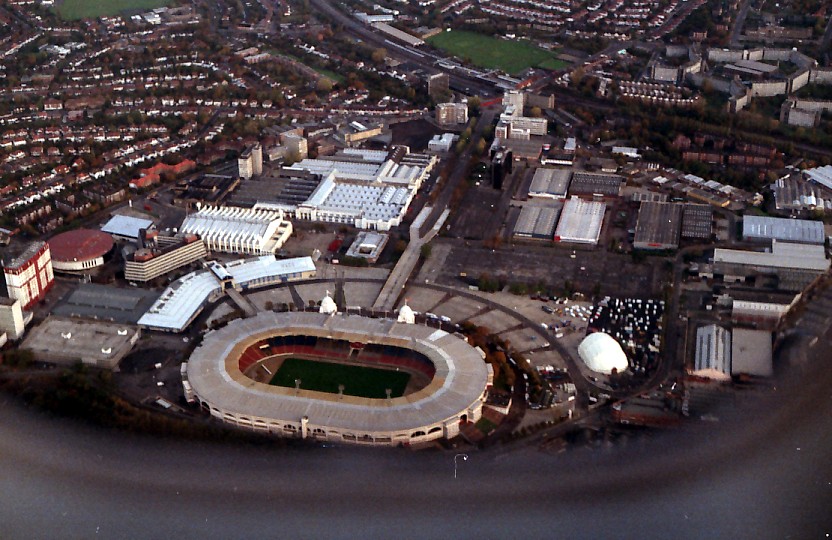
Their road to Wembley had earned that confidence. Sunderland beat Port Vale and Oxford United, then survived replays against West Ham United and Chelsea before John Byrne's semi-final winner against Norwich City. Liverpool's route was longer and less convincing: Bristol Rovers and Ipswich Town each forced a replay, while Portsmouth held them through two full extra-time semi-finals before a shootout finally separated the teams. One finalist arrived from a relegation struggle; the other had endured an unusually difficult cup campaign by its own standards.[10][2][3][11]
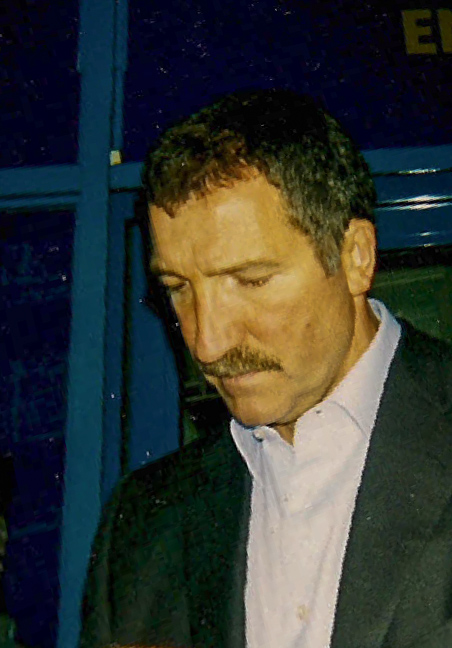
Liverpool's preparations carried another strain. Graeme Souness had undergone major heart surgery after the first Portsmouth match and returned to the Wembley bench with the club doctor beside him. Ronnie Moran led the players out and handled the match-day coaching. John Barnes withdrew with a thigh injury on the Friday, so McManaman returned after a month out with damaged cartilage. The replacement was only twenty and the youngest player on the pitch, yet the final would turn on Moran finding the right place for him rather than on Sunderland exposing his lack of recent football.[1][6][7][8]
Liverpool might have led almost immediately when Houghton and Molby released Thomas through the centre, but Norman left his line quickly and the midfielder lifted his finish over. Sunderland's clearest opening was better. Ball headed a cross down to Byrne, unmarked at close range, and the forward who had carried their scoring through the competition miscued. Bracewell then had an effort turned wide off Wright, while Davenport went down under Jones's challenge. Their pressure unsettled Liverpool without producing the goal that their first-half authority deserved.[7][1]
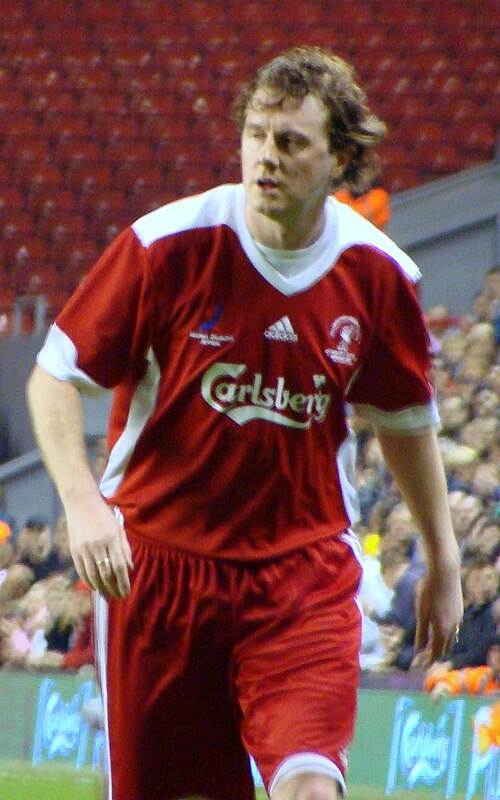
Moran's decisive adjustment began before the interval. McManaman moved from the left, where David Rush and Owers had crowded him, to attack Rogan on Sunderland's other flank. His first dangerous incursion brought a penalty appeal when Bracewell caught his trailing leg. His next brought the goal. Hemmed in near the right edge of the area, McManaman feinted away from the converging defenders and used the outside of his boot to lift the ball into Thomas's path. The switch did not simply improve Liverpool. It removed the mechanism that had kept their most inventive runner quiet.[7][2][1]
Thomas met the bouncing delivery with a controlled swivel and an angled half-volley. Norman touched it but could not divert it from the far corner. The scorer's Liverpool story made the moment irresistibly neat: his late goal for Arsenal at Anfield had denied the club the league championship in 1989, and now he had supplied a Wembley breakthrough for them. More important on the afternoon was the effect on Sunderland. Their compact first-half certainty disappeared, Molby gained room to pass and Liverpool began finding gaps through the middle.[1][2][7][6]
Norman tipped a dipping Molby effort over and Saunders headed against the bar before the second goal converted Liverpool's control into safety. Molby and Houghton moved the ball forward, Saunders attacked a retreating back line and found Thomas. A late challenge knocked the ball away as Thomas tried to shift it onto his left foot, but it rolled perfectly for Rush to guide into the corner. Sunderland made both substitutions and kept working, yet their forwards were isolated and Liverpool could now take the pace out of the match.[7][2][8][6]
The 2-0 finish gave Liverpool their fifth FA Cup and Souness the only trophy of his Anfield management. Wright received the cup after a final whose central lesson was tactical rather than romantic: Sunderland were not overwhelmed by status, but by a matchup they could no longer control once McManaman changed wings. He was named man of the match after returning from injury to create the opener. Sunderland had shown why they reached Wembley; Liverpool's greater depth of invention decided why only one side climbed the steps as winners.[1][4][6][9]
How the match unfolded
- 2'Ray Houghton and Jan Molby release Michael Thomas beyond Sunderland's square defence. Tony Norman comes out quickly and Thomas lifts his shot over the bar.[7]
- 14'Kevin Ball heads a cross down to the unmarked John Byrne, but Sunderland's leading cup scorer snatches at the loose ball and miscues.[7]
- later in the first halfPaul Bracewell's effort is deflected wide by Mark Wright and Peter Davenport is challenged by Rob Jones inside the Liverpool area. Sunderland cannot turn their stronger spell into a goal.[7][1]
- seconds before half-timeBracewell catches Steve McManaman's trailing leg as the winger drives into the Sunderland area. Contemporary reports regarded it as a stronger penalty appeal than Sunderland's earlier claim, but Philip Don lets play continue.[7]
- 47'McManaman escapes down the right and scoops the ball into Thomas's path. Thomas swivels onto the bouncing pass and drives an angled half-volley beyond Norman for the opening goal.[1][2][6][7]
- after Liverpool's opening goalLiverpool take control. Norman tips Molby's dipping shot over the bar and Dean Saunders heads against the crossbar.[7]
- 67'Molby and Houghton release Saunders against a retreating defence. Thomas gathers Saunders's pass, loses the ball under a challenge and Ian Rush sweeps it into the corner to double the lead.[1][2][6][8]
- 68'Sunderland make their first change, Paul Hardyman replacing David Rush.[6][7]
- 77'Warren Hawke comes on for Sunderland. The contemporary Guardian compilation lists Gordon Armstrong as the player withdrawn; the modern LFCHistory timeline gives Brian Atkinson and labels the change one minute later.[6][7]
- full-timeLiverpool close out a 2-0 victory. Captain Mark Wright climbs the Wembley steps and lifts the club's fifth FA Cup.[1][4][9]
Match facts
Where they played
Both sides as they lined up. Choose any player to read what they did in this final.
Select a shirt for that player's note.
Route to the final
Liverpool
- Third round: Crewe Alexandra (a) won 4-0
- Fourth round: Bristol Rovers (a) drew 1-1, replay (h) won 2-1
- Fifth round: Ipswich Town (a) drew 0-0, replay (h) won 3-2
- Quarter-final: Aston Villa (h) won 1-0
- Semi-final: Portsmouth (Highbury) drew 1-1 after extra time, replay (Villa Park) drew 0-0 after extra time and won 3-1 on penalties
Sunderland
- Third round: Port Vale (h) won 3-0
- Fourth round: Oxford United (a) won 3-2
- Fifth round: West Ham United (h) drew 1-1, replay (a) won 3-2
- Quarter-final: Chelsea (a) drew 1-1, replay (h) won 2-1
- Semi-final: Norwich City (Hillsborough) won 1-0
Line-ups
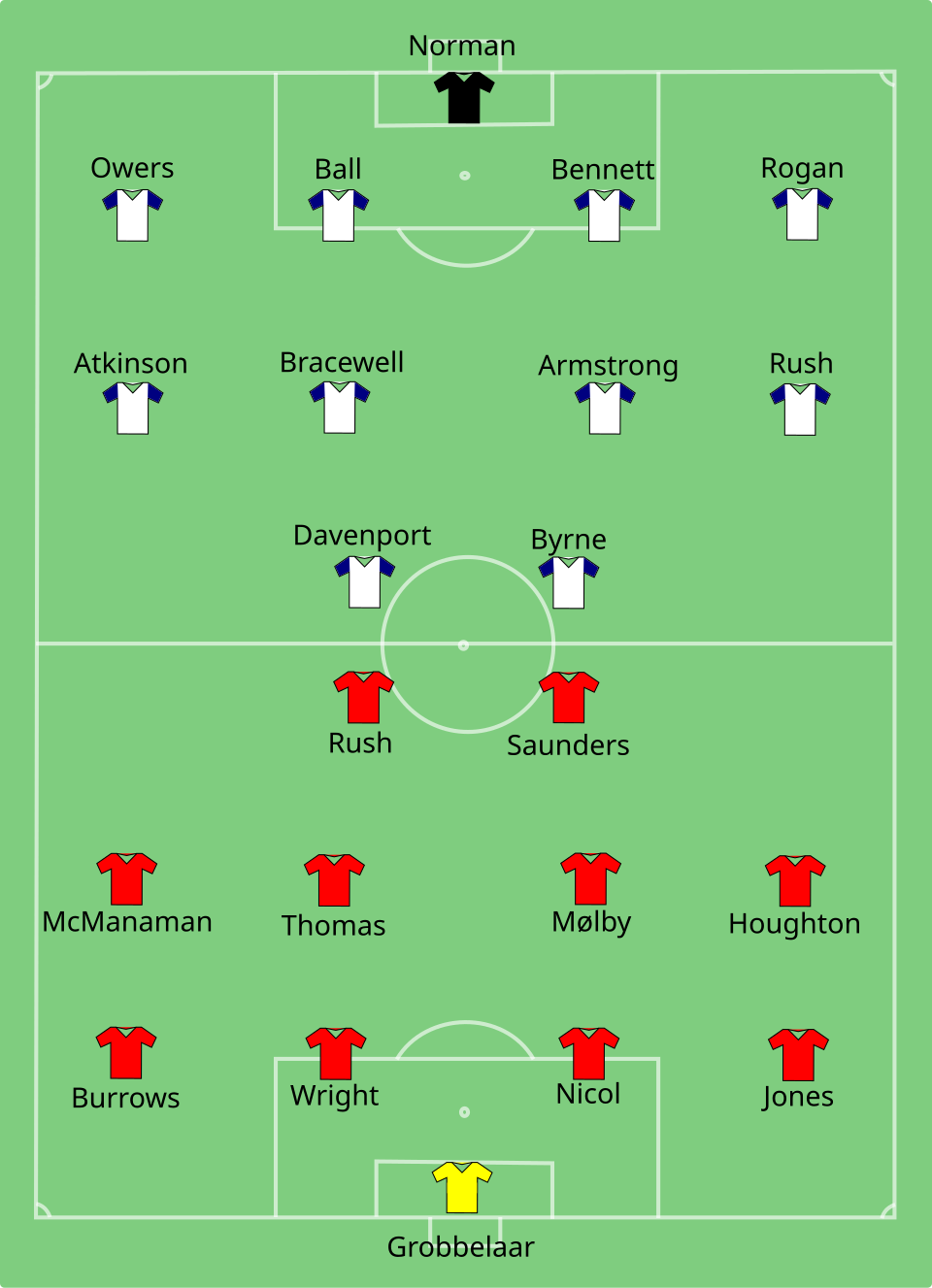
Liverpool · 4-4-2
- Bruce Grobbelaar Goalkeeper
- Rob Jones Right back. Challenged Peter Davenport during Sunderland's strongest spell
- Steve Nicol Centre back
- Mark Wright Centre back and captain. Lifted the FA Cup
- David Burrows Left back
- Ray Houghton Right midfield. Combined with Molby in the move that led to the second goal
- Jan Molby Central midfield. Controlled the second half after being pressed deep in the first
- Michael Thomas Central midfield. Scored the opener and was involved in the second goal
- Steve McManaman Left midfield before switching right. Created the opener and was named man of the match
- Dean Saunders Forward. Hit the crossbar and began the decisive second-goal attack
- Ian Rush Forward. Scored Liverpool's second goal
Sunderland · 4-4-2
- Tony Norman Goalkeeper. Rushed out to deny Thomas early and got a hand to the opening goal
- Gary Owers Right back. Helped contain McManaman while the winger remained on Liverpool's left
- Kevin Ball Centre back. Headed the ball down for Byrne's first-half chance
- Gary Bennett Centre back
- Anton Rogan Left back. Faced McManaman after Liverpool switched the winger
- Brian Atkinson Right midfield
- Paul Bracewell Central midfield and captain. Pressed Molby and had a first-half effort deflected wide
- Gordon Armstrong Central midfield. Challenged as McManaman created the opening goal
- David Rush Left midfield. Helped contain McManaman before the tactical switch
- Peter Davenport Forward. Involved in a first-half penalty appeal
- John Byrne Forward. Had Sunderland's clearest chance after scoring in every earlier round
Trivia and detail
- John Byrne scored in every round of Sunderland's run before the final. His first-half miscue at Wembley prevented him becoming only the tenth player to score in every round of one FA Cup campaign.[7]
- Mark Wright had been appointed Liverpool captain in December 1991 after a League Cup defeat at Peterborough United. Five months later he lifted the FA Cup at the end of his first season with the club.[4]
- John Barnes and Steve McManaman finished as Liverpool's joint leading scorers in that FA Cup campaign with three goals each. Dean Saunders and Michael Thomas scored two apiece, while Rush's only goal in the run came in the final.[2][8]
- With Liverpool already two goals ahead, Ray Houghton attempted an audacious lob from roughly forty yards. The ball bounced over Tony Norman's crossbar.[7]
- The trophy presented in 1992 was a new replica FA Cup made by Toye, Kenning and Spencer of Birmingham.[11]
- Paul Bracewell captained Sunderland in the fourth FA Cup final defeat of his career, after losing three finals as an Everton player.[13]
- Sunderland were the first team from the second tier to reach the FA Cup final since Queens Park Rangers in 1982.[14]
- Sunderland's starting XI was made up entirely of players born in the British Isles, the most recent such FA Cup final side according to the standard final summary.[14]
- Rush's Wembley finish was his first goal of that season's FA Cup but his fifth goal across FA Cup finals, overtaking Stan Mortensen's final-scoring record.[8][7][5]
How well do you know the 1992 final?
Five questions. Every answer is sourced from the material on this page.
-
Who scored Liverpool's opening goal?
-
Which tactical change transformed Liverpool's attack?
-
Who missed Sunderland's clearest first-half chance?
Answer
John Byrne. Ball headed the ball down to Byrne, who was unmarked but miscued his attempt.[7]
-
Who captained Liverpool and lifted the cup?
-
How did Liverpool finally eliminate Portsmouth in the semi-final?
What is not settled
Honesty matters more than tidiness. These details are contested or unrecorded, and we have not guessed at them:
- Goal-minute notation differs by one across the sources. Liverpool's official history and LFCHistory label Thomas 47 and Rush 67. The contemporary Guardian compilation prints Thomas 47 and Rush 68, while the Daily Mirror calls the same goals the 46th and 67th minutes. This record uses 47 and 67 as elapsed-minute labels and preserves the disagreement in the originality section.
- Sunderland's second substitution is disputed. The contemporary Guardian compilation lists Warren Hawke for Gordon Armstrong at 77. LFCHistory lists Hawke for Brian Atkinson at 78. The record follows the contemporary team line, but the timeline and substitute list state the conflict explicitly.
- The formations are reconstructed as 4-4-2 from the confirmed XIs and contemporary descriptions of roles. No consulted source publishes a formation diagram, so positional ordering is best-supported reconstruction rather than an official tactical sheet.
How we know
Every claim on this page is tied to a numbered source below. These are the contemporary records behind it, each one fetched and matched word for word before publication rather than taken on trust:
- Match reports published after the final, compiled by Graeme Riley · The Times and The Guardian, archived by LFCHistory.net
- Harry Harris, pages 30-31, 11 May 1992 · Daily Mirror, archived by LFCHistory.net
Where a primary record and a modern account disagree, we show both rather than choosing the tidier number.
Sources
- No.7: Thomas secures FA Cup joy for the Reds in 1992 · Liverpool FC
- Thomas and Rush end a tough campaign on a high at Wembley · Liverpool FC
- Watch How The Cup Was Won: 1992 on LFCTV · Liverpool FC
- Mark Wright · Liverpool FC
- Ian Rush · Liverpool FC
- Liverpool 2-0 Sunderland, 9 May 1992 · LFCHistory.net
- Contemporary reports: Sunderland clipped by wings and Liverpool overpower and overawe · The Times and The Guardian, archived by LFCHistory.net
- Daily Mirror coverage of Liverpool's FA Cup win · Daily Mirror, archived by LFCHistory.net
- England - FA Cup Finals 1946-2000 · Rec.Sport.Soccer Statistics Foundation
- England - FA Challenge Cup 1991-1992 · Rec.Sport.Soccer Statistics Foundation
- 1991-92 season final football tables · English Football League Tables
- 1992 FA Cup Final: Liverpool vs Sunderland · FA Cup Finals
- Paul Bracewell · Everton Encyclopedia
- 1992 FA Cup final · Wikipedia