1989-90 FA Cup · The Final
1990 FA Cup Final: Manchester United 3-3 Crystal Palace (won after a replay)
Wright's final, Martin's replay
Treating the draw and replay as separate tactical matches shows how one substitution transformed Palace on Saturday, while one goalkeeper change and one left-back run transformed United on Thursday.
Ian Wright came from the bench to take Crystal Palace within seven minutes of the cup, but Mark Hughes forced a replay and Lee Martin won it for Manchester United five days later.
Saturday 12 May 1990 · Wembley Stadium
What you will not find elsewhere
Ian Wright remembered living the FA Cup fairytale
Palace's starting XI maps to a 4-5-1, with Mark Bright alone up front. Introducing Ian Wright changed the same personnel into a 4-4-2 and produced two goals from the substitute. Wright later captured how the transformation felt: "At the time, the match felt like one of those FA Cup fairytale stories out on the pitch."[1][15][9]
The first-match crowd is not uniformly recorded
Transfermarkt and one secondary final page give the first-match attendance as 78,000. Three independent records - 11v11, RSSSF and MUFCInfo - give 80,000, the same figure all three use for the replay. This page follows the broader consensus while preserving the lower figure as a documented disagreement, rather than presenting a disputed crowd as universally settled.[1][3][4][14]
Twenty-one starters stayed; the one change kept the clean sheet
Compare the two starting line-ups and only one place changes across both clubs: Sealey replaces Leighton in United's goal. The other 21 starters return. Palace again introduce Wright, but Sealey saves from Gray after the resulting corner and United win without conceding. The replay's decisive selection was therefore not an attacking reshuffle but the only altered name on either starting sheet.[1][2][3][15]
The cup mattered enormously, but the automatic-sacking story is not established
Retellings often make the cup run a single-match employment verdict on Ferguson. ESPN records the pressure but also notes Ferguson's own account that directors had assured him his position was secure. The defensible claim is that the replay delivered his first United trophy and changed the club's trajectory, not that every defeat in the run carried a documented dismissal order.[18][12]
The footage
The match report
Manchester United and Crystal Palace reached Wembley by opposite kinds of route. United played every round away from Old Trafford, survived a 3-3 semi-final with Oldham and needed extra time in the replay. Palace were drawn at home against three lower-division opponents, then squeezed past Fourth Division Cambridge before overturning Liverpool 4-3 after extra time. That semi-final mattered beyond its score: Palace had lost 9-0 at Anfield earlier in the season, so Villa Park established that this promoted side could recover against the champions rather than merely resist them.[6][7][11][12]
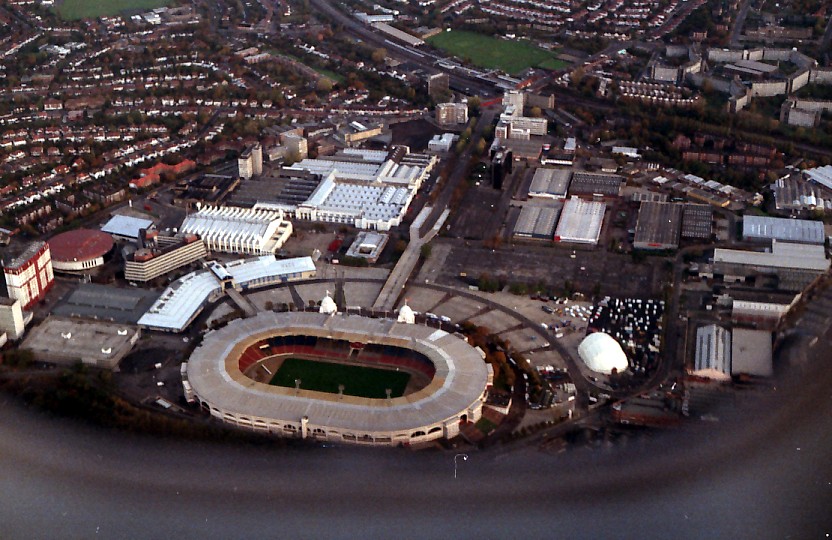
Palace began the final in the same cautious 4-5-1 used against Liverpool. Mark Bright worked alone ahead of five midfielders, while Wright waited on the bench after breaking his leg twice during the campaign. United's 4-4-2 offered more possession but not an early lead. Barber's free-kick found O'Reilly, whose header glanced off Pallister and looped over Leighton. McClair missed two chances before Robson met Webb's cross, with another deflection - this time from Pemberton - helping the ball past Martyn. The score was level at half-time, but neither goal had travelled cleanly from head to net.[15][9][14]
United improved after the interval and Hughes punished a blocked clearance with a low volley. McClair then seemed certain to stretch the lead until Thorn cleared from the goal line. Coppell answered by removing Barber and sending on Wright beside Bright, turning Palace into a 4-4-2. The effect was immediate. Bright fed the substitute, who turned through Phelan and Pallister and finished beneath Leighton with his first touch. Wright had not played a senior match for almost two months, yet one intervention had changed both the score and the shape of the final.[15][9][13]
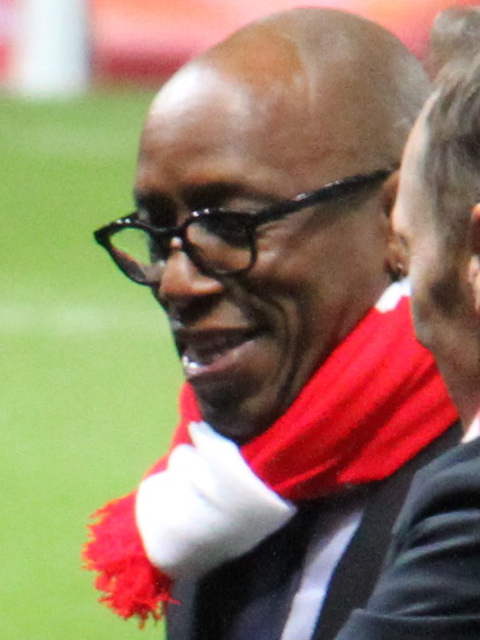
The first match reached extra time at 2-2, then Wright struck again almost at once. Salako floated a cross to the far post and the striker volleyed Palace ahead. United lost Pallister to an ankle problem and used Robins in a makeshift chase, while Palace dropped narrow around the lead. Martyn's late save from Ince looked capable of preserving it. Instead Wallace released Hughes with seven minutes remaining, and the forward squeezed his second goal between O'Reilly and Martyn. After two hours and six goals, neither side had the cup, and Wembley was booked again for Thursday night.[1][15][10][12]
Ferguson's replay selection reduced a team decision to one brutal position. The ten outfield starters remained, but Sealey replaced Leighton in goal after the first match had exposed the goalkeeper's uncertainty. Sealey was on loan from Luton, and the arrangement had to be extended to keep him eligible. Palace retained their starting side yet appeared in unfamiliar yellow-and-black stripes, a colour scheme born from Thomas telling Coppell about an unbeaten youth team. One manager changed the last line of defence; the other changed a superstition. Only the first choice altered the football decisively.[3][14][10][13]
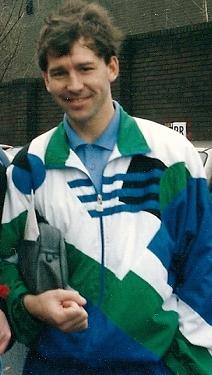
The replay discarded the first match's flow. Bright and Pardew were booked as Palace challenged aggressively, and the first clear chances came from set pieces. Gray drove one free-kick through the wall for Sealey to stop with his legs; Webb bent another into the side netting. United found more space after half-time. Shortly before the hour Webb carried play on the right and delivered across the back line. Martin, arriving from left back, controlled the ball and drove it high inside Martyn's near post. It was a defender's finish produced by a run Palace had not tracked.[15][14][2][5]
Coppell turned to Wright again, but repetition did not restore Saturday's freedom. The substitute forced a corner and the resulting scramble gave Gray a close-range effort, which Sealey saved sharply. Robson later headed against the crossbar at the other end. Palace's last opening fell to Wright from an angle too tight to exploit, and his shot entered the side netting. United had managed the replay without a substitution and without conceding. The final that produced six goals had been followed by one settled through positioning, contact and a single untracked surge from deep.[2][15][14]
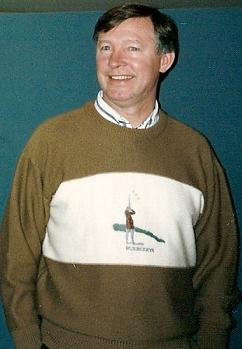
Robson lifted the cup for the third time as United captain, and Ferguson had his first major trophy in Manchester. The victory did not make every later success inevitable, nor does the evidence support the familiar claim that one defeat would automatically have cost him his job. What the two matches do establish is narrower and more interesting: United survived when Hughes answered Wright, then won when Ferguson replaced his goalkeeper and Martin abandoned left back at exactly the right moment. Palace left without the trophy, but their first final had revealed a team capable of twice leading United and forcing English football's showpiece into a second night.[8][12][18][17]
How the match unfolded
- 18'Gary O'Reilly heads Phil Barber's free-kick goalwards. The ball glances off Gary Pallister and loops beyond Jim Leighton to put Crystal Palace ahead.[1][14][12]
- before the equaliserBrian McClair passes up two presentable chances as Manchester United respond to falling behind.[15]
- 35'Bryan Robson meets Neil Webb's cross at the near post. His header takes a deflection from John Pemberton and beats Nigel Martyn for the equaliser.[1][14][15]
- 62'A Palace clearance is charged down and Mark Hughes drives a low right-footed volley into the net, putting United ahead.[1][14][15]
- shortly after United take the leadAndy Thorn clears McClair's attempt from the goal line and keeps Palace within one goal.[15]
- 69'Ian Wright replaces Phil Barber. Palace switch from their starting 4-5-1 to a two-striker shape beside Mark Bright.[1][9][15]
- 72'Wright scores with his first touch. Bright supplies the ball, Wright turns between Mike Phelan and Pallister, then slides his finish beneath Leighton.[1][9][13]
- 88'Lee Martin leaves with cramp and Clayton Blackmore replaces him as the first match approaches extra time.[1][14]
- 92'John Salako crosses to the far post and Wright volleys his second goal, restoring Palace's lead early in extra time.[1][9][12]
- 93'The injured Pallister makes way for Mark Robins, leaving United to chase the match with a depleted defence.[1][14]
- late in extra timePaul Ince forces a major save from Martyn while Palace defend narrowly around their lead.[15]
- 113'Danny Wallace releases Hughes, who angles his shot between O'Reilly and the advancing Martyn to make the final 3-3 and force a replay.[1][10][15]
The replay
Five days after the six-goal draw, the teams returned to Wembley for a colder and more confrontational replay. United changed only their goalkeeper, Palace changed their colours but not their starters, and Lee Martin's second-half run supplied the one goal that the first match had seemed least likely to produce.
- Date
- Thursday 17 May 1990
- Venue
- Wembley Stadium
Changes from the first match
- Les Sealey replaced Jim Leighton in goal; United's ten outfield starters were unchanged. Alex Ferguson dropped Leighton after the drawn match and selected Sealey, whose loan from Luton Town had been extended so he remained eligible.[3][14][13]
- Crystal Palace retained the same starting XI but wore a one-off yellow-and-black striped change strip. Captain Geoff Thomas had suggested colours in which a youth team of his had never lost, and Steve Coppell was superstitious about kits.[2][10]
- opening half-hourThe replay begins as a physical contest. Mark Bright is booked after colliding with Sealey, while Alan Pardew is booked for bringing down Ince.[15][8]
- Palace's first effort on targetJohn Salako tests Sealey as Palace register the first shot on target.[15]
- first halfBruce fouls Bright outside the penalty area. Gray drives the free-kick through United's wall and Sealey blocks it with his legs.[15][14]
- before half-timeWebb curls United's best first-half attempt into the side netting rather than beyond Martyn.[15][14]
- early second halfHughes reaches the Palace penalty area twice but cannot connect with McClair for a finish.[15]
- 59'Martin advances from left back to meet Webb's deep delivery, controls the ball and drives high past Martyn at the near post for the only goal.[2][5][14]
- 64'Wright replaces Barber. He immediately forces a corner as Palace seek another intervention from the striker who changed the first match.[2][15]
- after Wright entersSalako's corner creates a scramble and Gray's close-range attempt brings a reflex save from Sealey.[15]
- 79'David Madden replaces Salako for Palace's second and final substitution.[2]
- closing stagesRobson meets a United free-kick with an unmarked header, but the ball strikes the crossbar.[15][14]
- final Palace attackWright reaches a very tight angle and shoots into the side netting. The chance passes and United close out the replay.[15]
- full-timeRobson lifts the FA Cup after United's 1-0 win, giving Ferguson his first major trophy as Manchester United manager.[8][12][17]
Match facts
- Date
- Saturday 12 May 1990
- Venue
- Wembley Stadium, London
- Attendance
- 80,000The recorded attendance for the drawn first match is 80,000. Transfermarkt and one secondary final site print 78,000, but 11v11, RSSSF and the Manchester United match archive agree on 80,000.[1][3][4]
- Scorers
- Gary O'Reilly 18'
Bryan Robson 35'
Mark Hughes 62'
Ian Wright 72'
Ian Wright 92'
Mark Hughes 113'[1][3][4] - Half-time
- 1-1
- Competition
- 1989-90 FA Cup
Where they played
Both sides as they lined up. Choose any player to read what they did in this final.
Select a shirt for that player's note.
Route to the final
Manchester United
- Third round: Nottingham Forest (a) won 1-0
- Fourth round: Hereford United (a) won 1-0
- Fifth round: Newcastle United (a) won 3-2
- Quarter-final: Sheffield United (a) won 1-0
- Semi-final: Oldham Athletic (Maine Road) drew 3-3 after extra time, replay (Maine Road) won 2-1 after extra time
Crystal Palace
- Third round: Portsmouth (h) won 2-1
- Fourth round: Huddersfield Town (h) won 4-0
- Fifth round: Rochdale (h) won 1-0
- Quarter-final: Cambridge United (a) won 1-0
- Semi-final: Liverpool (Villa Park) won 4-3 after extra time
Line-ups
Manchester United · 4-4-2
- Jim Leighton Goalkeeper. Replaced by Les Sealey for the replay
- Paul Ince Right back in the starting shape before influencing midfield phases
- Steve Bruce Centre back
- Gary Pallister Centre back. Left with an ankle injury in extra time
- Lee Martin Left back. Left with cramp before extra time
- Mike Phelan Right midfield
- Bryan Robson Central midfield, captain and first-match scorer
- Neil Webb Central midfield. Crossed for Robson's equaliser
- Danny Wallace Left midfield. Released Hughes for the late equaliser
- Brian McClair Forward
- Mark Hughes Forward. Scored twice in the drawn match
Crystal Palace · 4-5-1
- Nigel Martyn Goalkeeper. Saved late from Paul Ince
- John Pemberton Right back. Robson's header deflected off him
- Gary O'Reilly Centre back. Scored the opening goal
- Andy Thorn Centre back. Cleared McClair's effort from the line
- Richard Shaw Left back
- Andy Gray Right-sided midfield before moving wider after Wright arrived
- Geoff Thomas Central midfield and captain
- Alan Pardew Central midfield
- Phil Barber Midfield. Replaced when Palace changed to two strikers
- John Salako Left midfield. Crossed for Wright's extra-time goal
- Mark Bright Lone starting forward. Supplied Wright's first goal
Trivia and detail
- The drawn match was the first FA Cup final played in front of an all-seater crowd; Wembley's remaining standing areas had been converted during the previous autumn.[1]
- O'Reilly's goals in the semi-final and final were his only two goals for Crystal Palace.[12]
- Palace's first-match starting XI is recorded by 11v11 as the last all-English lineup in an FA Cup final.[1][2]
- Martin scored only twice in his Manchester United career; the second was the replay winner.[16]
- The day after the drawn match, United completed a pre-arranged open-top bus tour of Manchester without the cup.[14]
- Twenty-five years later, captains Geoff Thomas and Bryan Robson reunited in their final shirts after both had experienced cancer, with Robson supporting Thomas's fundraising for Cure Leukaemia.[8]
- The same referee, Alan Gunn, handled both the Saturday final and the Thursday replay.[1][2][3]
- In the following season Palace finished third in the top flight, their best league placing, and returned to Wembley to beat Everton 4-1 in the Full Members' Cup final.[15][13]
- Both matches are recorded with identical attendances of 80,000 by 11v11 and RSSSF.[1][2][3]
How well do you know the 1990 final?
Five questions. Every answer is sourced from the material on this page.
-
Who scored the opening goal in the drawn first match?
-
Which substitute scored twice for Crystal Palace in the first match?
-
Who scored the only goal of the replay?
-
Which goalkeeper did Manchester United bring in for the replay?
-
Which team did Palace beat in the semi-final?
What is not settled
Honesty matters more than tidiness. These details are contested or unrecorded, and we have not guessed at them:
- The first-match attendance is 80,000 in 11v11, RSSSF and MUFCInfo, but Transfermarkt and an internal line on FA Cup Finals give 78,000. This record uses the three-source consensus and does not conceal the minority figure.
- The referee's given name appears as Alan in 11v11 and MUFCInfo, while some later references spell it Allan. Alan is used here because the two detailed match databases agree.
- The starting formations are reconstructed from the named positions and tactical descriptions. The first-match Palace 4-5-1 and its switch to 4-4-2 are explicitly described by Football365; United's 4-4-2 follows the XI and roles but no source-published formation diagram was found.
- The replay's winning move is described in two ways. FA Cup Finals says Webb crossed directly to Martin; Football365 says Webb found McClair, whose deep cross reached Martin. The record attributes the delivery to Webb, which is also how the standard final account records it, and leaves the disputed intermediate touch out.
- A detailed contemporary newspaper report for each match was not freely accessible. The timelines therefore combine official first-person retrospectives, later newspaper histories and three independent match databases rather than claiming contemporary minute-by-minute certainty.
How we know
Every claim on this page is tied to a numbered source below. These are the contemporary records behind it, each one fetched and matched word for word before publication rather than taken on trust:
- First-person recollections from Geoff Thomas and Bryan Robson · The Football Association
- Ian Wright interview, 15 May 2025 · Crystal Palace FC
- Geoff Thomas interview · Crystal Palace FC
- We Were There: the inside story of the 1990 FA Cup semi-final · Crystal Palace FC
Where a primary record and a modern account disagree, we show both rather than choosing the tidier number.
Sources
- Manchester United v Crystal Palace, 12 May 1990 · 11v11
- Manchester United v Crystal Palace, 17 May 1990 · 11v11
- England - FA Cup Finals 1946-2000 · Rec.Sport.Soccer Statistics Foundation
- Manchester United 3 v 3 Crystal Palace, 12 May 1990 · MUFCInfo
- 1990 FA Cup Final Replay line-up · MUFCInfo
- Manchester United 1989-1990 season results and statistics · MUFCInfo
- Crystal Palace match record: FA Cup 1990 · 11v11
- 25 years on: 1990 FA Cup final captains unite · The Football Association
- The greatest moment of my career - Voices of Wembley: Ian Wright · Crystal Palace FC
- Geoff Thomas: sheepskin coats, South London wit and imaginary trophies · Crystal Palace FC
- We Were There: the inside story of the 1990 FA Cup semi-final · Crystal Palace FC
- How the 1990 FA Cup changed Crystal Palace, Manchester United and Liverpool · The Guardian
- Crystal Palace's Cup final class of 1990 hope to inspire this year's model · The Guardian
- 1990 FA Cup Final: Manchester United vs Crystal Palace · FA Cup Finals
- FA Cup Final 1990 · Football365
- Goal of the Day: Martin v Crystal Palace · Manchester United FC
- Crystal Palace 0 United 1: 1990 FA Cup final replay highlights · Manchester United FC
- How Manchester United's history was forever altered by the 1990 FA Cup final · ESPN