Konate Racist Abuse: Liverpool Condemn Vile Attacks
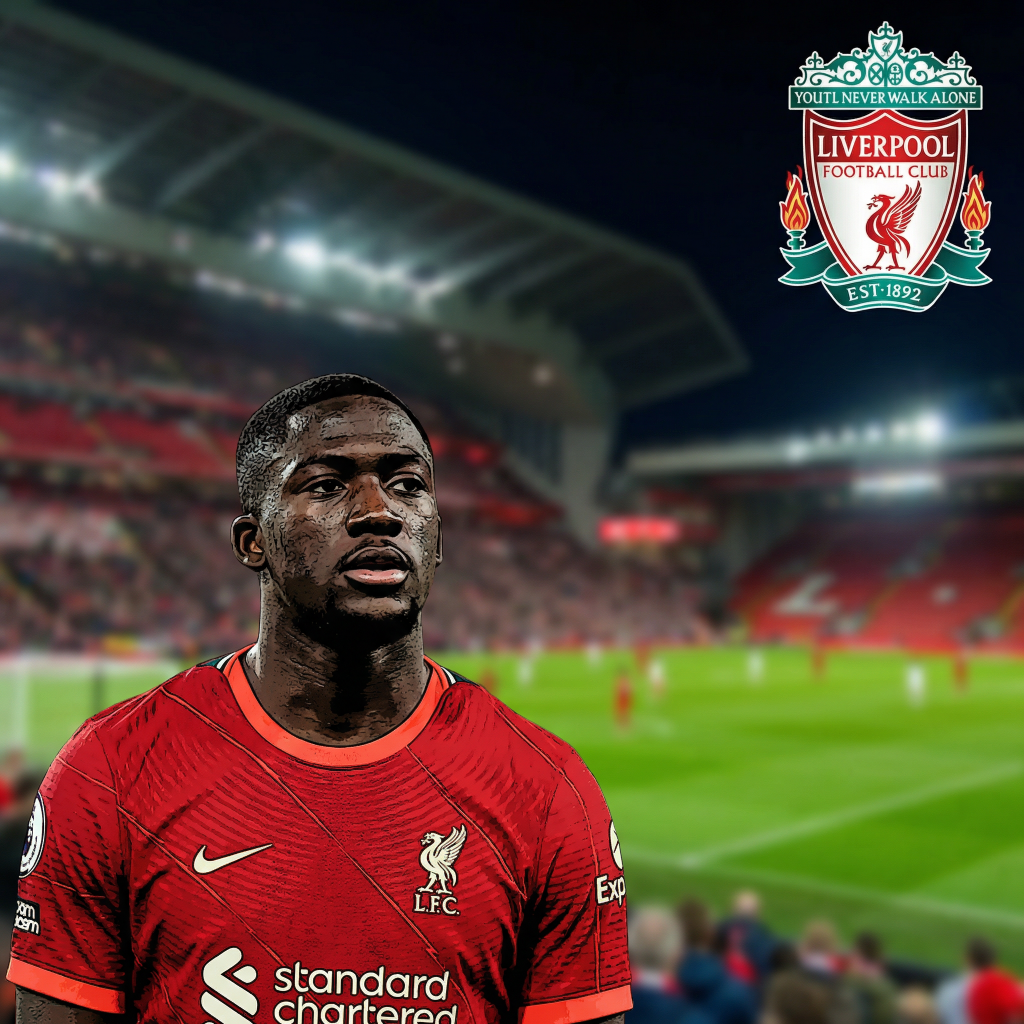
This piece examines the racist abuse directed at Ibrahima Konate following Liverpool’s Champions League victory over Galatasaray, the club’s forceful condemnation, and the systemic failure of social media platforms to protect players. It follows a relentless pattern of online racial abuse targeting footballers and demands accountability from the technology companies profiting from toxic engagement.
The depressing rhythm has become sickeningly familiar. A player steps onto the pitch, does his job, and hours later finds himself targeted by the spineless cowards who populate football’s ugliest corner: the racist cesspit of social media. This time, it’s Ibrahima Konate who became the latest victim after Wednesday’s Champions League fixture against Galatasaray, when an incident that led to Victor Osimhen sustaining a fractured arm triggered a torrent of vile racist abuse.
Liverpool’s response was immediate and unflinching, and frankly, their fury is entirely justified. The club didn’t mince words, didn’t hide behind corporate-speak, and didn’t pretend this was anything other than what it is: a grotesque failure of human decency that continues to poison the game we all love.
The Flashpoint at Anfield
Let’s be clear about what actually happened on the pitch. In an early aerial duel during the match, Konate collided with Osimhen, with the Liverpool defender landing on the Nigerian forward’s arm, leaving him in visible pain. Liverpool players, perhaps suspecting time-wasting, reacted angrily and wanted Osimhen to get back to his feet quickly, yet the striker was not impressed by Liverpool’s protests and almost came to blows with Dominik Szoboszlai.
The reality? Osimhen’s injury was far from theatrics. The Nigerian international was clearly hobbled and continued on until half-time when he was replaced by Leroy Sane. Post-match medical examinations revealed a fracture in Osimhen’s right forearm, which was subsequently casted, with surgery potentially required.
It was a nasty coming-together, the sort of physically committed challenge that happens dozens of times in elite football. There was no malice, no premeditation, just two warriors competing for the same ball in a high-stakes Champions League knockout tie. But try explaining nuance to those hiding behind anonymous accounts with hate in their hearts.
Liverpool’s Scathing Condemnation
But what truly resonated was their refusal to accept the status quo. “Our players are not targets. They are human beings,” the statement continued. “The abuse that continues to be directed at players, often hidden behind anonymous accounts, is a stain on the game and on the platforms that allow it to persist.”
That last part bears repeating. The platforms that allow it to persist. Because this isn’t just about individual bigots anymore. This is about a system that enables them, protects them, and profits from the engagement their hatred generates.
The Technology Exists. The Will Does Not.
Here’s where Liverpool’s statement becomes genuinely powerful. They called out the elephant in the room with surgical precision: “Social media companies must take responsibility and act now. These platforms have the power, the technology and the resources to prevent this abuse, yet too often they fail to do so. Allowing racist hatred to spread unchecked is a choice, and it is one that continues to harm players, families and communities across the game.”
Let that sink in. It’s a choice. Meta, which owns Instagram where much of this abuse festers, certainly has the algorithms sophisticated enough to serve you targeted adverts within seconds of a Google search. They have facial recognition technology. They have artificial intelligence that can detect copyrighted music in milliseconds. But racist abuse? Apparently that’s just too technically challenging.
Following racial abuse incidents in February, Meta stated: “No-one should be subjected to racist abuse, and we remove this content when we find it.” The problem, as any footballer will tell you, is that “when we find it” simply isn’t good enough. The damage is done the moment the message lands in a player’s notifications. The trauma doesn’t wait for the content moderation team to clock in for their shift.
Anti-discrimination organisation Kick It Out has called for action, insisting work is going on to tackle the issue with policing units and Ofcom, but emphasising that social media companies must do more to offer protections to players and help improve accountability when incidents occur.
A Relentless Pattern
Last month, four Premier League players were targeted with racist abuse online over the same weekend: Chelsea defender Wesley Fofana, Burnley midfielder Hannibal Mejbri, Wolverhampton striker Tolu Arokodare, and Sunderland winger Romaine Mundle. Fofana posted screenshots of messages he had been sent and wrote on Instagram: “2026, it’s still the same thing, nothing changes. These people are never punished.”
He’s not wrong, is he? For all the hashtag campaigns, the pre-match gestures, the colourful laces and the stern-faced press releases, the abuse continues unabated. Despite years of anti-racism initiatives across English and European football, including pre-match gestures, public awareness campaigns, and partnerships with advocacy groups, players continue to report persistent abuse, particularly online.
Strong words. But words are cheap when the infrastructure that enables this hatred remains fundamentally unchanged.
Konate’s Quiet Dignity
Amid all this, spare a thought for Ibrahima Konate himself. The 26-year-old French international has been a colossus for Liverpool since his £36 million move from RB Leipzig in 2021, helping the club secure the Premier League title last season. He’s a defender who combines physicality with technical quality, someone whose strengths include aerial duels: exactly the sort of challenge that led to this entire mess.
Konate has previously opened up about facing discrimination, telling French magazine So Foot in December 2024 about his experiences at Paris Charles de Gaulle Airport: “When I return to Liverpool, I buy a business-class ticket to pass through more quickly. But when I arrive, the staff don’t even look at my ticket and send me to economy class. What message does that send? That someone like me doesn’t deserve business class.”
That’s the reality for Black footballers in 2026. You can be an elite athlete, a Premier League champion, someone who represents your country with pride, and you’ll still face assumptions about who you are and where you belong, both in airports and in Instagram comments.
The Burden Must Shift
That’s the crux of it. Why should Konate, or any footballer, have to endure this? Why should clubs spend resources tracking down bigots? Why should the onus be on victims to report, document, and relive their abuse?
The technology exists to prevent this. Mandatory identity verification for social media accounts. Aggressive automated detection of racist language. Swift permanent bans with no appeal. Financial penalties for platforms that fail to act. These aren’t revolutionary concepts; they’re basic safeguards that could be implemented tomorrow if there was genuine will to do so.
Where From Here?
Liverpool won the Champions League last-16 second leg at Anfield 4-0 for a 4-1 aggregate victory, booking a quarter-final tie with holders Paris Saint-Germain. On the pitch, it was a statement performance. But what happened afterwards has overshadowed the football itself, and that’s perhaps the saddest indictment of where we are.
Football has made genuine progress in stamping out racism inside stadiums. The days of monkey chants echoing around grounds have largely, though not entirely, been consigned to history. But we’ve simply displaced the problem, allowing it to fester in the anonymous digital realm where cowards feel emboldened by distance and pseudonyms.
The Premier League said it would “work alongside clubs, football bodies, law enforcement and social media companies to ensure this remains a priority for all.” But priorities without action are just platitudes. Players need protection now, not another working group or another strongly-worded letter.
Ibrahima Konate went to work on Wednesday night. He defended his team’s goal, competed for headers, and helped Liverpool reach the Champions League quarter-finals. He did his job with distinction. And for that, he was racially abused by people who’ve never achieved a fraction of what he has, people whose only power comes from a smartphone screen and a complete absence of human decency.
If that doesn’t shame us into meaningful action, then frankly, we’ve learned nothing at all.