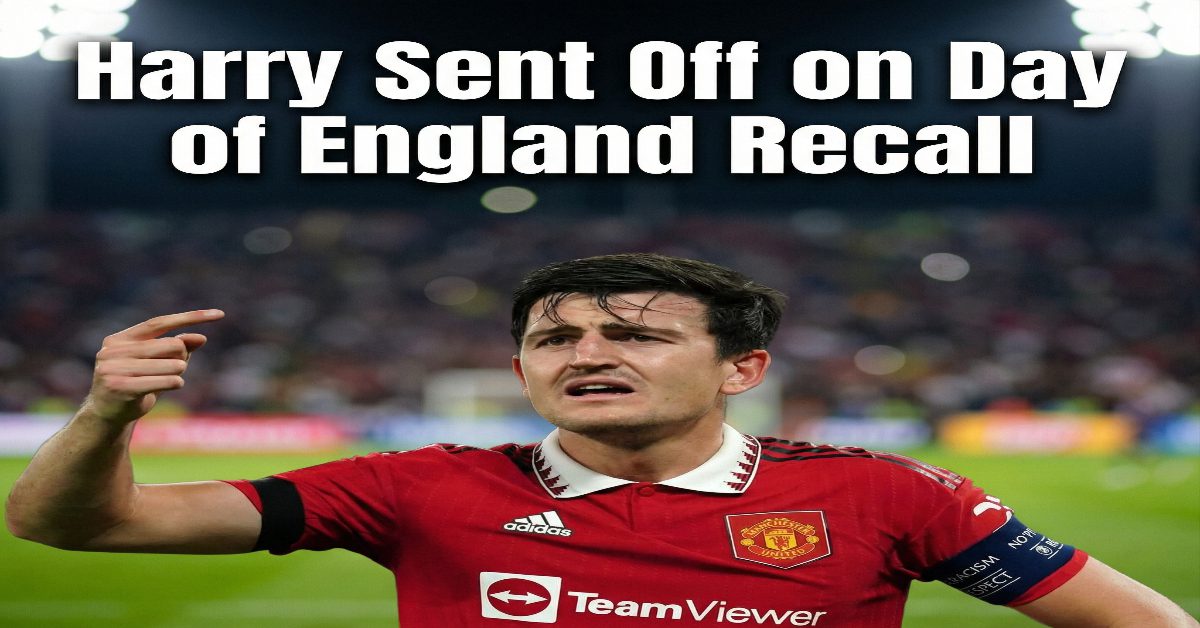
Maguire Sees Red Hours After England Call-Up Joy
This piece captures the whiplash emotion every football supporter understands: the cruel proximity of triumph and disaster. With Maguire’s international redemption arc colliding with on-field controversy in real time, the narrative centres on officiating inconsistency and individual culpability in a match that could define both United’s top-four bid and Bournemouth’s European hopes.
Harry Maguire’s day began with the best news of his recent career: recalled to the England setup for the first time in over 18 months. Thomas Tuchel explained that Maguire “simply deserves it” after “very, very good performances and fantastic results” since Michael Carrick took over at Manchester United. It was vindication, redemption and recognition rolled into one.
By the time the final whistle blew at the Vitality Stadium, that joy had curdled into despair. Referee Stuart Attwell produced a straight red card after Maguire impeded Cherries striker Evanilson as he burst into the box, gifting Bournemouth the chance to salvage a 2-2 draw from a match United had twice led. The Premier League confirmed the decision, stating it was “a holding offence with no attempt to challenge for the ball”.
For a defender who had clawed his way back into international contention through sheer consistency, the dismissal came as Carrick’s side twice looked on course for a seventh win in nine games under his management. Instead, United will be looking over their shoulders at the chasing pack of Aston Villa, Liverpool and Chelsea after dropping points for only the third time in 10 top-flight fixtures under Carrick.
A Second-Half Rollercoaster Defined by Spot-Kick Controversy
After a goalless first hour, United broke through when Álex Jiménez pulled Matheus Cunha’s shirt in the box and the United forward went down theatrically, earning a penalty that Bruno Fernandes calmly rolled into the bottom-left corner from 12 yards. It was Fernandes’ eighth Premier League goal of the season and appeared to set United on course for maximum points.
Then came the game’s defining controversy. Footage showed Adrien Truffert pushing Amad Diallo to the ground as the winger looked to cut in on his left foot, but the on-field decision from the referee was no penalty. VAR checked the incident but evidently felt no major mistake had been made, with the Premier League Match Centre stating “the contact was not sufficient for a foul”.
Moments later, justice seemed absent. Just seconds after the incident, Ryan Christie raced up the field and showed great composure to make it 1-1. The juxtaposition was stark and infuriating for United, who felt they should have been awarded a second penalty in similar circumstances to their first.
Parity lasted just four minutes, however. Fernandes’ inswinging corner from the left was flicked on by the head of Cherries defender Marcos Senesi and inadvertently diverted home by his centre-back partner James Hill, under pressure from Maguire. United were back in front, but the drama was far from over.
Bournemouth midfielder Alex Scott, one of the players overlooked by England boss Thomas Tuchel, rattled the frame of the goal from distance as the Cherries pressed for another equaliser. They didn’t have to wait long. In the 78th minute, Maguire was shown a straight red card after pulling down Evanilson inside the penalty area when the striker was through on goal, with the referee judging there was no attempt to play the ball.
Substitute Junior Kroupi kept his composure from the spot, drilling his penalty into the bottom corner to level the match at 2-2, setting up a frantic finale. The teenager delivered when it mattered most.
The Penalty Disparity That Will Fuel United’s Fury
The inconsistency in officiating became the match’s defining narrative. United were awarded a penalty for Jiménez pulling Cunha’s shirt. Maguire’s challenge on Evanilson was deemed a clear denial of a goalscoring opportunity, resulting in a red card and penalty. Yet Truffert’s shove on Diallo, which appeared just as clear, was waved away.
The official explanation was that “the contact was not sufficient for a foul”: a judgement that will feel hollow to anyone who watched Diallo tumble under Truffert’s challenge. The fact that Bournemouth scored within seconds of the non-decision only amplified United’s sense of injustice.
This wasn’t merely about one decision. It was about the principle of consistency. If a shirt pull warrants a penalty, why doesn’t a push? If Maguire’s foul is a clear red-card offence, why is a similar challenge in the opposite box dismissed as insufficient contact? These questions will linger long after the final whistle, particularly given the stakes involved in the race for Champions League qualification.
Bournemouth’s Drawing Habit: Resilience or Missed Opportunity?
This was Bournemouth’s fifth draw in a row, extending their unbeaten run to 11 in the top flight. No team has recorded more than Bournemouth’s 15 stalemates in the league this season, a statistic that tells the story of their campaign. They’ve shown they can compete with anyone, but they can’t seem to find the killer instinct required to climb into European contention.
With eighth place potentially offering European qualification, a win would have been enough to take Bournemouth above Everton and into eighth. They require at least five, and potentially six, wins from their final eight matches to maintain realistic European hopes without relying heavily on results elsewhere. That’s a tall order for a side that has drawn their last five.
Yet there’s undeniable quality in Andoni Iraola’s side. They fought back twice against a United team that had won seven of their previous nine under Carrick. The emergence of younger players like Junior Kroupi adds optimism, with his composure from the penalty spot under pressure suggesting a player with both technical quality and psychological resilience. If they can marry that resilience to greater ruthlessness, European football remains within reach, but time is running out.
Carrick’s United: Champions League Contenders or Bottlers?
A point does at least extend the gap for third-placed Man United on Liverpool (six points) and Chelsea (seven points) before their away games on Saturday, but this will feel like two points dropped rather than one gained. Michael Carrick has lost just one of his first nine games as interim boss, with seven wins in that stretch including an impressive 3-1 home victory over Aston Villa last weekend, propelling United up to third in the table.
The transformation under Carrick has been remarkable. United now find themselves in third place following a stunning upturn in form on the back of Carrick’s return to the Old Trafford dugout, a position that looked impossible when Ruben Amorim was sacked. But nights like this expose the fragility that still lurks within this squad.
Twice United took the lead. Twice they were pegged back. The second equaliser was entirely self-inflicted, Maguire’s panic leading to the dismissal and penalty. These are the moments that define whether a team is genuine top-four material or merely enjoying a purple patch. United, for all their improvement, still have questions to answer about their ability to see out tight matches.
The penalty controversy will dominate the post-match discourse, and rightly so, but United must also look inward. They created enough chances to have put this game to bed before Maguire’s red card. United rattled off 11 shots in the first half (the most Bournemouth had faced since the enthralling 4-4 draw at Old Trafford in December) and were by far the brighter side, but just lacked composure in the final third.
That lack of ruthlessness, combined with defensive lapses, threatens to undermine Carrick’s excellent work. Champions League qualification remains in United’s hands, but matches like this suggest they’ll make it harder on themselves than necessary. The gap to fourth is comfortable for now, but football has a habit of punishing complacency.
For Maguire, this was a day of extremes. The morning brought redemption, recognition from Tuchel that his renaissance under Carrick hadn’t gone unnoticed. The evening brought devastation, a moment of rashness that cost his team two points and will raise questions about whether he can be trusted on the biggest stages. His immediate task is ensuring one catastrophic lapse doesn’t define his England recall, whilst helping United navigate the run-in without him as he serves his suspension. The road back from the wilderness is never straightforward, as Maguire discovered in brutal fashion on the south coast.