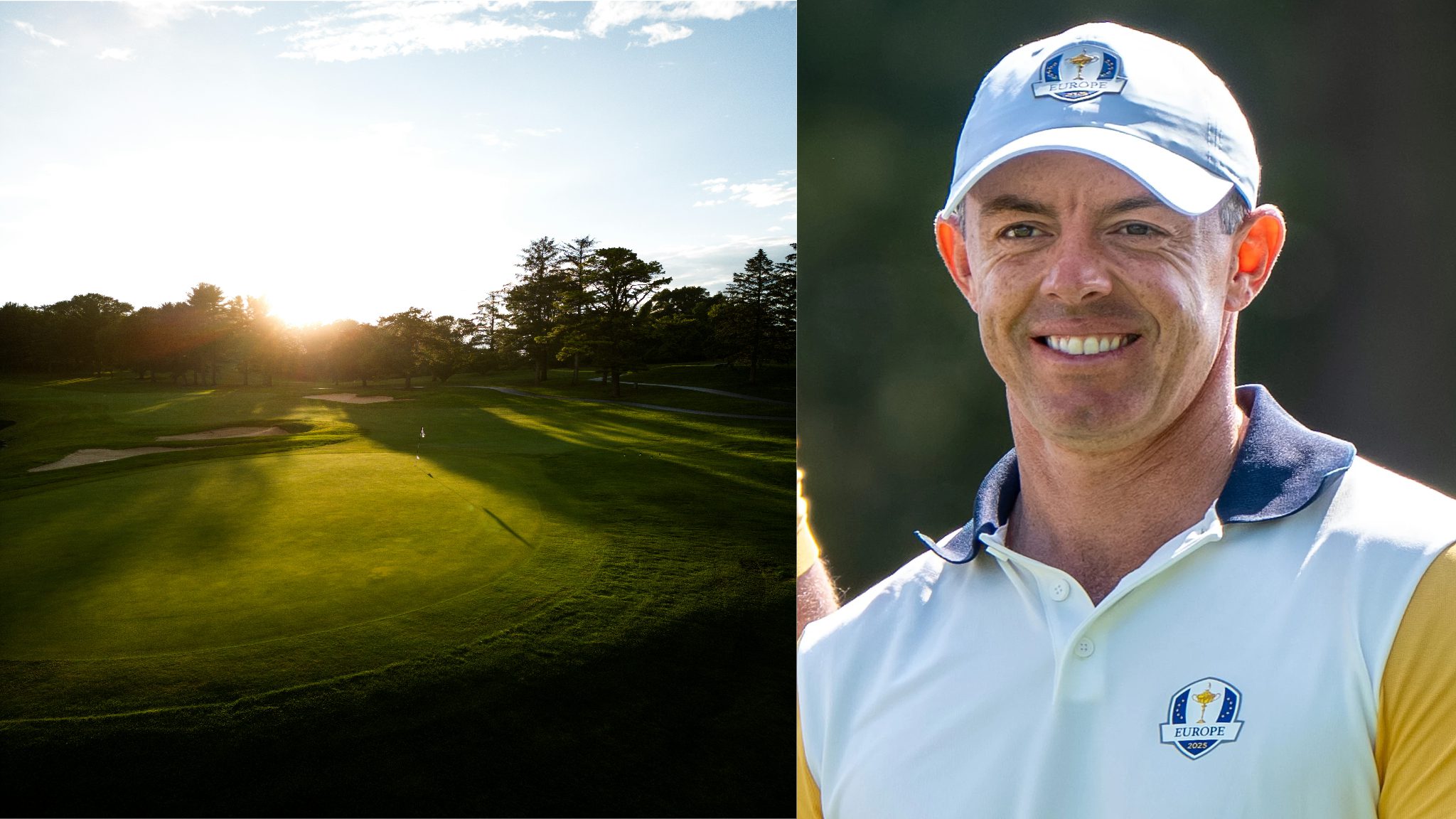
McIlroy Wins Back-to-Back Masters to Claim Sixth Major
Rory McIlroy has written another chapter in Augusta National history, becoming only the fourth man ever to defend the Masters title. We break down how the 36-year-old Northern Irishman held his nerve against a stacked leaderboard, what it means for his place among the all-time greats, and why Justin Rose continues to be the tournament’s most heartbreaking nearly-man.
There is a certain kind of sporting greatness that only reveals itself under sustained pressure rather than in a single moment of brilliance. Rory McIlroy spent the best part of a decade searching for that quality within himself at Augusta National, and over the past twelve months he has found it in abundance. On Sunday, the 36-year-old from Northern Ireland defended his Masters title to claim a sixth major championship, finishing on 12 under par and one stroke ahead of world number one Scottie Scheffler in a final round that tested every aspect of his game.
To appreciate the scale of what McIlroy has achieved, consider the company he now keeps. Only Jack Nicklaus, Sir Nick Faldo and Tiger Woods had previously won consecutive Masters titles. Those are not names that appear in lists by accident. McIlroy’s back-to-back triumph places him alongside the defining figures of the sport’s history and confirms that his 2025 victory, which ended an 11-year pursuit of the career Grand Slam, was not merely a cathartic release of tension but the beginning of a new chapter entirely.
The final leaderboard told its own story of how closely contested the tournament became. Tyrrell Hatton, Russell Henley, Justin Rose and Cameron Young all finished on 10 under, three shots off the pace in joint third, while Scheffler posted 11 under in a bogey-free weekend that would have been enough to win in most years. The sheer quality of the chasing pack made McIlroy’s one-shot margin all the more impressive given that he navigated a rocky middle portion of the week to get there.
A Six-Shot Lead That Became a Test of Character
The first two days at Augusta belonged almost entirely to McIlroy. He moved into a record six-shot lead at the halfway stage, a cushion so substantial that the tournament appeared to be drifting towards a comfortable conclusion. Yet the third round exposed the flaw that had been lurking beneath the surface. His driving, never the most reliable element of his game on Augusta’s tree-lined corridors, cost him in conditions that invited lower scoring, and the field closed the gap with alarming speed. It is a familiar vulnerability at this particular venue: Augusta’s second shots demand precise angles that McIlroy’s preferred power draw does not always generate, making accuracy off the tee more important here than almost anywhere else in major golf.
Sunday brought a different McIlroy. Rather than attempting to recover his earlier authority off the tee, he made a calculated adjustment, trading distance for accuracy with the driver and constructing a one-under 71 that prioritised discipline over ambition. It was the kind of round that champions produce when the situation demands pragmatism rather than pyrotechnics. The decision to manage his swing rather than force it spoke to a maturity that his younger self, the one who had crumbled at Augusta across so many agonising attempts over the years, would scarcely have recognised.
What separated McIlroy from the rest on this occasion was not superior ball-striking or a particularly inspired putting display. It was the ability to diagnose a technical problem mid-tournament and recalibrate without panic. That quality, perhaps more than any single shot he hit all week, is what distinguishes the truly elite from the merely excellent. It also marks a significant shift in how McIlroy operates under Masters pressure specifically: for much of his career, late-round errors at Augusta were the story; here, a late-week technical correction became the story instead.
Rose Denied Again at the Cathedral of Golf
Justin Rose deserves his own recognition, even if it is the bittersweet kind. The 45-year-old Englishman, whose sole major title came at the 2013 US Open, was bidding to become the oldest first-time Masters champion, and for much of his final round he looked entirely capable of delivering that fairytale. He moved into a one-shot lead midway through his round, and given that he had pushed McIlroy all the way to a play-off twelve months ago, the prospect of a famous victory felt entirely plausible.
Then came Amen Corner, golf’s most unforgiving stretch of real estate. A wayward second shot on the par-four 11th led to a three-putt and a dropped shot. The par-three 12th, notorious for its capacity to end Masters ambitions in a single stroke, yielded another damaging moment when Rose duffed a chip from the fringe and then three-putted again from an eagle position on the par-five 13th. Three holes, two bogeys and a missed opportunity, and the tournament had effectively slipped from his grasp. He finished on 10 under, recording what will be a fourth runners-up finish at Augusta National across his career. That the same three-hole stretch has undone so many contenders across the tournament’s history only deepens the sense that Amen Corner does not merely test technique but reveals something more fundamental about a player’s composure under the highest pressure.
The cruel symmetry with last year is not lost. In 2025, it was McIlroy who faltered under the weight of history while Rose played with freedom on the back nine, forcing a play-off. This time the roles were reversed entirely. Rose carried the pressure that comes with leading a major championship, and Amen Corner collected its toll. McIlroy, by contrast, played with precisely the liberation he predicted he would feel after finally winning the Green Jacket. His belief that one major win at Augusta would unlock another proved accurate to an almost uncanny degree.
Scheffler and the Cost of a Slow Start
Scottie Scheffler’s challenge deserves to be examined separately because it was, in statistical terms, quite remarkable. The 29-year-old American produced a bogey-free weekend at Augusta, a feat not achieved by any player since 1942 across the final two rounds of the Masters. He also recorded a fourth consecutive top-ten finish at the tournament, a sequence that underlines his consistency at a venue where consistency is perhaps the hardest quality to sustain.
And yet Scheffler finished one shot shy of a title that would have been his third Masters in four years. The reason, as he acknowledged himself, was a slow start to the week that left him chasing rather than leading. His two previous Augusta victories in 2022 and 2024 had been built on early momentum; here, he could not establish that foundation and found himself in the position of needing something extraordinary to overhaul both McIlroy and the other leaders above him. A bogey-free weekend is an exceptional achievement, but when the deficit from the first two rounds is large enough, sustained excellence in the back half of the week becomes a demonstration of quality rather than a route to victory.
Hatton Makes Peace With Augusta
Among the stories that emerged from the supporting cast, Tyrrell Hatton’s final-round 66 and joint-third finish stood out as a small but meaningful redemption arc. The 34-year-old Englishman had made no secret of his frustrations with Augusta National over the years, going as far as publicly calling the course unfair during the 2022 tournament. His relationship with the venue had been defined by a kind of mutual hostility that produced erratic results and visible irritation.
This week was different. Hatton’s results at Augusta have improved noticeably over the past three years, and a final-round 66 in a Masters of this quality is no trivial achievement. It is worth noting that scoring in the mid-60s on a Sunday at Augusta, when the pins are typically positioned at their most severe and the greens are at their fastest, requires a patience and shot-selection discipline that Hatton has not always associated with this course. His joint-third finish alongside Rose, Russell Henley and Cameron Young on 10 under suggests he has found a way to make the course work for him rather than against him, even if the gap to McIlroy at the top remained substantial.
Verdict: A Champion Transformed and a Legacy Confirmed
Rory McIlroy said before the tournament that he was returning to Augusta as a different player and a different man after finally winning the Green Jacket in 2025. The sceptical reading of that claim was that it was the kind of thing athletes say when they want to project confidence. The more generous interpretation was that completing the career Grand Slam genuinely had shifted something fundamental in how he approached the most pressure-laden event in golf. Sunday’s performance validated the generous interpretation completely.
With six major titles, McIlroy now stands level with Nick Faldo in the all-time rankings. The gap to Tiger Woods’s 15 and Jack Nicklaus’s 18 is still considerable, but McIlroy is 36, defending a major title, and visibly playing with greater freedom than at any previous point in his career. The question of how many more major victories he might accumulate has shifted from a theoretical one to something that feels genuinely open-ended. A player who spent a decade paralysed by the pressure of Augusta has now won there twice in succession. Historically, players who have solved a venue that once defined their limitations tend to keep solving it.
For Augusta National, the 2026 Masters produced another chapter in the tournament’s extraordinary capacity for drama. A 45-year-old nearly winning on one side, the world number one producing a bogey-free weekend and still falling short on the other, an English pair pushing hard in joint third, and a defending champion who solved his own technical difficulties mid-tournament to prevail by a single stroke. McIlroy said his perseverance at Augusta was starting to pay off. On the evidence of the past twelve months, that might be the understatement of the year.
Sources: Match statistics, leaderboard details, and direct quotes from BBC Sport’s coverage of the 2026 Masters at Augusta National.