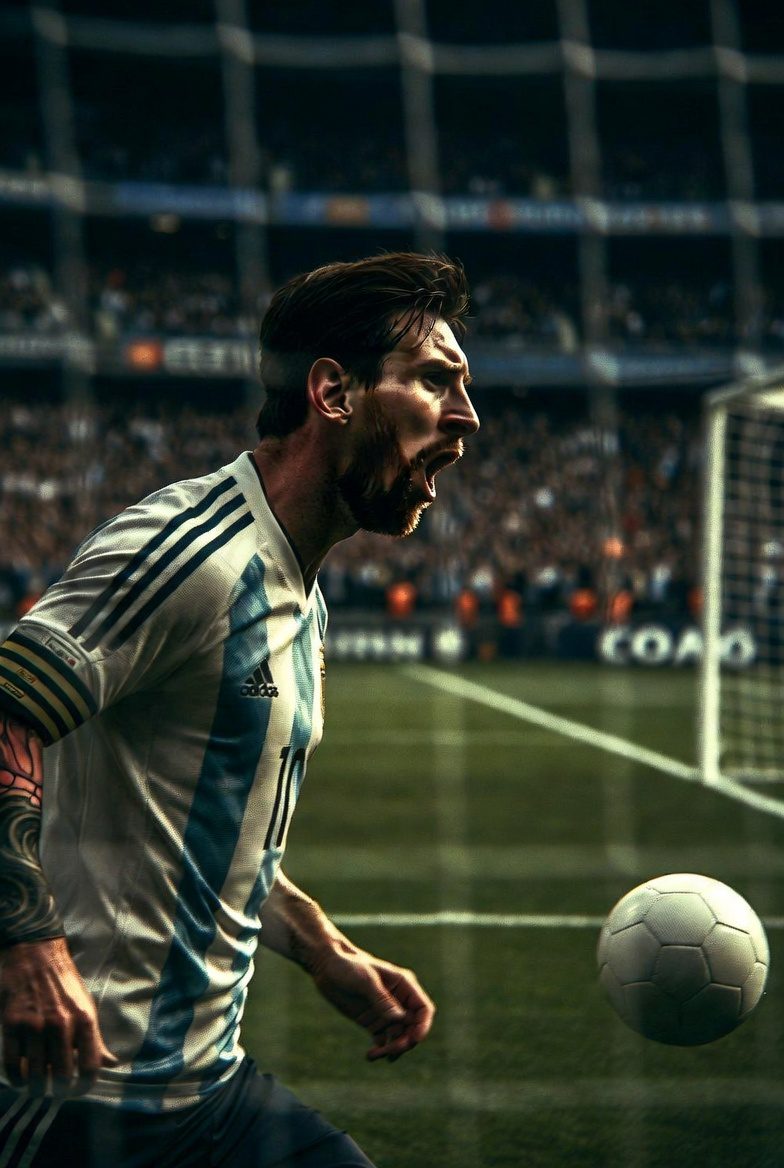
Lionel Messi One Goal Away From 900
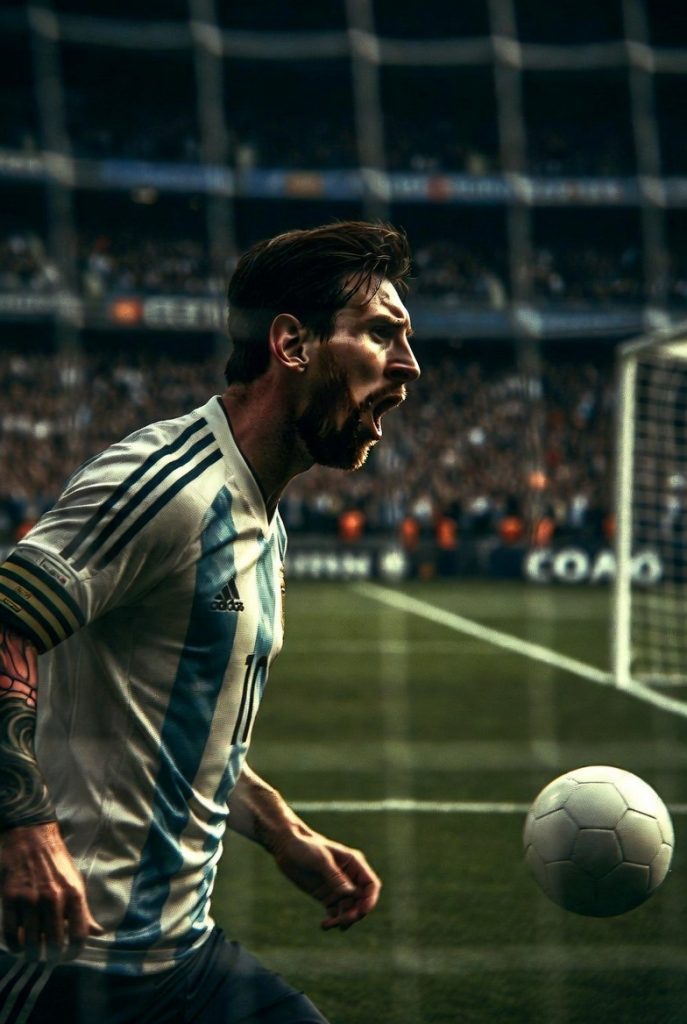
Lionel Messi One Goal Away From 900: A Complete Career Retrospective
Lionel Andrés Messi stands one goal away from 900. On Saturday 7 March 2026, the 38-year-old scored for Inter Miami against DC United — a deft finish midway through the first half — to bring his career total to 899 goals across all competitions for club and country. The eight-time Ballon d’Or winner will next get the chance to reach that extraordinary milestone when Inter Miami play Nashville on 11 March.
Should he reach 900 as expected, Messi will join long-time rival Cristiano Ronaldo, who scored his 900th career goal against Croatia in September 2024. But the number alone does not capture what Messi has achieved. This is the story of the most decorated footballer in history — 47 trophies, four clubs, one national team, and a career that has redefined what is possible in the sport.
Messi at a Glance
Goals
Assists
Trophies
d’Or
Appearances
Career Rating
Where It All Began: Rosario to La Masia
Messi was born on 24 June 1987 in Rosario, Argentina, the third of four children. He joined the local club Newell’s Old Boys at the age of six and quickly stood out as a prodigious talent, but his childhood was complicated by a growth hormone deficiency diagnosed when he was ten. The treatment cost around $1,000 per month — a sum his family could not sustain.
Barcelona offered a lifeline. In September 2000, the 13-year-old Messi and his father travelled to Catalonia for a trial at La Masia, the club’s famous youth academy. The story of sporting director Carles Rexach writing a commitment to sign him on a napkin has become one of football’s most celebrated origin stories. Barcelona agreed to pay for his medical treatment, and Messi relocated to Spain. The investment was, to put it mildly, worthwhile.
He progressed through Barcelona’s youth ranks with startling speed. On 16 October 2004, aged 17 years and 114 days, Messi made his competitive first-team debut against Espanyol in La Liga, coming on as a substitute. On 1 May 2005, he became the youngest scorer in Barcelona’s La Liga history with a chipped goal against Albacete. The world had its first glimpse of what was coming.
Barcelona: 2004–2021 — The Greatest Club Career in Football History
Messi’s 17 seasons as a first-team player at Barcelona produced statistics that read like fiction. Across 778 official appearances, he scored 672 goals and provided 303 assists, making him the club’s all-time leading scorer by an almost absurd margin. He is also La Liga’s all-time top scorer with 474 goals in 520 appearances — a record that may never be broken.
The Early Years: 2004–2008
Messi’s breakthrough came in the 2005/06 season, when he scored six goals across La Liga and the Champions League despite being just 18. He won his first La Liga title that year and his first Champions League medal, though his contribution to the final was cut short by injury. The 2006/07 and 2007/08 seasons saw him establish himself as one of the world’s best players, with 14 and 16 league goals respectively. He was beginning to show the full range of his ability — the dribbling, the close control at speed, the sudden changes of direction that left defenders stranded.
The Pep Guardiola Era: 2008–2012
The arrival of Pep Guardiola as manager in 2008 transformed both Barcelona and Messi. Guardiola moved the young Argentine into a “false nine” role — nominally a centre-forward but with the freedom to drop deep, drift wide, and orchestrate play from any position. The results were devastating.
In 2008/09, Messi scored 38 goals across all competitions as Barcelona won an unprecedented treble of La Liga, Copa del Rey and Champions League. He scored nine goals in that Champions League campaign, including a header in the final against Manchester United in Rome. It was the first of his four Champions League triumphs.
His goalscoring then escalated to a level previously unseen in the professional game:
- 2009/10: 47 goals in all competitions. Won a second consecutive La Liga title.
- 2010/11: 53 goals. Won La Liga and the Champions League again, scoring in the final against Manchester United at Wembley. Won his third consecutive Ballon d’Or.
- 2011/12: 73 goals in all competitions — a new record for a European footballer in a single season. Scored 50 goals in La Liga alone, a record that still stands. In a single calendar year (2012), he scored 91 goals for club and country, surpassing Gerd Müller’s long-standing record of 85.
According to WhoScored data, Messi’s average rating during the 2011/12 season was 8.88 in both La Liga (50 goals, 16 assists in 36 starts) and the Champions League (14 goals, 5 assists in 11 appearances). These remain among the highest seasonal ratings ever recorded on the platform.
The Messi–Suarez–Neymar Years: 2014–2017
After a brief relative dip in 2013/14 — “relative” meaning 28 goals in La Liga — Messi formed what many consider the greatest attacking trident in football history alongside Luis Suárez and Neymar. In 2014/15, the “MSN” trio scored 122 goals between them as Barcelona won another treble: La Liga, Copa del Rey and Champions League. Messi contributed 43 league goals and 10 in the Champions League, earning a WhoScored rating of 8.84 in La Liga and 8.90 in Europe’s top competition — the highest Champions League seasonal rating in the data available.
The 2015/16 and 2016/17 seasons brought further La Liga titles and individual brilliance. In 2016/17, Messi scored 37 goals in 32 La Liga starts, and his 54 goals across all competitions that season were achieved while carrying an increasingly ageing squad. His WhoScored rating that year was 8.47 in the league — extraordinary by any standard except his own.
The Final Barcelona Years: 2017–2021
Messi’s final four seasons at Barcelona were a study in individual excellence amid collective decline. The team suffered painful Champions League exits — the 4-0 collapse against Liverpool in 2019 after leading 3-0 on aggregate, and the humiliating 8-2 defeat to Bayern Munich in 2020 — but Messi’s personal output remained remarkable. He won six consecutive European Golden Shoes between 2017 and 2019, and his La Liga goal tallies of 34, 36, 25 and 30 across those final four full seasons showed no meaningful decline in his ability to score.
In his final season at Camp Nou, 2020/21, Messi scored 30 goals and provided 9 assists in 33 La Liga starts, earning a WhoScored rating of 8.52 and 22 Man of the Match awards. He won the Copa del Rey — his seventh — in what turned out to be his farewell trophy for the club that had shaped his life.
The departure, when it came in August 2021, was not by choice. Barcelona’s catastrophic financial position meant they could not register Messi’s new contract under La Liga’s salary cap rules, even though both parties had agreed terms. The press conference in which Messi broke down in tears, unable to speak for several minutes, remains one of the most emotional moments in modern football.
Barcelona Career Summary
| Competition | Apps | Goals | Assists |
|---|---|---|---|
| La Liga | 520 | 474 | 216 |
| UEFA Champions League | 149 | 120 | 41 |
| Copa del Rey | 80 | 56 | 32 |
| Other (Super Cups, Club World Cup) | 29 | 22 | 14 |
| Total | 778 | 672 | 303 |
Paris Saint-Germain: 2021–2023 — The Parisian Chapter
Messi’s move to Paris Saint-Germain on a free transfer was one of the most seismic transfers in football history, not because of a fee but because of its sheer unexpectedness. No one had seriously imagined Messi playing anywhere other than Barcelona.
His two seasons in Paris were a mixed experience. In 2021/22, Messi struggled to adapt to a new league and system, scoring just six goals in 24 Ligue 1 starts — though he contributed 14 assists, showing his creative qualities remained intact. His Champions League form was stronger, with five goals in seven appearances, including a stunning strike against Manchester City at the Parc des Princes. PSG won Ligue 1 that season, giving Messi his first French league title.
The 2022/23 season was better. Messi scored 16 goals and provided 16 assists in 32 Ligue 1 appearances, earning a WhoScored rating of 8.28 and 14 Man of the Match awards. He added another four Champions League goals in seven games (rating: 7.86). A second Ligue 1 title and a Trophée des Champions followed, but the Champions League glory that PSG craved never materialised.
In total, Messi scored 32 goals and provided 35 assists in 75 appearances for Paris Saint-Germain. The numbers were respectable by any normal standard, but measured against his Barcelona peak, they represented a clear step down. What the PSG chapter did provide, however, was the platform for the most remarkable chapter of Messi’s international career.
| Season | Competition | Apps | Goals | Assists | WhoScored Rating |
|---|---|---|---|---|---|
| 2021/22 | Ligue 1 | 24 (2 sub) | 6 | 14 | 7.77 |
| 2021/22 | Champions League | 7 | 5 | 0 | 7.73 |
| 2022/23 | Ligue 1 | 32 | 16 | 16 | 8.28 |
| 2022/23 | Champions League | 7 | 4 | 4 | 7.86 |
| PSG Total | 75 | 32 | 35 | — | |
Argentina: 2005–Present — From Heartbreak to Immortality
For years, Messi’s international career was the great caveat in any argument about his status as the greatest player of all time. He had everything at club level, but with Argentina, the trophies did not come. Three Copa América finals lost (2007, 2015, 2016). A World Cup final lost to Germany in 2014, where he won the Golden Ball as the tournament’s best player but could not quite lift his country to glory. The 2016 Copa América final defeat to Chile — on penalties, again — led to a tearful Messi briefly announcing his retirement from international football.
He returned, and what followed was the most complete international career any footballer has ever produced.
The 2021 Copa América
In July 2021, at the age of 34, Messi finally won his first major international trophy. Argentina beat Brazil 1-0 in the Copa América final at the Maracanã, with Messi named player of the tournament after scoring four goals and providing five assists across the competition. The image of Messi on his knees, surrounded by team-mates, weeping with relief and joy, became one of the defining photographs of the decade.
The 2022 FIFA World Cup
And then came Qatar. The 2022 World Cup is widely considered the greatest tournament in the competition’s history, and Messi was its beating heart. After a shock opening defeat to Saudi Arabia, he led Argentina through the group stage, past Australia in the last 16, the Netherlands on penalties in the quarter-finals, and Croatia 3-0 in the semi-finals. In the final against France, Messi scored twice in a match widely regarded as the greatest World Cup final ever played. Argentina won on penalties after a 3-3 draw, and Messi lifted the one trophy that had eluded him throughout his career.
He finished the tournament with seven goals — winning the Golden Ball for a record second time — and became just the second captain, after Diego Maradona in 1986, to lift the World Cup for Argentina.
The 2024 Copa América
At 37, Messi added a second Copa América to his collection as Argentina beat Colombia in the 2024 final, making him the only player in history to captain a team to victories in the World Cup and two Copa Américas.
Argentina Career Numbers
Messi has scored 115 goals in 196 appearances for Argentina, making him the second-highest scoring international footballer of all time behind Cristiano Ronaldo. He holds the records for most assists in international football (61), most goal contributions at the FIFA World Cup (21) and most goal contributions at the Copa América (32).
Inter Miami: 2023–Present — The American Sunset
Messi’s arrival at Inter Miami in June 2023 was a cultural event as much as a sporting one. The MLS club, co-owned by David Beckham, had finished bottom of the Eastern Conference the previous season. Messi’s impact was immediate and transformative.
In his first competitive appearance, he scored a stunning free-kick in stoppage time to win the Leagues Cup match against Cruz Azul. He went on to score ten goals in seven Leagues Cup matches, leading Inter Miami to the trophy — the first piece of silverware in the club’s history.
The 2024 MLS season saw Messi score 21 goals and provide 10 assists in 16 starts (plus four substitute appearances), earning a WhoScored rating of 8.32. Inter Miami won the Supporters’ Shield for the best regular-season record, and in 2025, Messi captained the side to the MLS Cup, beating the Vancouver Whitecaps 3-1 in the final. He also played in the 2025 FIFA Club World Cup, scoring one goal in four appearances as Inter Miami competed against elite European and South American opposition.
So far in 2026, Messi has scored three goals in three MLS appearances, including the strike against DC United on 7 March that brought his career total to 899. His WhoScored rating for the current season stands at 7.67, and his overall average for Inter Miami is a healthy 8.32 in league play.
| Season / Competition | Apps | Goals | Assists | WhoScored Rating |
|---|---|---|---|---|
| 2023 MLS | 4 (2 sub) | 1 | 2 | 7.08 |
| 2023/24 Leagues Cup & Other | 5 | 1 | 1 | 7.47 |
| 2024 MLS | 16 (4 sub) | 21 | 10 | 8.32 |
| 2025 MLS | 4 | 3 | 7 | 9.21 |
| 2025 FIFA Club World Cup | 4 | 1 | 0 | 7.54 |
| 2026 MLS (to date) | 3 | 3 | 0 | 7.67 |
| Inter Miami Total | ~85 | 80 | 38 | — |
The Complete Trophy Cabinet — 47 Trophies
Messi is the most decorated player in the history of professional football, having won 47 team trophies across his career. No other player has won more. Here is the full breakdown:
| Club / Country | Competition | Times Won |
|---|---|---|
| Barcelona (35) | La Liga | 10 |
| Copa del Rey | 7 | |
| UEFA Champions League | 4 | |
| Supercopa de España | 8 | |
| UEFA Super Cup | 3 | |
| FIFA Club World Cup | 3 | |
| PSG (3) | Ligue 1 | 2 |
| Trophée des Champions | 1 | |
| Inter Miami (3) | Leagues Cup | 1 |
| Supporters’ Shield | 1 | |
| MLS Cup | 1 | |
| Argentina (6) | FIFA World Cup | 1 |
| Copa América | 2 | |
| CONMEBOL–UEFA Cup of Champions (Finalissima) | 1 | |
| Olympic Gold Medal | 1 | |
| FIFA U-20 World Cup | 1 | |
| Grand Total | 47 |
Individual Awards
| Award | Times Won | Years |
|---|---|---|
| Ballon d’Or | 8 | 2009, 2010, 2011, 2012, 2015, 2019, 2021, 2023 |
| European Golden Shoe | 6 | 2009/10, 2011/12, 2012/13, 2016/17, 2017/18, 2018/19 |
| The Best FIFA Men’s Player | 4 | 2009, 2019, 2022, 2023 |
| UEFA Best Player in Europe | 3 | 2009, 2011, 2015 |
| World Cup Golden Ball | 2 | 2014, 2022 |
| IFFHS All Time Men’s World Best Player | 1 | 2025 |
How Messi Compares to the All-Time Greats
The debate about the greatest footballer ever is, by nature, subjective and influenced by era, culture and personal preference. But the statistical evidence places Messi in a category of his own when compared with the other contenders.
Messi vs Cristiano Ronaldo
The defining rivalry of modern football. As of March 2026, here is how the two compare:
| Statistic | Lionel Messi | Cristiano Ronaldo |
|---|---|---|
| Career Goals | 899 | ~961 |
| Career Assists | 407 | ~260 |
| Career Appearances | ~1,139 | ~1,308 |
| Goal Contributions Per Game | 1.15 | 0.93 |
| Ballon d’Or | 8 | 5 |
| Champions League Goals | 129 | 140 |
| International Goals | 115 (196 caps) | ~136 (220+ caps) |
| World Cups Won | 1 | 0 |
| League Titles | 14 | 7 |
| Team Trophies | 47 | 35 |
Ronaldo’s figures include goals scored for Al-Nassr in the Saudi Pro League. Messi’s figures include MLS goals for Inter Miami. Exact totals for Ronaldo are approximate due to ongoing career. Sources: Transfermarkt, WhoScored, michelacosta.com.
Ronaldo leads on total career goals and Champions League goals, reflecting his extraordinary longevity and aerial power. But Messi leads in almost every efficiency metric: goals per game, assists per game, and total goal contributions per appearance. Messi’s 407 career assists are nearly 150 more than Ronaldo’s, illustrating the fundamental difference in their playing styles — Ronaldo is the more prolific pure goalscorer; Messi is the more complete attacker.
The World Cup settled one part of the debate for many. Messi’s performance in Qatar 2022 — seven goals, the Golden Ball, a final that will be replayed for decades — gave him the one piece of the jigsaw that Ronaldo has never held.
Messi vs Pelé
Pelé, the Brazilian icon who won three World Cups (1958, 1962, 1970), claimed to have scored over 1,200 career goals, but that figure includes friendly matches and exhibition games. According to the RSSSF (Rec.Sport.Soccer Statistics Foundation), Pelé’s tally in official competitive matches stands at approximately 778 goals. By that measure, Messi surpassed Pelé’s official goal tally several years ago.
Where Pelé holds a clear advantage is in World Cup victories — three to Messi’s one. But in terms of measurable output in verified competitive matches, Messi’s 899 goals in an era of far more rigorous defending and athletic conditioning represents a level of sustained excellence that stands comparison with any player from any era.
Messi vs Diego Maradona
The comparison that matters most in Argentina. Maradona won the 1986 World Cup almost single-handedly, producing the “Hand of God” and the “Goal of the Century” in the same quarter-final against England. His influence on that tournament is arguably the single greatest individual performance in World Cup history.
But Maradona’s club career, while brilliant, was far shorter at the elite level. He scored approximately 312 goals in 588 career appearances — a fraction of Messi’s output. Messi’s 2022 World Cup victory, combined with his vastly superior statistical record, has led many in Argentina to conclude that the pupil has surpassed the master, though this remains a deeply personal and emotional debate in the country.
All-Time Top Scorers in Official Competitions
| Rank | Player | Goals (Official) | Career Span |
|---|---|---|---|
| 1 | Cristiano Ronaldo | ~961 | 2002–present |
| 2 | Lionel Messi | 899 | 2004–present |
| 3 | Josef Bican | ~805 | 1931–1955 |
| 4 | Pelé | ~778 | 1957–1977 |
| 5 | Romario | ~772 | 1985–2007 |
| 6 | Robert Lewandowski | ~733 | 2006–present |
| 7 | Gerd Müller | ~735 | 1963–1981 |
Historical goal tallies (Bican, Pelé, Romario) are estimates based on RSSSF data for official competitive matches. Figures for active players are current as of March 2026.
What Makes Messi Different: The WhoScored Statistical Profile
Beyond goals and assists, WhoScored data provides a detailed picture of Messi’s playing style and enduring quality. Across 663 tracked appearances on the platform, his career averages read:
Per Game
Success
the Match
Cards
His WhoScored-assessed strengths are striking in their breadth:
- Very Strong: Passing, through balls, key passes, dribbling, finishing, long shots, direct free-kicks
- Strong: Holding on to the ball
- Weak: Aerial duels, defensive contribution
His style of play profile notes: Likes to play long balls, likes to dribble, likes to cut inside, likes to shoot from distance, plays the ball off the ground often, does not dive into tackles. It is a description that could apply to no other player in the history of the sport with such precision.
Messi’s career WhoScored rating of 8.48 across 663 tracked appearances is the highest sustained average of any player in the platform’s history. For context, a rating of 7.0 is considered average for a top-flight player. To maintain an average above 8.4 across more than two decades of elite football is a statistical anomaly that underlines the consistency of his excellence.
The Road to 900 — And Beyond
Messi will next take the pitch for Inter Miami against Nashville on 11 March 2026. One goal from 900. Given his current form — three goals in three MLS appearances in 2026, including the finish against DC United that brought him to 899 — the milestone feels inevitable rather than uncertain.
The bigger question is what comes next. Messi signed a contract extension with Inter Miami through to 2028, meaning he could play until the age of 41. The 2026 FIFA World Cup, to be held across the United States, Canada and Mexico, looms large on the horizon. Argentina, as defending world champions, will be among the favourites, and Messi has shown no sign of relinquishing his place in the squad. He scored in World Cup qualifying as recently as September 2025, netting in a 3-0 victory over Venezuela.
Can he reach 1,000 career goals? At his current rate of roughly 30-40 goals per season, it would require approximately three more full seasons. Given his contract runs until 2028, it is not impossible — though it would require sustained fitness and form into his early forties. ESPN’s analysis has suggested 1,000 is achievable if Messi maintains his current output, though the margin for error narrows with each passing year.
For now, though, the focus is on 900. One more goal. One more milestone in a career that has been defined by surpassing every milestone placed in front of it.
Career Timeline
Frequently Asked Questions
How many career goals has Lionel Messi scored?
As of 8 March 2026, Lionel Messi has scored 899 career goals across all competitions for club and country: 672 for Barcelona, 32 for Paris Saint-Germain, 80 for Inter Miami and 115 for Argentina. He is one goal short of the 900 milestone.
When will Messi score his 900th goal?
Messi’s next opportunity to score his 900th career goal is when Inter Miami play Nashville on 11 March 2026. Given his current form of three goals in three MLS appearances in 2026, the milestone is expected imminently.
Has Cristiano Ronaldo already scored 900 career goals?
Yes. Cristiano Ronaldo scored his 900th career goal against Croatia in a UEFA Nations League match in September 2024. He was the first player in the history of the men’s professional game to reach that milestone. Ronaldo’s current career total stands at approximately 961 goals.
How many trophies has Messi won in total?
Messi has won 47 team trophies across his career, making him the most decorated player in the history of professional football. This includes 10 La Liga titles, 4 Champions Leagues, 1 World Cup, 2 Copa Américas, 7 Copa del Reys, 3 FIFA Club World Cups, 1 MLS Cup, and numerous other domestic and international honours.
How many Ballon d’Or awards has Messi won?
Messi has won the Ballon d’Or a record eight times: in 2009, 2010, 2011, 2012, 2015, 2019, 2021 and 2023. No other player has won more than five.
What clubs has Messi played for?
Messi has played for three senior clubs: FC Barcelona (2004–2021, 778 appearances, 672 goals), Paris Saint-Germain (2021–2023, 75 appearances, 32 goals) and Inter Miami CF (2023–present, ~85 appearances, 80 goals). He also represented Barcelona’s B team (22 appearances, 6 goals) in his youth.
Is Messi the greatest footballer of all time?
This is inherently subjective, but the statistical case for Messi is overwhelming. He holds the records for most goals for a single club (672), most goals in La Liga (474), most goals in a calendar year (91), most Ballon d’Or awards (8), most career assists in international football (61), and most career trophies (47). He has won the World Cup, multiple Champions Leagues, and has a goal contribution rate of 1.15 per game across his entire career. In 2025, the IFFHS named him the All Time Men’s World Best Player.
Will Messi play in the 2026 World Cup?
It is expected that Messi will be part of Argentina’s squad for the 2026 FIFA World Cup, which will be held in the United States, Canada and Mexico. He scored in World Cup qualifying as recently as September 2025, and his Inter Miami contract runs until 2028. Argentina will be among the favourites as defending world champions.
Last updated: 08 March 2026. Career statistics sourced from Transfermarkt, WhoScored, BBC Sport, ESPN, michelacosta.com and official club records. Messi’s career total of 899 goals includes all official senior competitive matches for club and country. Historical comparisons use RSSSF-verified data for official matches only.
Article by Adrian Dane, football writer and founder of WhatChan. Adrian covers Premier League news, match previews and football analysis for UK fans.
Follow Messi’s Journey to 900
From his next match against Nashville to the 2026 World Cup, WhatChan keeps you up to date with every milestone, every goal and every moment that matters. Bookmark WhatChan for the latest football news, fixture guides and live coverage information.
See Today’s Football on TV