England World Cup Kit Launch: No Flag Row This Time
This piece examines how Nike’s new England World Cup kit deliberately avoids the cultural politics that engulfed the Euro 2024 launch, when a multi-coloured St George’s Cross drew criticism from both the Prime Minister and the Leader of the Opposition. With a traditional all-white home design and a return to red for the away strip, the kit tells us as much about commercial risk management as it does about football fashion.
England’s new World Cup kits, unveiled this week, are about much more than what the lads will wear this summer. They mark a deliberate course correction from Nike, a conscious effort to avoid the sort of culture war controversy that engulfed the previous kit launch and threatened to overshadow the football itself.
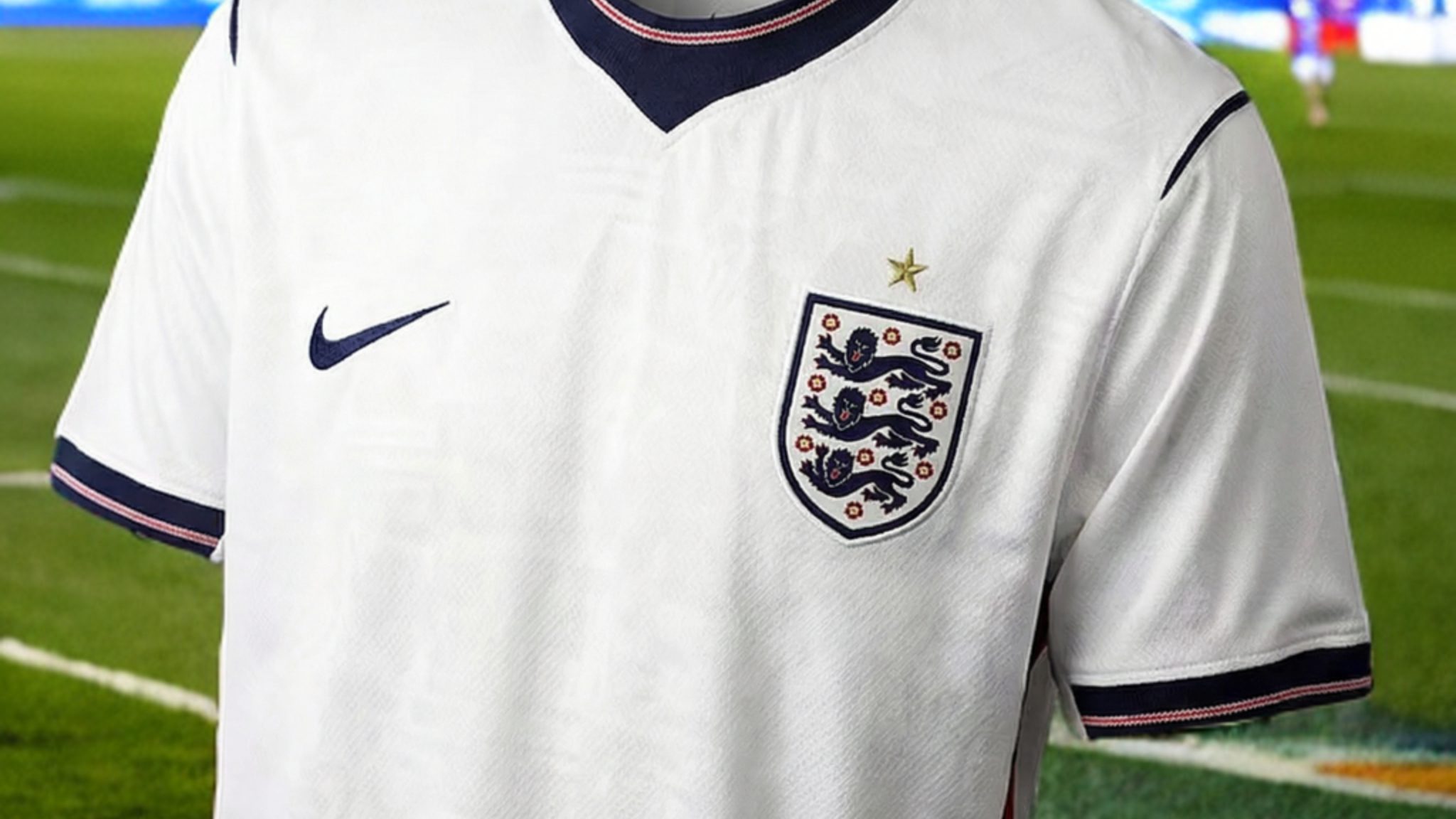
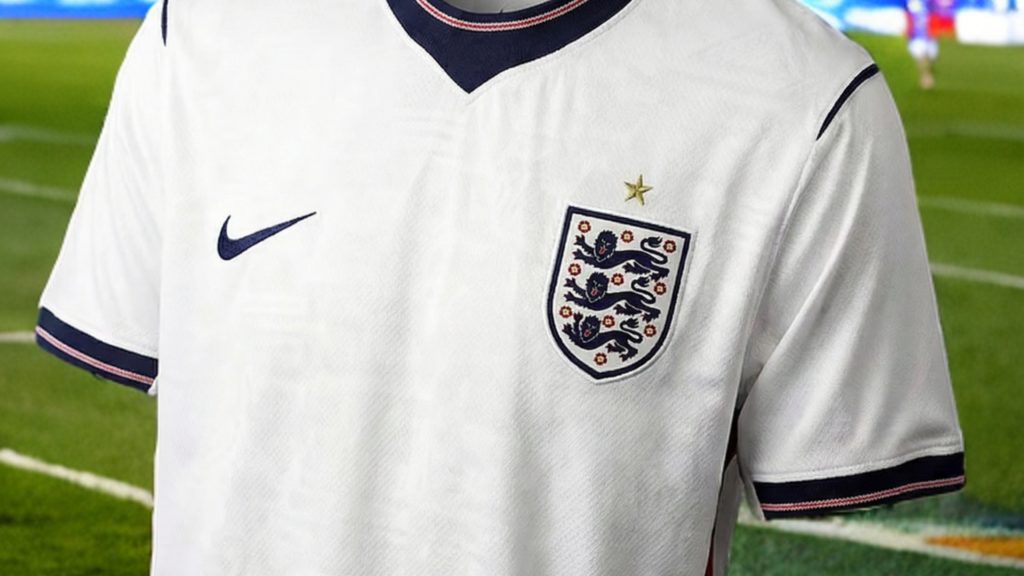
The American sportswear giant, which has supplied England’s kits since 2013 under a £400m deal worth approximately £33m annually, has opted for restraint where it once chose provocation. The new home shirt is described by Nike as a “modern all-white design that honours England’s heritage”, and crucially, it does so without reimagining the St George’s Cross in multiple colours.
That multi-coloured interpretation, unveiled ahead of Euro 2024, sparked a political firestorm that saw both the Prime Minister and the Leader of the Opposition weigh in on what should have been a straightforward kit launch. What Nike termed “a playful update” (adding purple, light blue and navy to the traditional red cross) became a lightning rod for debates about national identity.
The furore dominated news cycles and social media discourse, turning what should have been a moment of anticipation into a PR headache for both Nike and the Football Association.
A Return to Simplicity and Symbolism
The new home kit avoids any such controversy by keeping the St George’s Cross off the shirt entirely. Instead, Nike has chosen a subtler approach to patriotic symbolism. The inside collar bears the words “happy and glorious”: a direct reference to the national anthem, God Save the King.
It’s a clever piece of design. Patriotic without being provocative, nodding to national identity without courting the accusations of disrespect that dogged the previous kit. The inscription is invisible during normal wear, revealed only when players embrace after goals or when fans pose for photos with collars pulled open. It’s a detail for those who look closely, a reward for attention: the sort of thing that builds social media engagement without risking backlash.
The shirt also features a metallic gold star above the crest, representing England’s solitary World Cup triumph in 1966. It’s a reminder of both heritage and hunger: that one star standing alone for nearly six decades, a visual prompt of unfinished business.
The away kit, meanwhile, reverts to red after England wore purple as their change strip since 2024. The red shirt features a centred badge and will be paired with navy shorts: a traditional combination that harks back to numerous previous England away kits. Red has deeper resonance in England’s football history. The 1966 team wore red when they beat West Germany in the final, and red away kits have featured prominently across England’s tournament campaigns, creating a visual through-line across decades.
Both kits will be available to buy from Monday, and one suspects the FA and Nike will be monitoring social media reaction rather more nervously than usual.
The Commercial Reality Behind Kit Deals
To understand why Nike opted for this safer approach, it’s worth examining the commercial realities underpinning these agreements. The FA’s deal with Nike, agreed in December 2016 as a 12-year extension running from 2018, was structured with contingency clauses that reflect the high-stakes nature of international football.
For the first time, the agreement included financial penalties if the senior men’s team failed to qualify for major tournaments. Conversely, it offers incentive payments if England reach the semi-finals or beyond, a clause already triggered at the 2018 World Cup and Euro 2020. Sports industry executives suggested at the time that Nike’s partnership with the FA ranked second only to Germany amongst national kit supply deals.
The revenue model for kit deals might surprise casual observers. Even the biggest clubs typically receive only 7.5 to 15 per cent of revenue generated from shirt sales. Liverpool’s deal with Nike, considered exceptionally favourable, reportedly sees the club take a 20 per cent commission. The bulk of the profit goes to the manufacturer, which absorbs the production, distribution and marketing costs.
This means Nike has a direct financial incentive to produce kits that sell. Kits embroiled in political controversy, no matter how much publicity they generate, risk alienating portions of the potential customer base. A kit that half the country refuses to buy on principle is a commercial failure, regardless of how much social media engagement it creates.
Nike’s Learning Curve with England
Nike replaced Umbro as England’s official kit supplier in 2013, ending a relationship that stretched back to the 1950s (bar an eight-year period from 1974-82 when Admiral took over). Umbro, a domestic British brand with deep roots in English football culture, had become synonymous with England kits across generations.
Nike’s arrival represented a shift towards global marketing muscle and cutting-edge design technology. But international football operates under different rules to club football. Club kits are tribal markers within the sport; national kits are symbols of broader identity. What works for Chelsea or Tottenham doesn’t necessarily translate to the international game, where tradition carries more weight.
The 2024 controversy represented Nike learning that lesson the hard way. The company’s explanation that the multi-coloured cross was “inspired by the training kit worn by England’s 1966 World Cup winners” failed to mollify critics who saw it as unnecessary tampering with a national symbol. The FA, notably, had no intention of recalling the shirt despite the ongoing backlash. But the fact that this new kit takes such a markedly different approach suggests the message was received nonetheless.
The Tuchel Factor and Tournament Countdown
The kit launch coincided with head coach Thomas Tuchel naming a 35-man squad for upcoming friendlies against Uruguay at Wembley on 27 March and Japan on 31 March. The German described the camp as the “last opportunity for players to compete for their ticket” to the World Cup, which begins on 11 June and will be staged across the United States, Mexico and Canada.
This synchronicity is no accident. It’s part of the traditional countdown rhythm for major tournaments: a carefully orchestrated series of moments designed to build anticipation and focus. Kit launches, squad announcements, pre-tournament friendlies and commercial partnerships all slot together in a sequence that transforms the tournament from distant prospect to imminent reality.
For players, this period is crucial. Tuchel’s decision to name an expanded 35-man squad creates genuine competition for places. Unlike club football, where squads rotate regularly and there are always more fixtures ahead, international tournaments operate on a brutal selection logic. Make the final squad or spend your summer watching on television. The new kits, debuting in these matches, become part of that psychological preparation: the visual marker that tournament mode has been activated.
For supporters, the countdown serves a different but equally important function. It transforms abstract anticipation into concrete preparation. Kits go on sale, you decide whether to buy one. Friendlies are scheduled, you make plans to attend or watch. The squad is announced, you debate selections with fellow fans. Each step makes the tournament more real, more present, more tangible.
A Referendum on Risk
Perhaps the most fascinating aspect of this kit launch is what it reveals about the boundaries of acceptable innovation in national symbols. Nike discovered those boundaries the hard way in 2024, when its “playful update” collided with deeper currents of national identity politics.
The company’s retreat to safer ground reflects a broader calculation about risk and reward. Bold design changes generate publicity and discussion, but they can just as easily generate backlash and boycotts. In an era of polarised public discourse, where every decision is potentially a culture war flashpoint, restraint becomes its own kind of statement.
This matters beyond football. National team kits occupy a unique space in British culture. They’re commercial products, certainly, but they’re also symbols of collective identity in ways that club kits aren’t. When someone wears an England shirt, they’re making a different kind of statement than when they wear a Manchester United or Liverpool shirt. They’re claiming a national identity, aligning themselves with a broader collective.
That’s why politicians felt entitled to weigh in on the St George’s Cross controversy. National symbols are, by definition, everyone’s business. Nike and the FA might have legal ownership of the kit designs, but in a deeper sense, they’re custodians of something that belongs to the millions who’ll watch England play this summer.
The Verdict
These are kits designed not to offend, and in that limited ambition, they’ll likely succeed. The home shirt is clean, traditional and uncontroversial. The away kit returns to familiar territory after the purple experiment. Both will sell, both will be worn with pride by supporters who care more about tournament success than design innovation.
That might sound like damning with faint praise, but it isn’t meant as such. Sometimes the smartest move is the safest move. Nike tried pushing boundaries and discovered those boundaries push back. This kit launch suggests a company that’s learned from that experience, that understands the difference between club and country, between innovation for its own sake and innovation in service of the product’s purpose.
The kits will debut against Uruguay under the Wembley arch on 28 March, with 90,000 fans getting their first proper look at what England will wear in pursuit of World Cup glory. If Tuchel’s squad delivers the performances he’s demanding, if the tournament itself lives up to its promise, then these kits will become part of football history.
And if that happens, no one will remember or care that they were designed to avoid controversy rather than court it. They’ll remember the goals, the victories, perhaps even the trophy itself. The kits will simply be the uniform in which history was made, which is, when you think about it, the highest compliment any England kit can receive.